


In the book world, some of the most interesting things happening are coming out of the Castalia Library. Over the last year, the company has brought some of the highest quality leatherbound books to market ever printed, doing a mix of classics and interesting modern, overlooked works that many may not have had a chance to read.
Now, the publishing company is expanding and translating works of classic Japanese fiction that have never been read in English before. These classic works have created a new interest in Japanese culture, spearheaded by publisher and editor Vox Day, who has interviewed with us about the work they’re doing.
Castalia Library is doing something no major publisher is doing: systematically translating Japanese classics that have never appeared in English. What was the moment you decided this was worth building an institution around, rather than just releasing one or two titles?
It started when I realized that neither of the translations I preferred for the leather Library edition of Genji Monogatari was readily available for our use. Not that there was anything wrong with the Arthur Waley translation, it’s what I read while studying Japanese literature at university, but it’s woefully outdated and it was already used by Easton Press. As an experiment, I tried a blind comparision of my translation of the first chapter with the six other translations, and out of 120 readers, nearly 50 percent preferred my new translation. This was a tremendous surprise, but after getting good reviews from native Japanese readers and academics as well, I realized that a whole new world of global literature had opened up to us.
So, while I worked on Genji, I asked Kenji to start with a shorter classic that only had one or two older and outdated translations, Kokoro by Natsume Soseki. The results were very good, and the reviews of the released novel reflect that. Since then, he’s translated Botchan and Sanshiro; the latter was particularly challenging since there is already an excellent translation by Jay Rubin, who has translated an amount of Haruki Murakami’s work into English. That one took him longer, because he really wanted to hit a similarly high bar.

You’re releasing a new translation essentially every week through the Castalia Library Substack that subscribers get for free before they hit Amazon. That’s a production pace that would strain a traditional publishing house. How did you build the infrastructure to sustain that?
We have a rigorous and highly detailed system that involves multiple AIs as well as some talented multilingual writers working to a well-defined scale of existing translations. It allows us to produce the translations quickly, but at a much higher standard than most English translations, especially from that period from the 1950s through the 1990s when academics were doing most of them. Academic translations tend to be accurate, but excessively dry. One of the reasons I wanted to see Kokoro translated is because the McClellan translation I’d originally read tended to leave the English reader wondering how it had ever been so popular in Japan.
Fidelity to the original source is important, but not at the expense of comprehensibility by the reader. For example, you cannot translate “cavolo” from Italian into English literally. No English-speaker ever says “cabbage!” when they’re annoyed like an Italian would. The correct translation is more like “darn it!” So our principle is to always sacrifice a modicum of literal fidelity for literary quality.

Walk us through how a title gets selected. Is there a list or a set of criteria. What makes a work qualify for the Castalia Library treatment?
We look initially at three factors. First, is it public domain? Second, is there an existing translation, and if there is, is it any good? Third, is it a book that is either a) intriguing in its own right or b) important in the national literature of its origin. After that, it’s more a question of if it happens to personally appeal to the translator who’s going to handle it. There are some books we’ll do that are of less appeal to me than to the other translators, and that’s fine.
What Japanese author or work do you consider the single most important thing Western readers have been missing, and why?
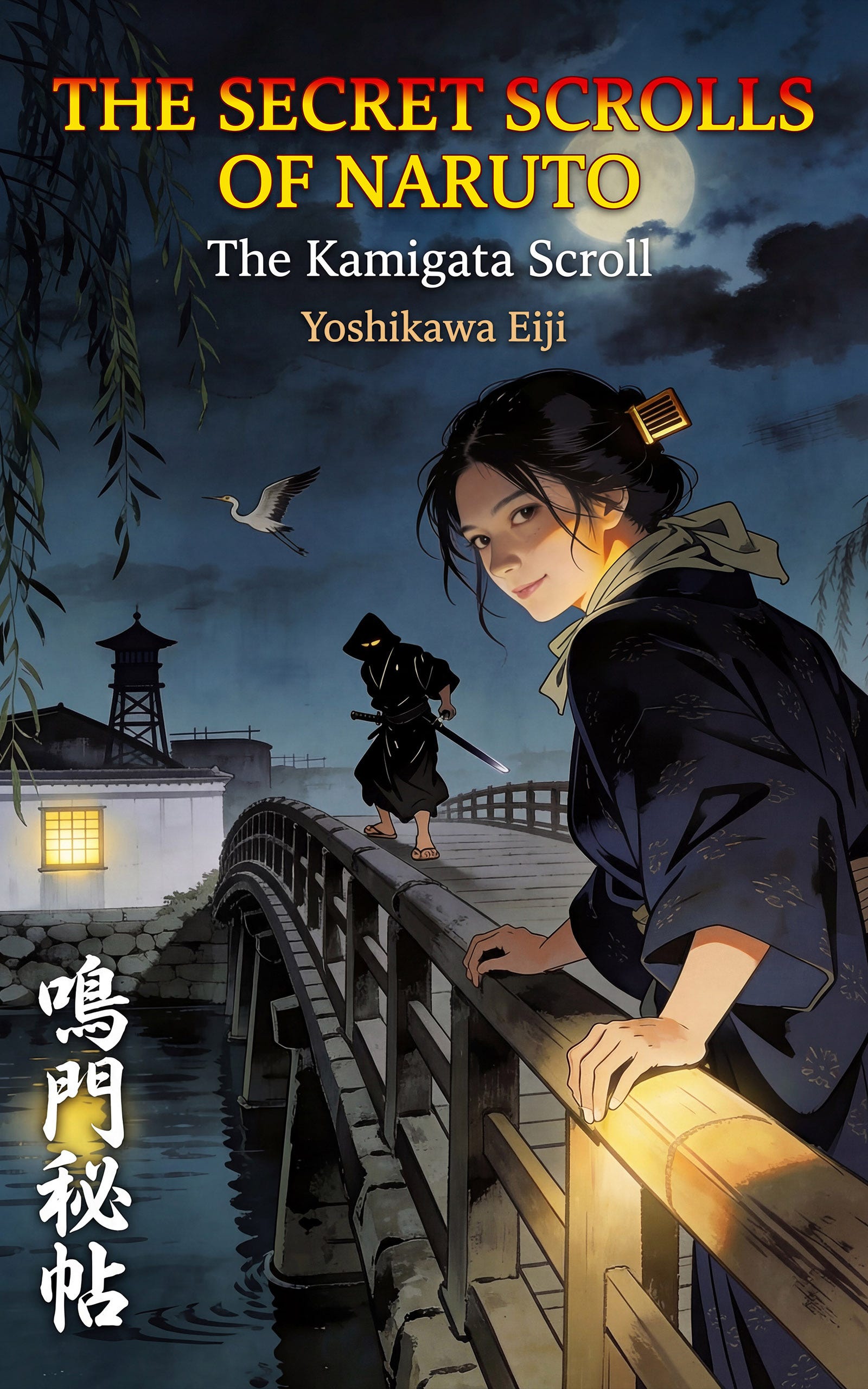
I think the extended ouevre of Eiji Yoshikawa. He was extremely prolific and extremely popular, both during the Meiji era and today, and his works are amazing. He’s more or less the Japanese Dumas, although a little more violent, of course, since this is the world of the samurai. I really didn’t think much of the only English translation of Musashi, so I was considering doing that, but since there’s so many Yoshikawa works that have never been translated at all, it will be a while before we’ll get around to addressing that. In fact, today we’re releasing the first of the six volumes of Naruto Hicho, The Secret Scrolls of Naruto, The Kamigata Scroll. It’s a fantastic book with intrigue, adventure, a beautiful assassin, tragedy, and romance.
You have personal favorites in this literature. What are they, and what do they do that Western literature in the same period wasn’t doing?
None of the four great mystery novels of Japan have been translated into English until now. I recently finished translating the first draft of Kokushikan Satsujin Jiken, which can be reasonably described as if Umberto Eco had co-written The Name of The Rose with Edgar Allen Poe in Tokyo with both of them out of their minds on absinthe or maybe something stronger. It’s intelligent and it is absolutely insane. I love it so much that I don’t know when I’ll be able to decide that it’s actually ready for release. Kenji is tackling the other one that is available, a darker mystery known as Dogra Magra.
The leather-bound editions are a poignant statement about what a book should be. A lot of publishers have abandoned that end of the market entirely. What does it mean to you that the object itself is beautiful and the highest quality possible?
As it happens, a lot of publishers are now starting to look at getting into deluxe books again now that Amazon has largely destroyed both the ebook and audiobook markets with KU and Virtua Voice. We’ve already been working with two other publishers at the bindery. I’ve just always been focused on all the aesthetic aspects of a book; my first solo novel, The War in Heaven, features an oil painting by Rowena, for whom I lobbied Pocket Books to be the cover artist. A great cover image or a really beautiful binding doesn’t make the text any better, but it sets the tone and adds considerably to the value of the book as an object.
The medieval scribes understood this. It’s a pity that most modern publishers don’t. You have only to look at Amazon to see how the art of the book cover has degraded over time.
As a Hugo Award finalist editor, you’ve read across a century of science fiction and fantasy at a serious level. When you come to Japanese literature with that background, what do you find that the Western genre tradition got right, and what did it miss that the Japanese understood?
Japanese literature is generally darker and more detailed. There is a saying that every English novel ends with a wedding, and, of course, every fantasy novel ends with the farm boy becoming the hero, killing the bad guy, marrying the princess, and becoming a king. Every Japanese novel, on the other hand, ends with a suicide.
Not every novel, you understand, but a lot more than you’d ever imagine. I think the ultimate modern Japanese novel would be a mystery about a young woman from Kyoto who works at a convenience store in Tokyo, whose murder is investigated by the homicide police and turns out to be a suicide.
Western literature is generally more optimistic, which I think is ultimately a reflection of the hope that Christendom has in eternal life through Jesus Christ.
What are the hallmarks of great writing, in your view?
Engaging characters whose behavior is realistic for their time and place. Stories with verisimilitude no matter how fantastic the setting. Emotions that are genuinely evoked rather than manipulated through artificial drama. And then, there are those with the true gift of the muse, the literary stylists like Tanith Lee and John C. Wright. They’re just on another level from the rest of us.
How many years of material of classic and worthy works is sitting in Japanese that hasn’t been translated?
Decades. It’s estimated that 95 percent of the historic literature has never been translated into English, which makes sense, since most of the translation efforts are understandably devoted to the modern bestsellers like Murakami, the Kawakamis, and Higashino. Even some of Japan’s greatest and most influential novelists remain untranslated; for example, we’ve been working on the previously untranslated work of Naoki Sanjugo, after whom the Naoki literary prize is named.
Do you see Castalia Library eventually moving into other non-English literary traditions or is the Japanese focus a permanent defining commitment?
We are already translating the Episodios Nacionales by Benito Perez Gardo, who is second only to Cervantes in his importance to the literary world of Spain. And I definitely intend to translate several of Hermann Hesse’s novels, since he’s been one of my favorite authors since I was in high school. But I think that Japanese will remain a particular focus for us, due to my connection and affection for the language, the people, and the culture.
You’ve operated largely outside the legacy publishing infrastructure for years. Looking at where traditional publishing is right now, do you think what you’re building with Castalia Library would even be possible inside that system, or does independence make this the only way it works?
There is no way we could have done any of this inside the professional publishing system or without the support of the Castalia community. No way at all. It really is a community effort; it may have started as my vision but it has now gone so far beyond anything I initially imagined that I won’t be surprised if it lasts for centuries. We are the digital monks of the 21st Century. I think what we’re doing is tremendously important, in more ways than one, and I sincerely invite your readers to join us in the grand project of the Library.
You can check out the works on the Castalia Library substack, and some are up on Amazon for purchase.

NEXT: The Surprise Biostellar Novel Is A Testament To Real Science Fiction
There have been a number of posts and articles from various sources in recent years talking about the state of publishing. While it is true that the current large publishers are focused on women, as a woman, I find most of what they offer to be poorly written and all the same. They are formulaic.
I am so thankful to publishers like Castalia Library for providing more options. Through CL, I was introduced to this substack, JDA, Raconteur (sending books to friends with boys), and Hans G Schantz, with more to come. It’s exciting to see what is coming next.
Nothing but respect and admiration for you guys.