


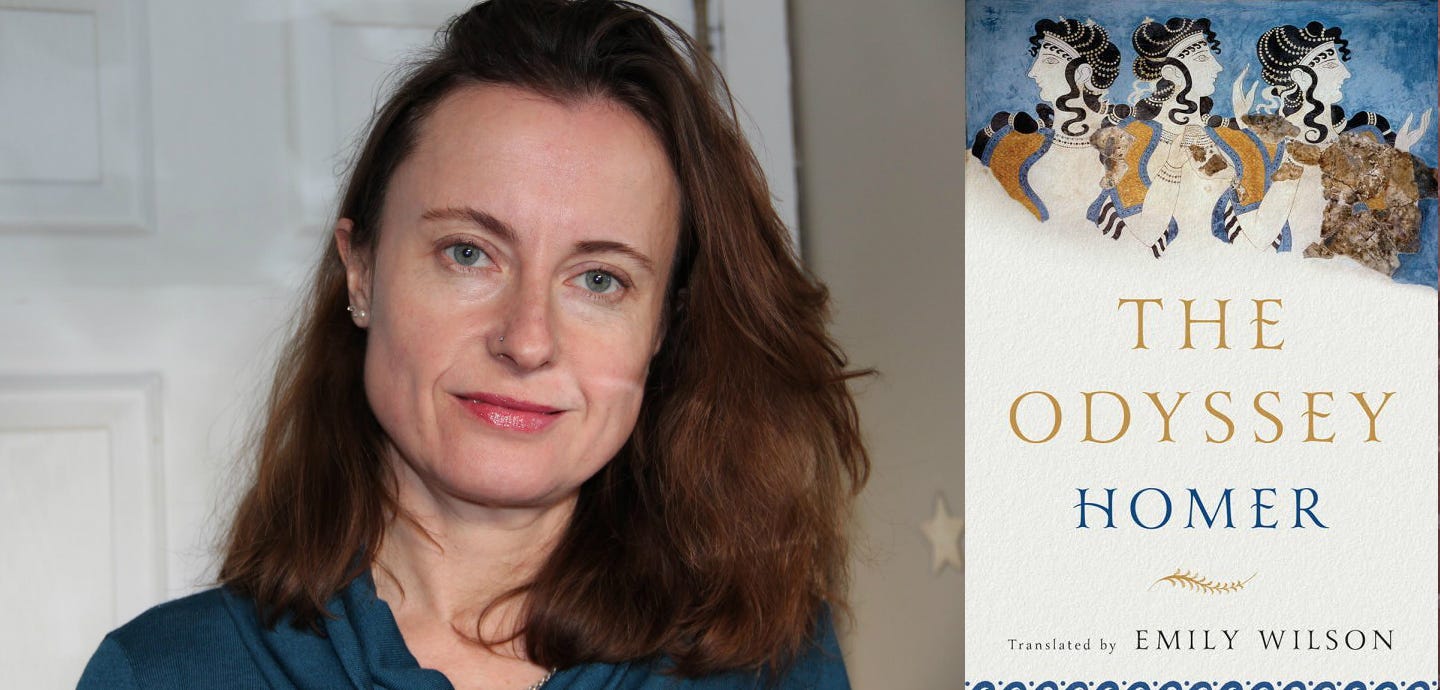
Christopher Nolan built his Odyssey script around Emily Wilson’s celebrated 2017 translation, crediting her opening line, “Tell me about a complicated man,” as direct inspiration. Now that the film has opened to $260 million worldwide and a string of glowing reviews, Wilson herself is telling the Associated Press it left her unsatisfied.
Wilson, a classical studies professor at the University of Pennsylvania, was careful not to come across as a purist rejecting any deviation from Homer’s text. “I want to celebrate the fact that so many more people are aware of ‘The Odyssey’ and were brought back to the poem,” she told the AP. But her specific criticisms go well past nitpicking. She questioned the film’s decision to strip Zeus and Poseidon from the screen entirely, its “incoherent” messaging that seems to condemn both war and physical cowardice in the same breath, and Penelope’s reduced role, which she said undermined “any possibility of believing in this marriage.” She also flagged the film’s handling of Odysseus’ dog Argos as leaning into material “catered towards modern sentimentality,” a modernizing instinct Nolan reached for even in a scene the original poem plays with more restraint.
Fellow translator Daniel Mendelsohn, whose own Odyssey translation came out in 2025, made a related point about what Nolan actually built out of the material. “This tormented, guilt-ridden Odysseus, stripped of humor and wit, seductiveness and cleverness, is a sibling of Memento’s anguished amnesiac, of Batman, of Oppenheimer, men tormented by pasts they wrestle with in different ways,” Mendelsohn wrote. “Nolan has merely remade Homer’s hero in his own image.” Both scholars praised Nolan’s visual ambition, what Mendelsohn called his “great visual panache,” while landing on the same underlying complaint: the film reads less like Homer’s Odysseus and more like a Christopher Nolan protagonist wearing Odysseus’ name.
Here’s the irony sitting underneath all of it. Wilson’s own 2017 translation was itself a deliberate modernizing project, marketed on its release for stripping away what critics of the older translations called centuries of “patriarchal interpretations” baked into the text, and for giving Penelope and the poem’s other women more interpretive weight than prior English versions had. That’s the translation Nolan says he built his script from. Six months of press-tour interviews from this film’s cast leaned on that same modernizing framework, Nolan citing “cultural prejudice” in how audiences view the ancient world, Lupita Nyong’o arguing Homer shortchanged his women’s screen time, all of it pointed back toward Wilson’s reframing of the source material. Now the translator whose modern lens the film borrowed is on record saying the finished movie thinned Penelope out further than the poem does and left the story’s moral logic “incoherent.” The translation reshaped the poem for a modern audience. The film built on that translation reshaped it again, and even the person who did the reshaping doesn’t recognize the result.
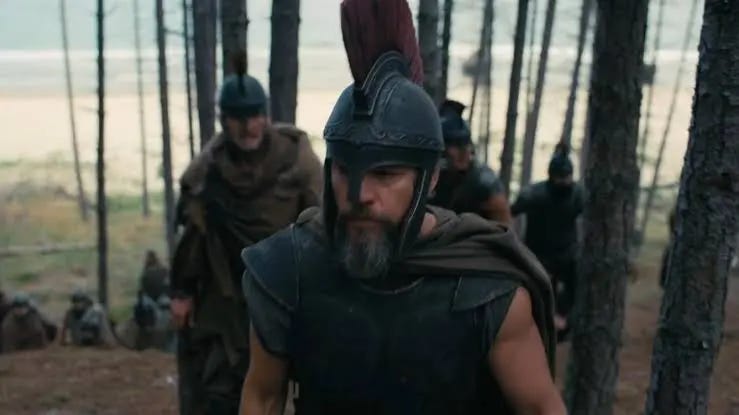
Wilson still says she’d recommend people see it, and specifically in a theater. “It was fun to be there with my kids. I didn’t feel it was pulling teeth to engage with it,” she said, declining to offer the film a grade or ranking. That’s a fair, honest note to end on, and it keeps this from being a simple takedown. But strip away the politeness and what’s left is a straight line: a 2,700-year-old poem, run through a modernized translation built to correct the original’s supposed politics, then run through a director who modernized it again on top of that, and the translator whose work started the chain is now the one saying the second pass broke something the first pass was trying to fix. That’s not a poor copy of Homer. It’s a poor copy of a poor copy, and each version further from the source loses a little more of what made the original worth adapting in the first place.
Why are people shilling so hard for this film at this point?
Epic Fantasy hasn’t been this hard-hitting since Tolkien. In a world where humanity is akin to a Roman legion, a great darkness arises. Read A Throne Of Bones today.
Of course Nolan botched it. How could he not. He was using a fucked up translation to make his movie.
As the saying goes, trash in, trash out.
I'd rather read an Odyssey reimagining from Wilson. Yes, Wilson the volleyball from Castaway.