


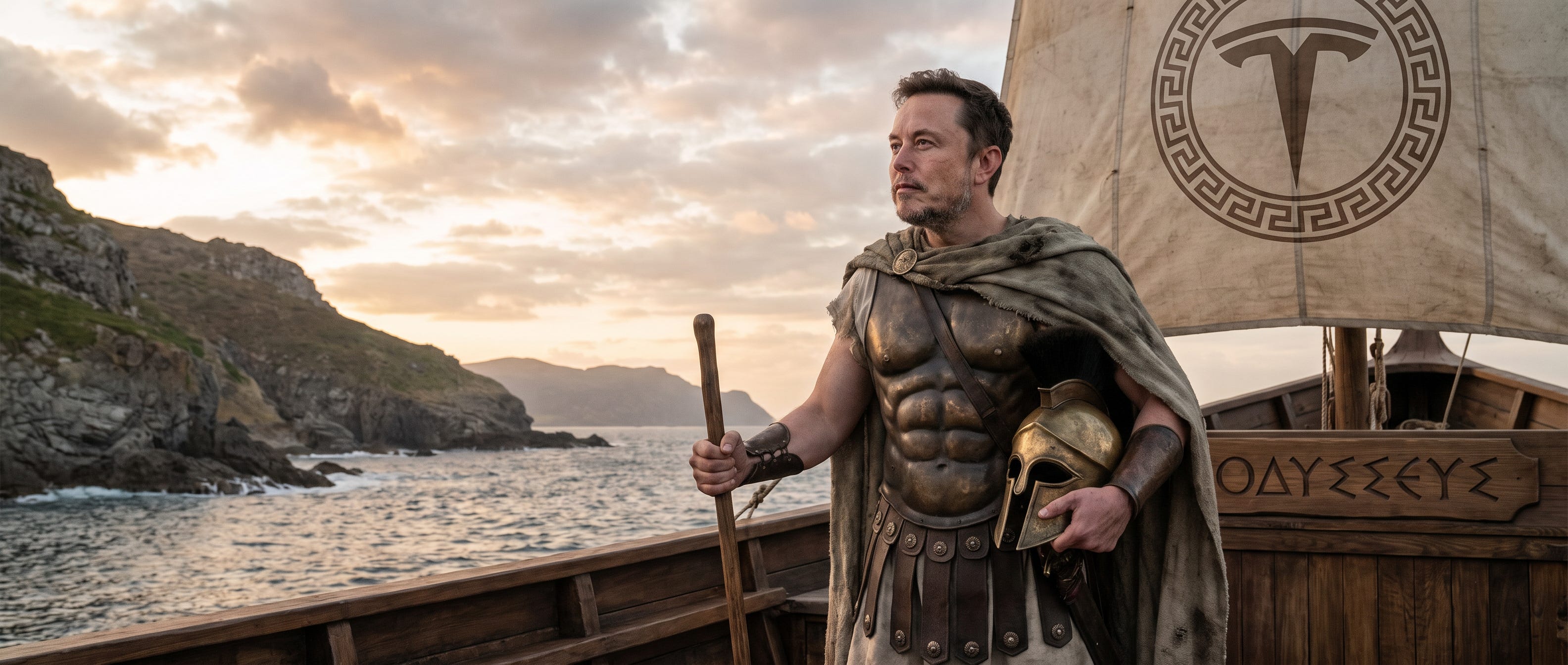
Christopher Nolan’s Odyssey has opened well, pulling in $124.5 million domestically and roughly $264 million worldwide. Elon Musk has spent six months arguing the adaptation strayed too far from Homer’s actual text, and box office numbers don’t settle that argument. Commercial success and fidelity to the source material are two different measures, and Musk’s response this week shows he’s willing to put serious money behind the second one instead of just complaining about it.
Musk’s criticism of this film goes back to January, when early reports suggested Lupita Nyong’o would play Helen of Troy, a character Homer describes explicitly as the most beautiful woman in the Greek world and the Spartan-born wife of Menelaus. Musk’s objection was about faithfulness to the text as written, not the actress herself, and he’s kept making some version of that same argument through the months since: that a story this foundational deserves an adaptation that treats Homer’s actual words, characters, and world as the standard, rather than a version reshaped around modern sensibilities and a translation explicitly marketed for breaking from the poem’s traditional reading. Reporters at outlets already inclined to defend Nolan’s creative choices have characterized Musk’s comments in the harshest possible terms available to them. Stripped of that framing, his core position has stayed consistent: the poem already contains everything it needs, and adapting it well means being faithful to that, not correcting it.
That consistency is what makes this week’s announcement worth taking seriously rather than dismissing as sour grapes. Musk replied “I’m down” to a viral pitch asking him to fund Mel Gibson at $100 million to direct an Odyssey “with painstakingly historically accurate ships, armour, weapons, and casting, with all dialogue taken straight from the original poem and delivered in Homeric Greek.” Gibson is a genuinely credible name to attach to that ambition. He self-funded The Passion of the Christ for roughly $30 million after every studio in town passed on it, shot the film in Aramaic and Latin with zero recognizable stars, and grossed more than $600 million worldwide anyway. He followed that with Apocalypto, filmed entirely in Yucatec Maya. A director with two box office-proven, commercially successful films made in dead or unfamiliar languages is exactly the kind of filmmaker willing to actually execute on a Homeric Greek Odyssey rather than talk about one.
Musk paired that pledge with an announcement that his own Grok Imagine tool will produce a full-length Odyssey adaptation before the end of the year, built from the same commitment to matching Homer’s actual poem rather than reworking it. That’s a genuinely ambitious technical bet, since AI video generation hasn’t produced a feature-length narrative film yet from any provider, and Musk deserves credit for putting a concrete timeline on the claim rather than leaving it vague. There’s a fair critique worth engaging honestly here too: calling any adaptation of the Odyssey “historically accurate” is a strange choice of words, since the poem itself is myth rather than history, full of a cyclops, a six-headed monster, and a witch who turns sailors into pigs. Musk likely means faithful to Homer’s actual text and world rather than literally historical, and that distinction is worth him clarifying, but it doesn’t undercut the underlying goal: a version of this story that treats the source material as something to honor rather than something to correct.
Nolan, for his part, has waved off all of this as “irrelevant,” arguing nobody criticizing the film ahead of release actually knows what it is yet. That’s a convenient answer for a director whose own film leaned on a modernized translation and a press tour full of cast members explaining why Homer needed updating for today’s audience. Musk is betting that a real appetite exists for the opposite approach: a Homeric Greek, textually faithful, visually authentic Odyssey that doesn’t need six months of interviews justifying what it changed and why. Whether Grok Imagine or Gibson gets there first, it’s a bet worth watching rather than mocking.
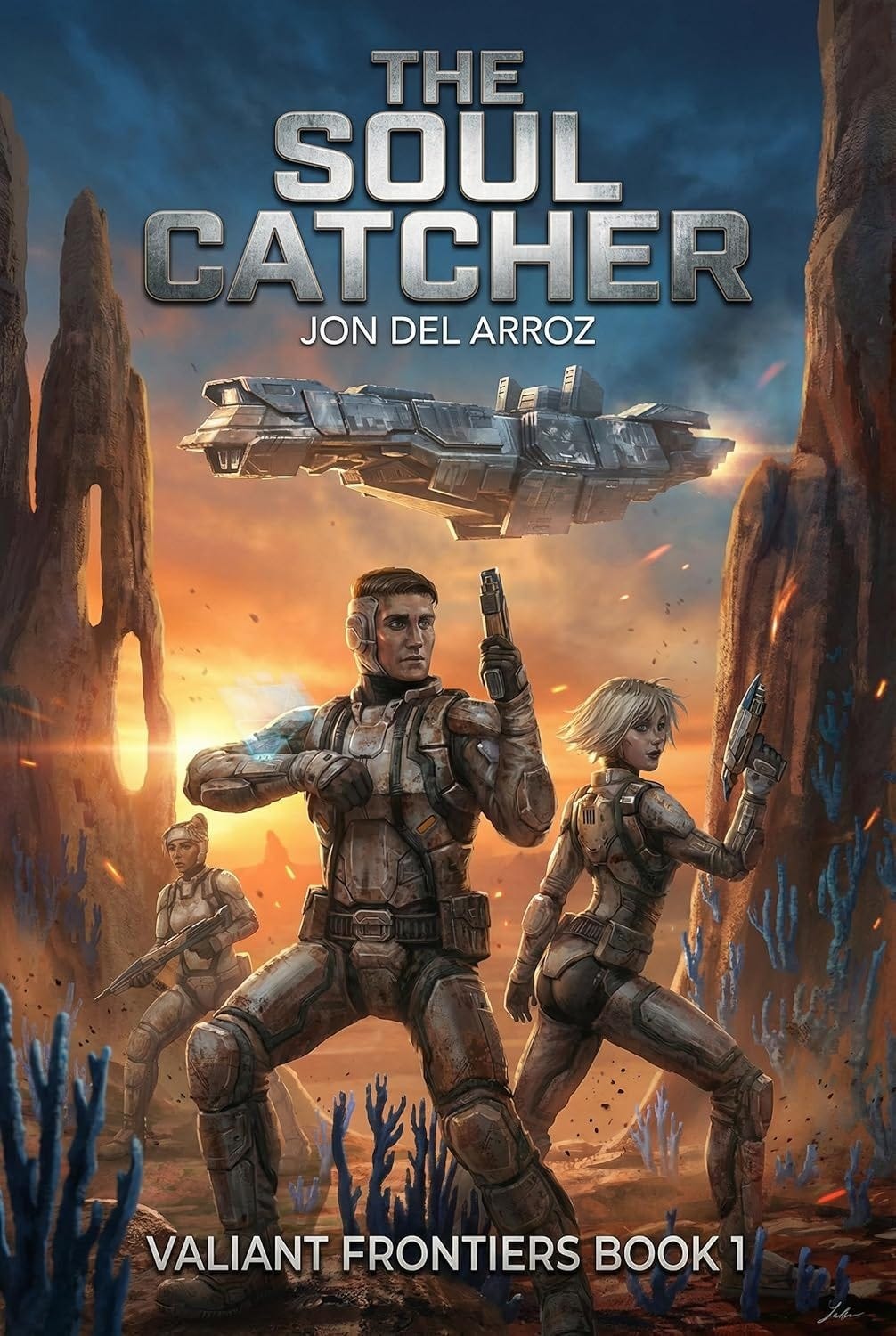
First contact with the Oridians was supposed to be humanity’s proudest moment. Instead, their chief engineer is dead, their ship is sabotaged, and an ancient alien technology is stealing souls. Book one of the Valiant Frontiers series delivers exploration, mystery, and the kind of crew you’ll want to follow across the galaxy. Read The Soul Catcher on Amazon and start the adventure.
Nolan turned out to be a hack after all.