


Anne McCaffrey’s unpublished manuscript “After the Fall Is Over” has a new witness. A Reddit user who goes by Brandon Weyr, who says he works as an actor, posted an account in r/pern describing a visit to McCaffrey’s home where the author walked him through the plot of the long-shelved Ninth Pass capstone. Fandom Pulse covered the mystery surrounding the manuscript earlier this year, when the only public record consisted of secondhand comments from Todd McCaffrey and fansite administrator Hans van der Boom. This account goes further than either of them ever did.
Brandon Weyr posted:
“We then sat down and she regaled us with the tale of “After the Fall is Over” which involved Pern reconnecting with the FSP who had returned to Pern’s skies due to the promise of Pern’s botanic bounty of numbweed, which had become blighted off planet. The spectre of Thread in another farflung planetary system was also part of the story. As well as the need for Jaxom to receive advanced surgery or the world risked losing he and Ruth. In many ways it did sound largely like a retread of Skies of Pern however: Brekke and F’nor had had children they weren’t fostering off. Twins if I remember correctly, who were incredibly likely of course to impress. F’lessan and Tai I believe also had a child. And then of course the children of Jaxom & Sharra, Menolly & Sebell, Piemur & Jancis, and basically the next gen of important players were poised to take things up if there were even more stories after. Another major aspect was either pirates or the FSP under bad orders, ended up launching a missile which was deflected by the Queen Dragons pooling their TK. Overall the story seemed a mix of Skies of Pern, Lyons Pride, and the ending of her Catteni series. So I can kinda see why it is yet/never to be published. Oh, and the Captain or 2nd Officer in the FSP crew is of course a realtion of Paul Benden.”
Brandon Weyr’s own comparison points to two McCaffrey series outside Pern entirely: Lyon’s Pride from the Tower and the Hive quintet, and Freedom’s Ransom, the closing volume of her Catteni tetralogy. Both comparisons are accurate in that there are striking similarities, and one of them explains the manuscript’s structure far better than the “Skies of Pern retread” label that has circulated among fans for over a decade in conjunction with why this wasn’t published.

Lyon’s Pride follows Damia and Afra Lyon’s eight children as they come of age and get pulled into active duty defending the Alliance against the insectoid Hive. The book’s climax turns on the family’s telepathic and telekinetic Talents combining their power to intercept an enemy threat, a dynastic passing of the torch dressed up as a space battle. It’s considered a lesser installment in the series compared to the earlier The Rowan and Damia because of its scattered nature and less of a tight emotional impact for characters than the first two books in the series.
Set that against Brandon Weyr’s account of “After the Fall Is Over”: Brekke and F’nor’s twins, F’lessan and Tai’s child, and the offspring of Jaxom, Menolly, and Piemur all introduced as the next generation of dragonriders, with the climax resolved by the Queen dragons pooling their telekinetic ability to deflect an incoming missile. This is almost exactly the same mechanic McCaffrey already used to close out the Tower and the Hive series, relocated to Pern and given scales instead of a psi rating.

Freedom’s Ransom, the final Catteni book, has a reputation among McCaffrey readers as the weakest entry in that series. Reviewers at the time noted that after three volumes of rebellion and open warfare, the fourth book downshifted into trade negotiations, with the newly liberated colonists at Botany working to reclaim looted goods from their former captors through commerce rather than combat. “After the Fall Is Over” as Brandon Weyr describes mirrors that shape closely: an off-world power, the FSP, returns to Pern’s skies not as a threat but as a trading partner, drawn by the planet’s numbweed after a blight wiped out their own supply. Diplomacy and resource scarcity replace Thread as the engine of conflict, the same downgrade in stakes that cost Freedom’s Ransom its reputation.

The Skies of Pern connection is apparent, too. With FSP contact, the political friction between an old warrior caste and a new peacetime order, and the looming question of what dragonriders are for once Thread stops falling: McCaffrey had already run all of those ideas in her 2001 novel. But to call it a “retread of Skies of Pern” undersells what Brandon Weyr describes. The actual narrative engine, a family of next-generation dragonriders inheriting their parents’ burdens and saving the day through pooled dragon power, definitely echoes Lyon’s Pride far more than Skies. The resolution mechanism with an outside power pacified through trade rather than defeated in battle belongs to Freedom’s Ransom. The Skies of Pern comparison mostly is involved with set pieces. The other two supplied the plot.
Pern fansite administrator Hans Van der Boom called the manuscript a retread and told Anne so to her face. Todd McCaffrey has said it “would not have made Pern fans happy.” Brandon Weyr’s account, if it holds up, explains why in specific terms neither of them was willing to give: McCaffrey wasn’t repeating herself so much as recombining two of her own late-career formulas of books that already were considered disappointments in series and grafting them onto Pern’s most beloved characters.
This is all unconfirmed information outside the one source, but the plot details do make sense. On the flip side of the argument, seeing a future history of posterity from characters we’ve grown to love, and having them have a future among the stars rather than just confined to a planet, would have fulfilled every promise McCaffrey made when she insisted Pern was sci-fi and not fantasy after she first released Dragonflight.
Regardless of the quality, now that so much time has passed, it might be time to release the early draft of McCaffrey’s final work as such, presenting it for historical purposes rather than presenting it as canon, much as Christopher Tolkien did with his father’s unpolished work.
Does a manuscript built from recycled McCaffrey mechanics deserve a posthumous release so fans can judge it for themselves, or does Todd and Gigi McCaffrey’s decision to leave it in the agent’s files look more justified now that the plot is out?
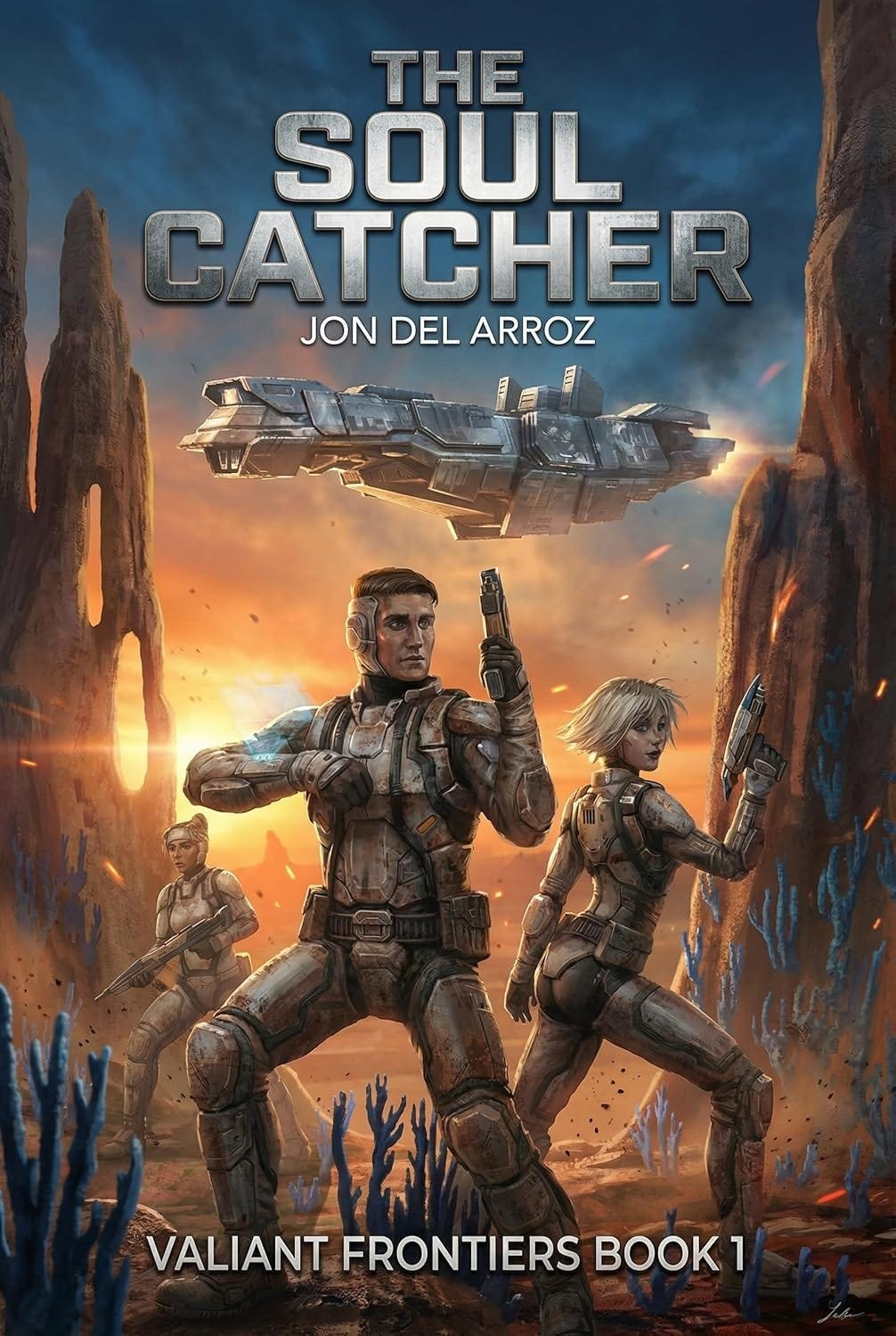
First contact with the Oridians was supposed to be humanity’s proudest moment. Instead, their chief engineer is dead, their ship is sabotaged, and an ancient alien technology is stealing souls. Book one of the Valiant Frontiers series delivers exploration, mystery, and the kind of crew you’ll want to follow across the galaxy. Read The Soul Catcher on Amazon and start the adventure.
I will give Anne this much, the concept alone makes it more appealing than The New Shadow.