


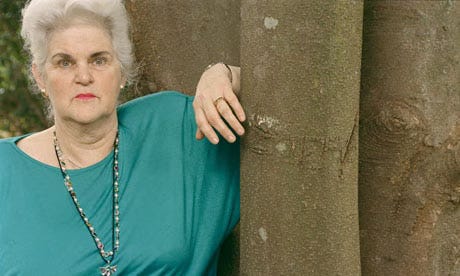
Anne McCaffrey, who created the Dragonriders of Pern series beginning in 1968 and spent decades building one of the most beloved science fiction and fantasy universes in the genre’s history, published an explicit set of fan fiction guidelines that included one rule stated without apology or hedge:
“Pornographic sites, based on any of my literary works, are expressly forbidden. But I’m sure you know that. I’m a grandmother, after all.”
That sentence, delivered with characteristic wit and firmness, drew the line McCaffrey believed any author with a moral compass should draw. She had built her worlds. She had created her characters. She had spent her career producing fiction she was proud to put her name on. She was not going to allow those same characters and worlds to be used as raw material for pornographic content by people who had contributed nothing to their creation.
Her complete rules covered the full range of fan activity with care and generosity. Non-commercial fan fiction, fan art, and online RPGs were explicitly permitted. Free web hosting with banner ads was fine. The trademark notice requirement was reasonable. The protections she offered registered fan sites in the event of future licensing deals were thoughtful. She concluded with the phrase she told her grandchildren: play nice.
The rule against pornography was the natural centerpiece of a framework that said: I love that you love my work, I want you to engage with it, and there are limits to what that engagement should include.
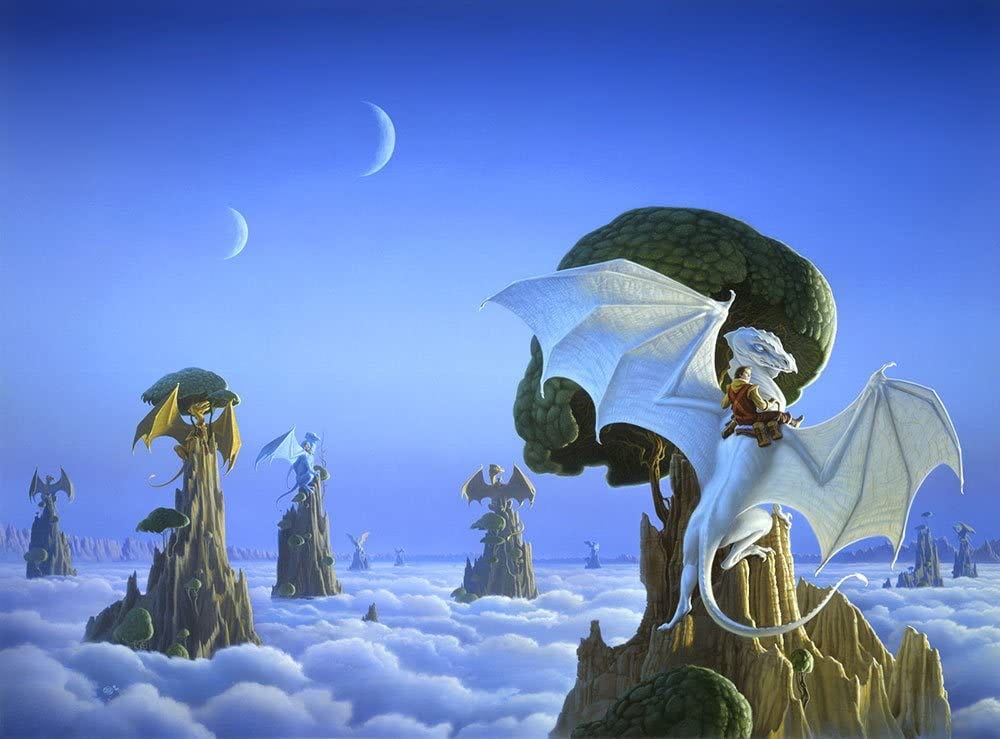
The publishing industry has spent the years since McCaffrey’s death in 2011 systematically demonstrating what happens when those limits go unenforced.
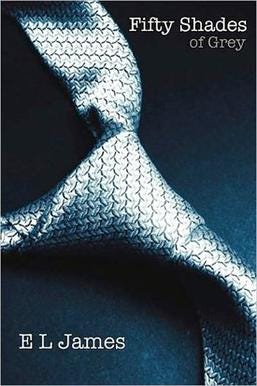
Fifty Shades of Grey began as a Twilight fan fiction posted to FanFiction.net under the pen name Snowqueen’s Icedragon, titled “Master of the Universe.” The story was an explicit BDSM narrative using Stephenie Meyer’s Bella Swan and Edward Cullen as the protagonists. E.L. James later filed off the serial numbers, renamed the characters, and published it through a small Australian press before Random House picked it up. That the resulting books sold in enormous numbers is not a vindication of the process. It is a demonstration of how much money the publishing industry can extract from IP it did not create, using sexual content the original author never sanctioned. Stephenie Meyer told the press she would never read it and found the concept distasteful, but she never issued McCaffrey-style rules forbidding sexual content from fan fiction based on her work, and she never took legal action. The question one Substack writer asked — “Should Stephenie Meyer have sued E.L. James when she had the chance?” — has an obvious answer in retrospect. She should have.
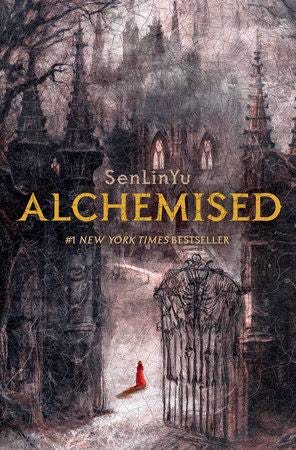
Alchemised, published in September 2025 by Penguin Random House’s Del Rey imprint, is the most recent and most commercially significant entry in this pipeline — and the clearest illustration of where the industry ends up when authors fail to draw McCaffrey’s line. The book began as Manacled, a Harry Potter fan fiction posted to Archive of Our Own by SenLinYu — a graphic, dark narrative combining Harry Potter with The Handmaid’s Tale, featuring BDSM content, forced surrogacy, rape, kidnapping, and torture. It accumulated 10 million views on AO3 before being taken down when the publishing deal was announced. The “reskinned” novel changed Hermione to Helena and Draco to Kaine, renamed the Order of the Phoenix the Order of the Eternal Flame, and replaced magic with necromancy. It debuted at number one on the New York Times bestseller list and was acquired by Legendary Entertainment for a seven-figure movie deal. That those numbers are large does not make them clean. They represent the full financial reward available to anyone willing to take a beloved children’s author’s characters, subject them to graphic sexual violence, scrape off the names, and hand the manuscript to a major publisher. The author described removing Rowling’s intellectual property as “liberating” — in an interview extensively marketed using Harry Potter comparisons by the same publisher that called the content original.
J.K. Rowling’s position on fan fiction was never as clear as McCaffrey’s. Her literary agency spokesman said she was “flattered” and wanted the practice to remain “non-commercial” and “child-friendly,” with a warning that “if young children were to come across characters in X-rated stories, there’d be trouble.” She “deplores” pornographic fan fiction personally. She never published McCaffrey’s clean, direct rule. She never said in her own voice what McCaffrey said: this is expressly forbidden. The result is that her characters — children’s book characters, created for readers aged nine and up — have spawned one of the most extensive libraries of explicit sexual content on Archive of Our Own, where Dramione alone accounts for hundreds of thousands of published works across every rating category.
McCaffrey’s guidelines also addressed the commercial question that has now become the defining issue in the fan fiction pipeline debate. She specified that fan sites must be entirely free to participants, that no membership fees may be charged, and that sites could not be used to sell derivative merchandise. The rule was non-commercial engagement only. The moment Fifty Shades went to Random House and Manacled went to Del Rey, both works crossed every line McCaffrey identified. They were commercial. They profited from other authors’ intellectual property without compensation or consent. The children’s characters Rowling created for nine-year-olds were used as the scaffolding for graphic sexual violence that a major publisher then sold to adults worldwide. There is no version of that transaction that should be described as a success. It is a failure of every mechanism that was supposed to prevent it.
McCaffrey’s instruction was simple and correct: play nice. She meant it. The industry decided there was too much money in not doing so. Some things are not worth the revenue. McCaffrey understood that. The publishers who built their lists on her successors’ characters did not, and do not, care.
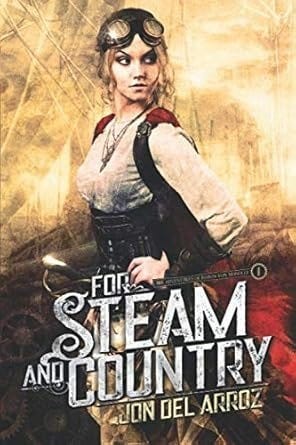
Six books. One unforgettable world. The Adventures of Baron Von Monocle is steampunk adventure with the kind of worldbuilding and heart that made you fall in love with fantasy in the first place. Start the series on Amazon.
NEXT: The Jesuit, the Starship, and the Star Trek Books: A James Blish Retrospective
A woman ahead of her time, and keeping an eye out for the well-being of her amazing series(s').
Bully for her. This is a message that needs to go out more widely to anyone who creates new fiction, whether it "takes off" or not. This message needs to proceed any digital or physical publishing efforts.
Enforcing it, now... different problem.