


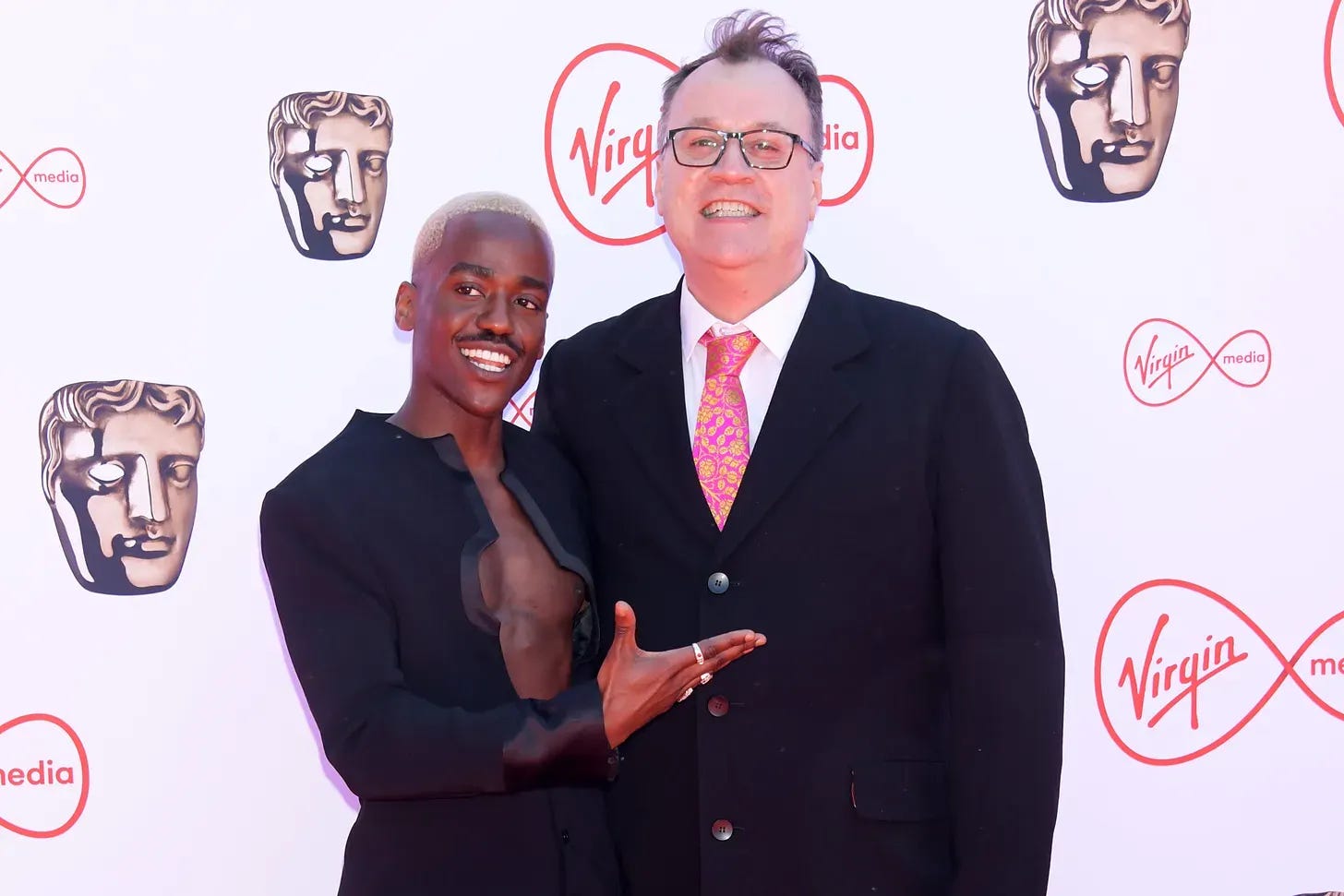
Russell T. Davies announced Wednesday that he is leaving Doctor Who. The BBC confirmed simultaneously that the 2026 Christmas special is canceled, production company Bad Wolf is out, and the BBC is putting the show out to competitive tender for the first time in its history. The statement from BBC Director of Drama Lindsay Salt described the decision as investing in “the long-term future of the show.” The press release language was careful. Davies’ Instagram farewell was not.
“And so GOODBYE from me to Doctor Who but HELLO to a big new future for the show,” Davies wrote. He added that there was no Christmas special script: “For the record: there was no script, I never wrote it, and no actor was ever approached to play the next Doctor. You may disagree; fine, sit in that chair and wait to be proved right. You’ll wait a lonnng time.”
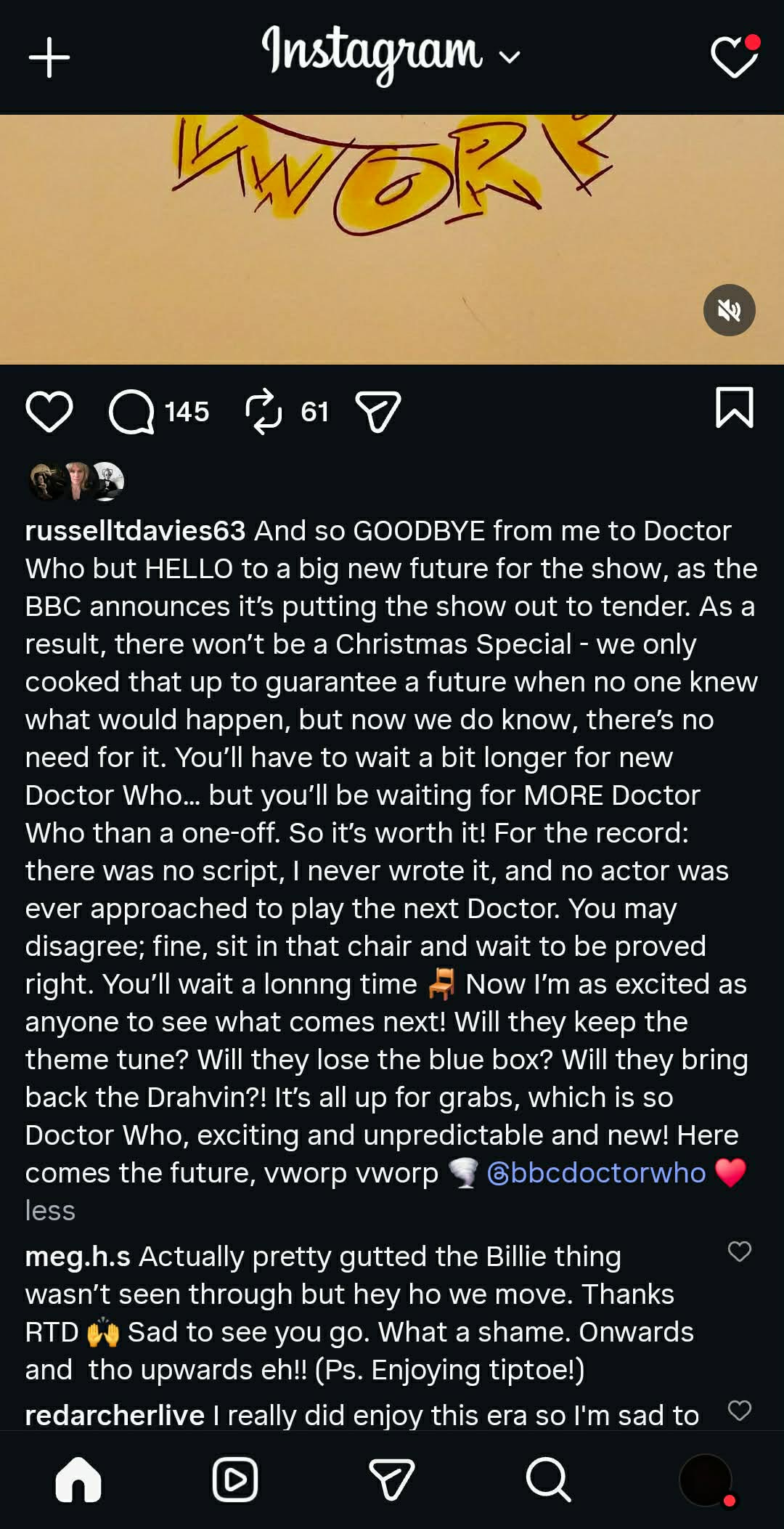
That last sentence tells you everything about the kind of exit this is. This is not gracious, nor reflective. A preemptive argument against people he knows will contradict him, and they will, because the evidence contradicts him already.
In February 2026, Doctor Who composer Murray Gold told the Radio Times that Davies had written “multiple versions” of the Christmas special script “depending on certain outcomes.” Gold added that he probably wasn’t supposed to share that information. The BBC’s own announcement when Disney+ exited the partnership in 2025 stated explicitly that the BBC was “delighted that Russell T Davies has agreed to write us another spectacular Christmas special for 2026.” BBC Director of Drama Lindsay Salt said at the time: “We are delighted that Russell T Davies has agreed to write us another spectacular Christmas special for 2026.”
Davies now says there was no script and he never wrote it. Gold said on the record that Davies had written multiple versions. The BBC’s own press release said Davies agreed to write the special. One of these things is not true, and it is not Murray Gold’s interview or the BBC’s official statement.
The passive aggression in the Instagram post runs all the way through. Davies announces he is “excited as anyone to see what comes next,” asks if the new production will “keep the theme tune,” wonders if they will “lose the blue box,” and signs off with “vworp vworp.” This is a man performing enthusiasm for a successor he did not choose while defending a record he cannot honestly defend.
That record looks like this. Davies returned as showrunner in 2023 for the sixtieth anniversary specials, bringing back David Tennant and Billie Piper, and generated genuine goodwill on arrival. Then he made the show he actually wanted to make. Season 14 opened with 2.6 million overnight viewers for the first episode. By episode three of the same season, viewership had dropped to 2.04 million — the lowest in the show’s sixty-year history at that point. Season 15’s opening episode pulled 2 million flat. A single episode in the second half of Season 15, “Lucky Day,” posted 1.5 million overnight viewers. That number is not a record low. It is a structural collapse.
Disney+ exited the co-production deal in 2025. Per Deadline’s reporting, Doctor Who failed to crack Nielsen’s streaming charts in the United States across both seasons. The Entertainment Strategy Guy blog labeled it one of the “flops of 2024.” Disney sources told Deadline the writing had been on the wall for a long time: “Everyone got the impression that it wasn’t doing what it needed to do on Disney+ to be sustained.” One source was more direct: Doctor Who had become “too woke for Trump’s USA.”
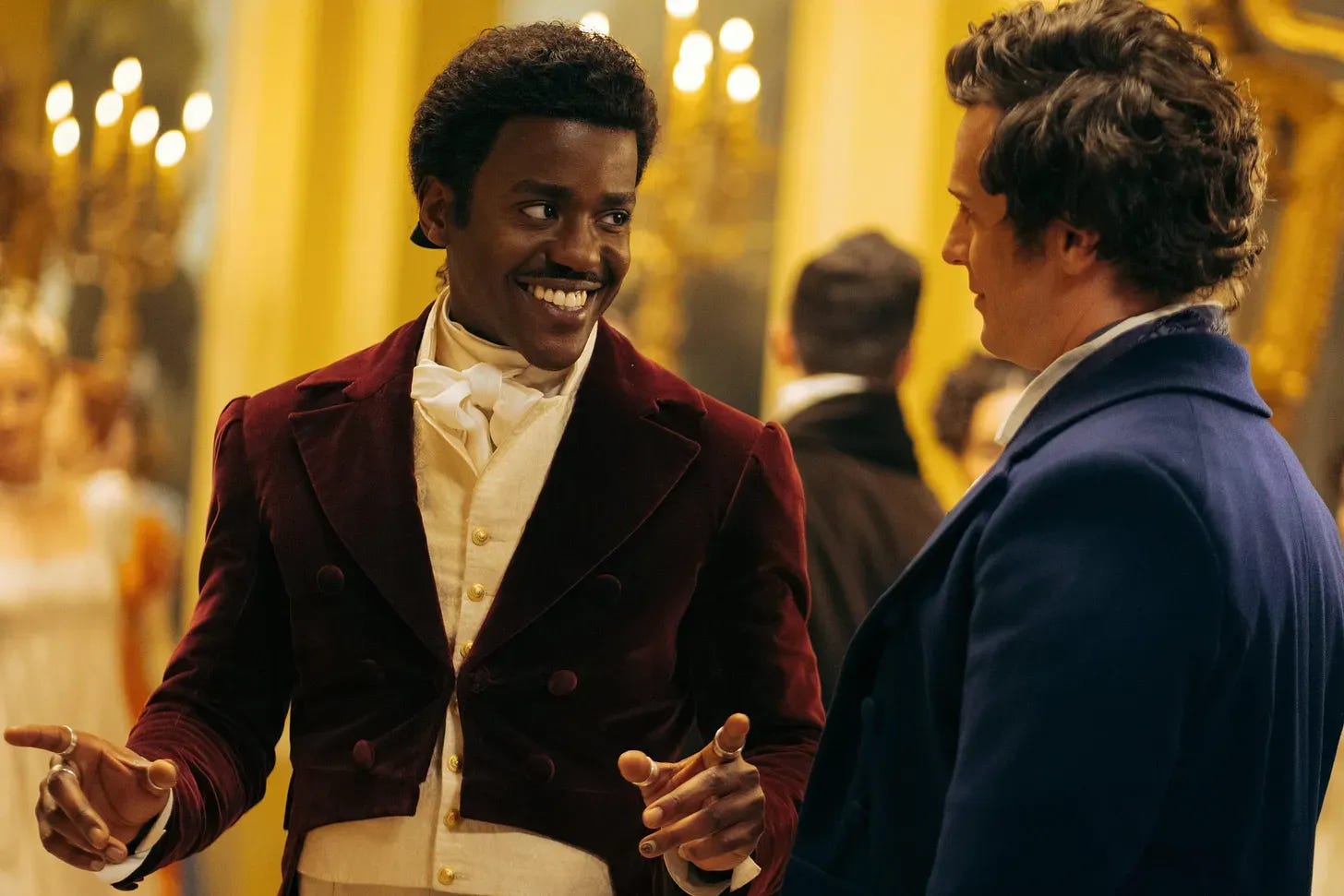
Ncuti Gatwa, cast as the Fifteenth Doctor with enormous fanfare, left after two seasons citing exhaustion.
Davies had explanations for all of this, and those explanations were consistently about the audience rather than the product.
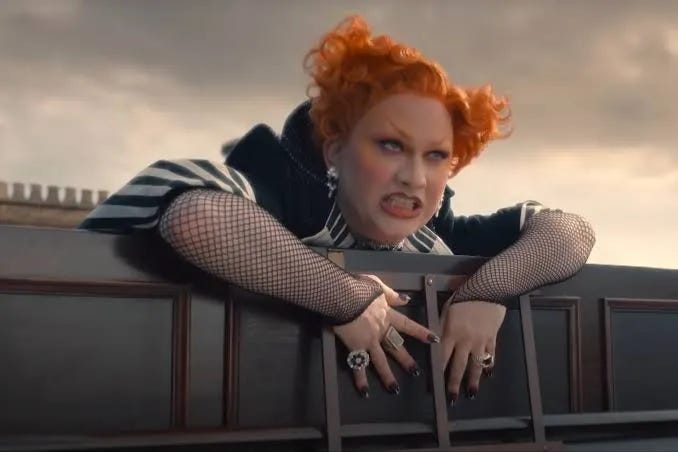
At Series Mania in March 2026, Davies described Doctor Who as “a gay show,” defined its central appeal as the Doctor being “othered from sex and from relationships,” and addressed the critical fan reaction directly. “That online voice, which is hostile, exists on X, which is a hate site,” he said. “We shouldn’t be surprised to find hatred on it, because it’s a hate site. It’s very dangerously assumed that that is the fan voice.” He told HuffPost UK that he had demanded the BBC stop posting Doctor Who press releases on X: “There is no way a publicly-funded corporation should be posting on a hate platform.” He said public bodies that continue posting on the platform should be sued.
The problem with framing all criticism as hate-site toxicity is that the ratings numbers do not come from X. They come from television sets in British homes, most of which belong to people who have never posted about Doctor Who in their lives. Millions of people who watched the Tennant era and the Smith era simply stopped watching. They did not stop watching because they posted hostile things online. They stopped watching because they did not find the show worth their time.
That same impulse to dismiss the audience showed up inside the show itself. Season 15’s episode “Lucky Day,” written by Pete McTighe, featured Ruby Sunday’s boyfriend Conrad as an explicitly political villain. One reviewer summarized the character plainly: “Conrad is for all intents and purposes a right-wing grifter. He’s an emboldened white, toxic male who stirs up his fans by creating drama in the guise of taking down the man, only to make himself rich and famous.” The villain’s podcast operation was compared directly in the episode’s press coverage to Joe Rogan and Jordan Peterson. The character existed to embody the people who dislike the current direction of Doctor Who. Ruby Sunday, the Doctor’s former companion, had been dating him. The show’s message was clear: fans who reject the new Doctor Who are not just wrong, they are manipulative grifters who fake relationships to exploit women.
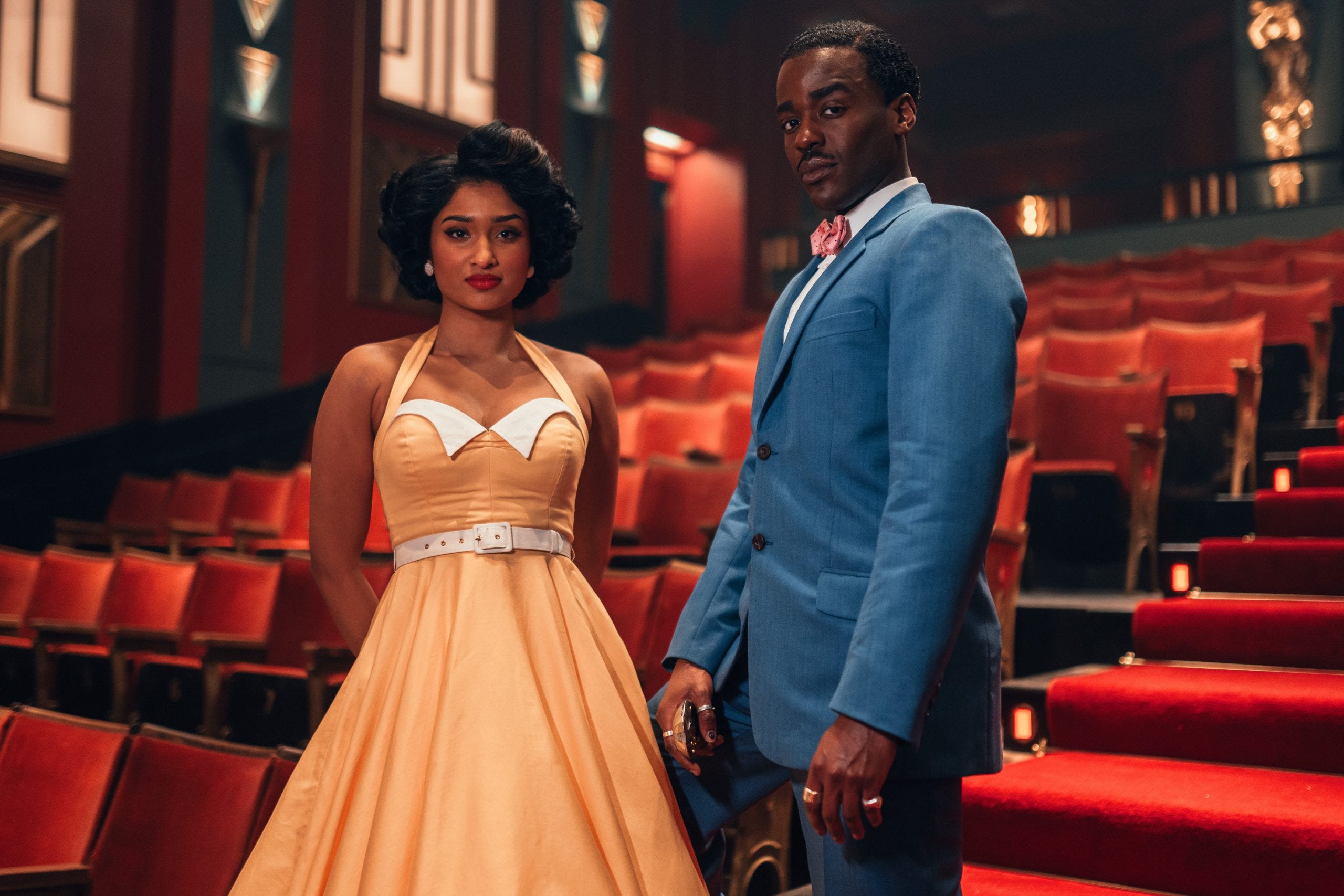
Episode two of Season 15, “Lux,” written by Davies himself, went further. The Doctor and Belinda crossed into a reality in which Doctor Who is a television show. Actual fictional Doctor Who fans appeared onscreen, including one who complained about the current era of the series. The episode was framed as a “love letter to the fandom.” What it actually was: a showrunner using the show’s own broadcast time to respond to his critics, placing them inside the fiction as minor characters in a story he controlled, then deciding whether they got to survive. One critic accurately described the episode as something that “referenced and hastened the show’s long hiatus.”
Davies spent three years telling his audience that the people who did not like his Doctor Who were hate-site trolls, toxic white males, or sufficiently niche that their opinions did not represent real fandom. His show drew 1.5 million viewers on its worst night. Disney left. His lead actor left. The BBC has now put the show out to competitive tender rather than simply hand it to a successor.
The Christmas special that Davies now says never existed was announced by the BBC with his name attached to it. The reasons it did not happen are almost certainly the same reasons the last two seasons failed to find an audience: no actor of sufficient profile agreed to step into the role, the creative direction had damaged the brand enough that committing to another season under the same framework carried real institutional risk, and the BBC decided to cut its losses and start over.
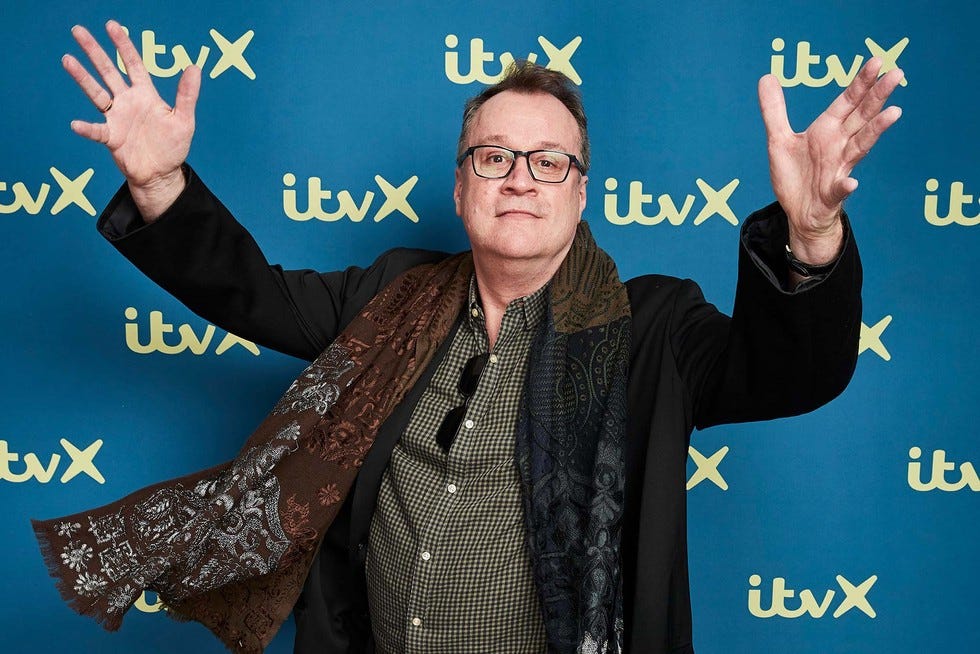
Davies calls his exit “exciting and unpredictable and new.” The word for it is accountability, which arrived on a delay but arrived nonetheless.
The show that Davies revived in 2005 was one of the great comebacks in British television history. Christopher Eccleston’s Doctor, David Tennant’s Doctor, the writing of the first four seasons — these were genuine achievements that built an audience of millions across multiple generations. When Davies came back in 2023, he inherited goodwill earned by that original run and spent it on a version of the show that treated its own audience as an obstacle. The ratings told him so every week. He called the ratings incomplete. He called the critics hate-bots. He called X a hate site and tried to get the BBC to stop promoting the show there.
The audience disagreed. They expressed that disagreement the only way audiences can: they stopped watching.
Now the TARDIS goes out to tender. Whoever wins that bid will inherit a show that has posted historically low ratings, lost its American streaming partner, burned through two lead actors in three years, and spent its final two seasons insulting the people who made it a cultural institution in the first place.
Are you glad this nightmare’s over?
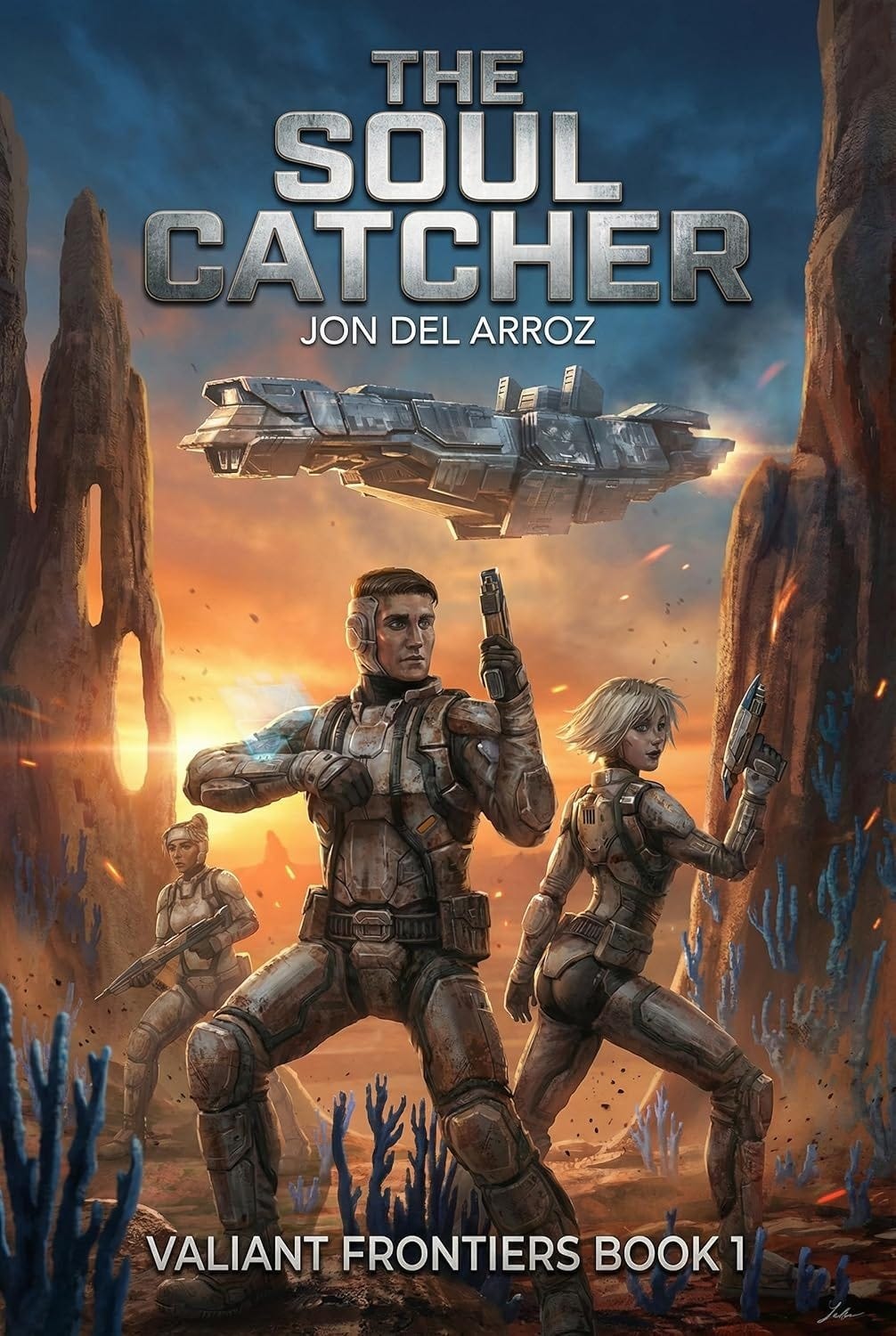
Doctor Who fans will love the Valiant Frontiers series, a classic-style science fiction with exploration through space and time. This is what you’ve been looking for, and we’re bringing back the sense of wonder sci-fi had when it was great. Read The Soul Catcher on Amazon and start the adventure.
NEXT: How to Fight for Stargate - Here Is What You Can Do Right Now
The effort Davies put into killing the show almost defies belief--it's a perfect object lesson for showrunners that alienate the audience, telling viewers to " go touch grass," etc, the fans deserved better...
Love it when the villain gets his comeuppance. Too bad he took the Doctor with him.