


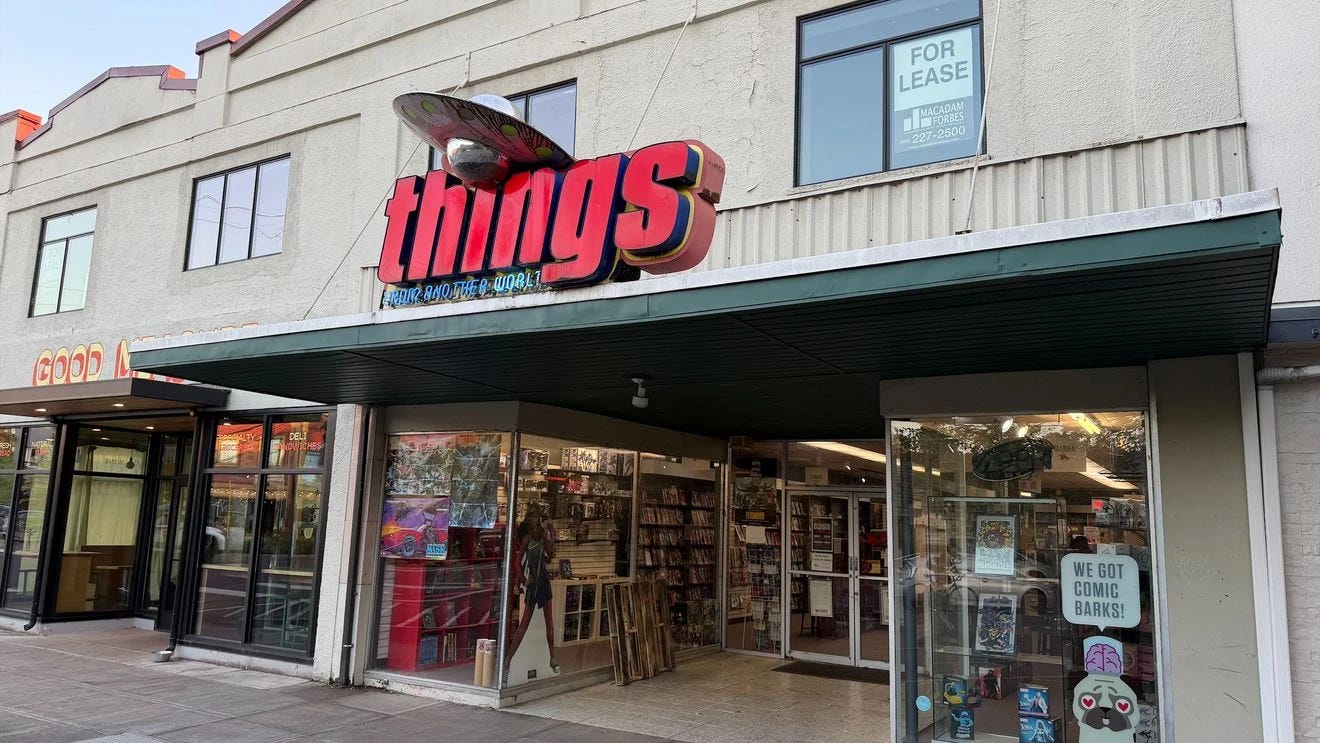
Things From Another World is closing. Dark Horse announced yesterday that its two Oregon retail locations in Milwaukie and Beaverton will shut on June 30, 2026, with the California store at Universal CityWalk following on September 30. The e-commerce site, TFAW.com, went dark in April 2025 after 25 years of operation.
The closure is not a minor footnote. Mike Richardson opened his first store, Pegasus Fantasy Books, as a 400-square-foot shop in Bend, Oregon in 1980. That store became Things From Another World, which became a chain of eleven locations at its peak, and the revenue from that chain funded the launch of Dark Horse Comics in 1986. Dark Horse became the third-largest comics publisher in the United States — the home of Hellboy, Sin City, the Alien and Predator licenses, Star Wars comics during their pre-Marvel era, and decades of creator-owned work that could not find a home at the Big Two. The store that built the publisher is now gone.
Richardson was fired from Dark Horse in March 2026 by new owners Embracer Group, on the eve of the company’s 40th anniversary. Dark Horse frames the TFAW closure as part of modernizing operations and building a more connected organization under Fellowship Entertainment. In plain language: the corporate owners who replaced the founder decided the retail chain he built was not worth keeping.
The closure lands inside a direct market that has been shedding retail locations for years without admitting the trajectory. Between 2020 and 2023, hundreds of comic stores across North America closed, unable to survive the combination of pandemic pressures, rising costs, and shrinking customer bases. Diamond Comic Distributors, the industry’s sole distributor for decades, filed Chapter 11 bankruptcy in January 2025 after years of cutbacks and the loss of its relationships with Marvel and DC. The distribution infrastructure that moved comics from publishers to shops for forty years collapsed inside twelve months.
The retail closures kept coming in 2025. Destiny City Comics in Tacoma, Washington closed when its rent increased beyond what the shop could sustain. Bleeding Cool tracked a single month in early 2025 where twelve stores closed across the country while seven opened — a net loss that describes an industry contracting faster than it can regenerate.
The sales picture tells the same story from a different angle. The direct market had one bright spot in 2025 and one in 2026: the DC Absolute line, led almost entirely by Absolute Batman. Industry analyst SKTCHD reported going into 2026 that Absolute Batman is “far and away the leader, with its in-store sales reaching new heights with each issue and its secondary market exploding to honestly preposterous levels,” while noting that the other Absolute titles — Wonder Woman, Superman, Martian Manhunter — were not replicating the same momentum. One book is carrying the visible health of an entire publishing line. The question SKTCHD posed for 2026 was whether the Absolute line’s new readers were discovering other comics on the shelves, and the honest answer, as of mid-2026, is that it is happening slowly.
Outside of Absolute Batman and select Energon Universe titles from Skybound, the direct market is not a growth story. Marvel’s market share fell from 39% to 29.4% in two years. DC’s recovery is real but concentrated in a handful of titles. The mid-list — the books that fill out shop orders and keep retailers from gambling everything on one or two titles per month — is thin. When a shop owner in Tacoma says rent has increased beyond what comics revenue can cover, the implicit admission is that the book portion of the business cannot carry the fixed costs that comics retail requires.
The TFAW closure fits the pattern. The Universal CityWalk location was one of the highest-profile comic stores in the country as a publisher-owned shop in one of Los Angeles’ busiest tourist corridors. If that location cannot justify staying open, the economics of publisher-owned retail in the current market are not defensible regardless of foot traffic.
Embracer Group’s statement frames the closure as forward-looking restructuring. What it describes is a company that bought Dark Horse, fired its founder, and is now disposing of the parts of the business it does not want while rebranding everything under Fellowship Entertainment’s licensing apparatus. The stores that once funded the publisher’s existence are being treated as legacy overhead.
Mike Richardson built a comic store chain, used the profits to launch a publisher, ran that publisher for forty years, and was fired by corporate owners on its anniversary. The stores he started are closing six months later. This is the full arc of what happens when independent publishing infrastructure gets absorbed by a corporate entity that views the creative history as an asset to be monetized and the physical community infrastructure as a liability to be shed.
The direct market’s problems are structural, not cyclical. Absolute Batman is a genuine phenomenon. It cannot save every shop that cannot make rent when the rest of the rack is not moving product consistently. The TFAW closure is the most historically significant retail casualty the direct market has seen in years. The industry will not acknowledge what it means.
What does the comics retail landscape look like in five years if the current trajectory continues? Let us know in the comments.
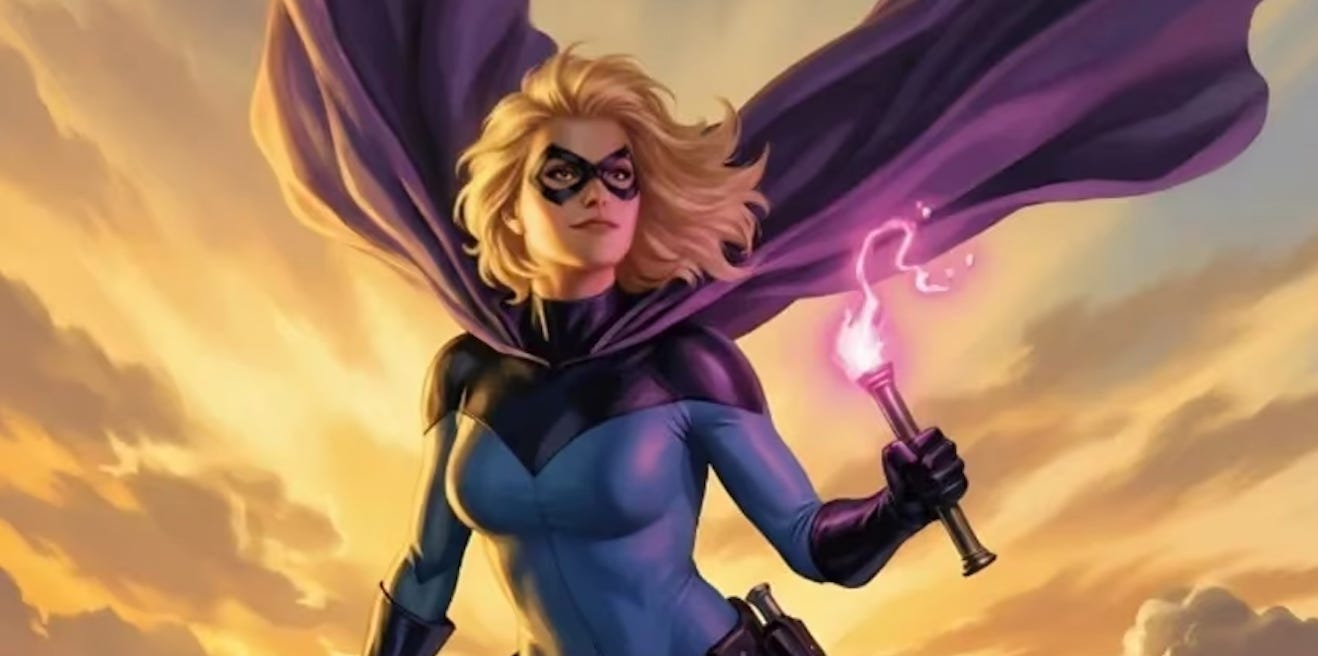
450 pages of classic superhero storytelling that puts character first. The Flying Sparks Omnibus collects the complete saga of Meta-Girl — the kind of cape comic the mainstream forgot how to make. Sign up to get your copy.
I hope the money Richardson got when he sold the company was worth it for him. How humiliating and sad to see everything he built over 40 years flushed down the toilet.
I don't care. Comics are dead. Comic book movies are dead. I only enjoy what came in the past.