


On May 15, Devin Lewis posted his farewell from Marvel Comics after sixteen years with the company. He wrote it as a thread on X, in the voice of someone who had loved his job.
“Not a trick! Not an imaginary tale! Just some bittersweet news to share: my final day as an Editor at Marvel Publishing has come and gone. I started as an Editorial Intern in 2010, and getting to play in the Marvel sandbox for 16 years was the honor of a lifetime.”
He continued: “In my time at Marvel, I’ve been lucky enough to work on some of the company’s biggest franchises, but, more importantly, with some of the industry’s biggest brains and hearts.”
And: “From Subterranea to the Blue Area of the Moon and everywhere in between, there is no limit to what the imaginations, keyboards, pencils, inkwells, and palettes of Marvel’s mightiest can concoct. Watching them work their magic across each and every page has been a dream come true.”
His closing line: “So while this chapter at The House of Ideas may have come to a close, I’ll still say with my whole heart: #MakeMineMarvel. On to the next adventure...!”
It is a gracious exit statement from someone who clearly believes in the company he worked for. The company demonstrated less belief in him.
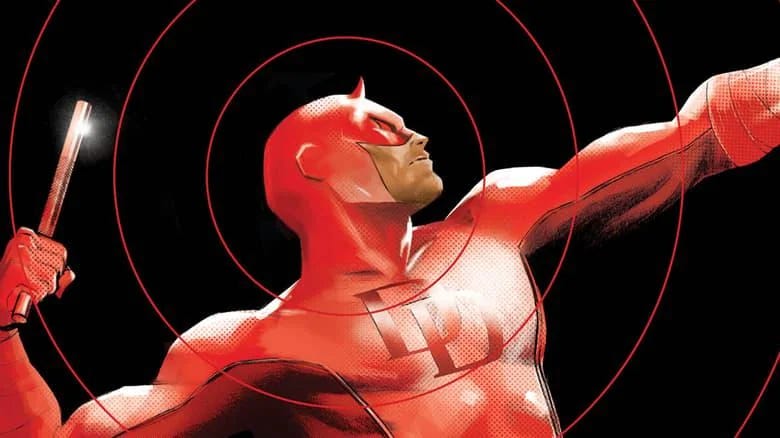
Lewis began at Marvel as an intern in 2010, was promoted to Editor in 2017, and spent his tenure on Daredevil, Punisher, Moon Knight, Spirits of Violence, and 1776, and was the editor who commissioned Ty Templeton’s Daily Bugle strips, a ten-year run of Marvel-themed humor features now canceled alongside his departure. He was cut alongside SVP David Gabriel (20-plus years at Marvel), editors Darren Shan and Lauren Bisom, and communications director Timothy Cheng, as part of the Disney reorganization that has seen over a thousand total employees fired. Between Lewis and Shan alone, approximately ten current Marvel series were left editorially uncovered simultaneously.
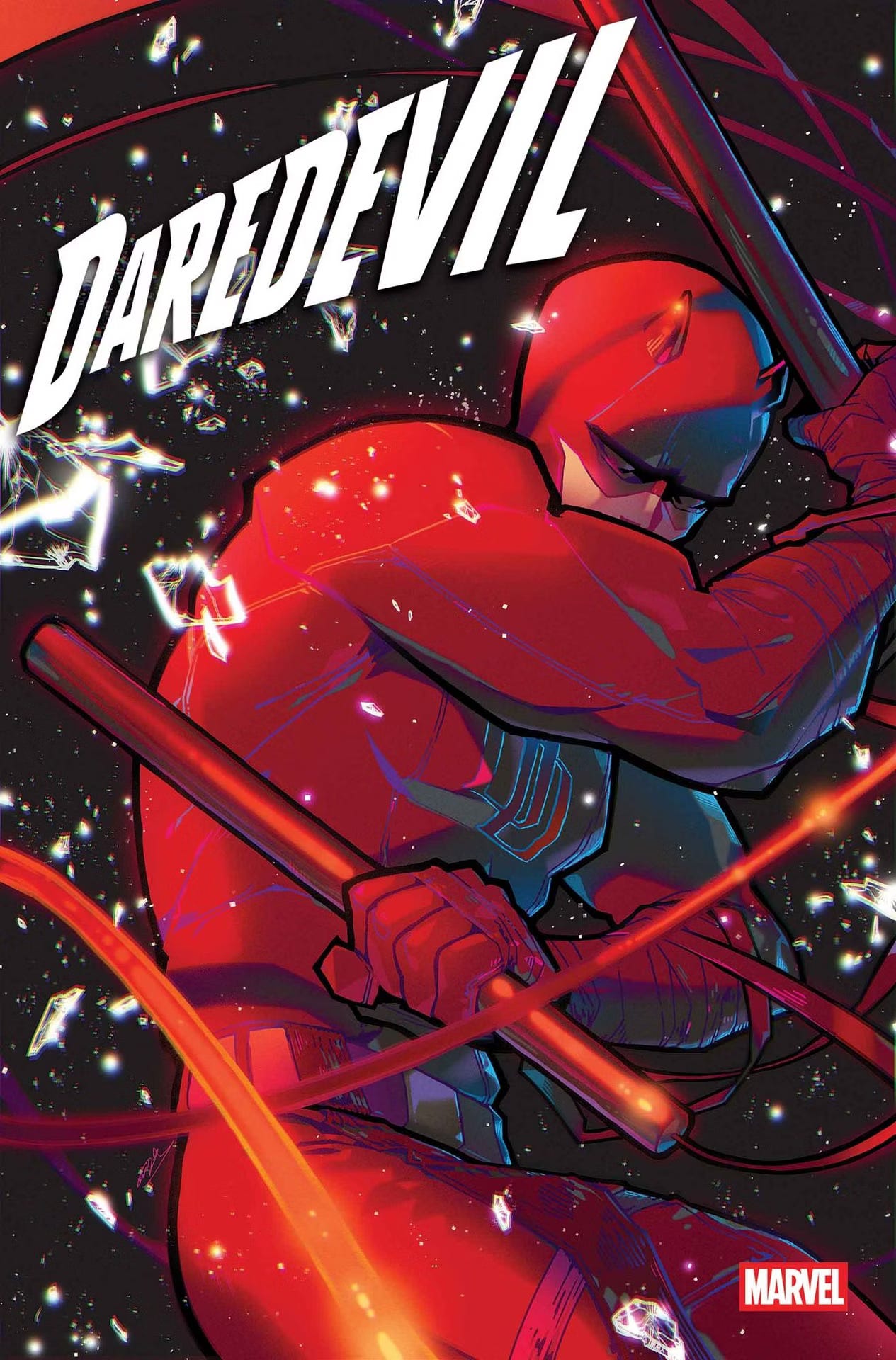
The 300,000-copy Daredevil #1 number being cited as evidence of his success requires more scrutiny than it is receiving. The launch was packaged inside Marvel’s new “True Believers Blind Bags” program, which are sealed bags containing a random variant cover from a list of 17 variants, including blind-bag exclusive covers by Daniel Warren Johnson and Dan Panosian available nowhere else, plus ultra-rare hand-drawn sketch covers by undisclosed contributors. The 300,000 figure includes speculators buying multiple blind bags chasing rare covers, not readers buying a comic because they wanted to read it. Stephanie Phillips’ previous Marvel work did not move those numbers. The character, the #1 designation, and the blind bag speculation program did. The numbers will not hold. They never do when they are built on variant cover engineering rather than reader demand for the story.
Phillips is a writer whose work consistently draws mixed-to-negative audience response on character-driven grounds. Reader reviews of Planet She-Hulk described the book as ideologically driven, stripping the character of her established femininity and personality to produce a harder, angrier version audiences did not ask for. One reviewer put it plainly: Phillips emphasizes feminist themes to the detriment of the characters she writes, and audiences have noticed. Putting her on the flagship Daredevil launch in 2026 is a choice that reflects Lewis’s editorial priorities as much as it does anything else. A Daredevil run built around blind bag speculation and a writer with a thin track record on major characters is not a publishing success. It is a sales trick attached to a franchise name.
Lewis’s record across the street-level Marvel line is not uniformly bad. His tenure included the period when Chip Kidd’s Daredevil and subsequent runs moved the character through interesting territory. But the line he built in his final years leaned on variant cover programs, Red Band mature content labels, and a rotating cast of writers chosen for cultural identity rather than commercial track records. Spirits of Violence, Werewolf by Night: Blood Moon Rise, Blade: Red Band, these are books built around an aesthetic rather than a market. They sold to a core audience and no wider. Moon Knight: Fist of Khonshu added a fourth ongoing Moon Knight title to a line that already struggled to sustain one. The Daredevil relaunch handed to Phillips, with its sixteen variant covers and blind bag gimmick, is the logical endpoint of that approach: maximum short-term sales engineering, minimum long-term reader investment.
Marvel’s not had a lot of consistent editorial direction in recent years so it remains to be seen whether this is a good move.
What does Marvel’s publishing operation look like in five years under this management? Let us know in the comments.
450 pages of classic superhero storytelling that puts character first. The Flying Sparks Omnibus collects the complete saga of Meta-Girl — the kind of cape comic the mainstream forgot how to make. Sign up to get your copy.
NEXT: WotC Is Becoming A Brand Licensor And The Justice League TTRPG Is The Latest Proof
Marvel and DC are dead brands walking and won’t recover as long as they stay mired in cultural politics.
More proof Disney ruins everything it touches.