


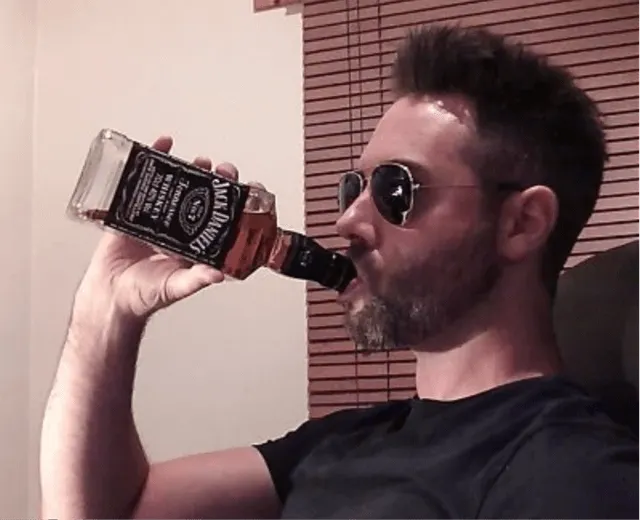
Commentators like The Critical Drinker have built large audiences by formerly mocking franchise mismanagement. There was a time when that kind of criticism landed well with viewers and grew his channel. While many of his complaints were surface-level in substance, viewers latched onto the sentiments expressed as some kind of traditional zeal against progressive politics. Many left-wing observers frequently label him as right-wing or even conservative simply for opposing progressive media. However, if one digs a little deeper into his commentary, one will find his beliefs align more with the Left than the Right.
This topic is worth addressing because of the real influence Will Jordan (Drinker) has accumulated. Millions of people treat his videos as more than casual entertainment; they take his cultural diagnoses seriously. He regularly appears alongside other prominent commentators, collaborates with organizations, and shapes discourse far beyond his own channel. The “I’m just an entertainer” or “it’s only my opinion” framing does not cancel that influence. When enough people treat the commentary as meaningful, and when the commentator himself engages with political and cultural institutions, the ideas themselves become fair game for examination.
Jordan frames his standards as neutral and craft-based rather than political or subjective. In interviews, he has said he approaches reviewing “from a politically neutral standpoint,” that he wants to “review on its own merits,” and that he refuses to dismiss a film simply because it is liberal or conservative. He consistently invokes a set of practical standards (setup and payoff, consistent character logic, earned development, etc.) and treats them as obvious measures of quality. While he attempts to contrast older films with modern failures, he never explains where the standards for those films come from, how they developed, or (most importantly) why they should be authoritative beyond the claim that he believes they produced better entertainment.
Ultimately, there is no sustained appeal to any defined principles of storytelling or film theory. Jordan has never even invoked a specific cultural or moral tradition, much less a detailed historical argument about why older practices were superior on any deeper grounds than a matter of personal taste. His standards are presented as self-evident.
https://www.hollywoodintoto.com/critical-drinker-interview-woke-movies/
Note that he explicitly refuses to dismiss a film simply because it is liberal or conservative and that he will not discount stories or viewpoints merely for falling on one side of the political spectrum. In his eyes, both the Left and the Right are just “viewpoints” to be weighed by craft rather than by truth. This reduces the culture war to nothing more than optional flavors of content consumption rather than competing accounts of reality.
Jordan also consistently frames the problem with media as execution. He repeatedly refers to the heavy-handed “Message,” which is his catch-all for progressive identity politics, virtue signaling, and ideology overriding story/character. He objects when studios lecture to you (surface-layer stuff), but he does not outright reject the deeper progressive premises that make those practices seem legitimate in the first place. For instance, he acknowledges the idea that there has been some historical underrepresentation of certain identity groups which has created an ongoing moral debt that must be repaid through preferential casting, hiring, or narrative focus. This means that he views said “representation” itself as a primary artistic good. Just so long as the movie doesn't announce it.
When he talks about people who “never got their shot,” he is describing the progressive claim that certain groups were systematically excluded and therefore deserve compensatory inclusion now. By treating that claim as the background reality (and only criticizing the clumsy or reverse-discriminatory ways it is applied), he leaves the premise unchallenged. That is a tacit acceptance of the Left’s framing of history and justice, even if he rejects the most aggressive applications of it. A more thorough critique would question whether the historical narrative itself is accurate or relevant as a guide for current creative decisions.
Jordan treated the Bill/Frank episode of HBO's The Last of Us (“Long, Long Time”) as good television. He praised the episode for its writing, performances, and emotional weight. However, he did not treat the fact that Bill and Frank were homosexuals as something requiring comment, much less a moral evaluation. He did not frame the relationship as a positive or negative development in cultural terms at all; in fact, he simply proceeded as if the homosexuality was just another background detail. That silence is the data that reveals the operating assumption: adult homosexual relationships are already normalized and outside the realm of live moral or cultural dispute. The only variables that still matter to him are the quality of writing and whether the material stops to lecture you about its progressivism.
Jordan's commentary doesn't come from a traditional conservative posture nor is it a classical Christian one. Instead, his is the posture of someone whose moral baseline was set by the post-1990s liberal settlement in which sexual liberalism had already been largely accepted, and the remaining fights were over how explicit the activism ought to be. Traditional right-wingers and conservatives who treat influencers like the Critical Drinker as some kind of cultural ally should register this clearly. While the shared opposition to the progressive heavy-handed “Message” creates an appearance of common ground, Jordan's silence on the actual substance of progressivism itself reveals where his true allegiances lie. Despite his insistence that he does not critique on political grounds, his operating assumption is that adult homosexual relationships are normal and outside the realm of moral or cultural dispute. The only variable that matters to him in that regard is whether the material lectures him about it. Otherwise, the sodomy passes without remark.
This is one of the main difficulties when engaging anyone who operates in a contemporary centrist-libertarian mode. They will insist they are not political and that they simply want good stories judged on craft. Yet they almost never question the deeper progressive assumptions that now govern how identity is handled in entertainment. This includes assumptions about sexuality and traditional moral frameworks. People like Jordan operate based on the premise that underlying progressive assumptions are settled background reality rather than politically charged, contested claims. In practice, he is working inside a progressive framework that he has already accepted as given, even while presenting himself as neutral.
The reason we will never roll the culture back to 2005 or 1998 or whenever Jordan believes movies were "better" is because society has moved the moral center of gravity away from any residual Christian influence. Media that once operated under a broadly Christian (or at least traditionalist) canopy was essentially rendered a politically and ideologically neutral commercial product before it was eventually and inevitably updated according to the evolving tastes of the educated progressive class. And Jordan tacitly accepts this mode of thinking, which means that he is in no position to contest its contemporary iterations as any kind of culture war "ally."
There is no public evidence that Will Jordan is a Christian. He has never spoken about personal faith, church involvement, Christian belief, or any theological commitments. While he wants the residual comforts and cultural amenities that a broadly Christian society once produced, he remains uninterested in (or actively detached from) the Christ who made those amenities possible. He wants coherent storytelling and competent male heroes who face real adversity, and yet he fails to acknowledge that those ideals are downstream of a culture that flourished for centuries under a Christian moral and anthropological framework. Jordan's posture is one that enjoys the fruit while declining the root.
What do you make of this pattern among anti-woke cultural critics? Is the centrist-libertarian posture a useful temporary alliance, or does it ultimately limit any meaningful pushback on the culture war front?
NEXT: Hayden Panettiere Died at 36, And She Told Us How She’d Get There

When Drinker praised that movie "The Whale," I knew what kind of person he was. That movie is an anti-Christian, pro-homosexual film where Christians are treated as monsters for rejecting a family member who has given himself over to wickedness.
I think its possible to see something from the perspective of a storyteller or on its own creative merits as a story without bringing your own biases into play. I can understand how that episode of Last of Us can be viewed from just that perspective as "good" in a narrative sense, but as Christian myself I would sooner throw it out the window no matter how "good" it is as art.