


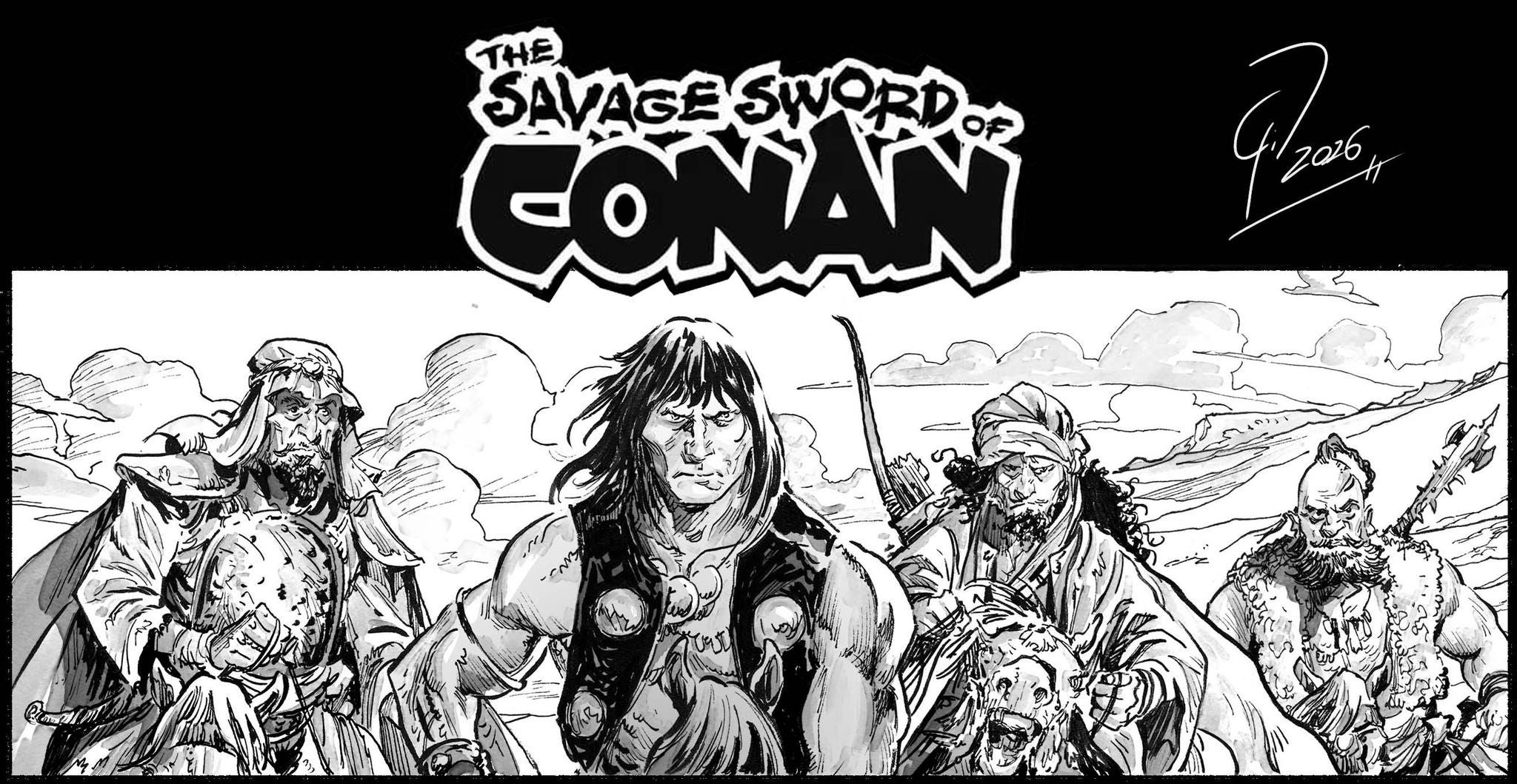
Titan Comics has been doing right by Robert E. Howard since they picked up the Conan license, and issue #14 of their Savage Sword revival is another strong entry in what has become one of the more reliable books on the shelf. Three stories, two comics and one prose piece, all operating in the tradition the original magazine made famous. None of them overreach. All of them deliver.
Worth noting before anything else: the book prints black and white on matte stock. Not quite newsprint, but close enough that the feel is there. Anyone who read the original Savage Sword off a spinner rack will recognize it immediately. This is a deliberate choice, and the right one. The paper does something for the black-and-white linework that glossy stock never could. It absorbs the ink differently, softens the contrast just enough, and gives the whole thing the texture of something that was printed to be read and passed around rather than bagged and boarded. Modern comics have largely abandoned this. Titan brought it back, and the issue is better for it.
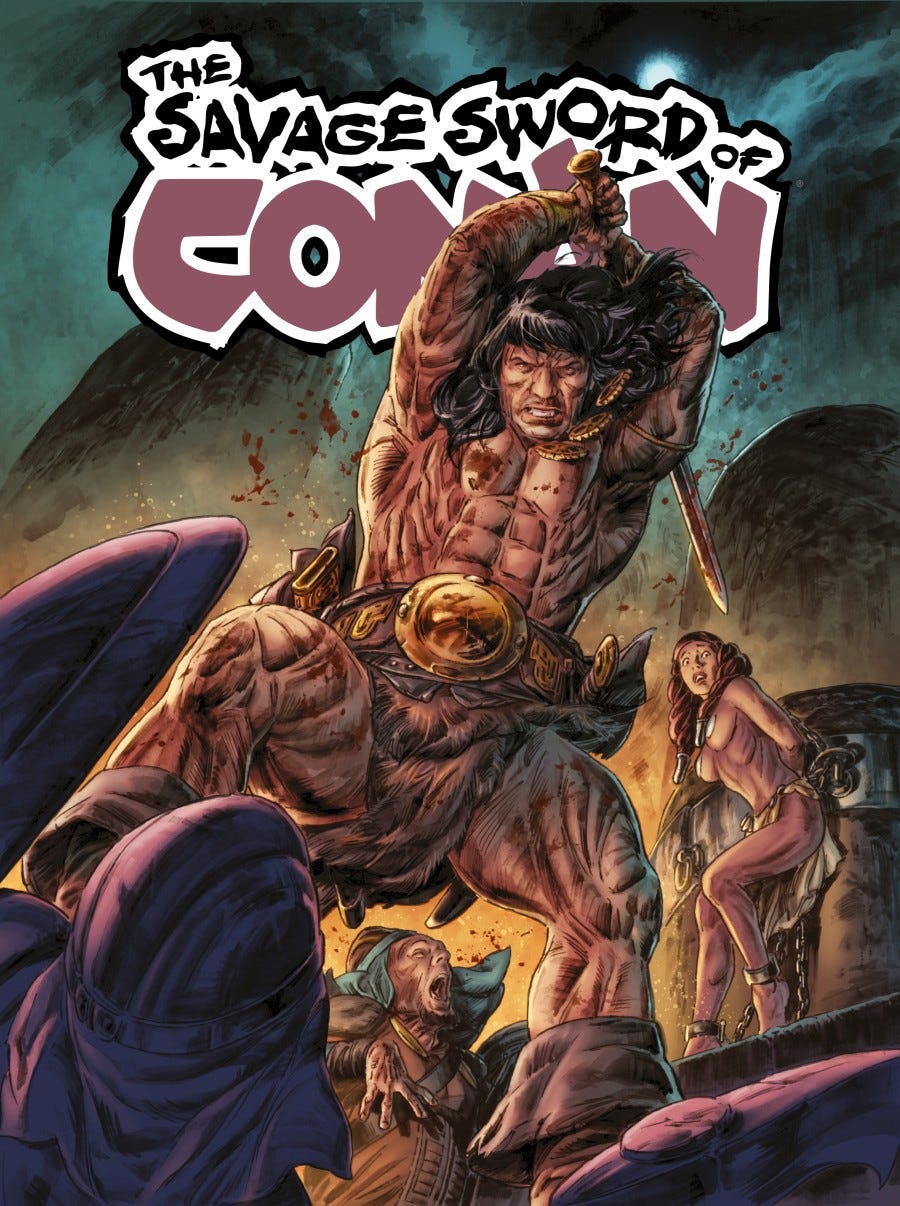
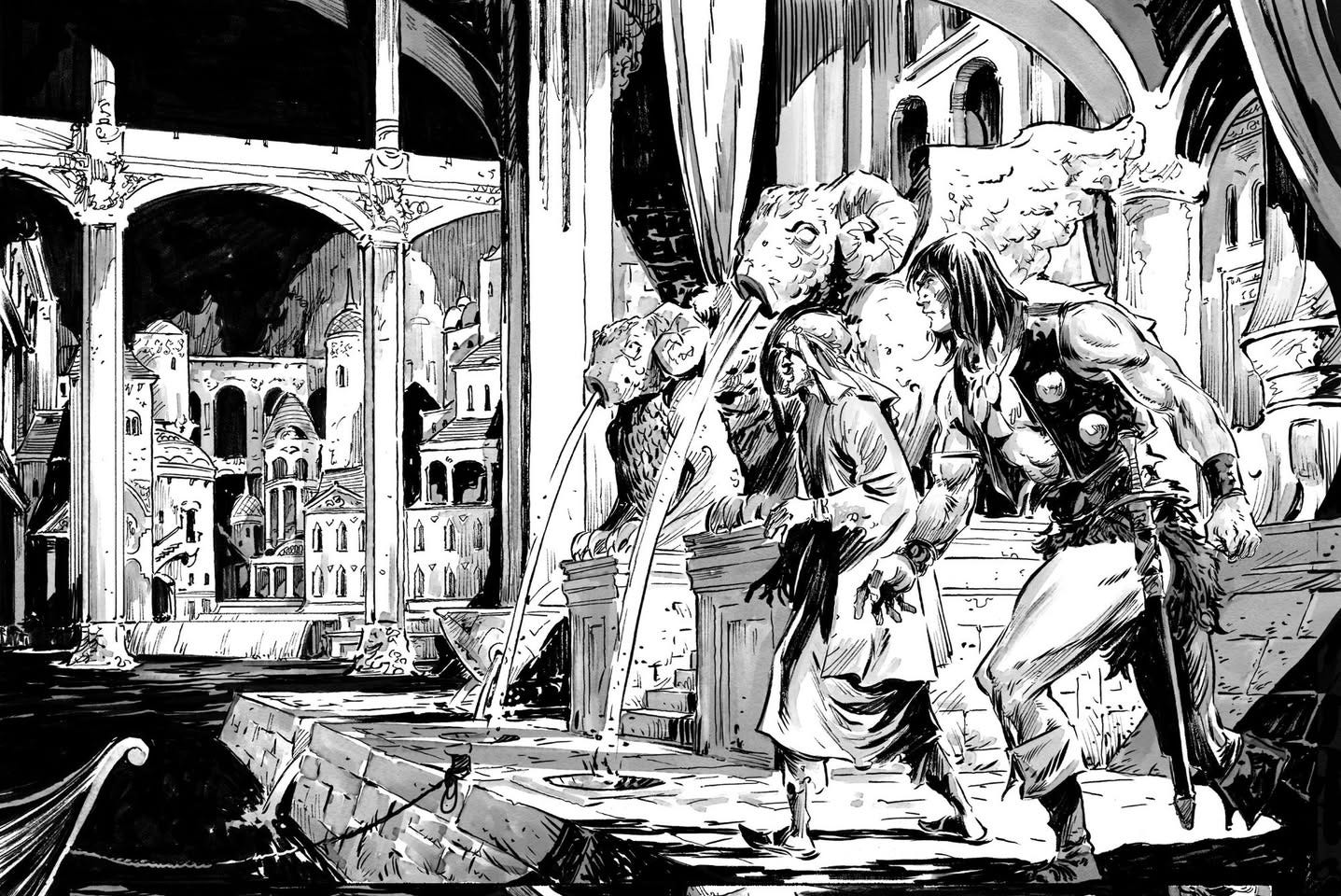
Jim Zub and artist Ivan Gil lead with a blood-and-sand Conan story that hits every beat of the classic pulp formula and hits them well. Conan leads a group of men through the desert. They come across a caravan, goods intact, no bodies, no sign of struggle, just abandoned where it stopped. They follow the footprints. The sand has swallowed something, and they go down into it, descending into an underground city that shouldn’t exist. The city is beautiful. The women who inhabit it are beautiful. They want to please their guests. The formula announces itself early and Zub lets it run. Temptation, the kind Conan never entirely resists and never entirely falls for. Evil operating behind a comfortable face. The women are sirens, predators in a beautiful trap, and getting out requires the kind of daring, bloody escape that the format was built for. Conan and his men get out. They don’t gain anything. They barely keep their lives. Howard wrote this shape dozens of times and it never got old, because the shape isn’t the point. The man moving through it is. Zub understands that. He keeps Conan exactly where he belongs: competent, wary, never quite fooled, never entirely safe.
Ivan Gil’s art is what the issue will be remembered for. The linework channels the classic Savage Sword era without copying it: Buscema’s weight, Alcala’s shadows, the ferocious physicality that made the original magazine’s reputation. Pages that could read as static become kinetic. The matte stock serves Gil’s work well, pulling the blacks deep without the artificial sheen that glossy paper adds. He works the format hard and the format pays him back.
Matthew John’s prose interlude, billed as “a Conan piece of cruel luck,” lands where a good short prose piece should: quick, punchy, tonally flush with the surrounding material. Prose inserts in anthology comics can feel like filler. This one earns its pages and doesn’t break the rhythm of the issue.
Joe Pruett and Goran Sudžuka close with a Bêlit story that takes a more interesting angle than the sword-and-plunder approach most Queen of the Black Coast stories favor. Bêlit finds a temple. Inside it a jewel, and a goddess figure who appears at first to be in control of the encounter. The goddess tries to take possession of Bêlit’s body. She nearly manages it. Bêlit fights back through will alone, breaks the hold, kills the goddess, and walks out of the temple with the jewel and a new congregation worshipping at her feet. It’s a tight story with a clean arc, and Pruett earns the ending. Sudžuka’s art carries a faint modern sheen that sits at a slight distance from what Gil delivers in the lead story. Not a weakness exactly, more a different set of priorities. The main story sets a visual standard the backup doesn’t quite reach. The gap is the issue’s only real friction.
Titan’s Savage Sword revival has held a consistent line: anthology structure, no code restrictions, stories written for adults, artwork in service of the barbaric and the strange. Issue #14 holds that line.
9/10
NEXT: Rippaverse Goes to Retail: The Business Case Behind The Hachette Deal Deserves A Hard Look
If you haven't read Chuck Dixon's two recent Conan novels, you should. I can't recommend them highly enough. Bloody amazing. Chuck captured Conan perfectly.
The Siege of the Black Citadel
Caravan of the Damned
In how many places in the magazine is the CREATOR'S NAME--Robert E. Howard--mentioned? Is it the front before the story, or in the credits in the story? Or is Howard's name only mentioned in a text piece in the back?
I've had two of the Titan Conans--the first issue of their SSoC, and the FCBD comic this year--and BOTH times the ONLY mention of the character's CREATOR is in text pieces in the back (of the bus.)
This crime Titan MUST answer for.