


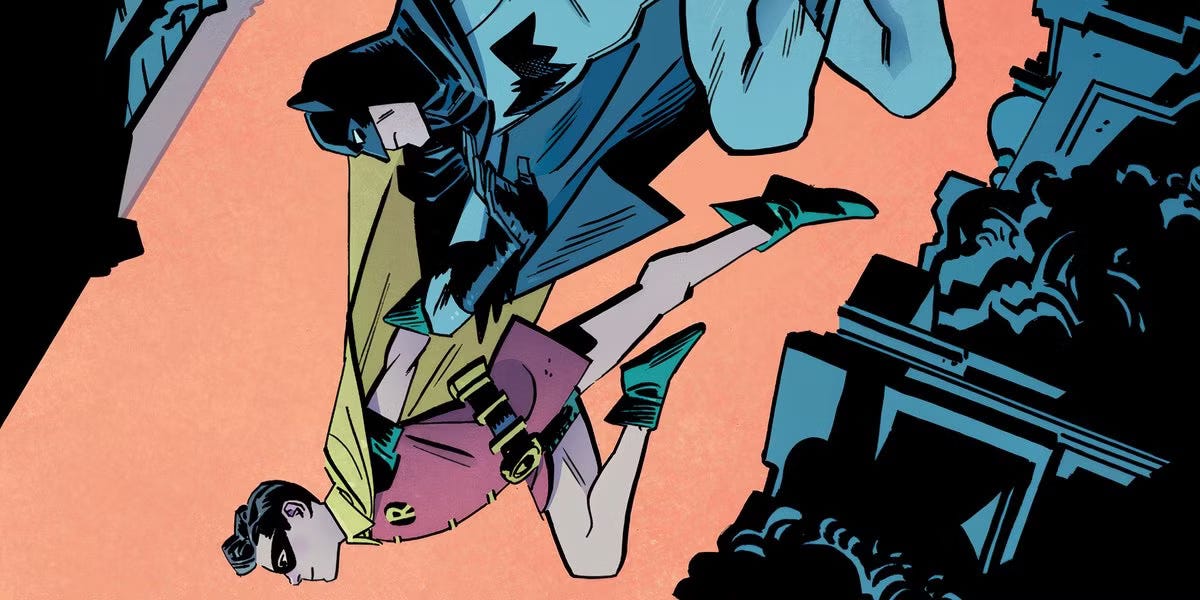
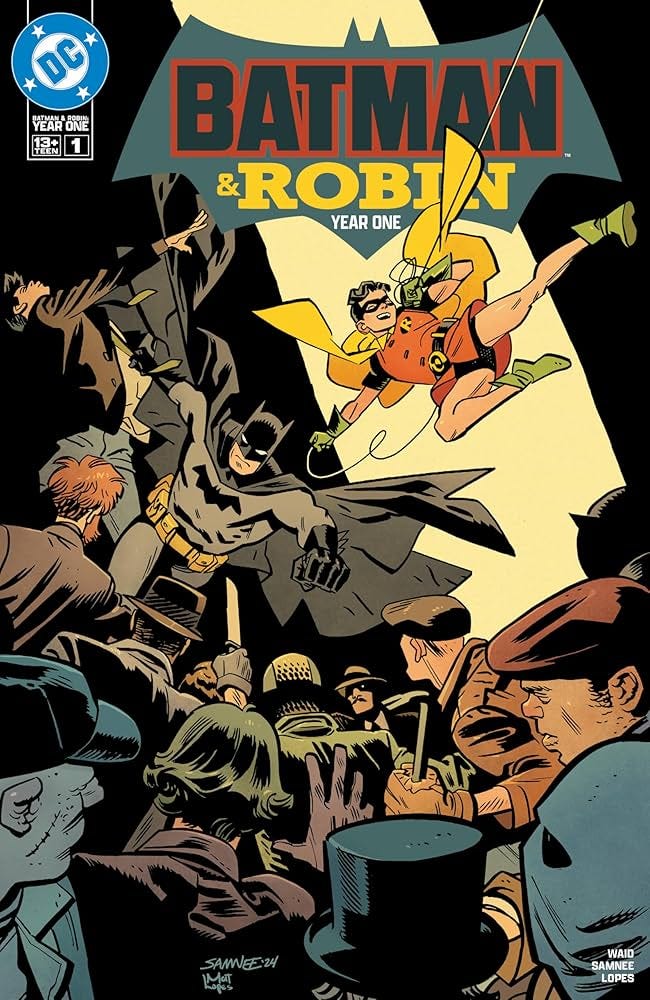
DC Comics keeps returning to Dick Grayson’s origin, and that is not a complaint. Mark Waid and Chris Samnee’s Batman and Robin: Year One ran twelve issues from October 2024 through October 2025, now collected in a single volume. The Dynamic Duo has been rebooted, revisited, and reimagined more times than any publisher could count, so the question isn’t whether this story needed to exist. The question is whether Waid and Samnee did it justice.
The setup is familiar: Bruce Wayne takes in orphaned Dick Grayson, fresh off the loss of his parents at the circus, navigating the tension between a grief-stricken child and a driven, demanding guardian who has never parented anyone in his life. On the criminal side, a new mob figure called the General is dismantling Gotham’s organized crime families, with Two-Face and Clayface woven through the chaos. The mafia framework recalls Jeph Loeb and Tim Sale’s The Long Halloween, and Waid doesn’t pretend otherwise. He plays in the same register: Gotham as a city of competing criminal power structures, Batman threading through them as both detective and force.
The twists with Two-Face and Clayface are solid, and the mystery sustains itself across twelve issues without overstaying its welcome. Where the story loses a step is in the resolution. Like a lot of mafia-arc comics, it resets to baseline. The General’s threat collapses tidily, the status quo reasserts itself, and the book closes without leaving a scar on Gotham or its characters. That’s a feature of the genre more than a failing specific to Waid, but it’s worth noting for readers expecting a permanent shake-up.
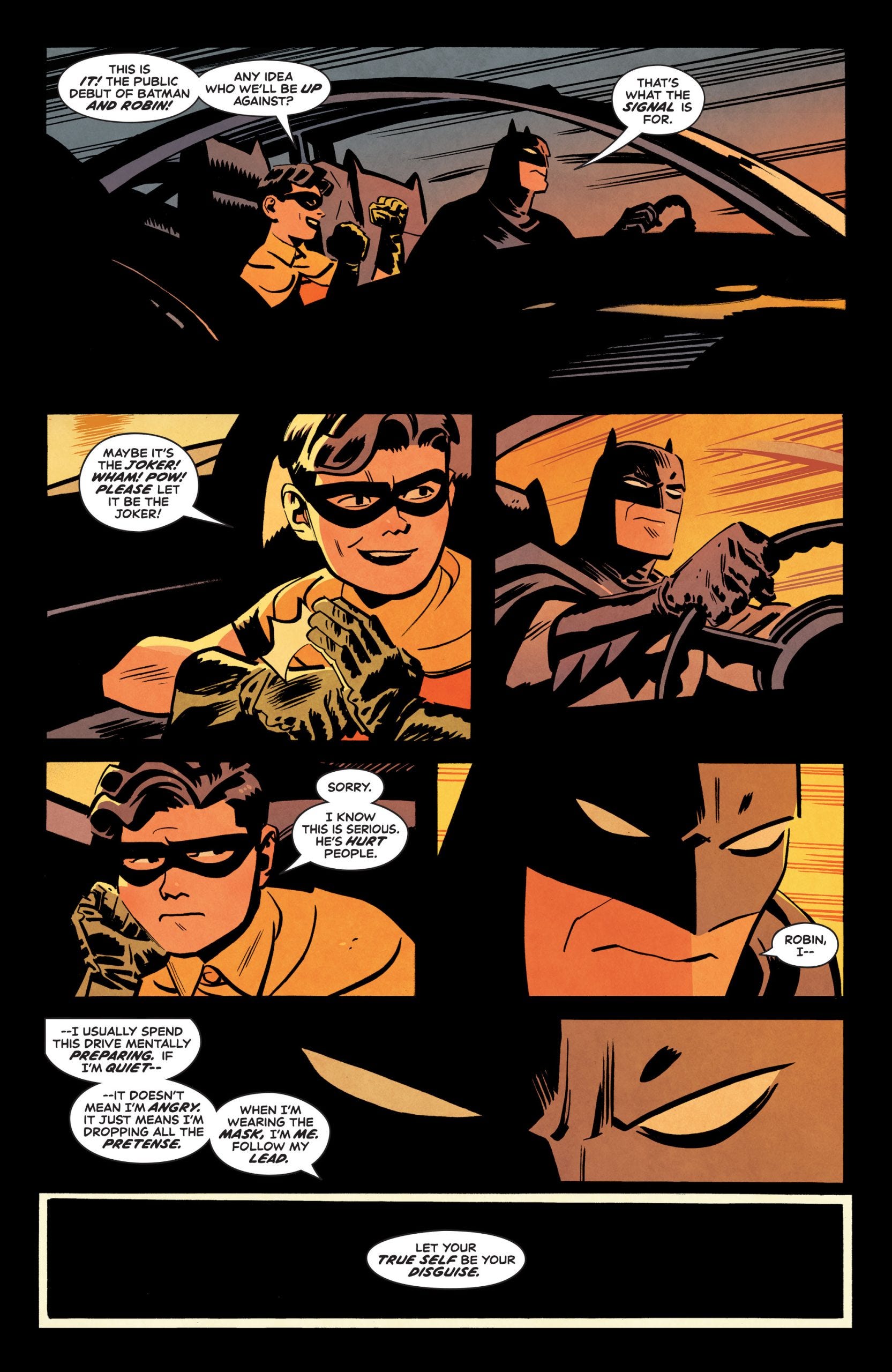
What carries the book is the Dick Grayson subplot. The child welfare angle, where a social worker intervenes and Dick briefly ends up in foster care before Bruce legally secures his guardianship, gives the story its best material. The dynamic between Dick’s instinct to throw himself into danger and Bruce’s measured effort to train that impulse into something disciplined tracks across all twelve issues. That’s real character development, delivered slowly enough to feel earned. Dick Grayson’s arc from reckless grief to controlled partner reads as one of the better training narratives the character has received in decades.
The book also does what DC has mostly failed to do with Dick Grayson: it lingers in this time period instead of sprinting past it. Modern comics rushed him into adulthood, into Nightwing, into team leadership, until the boy wonder years became a footnote. Year One treats that window as the story’s natural home. There’s a warmth here, a nostalgia that isn’t saccharine, that comes from watching two damaged people figure out how to be family to each other. That’s what a “Year One” format should deliver, and Waid gets it right.
Then there’s Samnee. Chris Samnee is working at Alex Toth levels of draftsmanship, and this is some of his finest work to date. His line economy is absolute, but the backgrounds in Gotham, the shadows on the architecture, the blocking in the action sequences, add layers that his Daredevil run with Waid didn’t always have room for. The difference here is colorist Matheus Lopes. Samnee’s prior work leaned into flat, graphic color schemes. Lopes builds depth into the shadows, shifts the palette scene by scene, and amplifies the noir atmosphere without muddying Samnee’s clarity. The combination is the best Samnee has looked on a page.
One thing conspicuously absent from this book is anything that doesn’t belong in a Batman and Robin story. No retrofitted agendas, no subversive reframings of who Bruce or Dick are as characters. Just a clean, confident superhero comic doing what the form does best. That sounds like a low bar in 2025, but given what DC and Marvel have been publishing, it’s actually a relief.
Batman and Robin: Year One isn’t a comic that will get referenced in ten years the way The Long Halloween or the original Batman: Year One gets referenced. It won’t redefine the character or change how readers think about the Dynamic Duo. What it does is deliver a well-constructed, genuinely fun Batman story with art that earns its place among the best the character has seen. That’s enough.
8/10
Is there still room for classic Batman-and-Robin stories in modern comics, or has the market moved past them? Let us know in the comments.
450 pages of classic superhero storytelling that puts character first. The Flying Sparks Omnibus collects the complete saga of Meta-Girl — the kind of cape comic the mainstream forgot how to make. Sign up to get your copy.
NEXT: Dan Buckley Is Out And Marvel Just Handed Its Comics Division to a TV Executive