


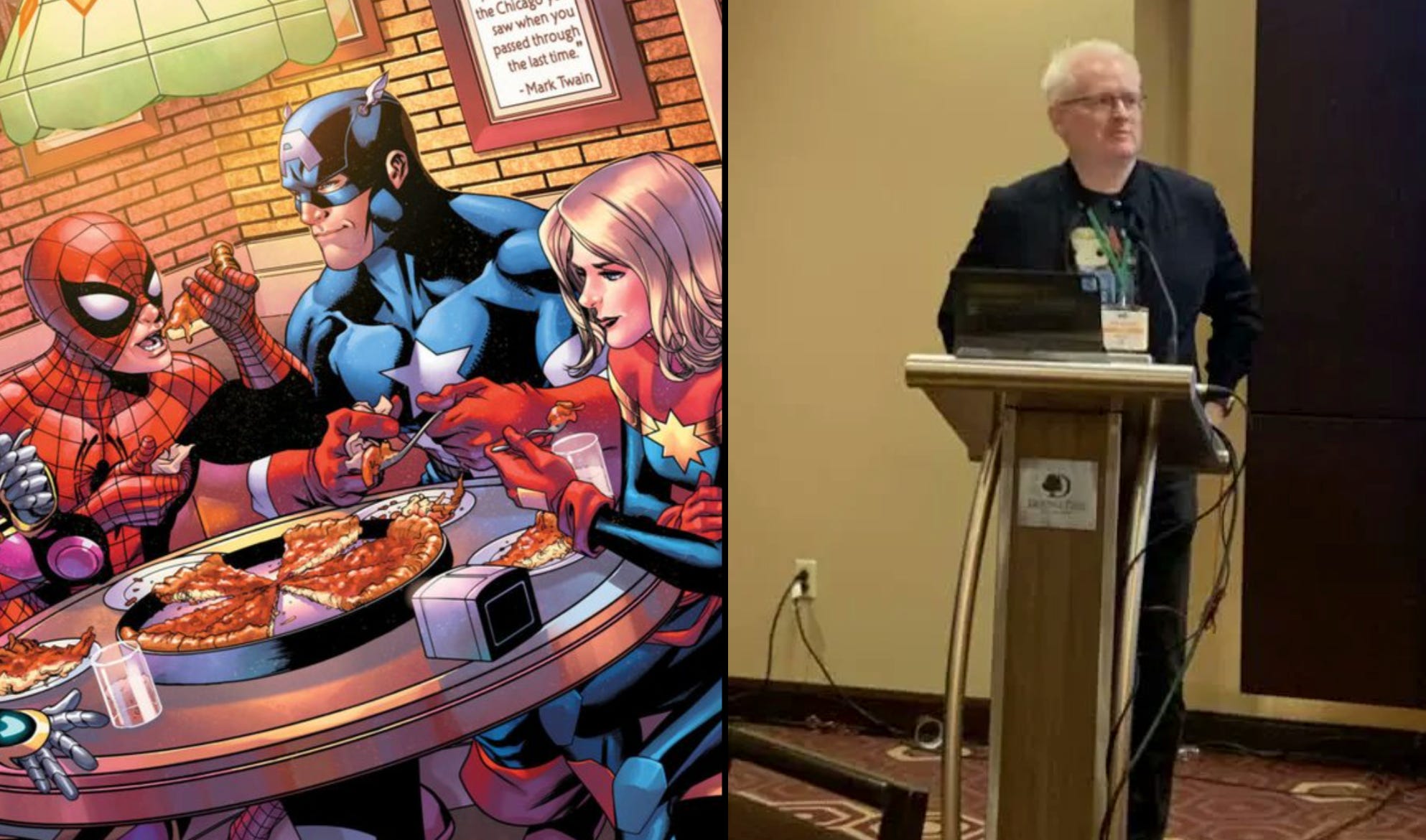
Marvel Comics published its biggest leadership shakeup in decades today. Dan Buckley, who has run Marvel’s publishing operation in various capacities since 2001, is out. Brad Winderbaum, Marvel’s head of television and animation, is taking over as head of Marvel television, animation, comics and franchise. David Abdo, most recently general manager of Disney Music Group, arrives as Marvel’s new general manager of comics and franchise.
Neither Winderbaum nor Abdo has a comics publishing background.
Buckley will stay through mid-2027 to support the transition. Kevin Feige, who added publishing to his portfolio in 2023, put his name on the announcement. “Brad’s exceptional creative leadership and David’s deep experience in operations and digital innovation will be a powerful pairing as we begin building out the next 90 years of Marvel’s comic book legacy,” Feige said.
The announcement arrived the same week Marvel’s Eisner Award nominations were shut out by DC, which dominated the industry’s most prestigious honors following its dominant Q1 2026 market share. DC now holds 34.7% of the direct market. Marvel holds 29.4%, down from 39% eighteen months ago. It is the first time in this century that Marvel has lost its direct market position to DC. The restructuring is Disney’s response to that collapse.
Buckley’s record at Marvel is complicated. He oversaw the publisher during its peak period of cultural dominance, shepherding the direct market through the MCU’s rise when comic sales benefited from film franchise heat. Under his tenure Marvel ran events like Civil War, Secret Invasion, and the Krakoa X-Men era that generated genuine reader excitement and short-term sales spikes. He also presided over the rotating creative team strategy, the endless miniseries model, the price increases, and the ideological content decisions that drove the publisher’s core audience away in measurable numbers. Rob Liefeld called for his removal publicly over a year ago. David Gabriel, Marvel’s SVP of Sales, was let go in April. Now Buckley follows.
Winderbaum’s television track record is the reason Feige picked him. He has been with Marvel since Iron Man and served as executive producer on Hawkeye, Loki Season 2, Agatha: All Along, Daredevil: Born Again, X-Men ‘97, and Your Friendly Neighborhood Spider-Man. His mandate is to bring the comics line into closer alignment with Marvel’s television and streaming output. That integration has been Feige’s stated goal since he took publishing oversight in 2023.
The strategic logic is legible. Marvel’s comics have functioned as an independent creative operation largely disconnected from what the MCU is doing on screen. Feige wants the publishing line to serve franchise development, introduce characters before they appear in film, and create a coherent pipeline between the page and the screen. Winderbaum, who has operated that pipeline from the television side for fifteen years, is the tool for that job.
The risk is equally legible. The comics direct market is not the MCU. It is a specialty retail ecosystem with a specific, historically loyal audience that has been abandoning Marvel in measurable numbers for two years. That audience’s grievances are not about lack of franchise integration. They are about price hikes, cancelled miniseries, ideological content, and the loss of sustained creative runs that build reader attachment. Bringing in a television executive and a Disney Music Group operator to fix a publishing problem assumes the problem is strategic rather than creative. The readers leaving Marvel are not leaving because the comics don’t connect to the films. They are leaving because the comics stopped being worth buying on their own terms.
C.B. Cebulski, Marvel’s editor-in-chief since 2017, will now report to Winderbaum. His position in the new structure is the one to watch. Cebulski has been the public face of Marvel’s creative output through its entire market share collapse. Whether Winderbaum empowers him to correct the publishing strategy or overrides him in favor of franchise integration tells you what the new leadership actually intends.
Abdo’s presence is the most unusual element. The general manager of Disney Music Group has no documented relationship with comics publishing or direct market retail. His mandate appears to be operational and digital, which suggests Marvel is looking at its publishing business as a digital media operation rather than a print-first specialty retailer. That reframe has real consequences for the comic shops that have carried Marvel’s physical product for decades.
Rob Liefeld predicted this restructuring publicly before it happened. He called for Buckley and Gabriel to be removed, both are now gone, and he is currently publishing creator-owned work at Image while Marvel installs television executives in the chairs those men vacated.
Not everyone is accepting the transition framing at face value. Kneon at Clownfish TV put it plainly: “There’s no way Buckley left willingly. They shitcanned him and bought out his contract. And he’s being forced to train his replacements and say nice things if he wants that parachute. IMHO.”
The structure of the announcement supports that reading. Buckley staying through mid-2027 to “support the transition” is the standard corporate language for a forced exit with a payout contingent on cooperation. His statement through Feige’s announcement was warm and institutional. Nobody who leaves a job they built over two decades on their own terms gets described as staying to “support the transition.”
The next 90 years of Marvel’s comic book legacy that Feige referenced in his statement begins with DC holding the top market share position for the first time this century. Winderbaum and Abdo inherit a publisher that has lost nearly 10 points of market share in eighteen months and whose most vocal critics were right about the people they said needed to go.
Does replacing Buckley with a TV executive fix what’s broken at Marvel Comics, or does it confirm that Disney sees publishing as franchise infrastructure rather than an art form worth saving?
450 pages of classic superhero storytelling that puts character first. The Flying Sparks Omnibus collects the complete saga of Meta-Girl — the kind of cape comic the mainstream forgot how to make. Sign up to get your copy.
NEXT: Daredevil Editor Reacts To Being Fired By Disney Marvel
"the next 90 years" marvel comics will be lucky if it lasts the next 2 to 5 years. Good article Jon.
We can look forward to DC winning again next year.