


Castalia Library built its reputation translating Japanese literature into English. Natsume Soseki’s Sanshiro, Botchan, and Kokoro. Six volumes of Eiji Yoshikawa’s scroll cycle. Nine translations into a catalog that has established Castalia as the most serious independent literary translation operation in the English-speaking world.
Their tenth translation is not Japanese. It is Spanish. And it is one of the most overdue introductions in the history of European literature reaching English readers
.
Trafalgar by Benito Pérez Galdós is the first of forty-six novels in the Episodios Nacionales, the vast fictional history of nineteenth-century Spain that Pérez Galdós published across four decades beginning in 1873. Castalia describes the series as “a literary project on the scale of Balzac’s Comédie humaine, and one of the supreme achievements of European realism.” Only eight of the forty-six volumes have ever been translated into English. Thirty-eight novels from one of the supreme achievements of world literature are inaccessible to readers who don’t read Spanish. Castalia is starting to fix that.
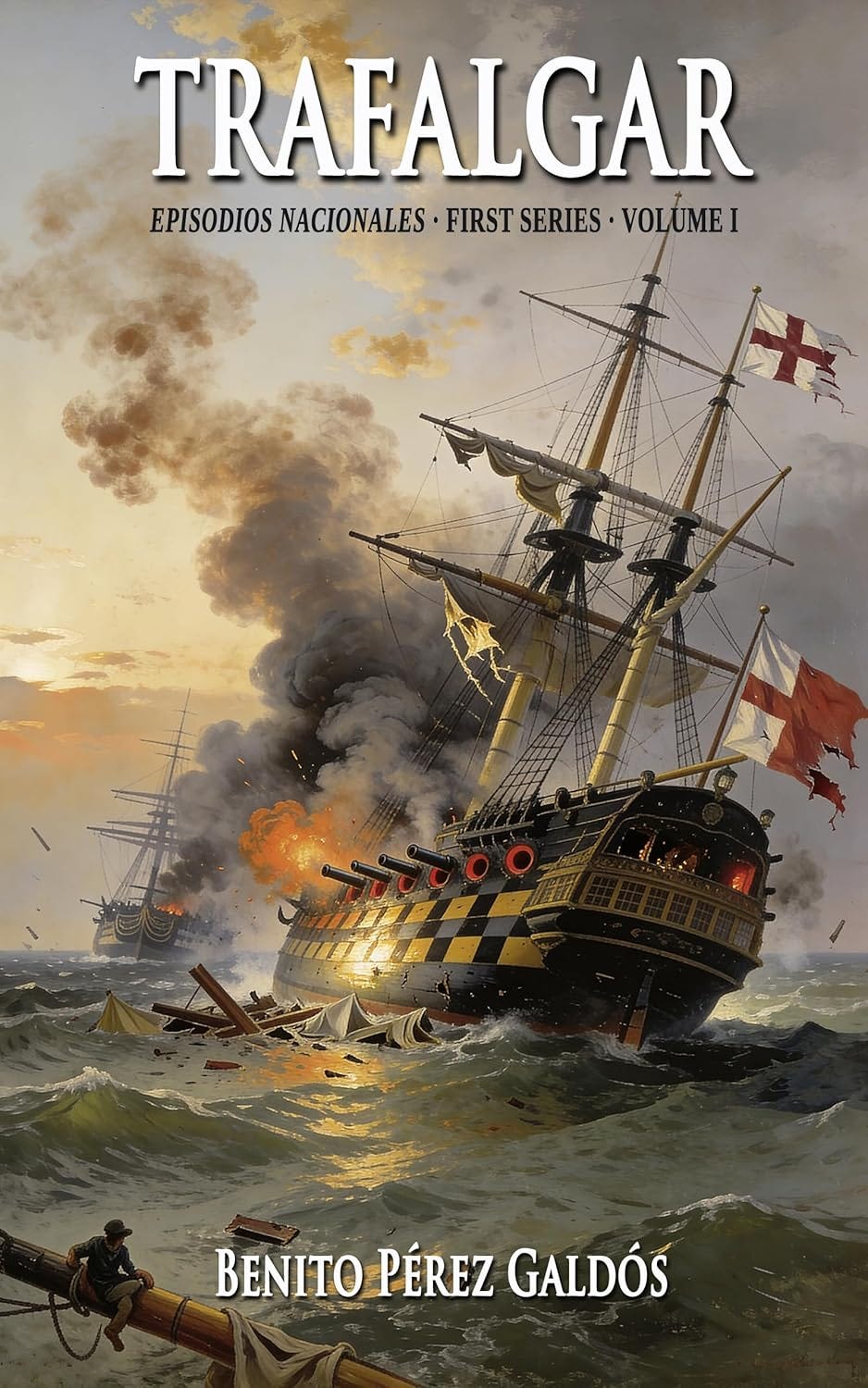
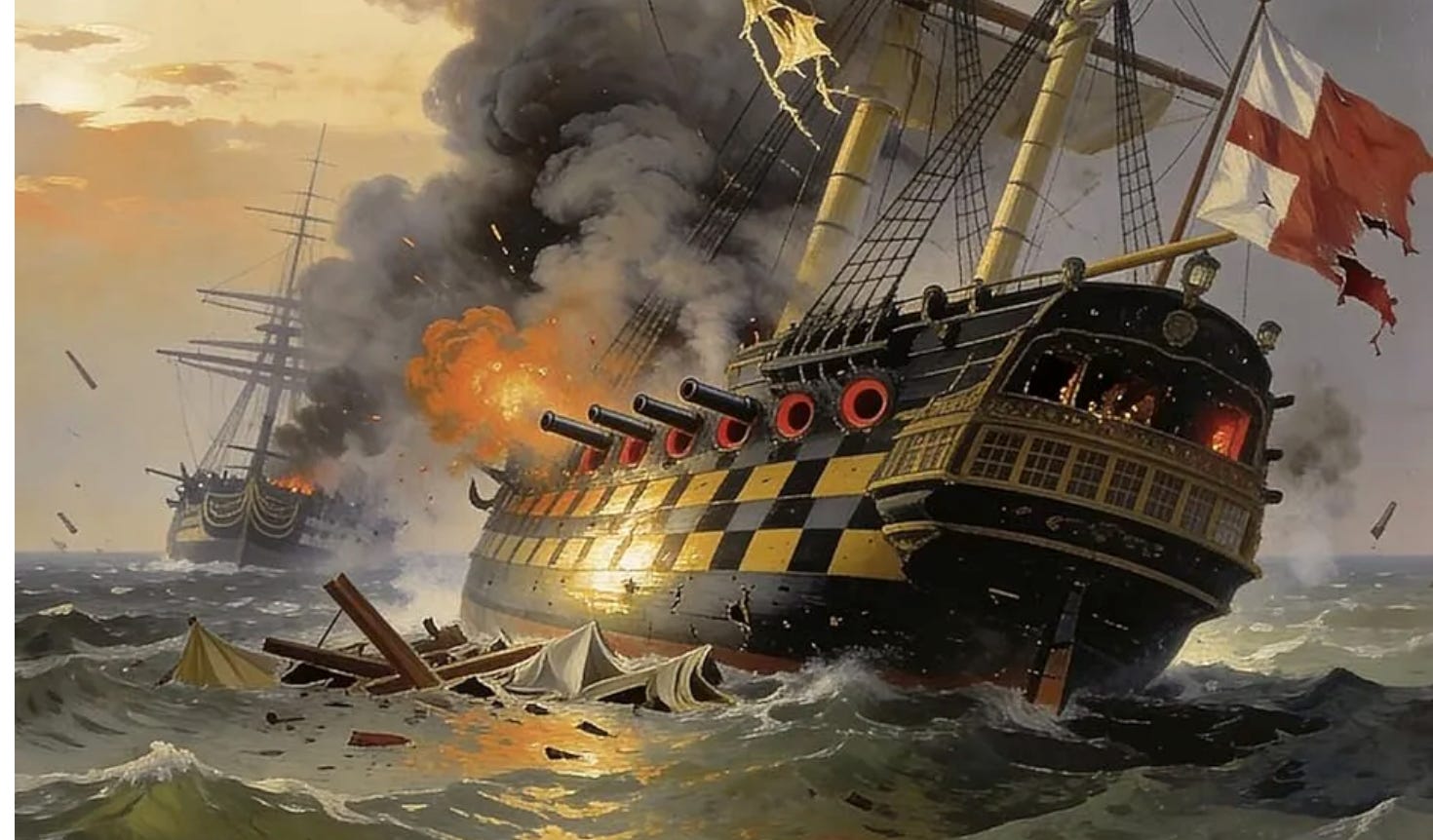
The premise of Trafalgar is this: Gabriel Araceli is fourteen years old, an orphan from the slums of Cádiz, attached to the household of a retired naval officer who slips away from his wife to join the Spanish fleet on the morning of October 21, 1805. Gabriel goes with him. He ends up aboard the Santísima Trinidad, the largest warship in the world, on the day Nelson destroys it.
Castalia frames the book’s appeal directly: “What follows is one of the great battle sequences in European literature: the four-decker as living giant, the sand spread on the planks for the blood, the smoke that swallows the line, the slow agony of a ship that will not surrender and cannot be saved.”
The excerpt published with the announcement establishes the register immediately. Gabriel narrates as an old man looking back at a boyhood in Cádiz’s worst streets. The prose carries the confidence of Pérez Galdós’s authority: unhurried, precise, ironic in exactly the way the greatest 19th-century novelists were ironic. He describes his childhood self and the gang battles at Puerta de Tierra “that stained the ground with heroic blood” with the same dry distance Tolstoy brings to Borodino.
This is Trafalgar as the losing side saw it. Not Hornblower. Not Nelson’s triumph. A Spanish tragedy narrated by the boy who lived it, written by a novelist who tracked down the survivors of the battle seventy years later to get the details right.
Pérez Galdós was nominated for the Nobel Prize in Literature five times. He never won. He is widely described as the greatest Spanish novelist since Cervantes. Most English readers have never heard of him. Castalia is positioning Trafalgar as the entry point for readers who love Patrick O’Brian, C.S. Forester, and Bernard Cornwell and want to see the age of sail from the other side of the line.
The expansion into Spanish literature signals something about what Castalia is building. Their translation subscription has run on Japanese literature since launch. A single pivot to Pérez Galdós announces that the project is broader than a specialty press, that the mission is recovery of major world literature that English publishing has ignored rather than Japanese literature specifically. Forty-five more volumes of the Episodios Nacionales exist. If Castalia follows through, they will have done something no major publisher has attempted in the history of English-language literary translation.
Fandom Pulse reached out to Vox Day asking if they would be translating the entire series, and he told us, “Yes, we are translating the entire 46-volume series.”
Trafalgar is available now on Kindle, Kindle Unlimited, and audiobook. Paid subscribers to the Castalia Library Substack received the ebook on publication day. The Substack is at stack.castalialibrary.com.
Pick it up here: https://amzn.to/3P8oGsR
Have you read Pérez Galdós? If not, is this the kind of translation project that gets you to finally start?
NEXT: How Madeline Miller, Emily Wilson, and Christopher Nolan Killed Homer for a Generation
I love stuff like this. There's so much classic literature out there that no one in the English-speaking west has ever read. It may not all be "good", but it's all quality. People really used to know how to write. Now even conservative minds are letting the AI do it for them, and it shows.
Bailén is my favorite. It’s so tedious and overfull with facts and introspection the text rings like bells in my autistic brain pan. Love it.