


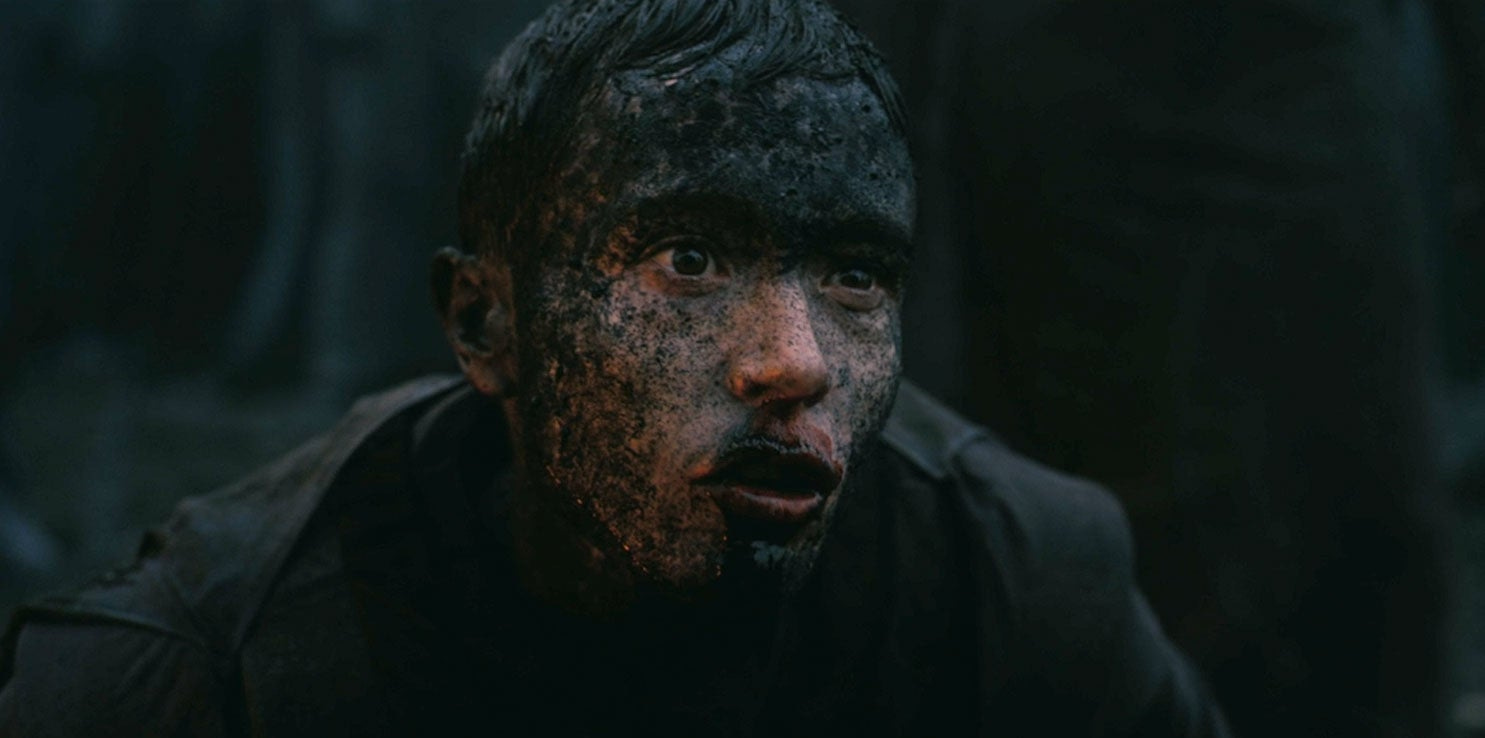
Christopher Nolan’s $250 million Odyssey film, set for July 17, 2026, is the endpoint of a fifteen-year project to overwrite Homer. The trailer dropped May 5 with Robert Pattinson telling Tom Holland, “You’re pining for a daddy you didn’t even know, like some snivelling bastard,” and the gay subtext readings began the same hour.
None of this is an accident. Nolan based the film on Emily Wilson’s 2017 translation. Wilson’s translation grew in the same soil as Madeline Miller’s The Song of Achilles, the 2011 novel that convinced two million readers that Achilles and Patroclus were a canon gay couple.
The Achilles and Patroclus revision is one piece of a larger pattern. Modern publishing has spent two decades strip-mining the Western canon, taking villains, side characters, and minor women, then rebuilding the original story around them with the moral structure inverted. Gregory Maguire did it to The Wizard of Oz. Maleficent did it to Sleeping Beauty. Margaret Atwood did it to Homer. Madeline Miller did it twice. The Nolan film is what happens when Hollywood puts $250 million behind the same template.
Miller Started the Fire
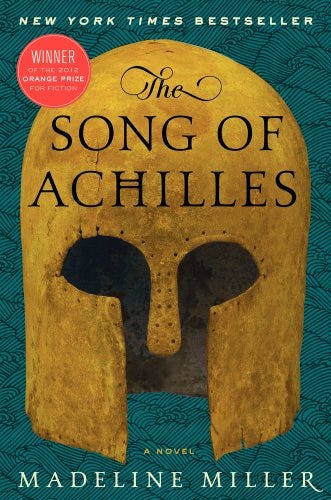
Madeline Miller holds a BA and MA in classics from Brown and studied “adaptation of classical texts to modern forms” at the Yale School of Drama. She knew what Homer wrote. She also knew Homer never depicted Achilles and Patroclus as lovers.
Asked about her decision to make them romantic and sexual partners, including an explicit sex scene set on Achilles’s sixteenth birthday, Miller admitted on her own website: “I stole it from Plato! The idea that Patroclus and Achilles were lovers is quite old. Many Greco-Roman authors read their relationship as a romantic one... We even have a fragment from a lost tragedy of Aeschylus, where Achilles speaks of his and Patroclus’ ‘frequent kisses.’”

Note the citations. Plato wrote roughly four hundred years after the Iliad was composed. Aeschylus wrote three centuries after Homer. Miller did not steal it from Homer because Homer never wrote it. She borrowed from later Greek authors who were projecting their own pederastic customs backward onto a Bronze Age epic, then sold the projection as the real story.
The Song of Achilles won the Orange Prize in 2012, sold modestly for a decade, then exploded on BookTok in 2020. A “books that will make you sob” video by @moongirlreads racked up six million views. By April 2021 the book hit number one on the New York Times paperback fiction list, ten years after publication. By July 2022 Miller had moved two million copies. The #songofachilles hashtag passed nineteen million views on TikTok. Her follow-up Circe, which reframes Homer’s witch as a #MeToo victim and Odysseus as the villain, debuted at number one and is being adapted by HBO Max.
The displacement effect was immediate. Kent State’s Burr Magazine put it plainly: “Although the original myth doesn’t explicitly depict a romantic relationship between Achilles and Patroclus, many people see the subtext... Miller, on the other hand, does clearly depict a romantic relationship.”
For an entire generation, the gay reading is the canonical reading because Miller’s book is the only version they have read.
What Homer Wrote
Homer never describes a sexual or romantic relationship between Achilles and Patroclus. They share a tent. Each has his own captive woman beside him. Their bond is philia, the deepest comradeship between warriors, and the engine of the poem’s tragic grief.
The earliest surviving ancient Greek commentary on the question, in Xenophon’s Symposium from the fourth century BC, attributes to Socrates a direct rejection of the romantic reading: “Homer pictures us Achilles looking upon Patroclus not as the object of his passion but as a comrade, and in this spirit signally avenging his death.”
Plato and Aeschylus disagreed with each other about which man was the older lover, which only proves the Athenians of the Classical period were guessing four centuries after the fact, projecting their own customs onto a culture they no longer understood. Modern scholars have followed Homer rather than the Athenian gossip. The editor of the standard Loeb edition states that “Homer in the Iliad never suggested that they had sex with each other.”
Emily Wilson’s “Cis-Gendered Feminist” Homer

Emily Wilson published her Odyssey translation in 2017 and her Iliad in 2023. She has described herself in interviews as a “cis-gendered feminist” and frames her work as a corrective to “centuries of masculinist readings of the poem.”
Her translation introduces “tote bag,” “canapés,” “kebabs,” “scalawag,” and “hobo” into Homer. She calls Demeter “cornrowed” and Achilles a “superhero.”
NPR’s Annalisa Quinn praised the project for “basically a progressive one: to scrape away all the centuries of verbal and ideological buildup, the Christianizing (Homer predates Christianity), the nostalgia, the added sexism.” Read that quote twice. The thing to be scraped away includes “the Christianizing.” Two thousand years of Augustine, Aquinas, Dante, and the entire Catholic intellectual project that received and transmitted the classics, dismissed as buildup to be removed.
On Achilles and Patroclus, Wilson admitted in a LitHub conversation with Madeline Miller that “the Iliad doesn’t have anything explicit, or even implicit, about our heroes having sex.” She then said she made sure to “convey the profound intimacy and love” through her introduction and notes anyway. The text would not cooperate, so she added the framing around it.
Spencer Klavan dismantled both translations in the Claremont Review of Books: “Wilson’s version saps the marrow and vigor from the words. Wilson’s Iliad is so deflated that it’s hard to tell what Homer’s characters are fighting for. This is heroic verse without the heroism.”
Valerie Stivers in Compact Magazine was sharper: “Wilson does lay waste to the Iliad... since her version is likely to be championed by leading cultural institutions for years to come, her distortions are a tragedy.”
The Pattern, Everywhere
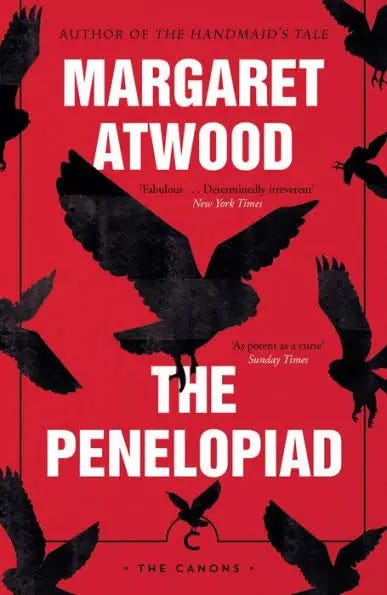
Margaret Atwood’s The Penelopiad in 2005 ran the same play on the Odyssey from the other end. Atwood retold the poem from Penelope’s perspective and recast the twelve hanged maids as victims of a patriarchal coup. The maids’ chorus delivers a speech arguing that “our rape and subsequent hanging represent the overthrow of a matrilineal moon-cult by an incoming group of usurping patriarchal father-god-worshipping barbarians.” Atwood denies the book is feminist. The book argues that Odysseus is the villain.
Gregory Maguire did the same to Baum’s Wizard of Oz in 1995, turning the Wicked Witch into a misunderstood political dissident persecuted by a fascist regime. The Broadway musical and the 2024 film grossed over $700 million.
Angelina Jolie’s Maleficent in 2014 took Disney’s Sleeping Beauty and rebuilt the villain as a sexual assault survivor. Jolie told BBC Radio 4’s Woman’s Hour: “We were very conscious, the writer and I, that [the scene in question] was a metaphor for rape.”
The webcomic Lore Olympus has 1.1 billion views and rewrites the abduction of Persephone so Hades refuses to abduct her and the rape plot is reassigned to Apollo. Hadestown won eight Tony Awards in 2019 retelling Orpheus and Eurydice as a climate-change parable. Jean Rhys started the genre in 1966 with Wide Sargasso Sea, recasting Jane Eyre‘s madwoman as a colonial victim and Rochester as a racist patriarch. Pat Barker’s The Silence of the Girls gave Briseis her own Iliad in 2018, with Achilles as her rapist captor. Jennifer Saint, Natalie Haynes, and Costanza Casati have flooded the market with the same product since 2019.
The template is fixed. Take a canonical text. Find the villain, the woman, the slave, the queer-coded character. Retell from their perspective. Invert the moral structure. Sell it to a generation that has not read the original and will not.
The Nolan Endpoint
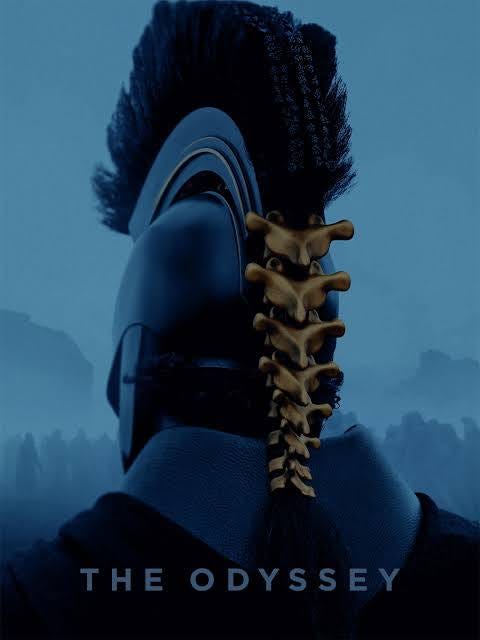
Nolan’s film is the template scaled to $250 million and IMAX. He chose Wilson’s translation as his basis. Matt Damon prepared by reading Wilson. The trailer’s “pining for a daddy” line is precisely the kind of Miller-coded innuendo a 2026 audience trained on BookTok will read as confirmation that Antinous and Telemachus are lovers.
Lupita Nyong’o is widely reported to be playing Helen of Troy, prompting Elon Musk to tweet that Nolan has “lost his integrity.” The Laestrygonians wear medieval plate. The British cast speaks in American accents. Agamemnon’s helmet looks like a Warhammer prop. Greeks charge as a mob rather than a phalanx.
Augustine and Aquinas read the pagans and received them. They added Christian commentary above an inherited text without overwriting it. Dante put Virgil at his side through Hell as a guide. The Catholic intellectual tradition treated the classical inheritance as something handed down to be preserved and built upon.
The modern revisionist project does the opposite. It overwrites the original, sells the overwrite as the real thing, and trusts that nobody will go back to check.
Homer survived 2,800 years without help from a Brown classics graduate, a Yale feminist translator, or a British director who wanted his Bronze Age heroes to sound like Los Angeles teenagers. He may not survive the next twenty.
Is Christopher Nolan’s Odyssey the final blow that turns Homer into a footnote behind Miller, Wilson, and Atwood, or do you think the original poem still has the strength to outlast the revisionists? Leave a comment and let us know.
Epic Fantasy hasn’t been this hard-hitting since Tolkien. In a world where humanity is akin to a Roman legion, a great darkness arises. Read A Throne Of Bones today.
Brilliant article. Even before you mentioned "Sargasso Sea" I remembered how in college, as an English major, I had that awful book shoved down my throat not once, but twice. At the time, I knew it was trash, but couldn't articulate why. This article clarifies that beautifully. All we can do is hope the audience will finally wise up and stay away from this garbage in droves.
Saint Basil the Great, Archbishop of Caesaria in Capadoccia, urged the young Christians to read and study Homer. And now some arrogant women believe that they know better. Delusional.