


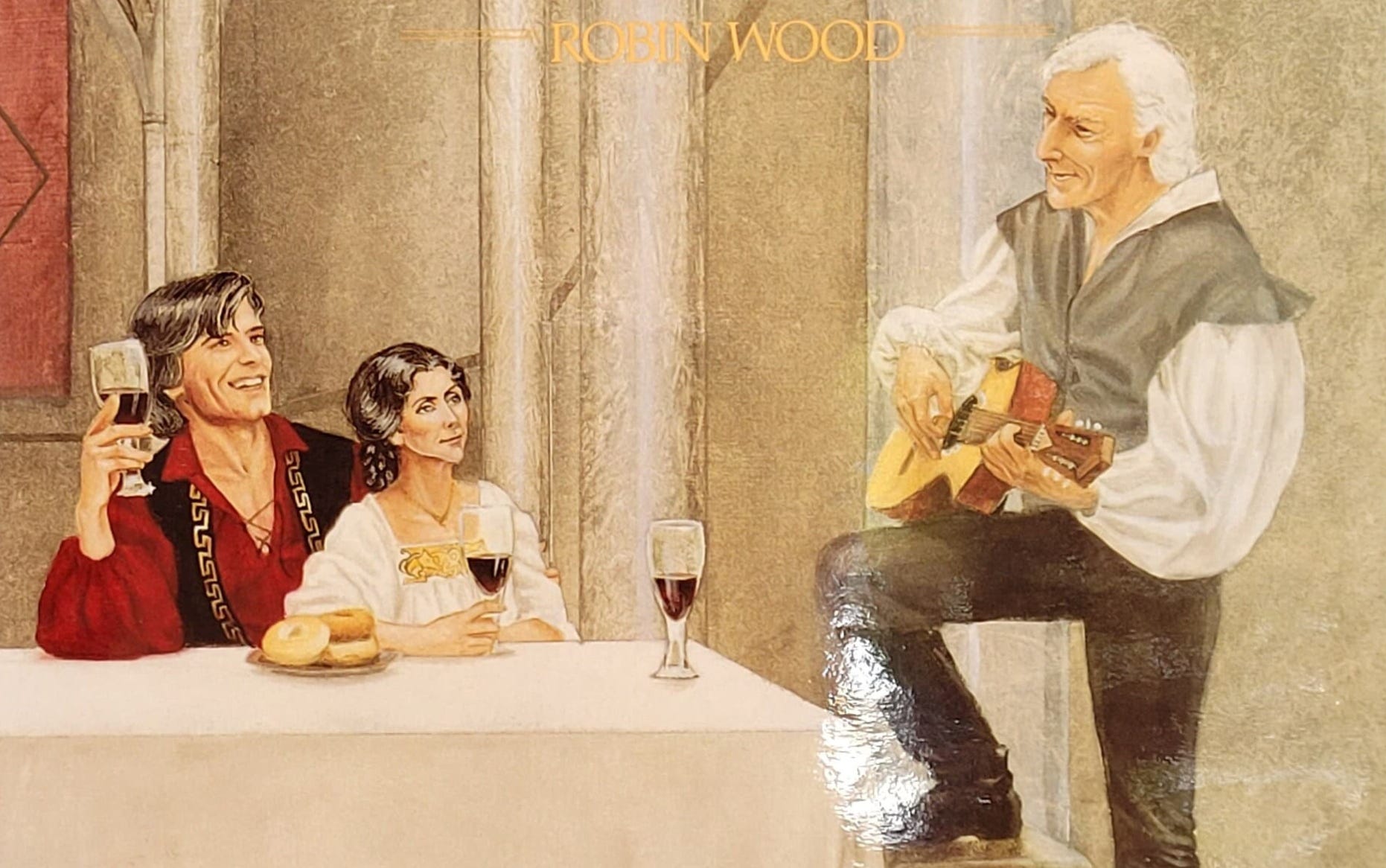
Anne McCaffrey built her dragon-color system decades before Vox Day gave a name to the taxonomy of the sociosexual hierarchy it accidentally dramatizes. Bronze riders compete directly for command. Brown riders hold the middle as competent seconds. Blue riders make up the ordinary mass of the fighting wings. Green riders carry a coding McCaffrey herself built in from the start, one she never fully walked back. None of this was designed as social theory. It was designed as worldbuilding. But worldbuilding this granular, sustained across two dozen novels and half a century of revision, ends up mapping status behavior with more precision than most writers manage on purpose.
The SSH framework sorts men by status-seeking strategy: Alpha, Beta, Delta, Gamma, Omega, and the later addition, Sigma. It’s explicit that rank is situational. A man can hold Beta status in one group and Alpha status in another, depending on which hierarchy he’s standing inside at the time. That qualifier turns out to matter enormously once you start running Pern’s cast through the grid, because several of the series’ most interesting characters only make sense once you ask which room they’re in.
The Dragon as Caste Assignment
The mapping is obvious for anyone who’s read Pern:
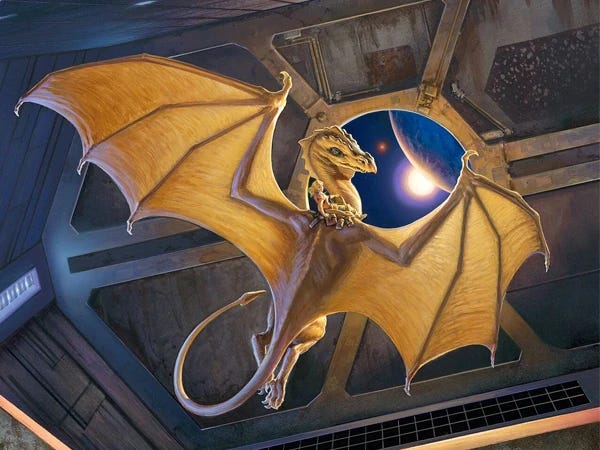
Bronze = Alpha. A bronze rider’s authority isn’t inherited or appointed. It’s won in the sky, when his dragon catches the senior queen in a mating flight and he becomes Weyrleader by direct contest. Lose the flight, lose the position, sometimes lose it to a rival within the hour. There’s no hierarchy in fiction that runs closer to Vox Day’s Alpha model on its own terms: dominance established by winning a contest that everyone in the group watches happen.
Brown = Beta. Brown riders are the wingleaders, the seconds, the men who make a Weyr function day to day without ever contesting a queen flight themselves. They’re competent, loyal, and largely uninterested in unseating the bronze riders above them. Sebell fits this same shape on the Craft Hall side of the world: he spends the entire span of the books as Robinton’s trusted second, and when he finally becomes Masterharper it’s by consensus and demonstrated skill, never by displacing his predecessor through contest. That’s Beta succession in its purest form.
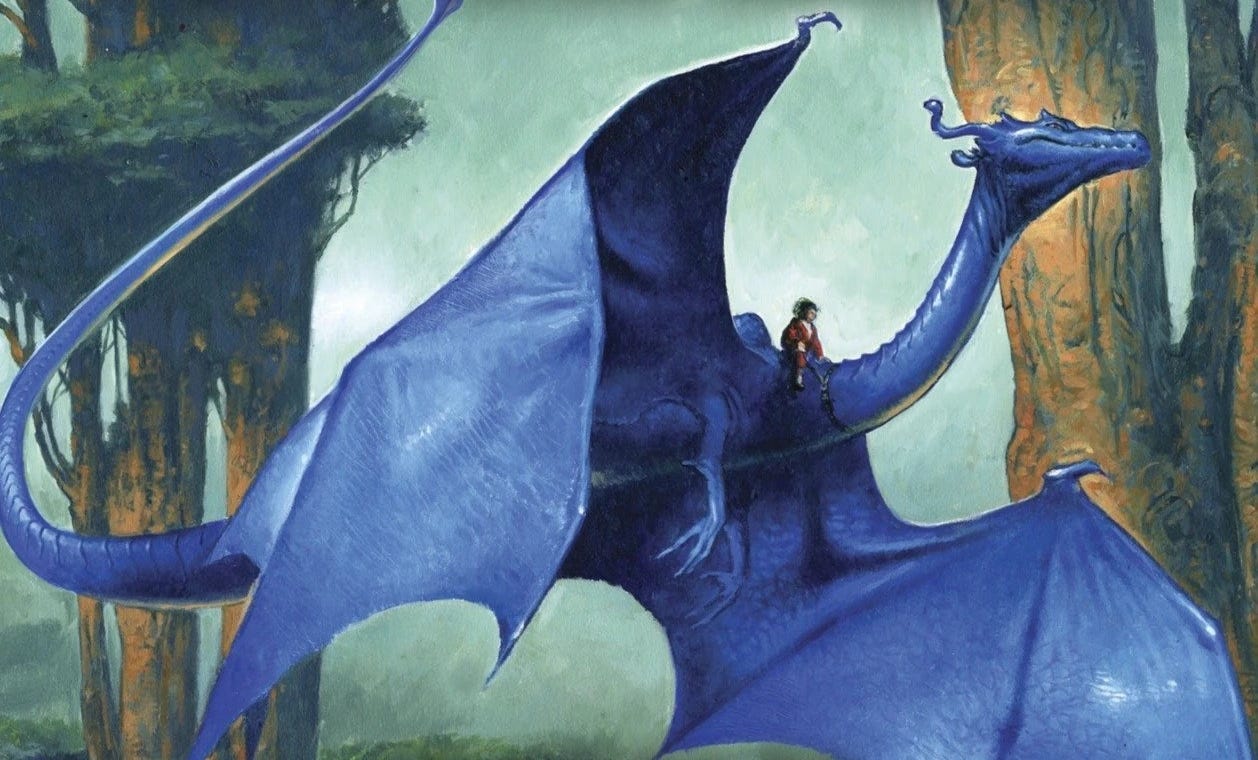
Blue = Delta. The bulk of every fighting wing. Ordinary, competent, unremarkable, mostly indifferent to the status games playing out above them. Delta is the largest category in Vox Day’s system for a reason: most people, in any hierarchy, aren’t fighting for the top or resentful about the bottom. They’re just there, doing the job.
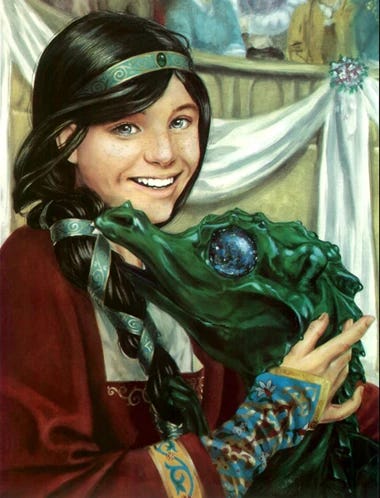
Golds and Greens don’t get listed because they’re female dragons. The golds are obviously the most sought after on Pern, while the greens are everyone else. It gets interesting looking at male green riders who are effeminate or homosexual coded in a lot of the Pern series, which would make the male green riders the Lambda in the system, because of their pairing with the female other half influencing their psychology.
As such, there are no clean innate gamma dragons divided by color, so we have to look at the behavior of specific riders to ascertain how those fit in.
Gamma: Where Rank and Psychology Split
The most useful discovery in mapping this system isn’t the clean cases. It’s the characters who hold Alpha rank by dragon color and Gamma psychology by behavior, because the split between the two reveals what the taxonomy is actually measuring. It was never about position. It’s about how a man responds when his position is threatened.
T’ron, the old-timer Fort Weyrleader, feels usurped by F’lar and his prowess. He starts as one of the more sympathetic figures in Dragonflight, a friendly, capable bronze rider who helps talk his fellow Weyrleaders into the leap of faith the plot demands. By Dragonquest he’s unrecognizable: suspicious, obstructionist, bullying the holders under his authority and rejecting F’lar’s reforms less because they’re wrong than because F’lar is the one proposing them. When it becomes clear the other Weyrleaders will eventually force him to answer for his failures, he doesn’t step down and he doesn’t out-compete F’lar within the system that made him Weyrleader in the first place. He challenges him to a duel and tries to kill him, calculating that removing F’lar removes the entire threat to his authority in one stroke. That’s a bronze rider, structurally Alpha by every metric the Weyr recognizes, choosing the exact move associated with Gamma: unable to win the legitimate contest, so he tries to cheat the board instead and feels the entitlement. F’lar will note multiple times that the old timers ride smaller dragons and can’t catch the queens as well as the modern ones. It creates a seething, entitled caste.
T’kul, the weyrleader of High Reaches, runs the same pattern further into ruin. He neglects Threadfalls until his own dragon complains. He’s implied to let his riders terrorize the holders under his protection rather than protect them. When he’s finally forced out of High Reaches, his last act as Weyrleader is fouling the Weyr’s own water source on his way out the door, a piece of pure spite that costs him nothing and helps him even less. His death completes the arc: he forces his elderly, dying dragon into one final mating flight he knows will kill it, purely so the shock and grief will let him get close enough to F’lar to try, one more time, to knife him. He never once tries to beat F’lar within the rules. Every move he makes is designed to cheat past a contest he’s already lost.
Meron of Nabol is the same psychology running on the Hold side, and arguably a more direct case, because he never holds legitimate rank at all. He was Fax’s steward, not his heir, and claimed Nabol only because Fax died before anyone could stop him. This hits the secret king archetype almost perfectly. Everything that follows is petty extraction dressed up as lordship: forcing his own holders to buy fuel they could otherwise gather for free, trading secretly with the exiled Oldtimers while considering his own trading partners too foolish to notice they’re being cheated. His death scene is the sharpest image in the whole comparison. Dying and refusing an heir by his own choice, his final act as Lord Holder is withholding the one thing that would keep Nabol stable after he’s gone, purely so the Hold suffers for a while without him in it.
Fax: The Alpha Standard the Gammas Can't Meet
Set the villainous Fax next to T’ron, T’kul, and Meron, and the difference stops being subtle. Fax never schemes his way around a fight he can’t win. He starts one hold and takes six more by direct conquest, marching an army from High Reaches to Crom to Nabol and finally Ruatha, killing the lords who stand in front of him and marrying into the families who don’t. Men follow him because men follow winners, and Fax wins every contest he enters, right up until the day he doesn’t. When F’lar finally faces him, it’s a straight duel under the Pernese code of formal combat, not an ambush, not a rigged fight, not a knife pulled after the terms were already agreed. Fax loses and dies on the spot, and there’s no Secret King spin on the way out. No righteous cover story, no last spiteful act to punish the world for outlasting him. He simply meets a better man and goes down in front of everyone. That’s what makes him worth the space in this chapter. He’s the Alpha the other three villains keep failing to be: someone who takes what he wants by being genuinely stronger, and who accepts a real contest even when it kills him, which is precisely the one thing T’ron, T’kul, and Meron could never bring themselves to do.
The irony is worth sitting with. The one man on Pern who plays the dominance game straight is brought down not by a stronger rival inside that same game, but by Lessa, working an entirely different game he never saw coming and couldn’t have out-fought if he had.
Omega: The Difference Between Losing and Being Cast Out
Gamma is resentment. Omega is something colder: total removal from the game, not by choice and not by a contest lost, but by a hierarchy that no longer has a slot for you at all.
Giron, the villain from The Renegades of Pern, is the main Omega in the series. He was a blue rider before his dragon died, an event that ends a rider’s eligibility for the Weyr permanently. No dragon means no re-entry, ever, into the one hierarchy he’d spent his life inside. The death leaves him with a head injury severe enough to damage his memory and his emotional stability, and he spends years afterward dependent on Thella’s protection, unable to function as anything resembling a competitor in any status economy. McCaffrey doesn’t write him with contempt the way she writes Meron or T’kul. He’s not bitter. He’s simply gone from the game, which is the harder and sadder version of Omega than the internet usually pictures.
Sigma: Three Different Roads to the Same Exemption
Sigma is exemption from the contest rather than defeat within it, and Pern offers three separate routes into that exemption, each worth distinguishing on its own terms.
Jaxom is Sigma by birthright. Ruth is a white dragon, the only one on Pern, too small by the normal rules to be a proper fighting dragon and never eligible for a queen flight in the way bronze and brown riders compete. Jaxom is Lord Holder of Ruatha by blood and a dragonrider by Impression, fitting neither role the way anyone else does, and the entire arc of The White Dragon is built around a young man discovering that his exemption from every category is itself his defining trait. It’s worth being honest in the manuscript that this same book contains one of the ugliest scenes in the series: Jaxom’s treatment of Corana, a holder girl he uses first as cover for his illicit dragon training and then pressures into sex against her visible resistance, a scene the narrative rationalizes through Ruth rather than confronting directly. Sigma exemption from status competition doesn’t make a character virtuous. It just means he isn’t playing the same game as everyone around him, for better and, here, for considerably worse.
Piemur reaches Sigma by circumstance rather than birth. He’s Robinton’s best boy soprano, excelling inside a very specific and very temporary hierarchy, until his voice breaks and ends that track overnight. Rather than get folded into a lesser slot within the normal Harper ladder, he goes sideways: spy work, solo missions into hostile Holds, increasingly independent operations that don’t answer to any single authority in the Weyr, Hold, or Craft systems. He never re-enters a status competition after losing the one he was winning. He builds a role that doesn’t compete on anyone else’s terms, which is a different and more circumstantial route to the same place Jaxom starts from at birth.
Jayge Lilcamp opts out before the story even needs him to. Trader clans live by choice outside the entire Hold and Weyr status economy, preferring the road to the safety and obligations of a hold. Jayge never competes for status inside a system he was never part of, and when the story eventually rewards him with a hold of his own in the south, it’s not a prize won inside the old hierarchy. It’s a new hierarchy he builds from outside the existing one, the natural endpoint for a character who was Sigma by upbringing rather than by exception or accident.
Robinton: The Character Who Proves Rank Is Situational
Robinton is Alpha and Sigma both, depending entirely on which room he’s standing in, and that split is the best illustration in the entire series to show status is relative to the group you’re inside, not a fixed trait stapled to the person.
Inside the Harper Hall, Robinton is unambiguous Alpha. Masterharper is the apex of a Craft hierarchy that runs on skill, composition, and earned trust rather than direct physical contest, but it is still a hierarchy, and he sits at the top of it by demonstrated mastery rather than by exemption from the competition. Nobody mistakes him for an outsider in his own Hall.
Step him into a Weyrleaders’ conclave or a gathering of Lord Holders and the picture flips completely. He holds no rank inside either system, and while respected, is definitely the outsider. He was never a candidate for Weyrleader and never stood to inherit a Hold. And yet he’s arguably the single most influential man in every room he enters, trusted by F’lar, trusted by the Lord Holders, moving information and leverage between two hierarchies that have no formal claim on him at all. That’s not Alpha behavior. It’s Sigma positioning: enormous informal influence purchased by standing entirely outside the specific status game everyone else in the room is playing.
The value of Robinton for this chapter isn’t that he breaks the taxonomy. It’s that he confirms the part of Vox Day’s own framework that’s easiest to flatten into a fixed five-letter grid: the same man can occupy two different tiers depending on which hierarchy is currently in the room with him.
The Renegades: A Blocked Alpha and the Company She Keeps
The sociosexual taxonomy is explicitly built around male status competition, and Thella as a female villain doesn’t fit inside it the way T’ron or Meron do. But her arc performs the identical psychological beat closely enough that leaving her out of this analysis would be a mistake.
Thella is Lord Tarathel’s firstborn child, older than her half-brother Larad by eleven months, and by every measure except her sex she has the stronger claim to Telgar. Larad inherits instead, because Pern’s Hold succession runs through sons. Thella doesn’t accept exclusion quietly. She refuses the marriage arranged to settle her out of the way, escapes with maps and supplies stolen from her own family, and over the following years builds a second, illegitimate hierarchy entirely her own: a renegade band she commands with the same authority a Lord Holder commands a hold, self-styled as Lady Holdless, answerable to nobody. She was never Delta and never resigned to a low rung. She was positioned to win a legitimate contest and disqualified from entering it on a technicality of birth, and what she builds afterward is Gamma’s exact shape: resentment at illegitimate exclusion, channeled into a destructive parallel structure rather than acceptance of the one that shut her out. The taxonomy doesn’t have a category name for her because it wasn’t built with her in mind, but the underlying mechanism, blocked ascension curdling into resentment and an alternative bid for dominance, is the same mechanism driving T’ron and T’kul. McCaffrey wrote the pattern accurately whether or not the vocabulary existed yet to name it.
It’s worth noting who ends up inside Thella’s band alongside her. Giron, the fallen Omega, finds shelter there because a renegade hierarchy is one of the only places left that will take a man the Weyr has permanently discarded. Jayge, by contrast, brushes against Thella’s world without ever joining it, moving through as Sigma even in the one setting built entirely from status wreckage. A renegade band, on this reading, is what accumulates at the bottom of a status system: the blocked Alpha who refuses to accept exclusion, the Omega with nowhere else to go, and whoever else the legitimate hierarchies discarded on the way.
What Pern Confirms About the Taxonomy
McCaffrey built at least three separate status economies into Pern, each running on different rules: the Weyr’s direct dominance contest, the Hold’s inherited succession, and the Craft Hall’s earned trust and skill. She populated every one of them with characters whose behavior maps cleanly onto the sociosexual categories, decades before that vocabulary existed to describe what she’d built. It presents real evidence, from the subconscious mind of a female writer, the underlying behavior it’s naming, how people respond to winning, losing, or being excluded from a status contest, is old enough and consistent enough that a science fiction writer working in the 1960s reconstructed it from instinct alone.
You can read more about the SSH in Vox Day’s Sigma Game:

NEXT: The AI Witch Hunt Just Claimed a $2.4 Million Publishing Deal