



Baen Books built its name by doing what the rest of traditional publishing refused to do: publish military science fiction, hard sci-fi, and unapologetically entertaining genre fiction without a political litmus test. For over four decades, authors like David Weber, John Ringo, and Larry Correia found a home there that didn’t exist anywhere else in New York publishing. Readers showed up in massive numbers. The imprint meant something.
That era is ending.
The Market Moved. Baen Didn’t.
The rise of Kindle Unlimited changed the economics of science fiction publishing, and Baen never adjusted. Military sci-fi, once the company’s bread and butter, became the backbone of the indie publishing revolution. Richard Fox’s Ember War series is the clearest example: Fox built a massive Amazon audience independently, then tried traditional publishing. Those books underperformed. The reason isn’t complicated. Traditional publishers price digital content too high to compete in a flat-subscription ecosystem. When a book sits outside KU at a premium price, that readership doesn’t show up. The royalty math makes it worse for any author who already knows what direct sales can earn.
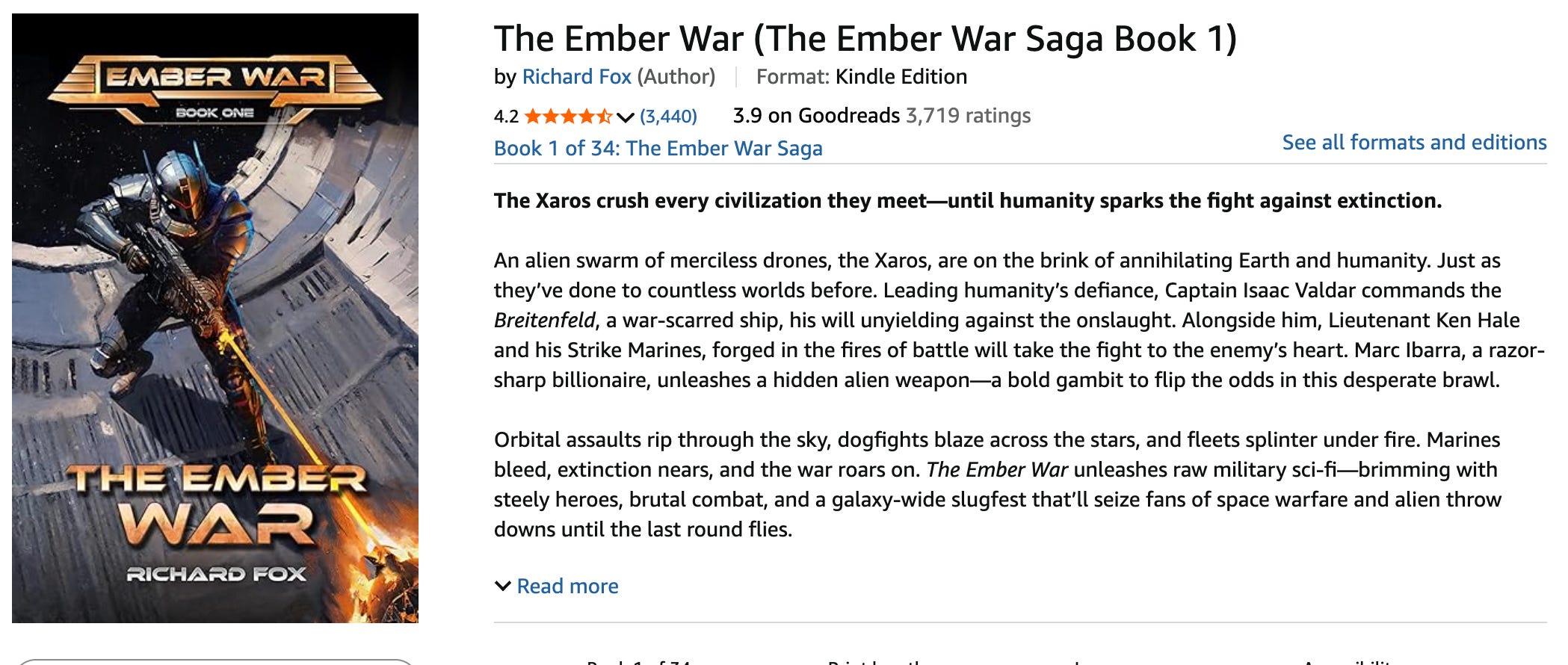

An entire generation of military sci-fi writers built careers and audiences with no help from Baen. The publisher that invented the genre’s biggest names watched the next wave bypass them entirely.
A Roster With No Succession Plan
Correia, Weber, and Ringo remain Baen’s biggest draws. Correia is already building elsewhere. Weber is nearing retirement age. Ringo won’t be far behind. These are authors whose careers were built over decades. No comparable new talent is generating those numbers under the Baen imprint now, and the indie market makes it structurally hard to recruit the writers who could.
Thiel Read the Room
In early 2026, Fandom Pulse reported that Peter Thiel’s investment group made an offer to buy Baen outright. Editor-in-Chief Toni Weisskopf declined. Thiel didn’t need her permission. He founded Ark Press, installed former Baen editor Tony Daniel as editor-in-chief, brought in Baen author D.J. Butler as the public face, and signed Larry Correia to write a new modern fantasy series. That series had reportedly been pitched to Baen first. Baen passed.
Correia jumping to a competing imprint is not a footnote. When a publisher’s flagship author starts building a new home somewhere else, that’s a signal about confidence, and the signal here isn’t subtle.
Three Numbers That Tell the Story
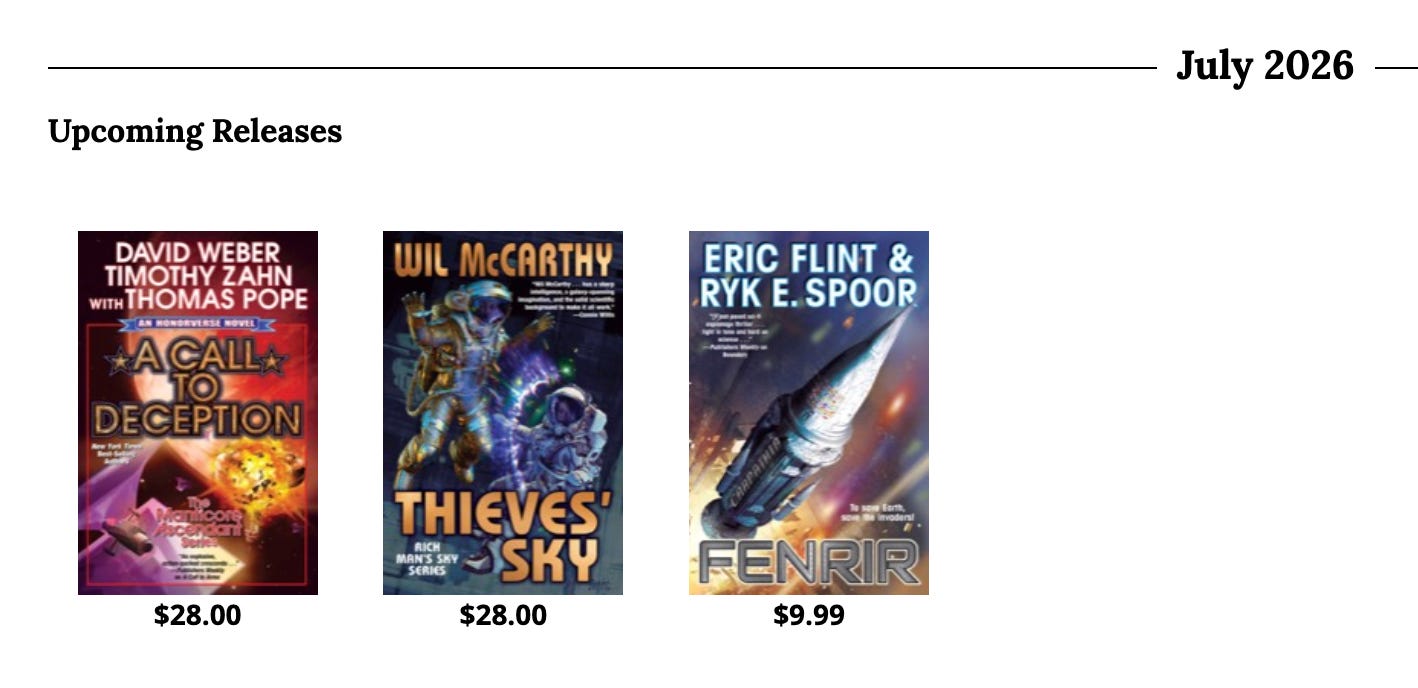
Baen historically published around six books per month. That cadence kept the imprint visible and kept authors on release schedules that built audience momentum. Looking at the 2026 publishing calendar, several months show five titles. Future months show four. Some show three. That’s not a seasonal slowdown. That’s a company contracting.
The Baen Roadshow is winding down. For over a decade, Baen ran promotional appearances at conventions across the country, direct engagement with the core readership that built generational loyalty. Marscon and Ravencon, both longtime Roadshow stops with runs of ten or more consecutive years, are off the schedule in 2026. Conventions that counted on Baen’s presence no longer have it.
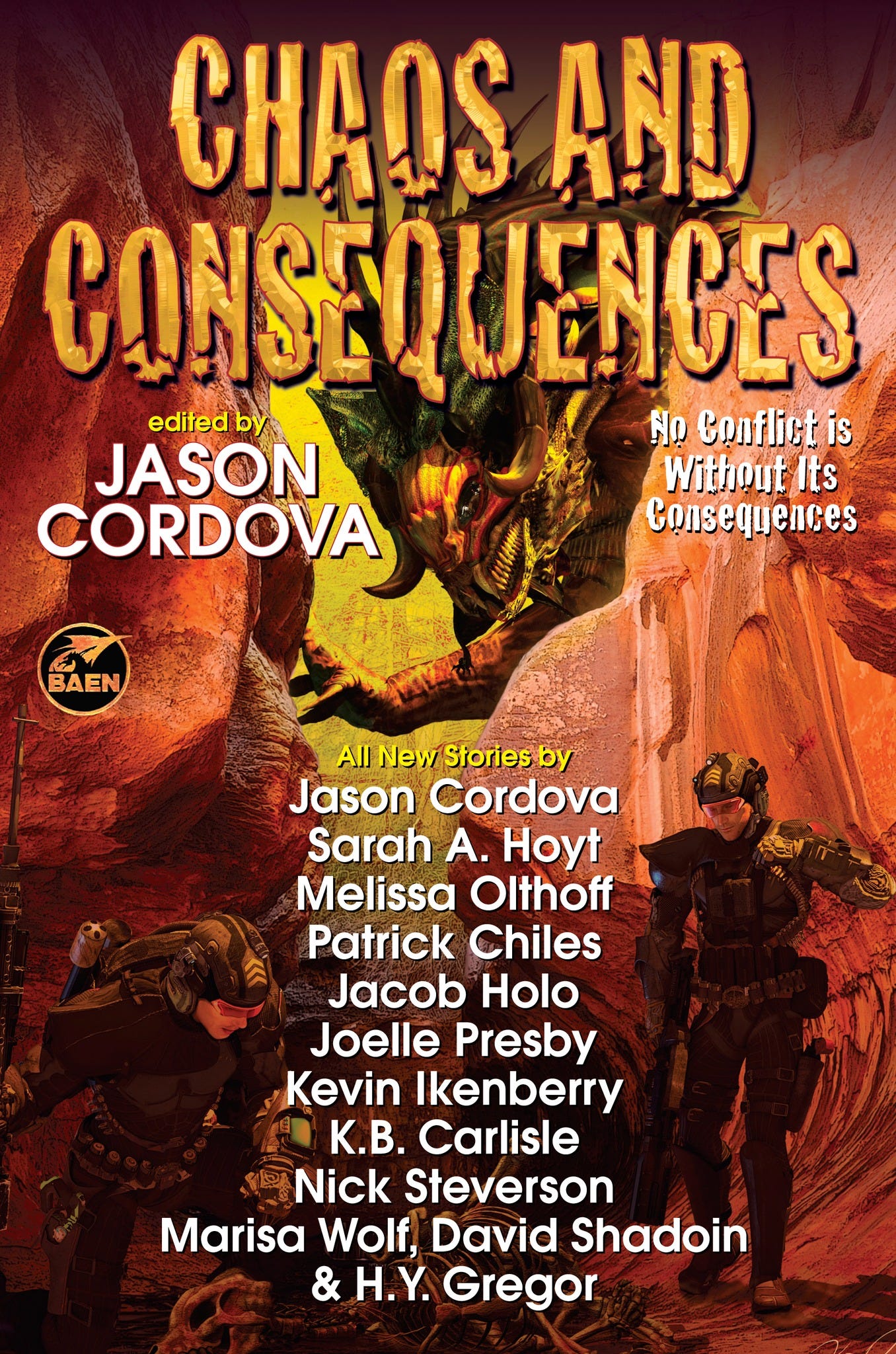
Then there’s Jason Cordova. Cordova recently announced on Facebook that his upcoming anthology, Chaos and Consequences, due from Baen in November 2026, will be his fourth “and probably final” in an ominous warning. Short fiction anthologies have been a cornerstone of Baen’s identity for decades, a deliberate pipeline for developing new voices. Cordova’s public reasoning was that anthology editing is “for people with patience and understanding” and that he lacks both. That’s a polite exit statement. The harder reading: a man who did this three times and committed to a fourth doesn’t walk away casually. The anthologies aren’t selling. The economics don’t justify continuing. Cordova is reading the same writing on the wall as everyone else.
What Baen Represented and What’s Left
Baen was a counterweight to an industry that grew ideologically narrow. That mattered practically, not just symbolically. Authors who didn’t fit New York’s approved politics could still reach an audience. Readers who wanted entertainment over messaging had a publisher that served them.
Good intentions and a strong backlist don’t override market forces. Baen compounded structural problems with an apparent unwillingness to modernize its digital pricing, adapt to subscription reading, or develop new talent at the rate the business required. The audience Baen served didn’t disappear. They went to Amazon, to indie authors, to Kindle Unlimited. Baen wasn’t there when they arrived.
Now the best authors are aging out, output is shrinking, the promotional infrastructure is being dismantled, and a well-funded competitor is actively recruiting what remains. Fandom Pulse reached out to Baen for comment. They have not responded.
What do you think about the future of Baen Books? Let us know in the comments.
When genetic engineering nearly doomed the species, humanity made a desperate bargain: let the frontier do what nature intended. In a harsh universe, these cadets have to make impossible decisions. Read Space Fleet Academy today.

NEXT: Space Fleet Academy Year 3 Marks A Milestone As Series Surpasses Starfleet Academy
Give even more power to the Amazon almost-monopoly? No, thanks, I refuse to use KU or to buy from there. Especially now that they removed the possibility to download them from the website, and are about to discontinue Kindle for PC as well, if an ebook is not available somewhere else it doesn't exist for me.
Especially for non-mainstream authors, depending exclusively on Amazon is extremely dangerous. They are slowly getting worse when it comes to censorship too, The Camp of the Saints was recently banned and only restored after a huge backlash. Not everyone can be that lucky, and I'm sure that if Vauban Books hadn't had the possibility to sell through other websites (and immediately shared them on X) they would have kept it removed anyway.
For that reason having single authors and publishers like Baen selling their books directly from their platforms (and/or on as many others as they can) is extremely important, and I will keep supporting them as much as possible.
So what’s the alternative? Kindle Unlimited? Getting a few cents per reader?
KU may work for the really big names who can turn a few hundred thousand readers into an income roughly on par with delivering Uber Eats.
But for everyone else it’s a scam. KU is the literary analogue to the 19th century sweatshop. Writers get a few cents while Amazon reaps the profits.