


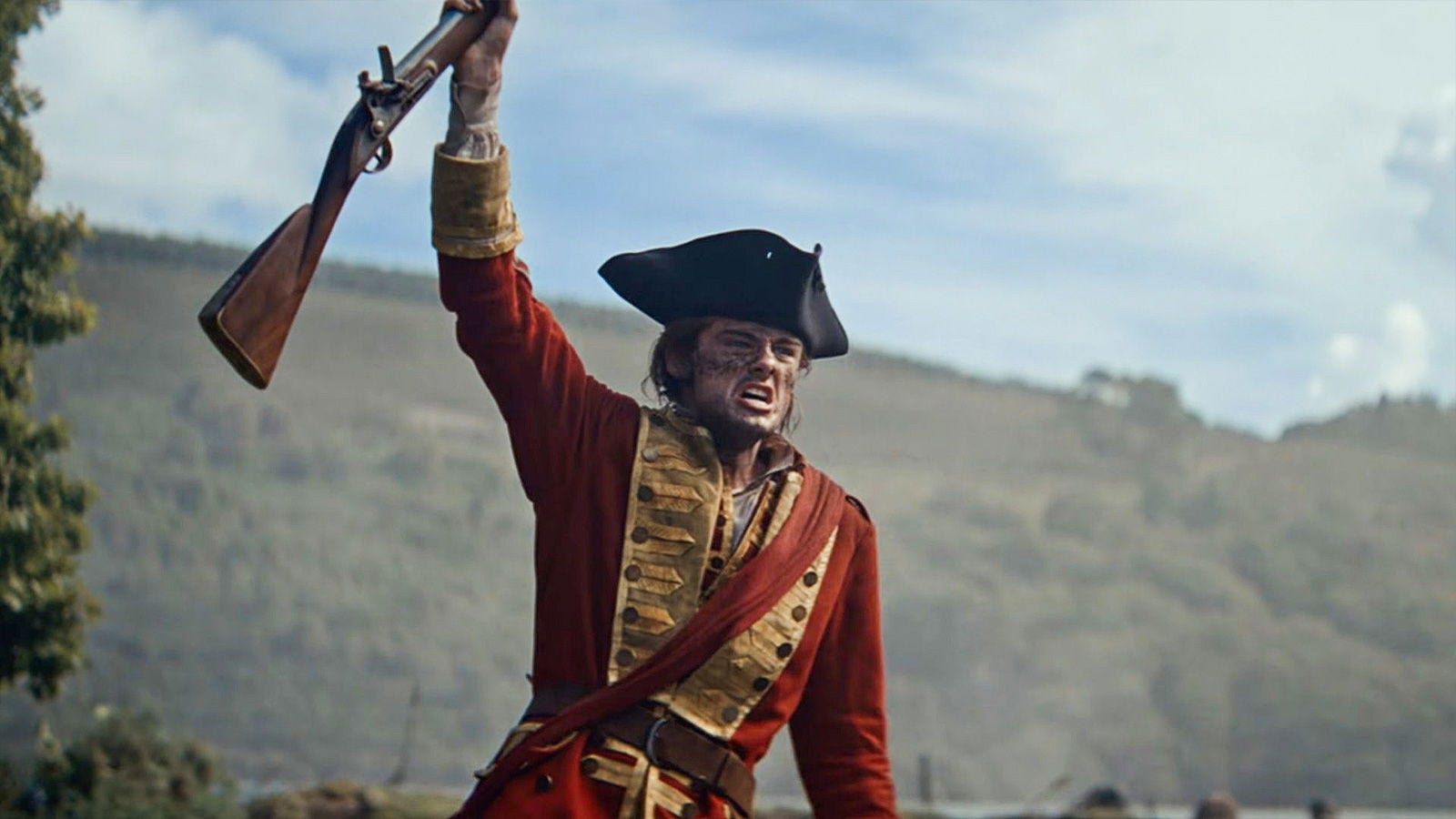
Angel Studios released Young Washington on July 3, 2026, and it opened to $20.8 million over the holiday weekend — the studio’s second-highest live-action opening ever, behind only the animated David, and ahead of Sound of Freedom’s $19.6 million three-day debut. The film recouped its entire $20 million production budget in a single weekend.
Industry projections had the film at $15 million. It beat that by nearly $6 million, finishing third for the weekend behind Minions and Monsters and Toy Story 5 — without premium large format screens, without a major bankable star, and without the kind of trade press coverage that typically moves needle on wide releases.
The top-grossing theater for the weekend was not the AMC Burbank in Los Angeles or AMC Lincoln Center in New York, as is typical for wide-release blockbusters. It was the Megaplex 18 Thanksgiving Point in Utah, which collected $111,000 to date. Young Washington played big in the Mountain, Midwest, Southcentral, and South regions, which drove 67% of the weekend take. That geographic footprint tells you exactly who Angel Studios is making movies for and where that audience lives.
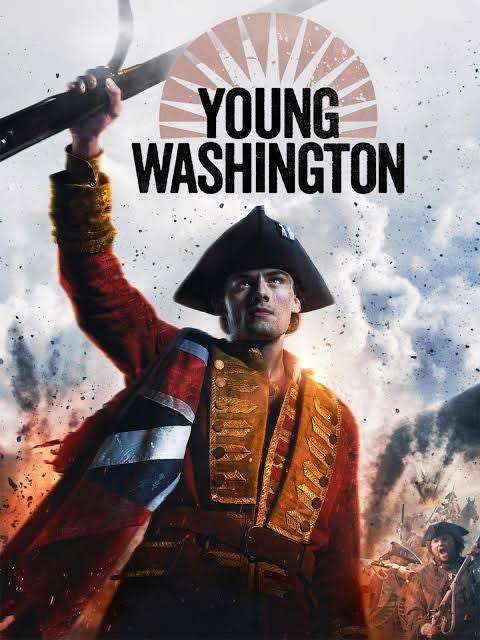
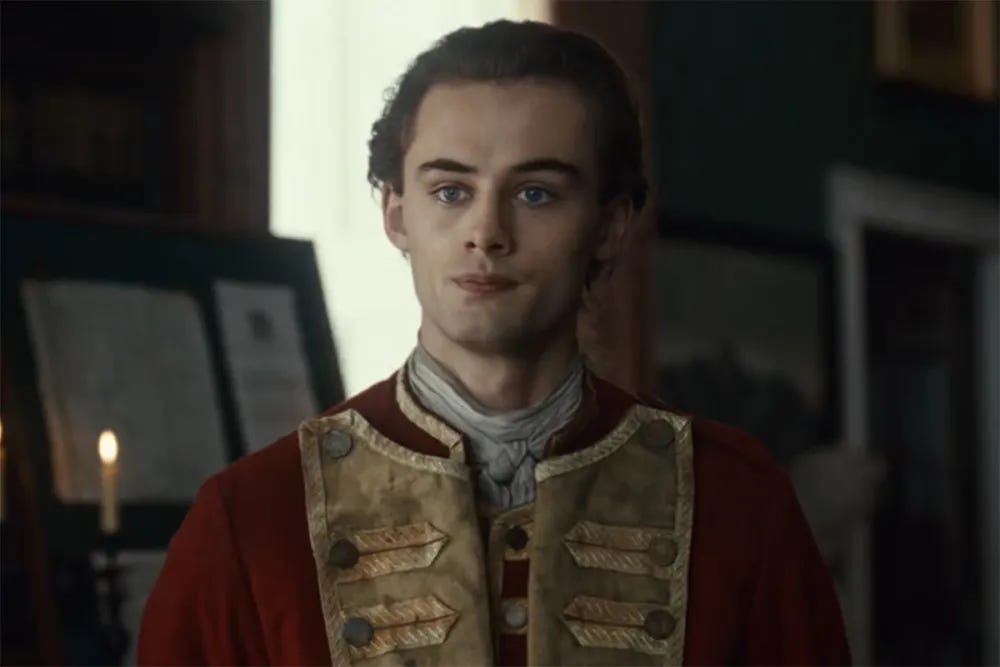
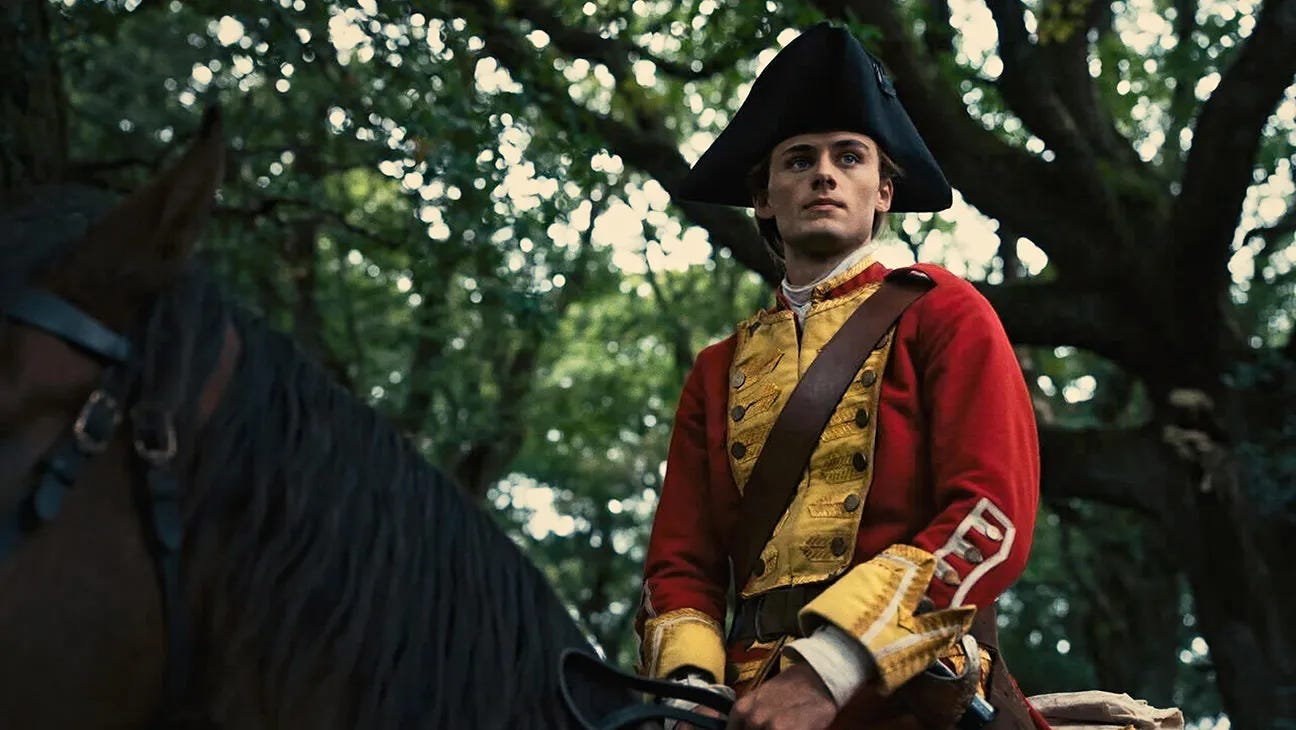
The film stars William Franklyn-Miller as a young George Washington, alongside Ben Kingsley, Mary-Louise Parker, Kelsey Grammer, and Andy Serkis. The story covers Washington before he became a national figure — a colonial surveyor denied a formal British Army commission, thrust into the French and Indian War, confronting his enemies and the man he was becoming. Directed by Jon Erwin, who previously made Jesus Revolution and American Underdog, the film traces how Washington’s experience on the frontier forged the leader the country would come to know.
The CinemaScore from opening-day audiences was an A. The Rotten Tomatoes critics score sits at 58%. The gap between press reception and audience response is a pattern Angel Studios has navigated before — Sound of Freedom ran the same playbook, posting mixed critical reviews while generating overwhelming audience enthusiasm en route to $184 million domestic.
The over-55 demographic showed up at 47% of the audience — remarkable, Deadline noted, as that demographic has been among the slowest to return to theaters post-COVID. This is the audience Hollywood has been writing off for years. They came out for a George Washington origin story on the 250th anniversary of the nation’s founding, in theaters, with their families.
Director Erwin announced on social media that a sequel, 1776, is already in development. The follow-up would cover the Revolutionary War itself — the payoff to everything Young Washington sets up. Erwin said: “The American experiment is one of the greatest origin stories in history, and George Washington’s journey through failure, perseverance, and sacrifice forged the leader who would help shape a nation. To share that journey with audiences alongside Angel as our nation marks its 250th anniversary has been one of the greatest honors of my career.”
The Angel Studios model is now documented across enough releases to state it plainly. The company targets the audience Hollywood does not: conservative, Christian, traditionalist, family-oriented viewers in the middle of the country who want stories that affirm rather than interrogate their values. Sound of Freedom told the story of a federal agent rescuing children from sex trafficking. Cabrini told the story of a Catholic nun building hospitals for immigrants. The Chosen built a global audience for a series about Jesus Christ. David told the story of the biblical king. Young Washington tells the story of America’s founder as a young man of faith, courage, and perseverance. Every one of these properties succeeds because it gives its specific audience something they cannot find in the mainstream theatrical market.
The lesson is not complicated. The audience exists. It is large. It spends money. It shows up on opening weekend in Utah and drives six hundred miles in the Mountain West to sit in theaters that the trades do not cover and the Hollywood press does not photograph. It gives A CinemaScores to films that get 58% on Rotten Tomatoes. It does not care what the trades think and never has.
Angel’s one misfire in recent memory makes the formula visible by contrast. Animal Farm, distributed by Angel in May 2026, opened to $5 million on a $35 million budget and earned a C- CinemaScore. Seth Rogen voiced Napoleon as an explicit Donald Trump caricature. The film contradicted George Orwell’s actual message so thoroughly that one reviewer called it “utterly destructive” of the source material. Angel’s natural audience — the same people who drove Young Washington to $20.8 million — watched the previews, saw what it was, and stayed home. The studio’s model only works when the content serves the audience. When it doesn’t, the core audience does not forgive the departure because they have no cultural obligation to keep showing up. They simply don’t.
The path forward for Angel is not complicated either. Brandon Purdie, EVP of Theatrical at Angel, said: “Seeing audiences across the country embrace Young Washington during our nation’s 250th anniversary celebration has been incredibly meaningful.” That sentiment is genuine and it is also a business statement. Stories from American history, told without irony or revisionism, for the audience that still loves that history — this is a lane almost nobody else is operating in. The founding era alone has enough material for a decade of films. Benjamin Franklin, John Adams, Abigail Adams, Alexander Hamilton told straight rather than through Lin-Manuel Miranda’s progressive anachronism, Dolley Madison, the Lewis and Clark Expedition, the Constitutional Convention — none of these have been treated with the seriousness a $20 million budget and Jon Erwin’s directorial sensibility could bring to them.
Supergirl spent $170 million and opened to $37 million. Young Washington spent $20 million and opened to $20 million. One of those films has a path to profitability. The other does not. Hollywood will spend the next month analyzing why Supergirl failed. The more useful analysis is sitting in the box office data from Utah.
Space marines on a holy crusade across the galaxy. If that sentence got your attention, Justified: Saga of the Nano Templar is your next read. Three books of relentless action Read Justified: Saga of the Nano Templar on Amazon!

I saw this movie on the third of July and loved it. It is by far the best movie I saw this year. The other two movies were also good, Hail Mary and Michael. But this was so moving and stirring it is by far the best. You can see the hand of God on Washington just like we have seen it on Trump. You and the dark Herald saved me from going to Animal farm and I thank you for that.
They have another potential dud coming up. The Brink of War has a great concept about an important, maybe THE important moment in the Reagan administration, but stars ultra progressive Jeff Daniels.
The audience might be there because Reagan and all, but I hate that it enriches and supports someone who clearly would have been shouting down Reagan should they have crossed paths.