


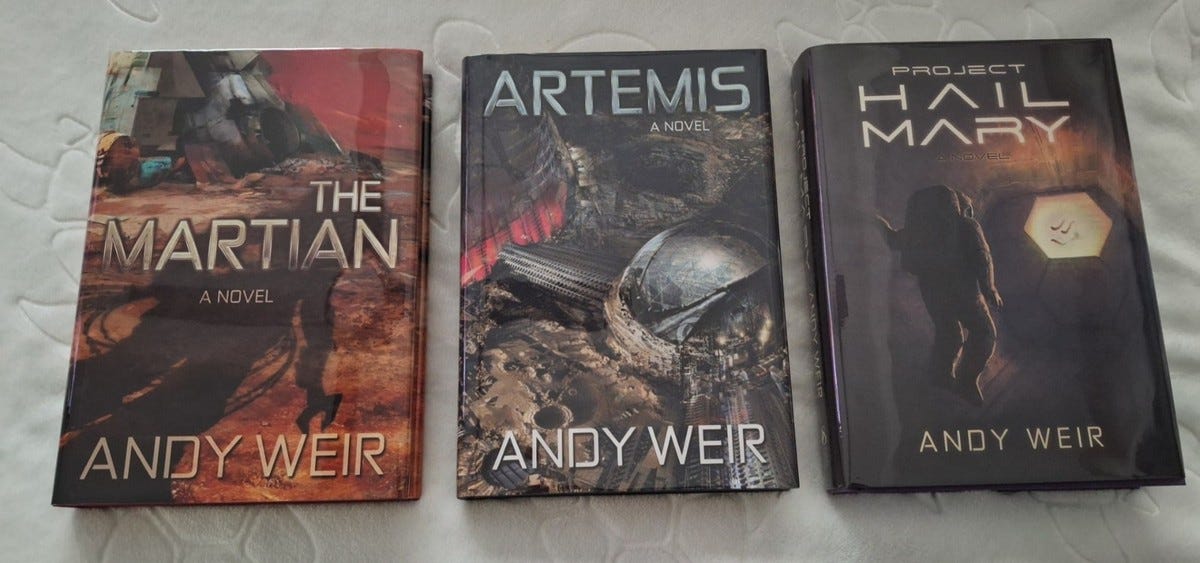
Bill Schafer announced Monday that Subterranean Press, the Burton, Michigan specialty publisher he founded in 1995, will permanently close. The press intends to continue publishing through the end of 2027, which Schafer says “may bleed into 2028 as we wrap things up.”
Schafer’s statement described a structured wind-down: “We want to handle this in a structured, orderly fashion, which will include communicating with a large number of writers, artists, as well as publishers we license rights from. One goal of our plan is that we either complete a number of ongoing series, or place them with other presses, to be continued in the same style as our volumes, so long-time customers will have a uniform set.”
That last line says everything about how Schafer ran the press. Thirty years in, facing a permanent closure, and the first concern is making sure collectors end up with matching sets.
For readers who never encountered Subterranean, some context. Founded in 1995, the small press based in Burton, Michigan published some of the most significant genre authors of the past three decades, including Stephen King, Harlan Ellison, Joe Hill, Peter Straub, and George R.R. Martin. In addition to publishing novels, short story collections, and chapbooks, Subterranean produced a quarterly publication called Subterranean Magazine from 2005 to 2014, specializing in short fiction and edited by Schafer himself.

What made SubPress different from every other publisher operating in the genre was its physical product. The company’s collector’s and limited editions were issued with author signatures, in both numbered and lettered states, and produced using high-grade book papers and bindings with matching slipcases and traycases. Numbered editions typically ran 500 copies. Lettered editions — bound in leather, housed in custom traycases — ran 26. The books were physical objects built to last a century. In an era when trade publishers are shrinking trim sizes, cutting paper quality, and pushing readers toward ebooks, Subterranean was doing the opposite. Every production decision treated the book as an artifact worth owning.
The press published approximately 45 titles a year and won awards including the World Fantasy, Locus, Horror Writers Association, and Hugo awards. Subterranean won the 2025 Locus Award for Best Publisher — meaning the announcement of its closure came one year after it received the field’s recognition as the best at what it does. That timing is not irony. It is a data point about the economics of doing things right in a market that increasingly does not reward it.
The novella was Subterranean’s native format. The genre had largely abandoned it — too long for magazines, too short for commercial publishers who need 80,000 word minimums to justify trade hardcover margins. Schafer published novellas because they were the right length for the story, not because the market demanded them. Subterranean Magazine included original tales by Robert Silverberg, Ted Chiang, Kelly Link, Lucius Shepard, Garth Nix, and Kage Baker, among many others. Ted Chiang, whose novella “Story of Your Life” became the film Arrival, built much of his early reputation in exactly this kind of venue. The specialty press ecosystem was where the novella survived long enough to matter again.
The broader context around this closure is not encouraging. Small Press Distribution, the nonprofit book distributor that had served small presses since 1969, abruptly closed in March 2024. Diamond Comics’ bankruptcy the following year pulled another distribution pillar out from under independent publishers — the same collapse currently bleeding Paizo dry. Between 2025 and 2026, many science fiction and horror publishers focused on the genre closed, either to submissions or entirely. The infrastructure that allowed specialty publishing to function — distribution networks, reliable fulfillment, the collector market that subsidized literary risk-taking — has been contracting for years.

Subterranean was one of the last major operators doing what it did at the level it did it. Grim Oak Press, PS Publishing out of the UK, and a handful of others occupy the same space, but none of them have the thirty-year back catalog or the author relationships that Schafer built. The Dresden Files collector’s editions alone, fifteen volumes in matching slipcases spanning 2008 through 2022, represent the kind of sustained publishing commitment that requires both capital and trust.
The wind-down through 2027 is the responsible approach. Schafer is trying to land every author and series somewhere, ensure collectors get complete runs, and close on his own terms rather than through a bankruptcy that would leave inventory in a creditor’s warehouse. He watched what happened to Diamond and Paizo. He is doing the opposite.
That does not make it less of a loss. The genre has fewer places now that take physical craft seriously, fewer outlets for the novella, and one fewer press that operates on the premise that a book should be built to outlast the person who bought it. What Subterranean spent thirty years proving does not stop being true because the press is closing. It just gets harder to prove without them in the room.
If the golden age of Trek and Babylon 5 left a hole in your sci-fi diet, The Stars Entwined fills it — interstellar espionage between two civilizations on the brink of war. Read The Stars Entwined on Amazon!

NEXT: N.K. Jemisin’s Grand Master Speech Is A Race Grievance With a Trophy Attached
What a shame. Another digital casualty.
It's a pity, but I don't think fancy regular hardcovers is a viable market for anyone but Folio Society. Go leather or go home appears to be the lesson. If people are going to pay more than $100, they require top quality, not a half-measure.