


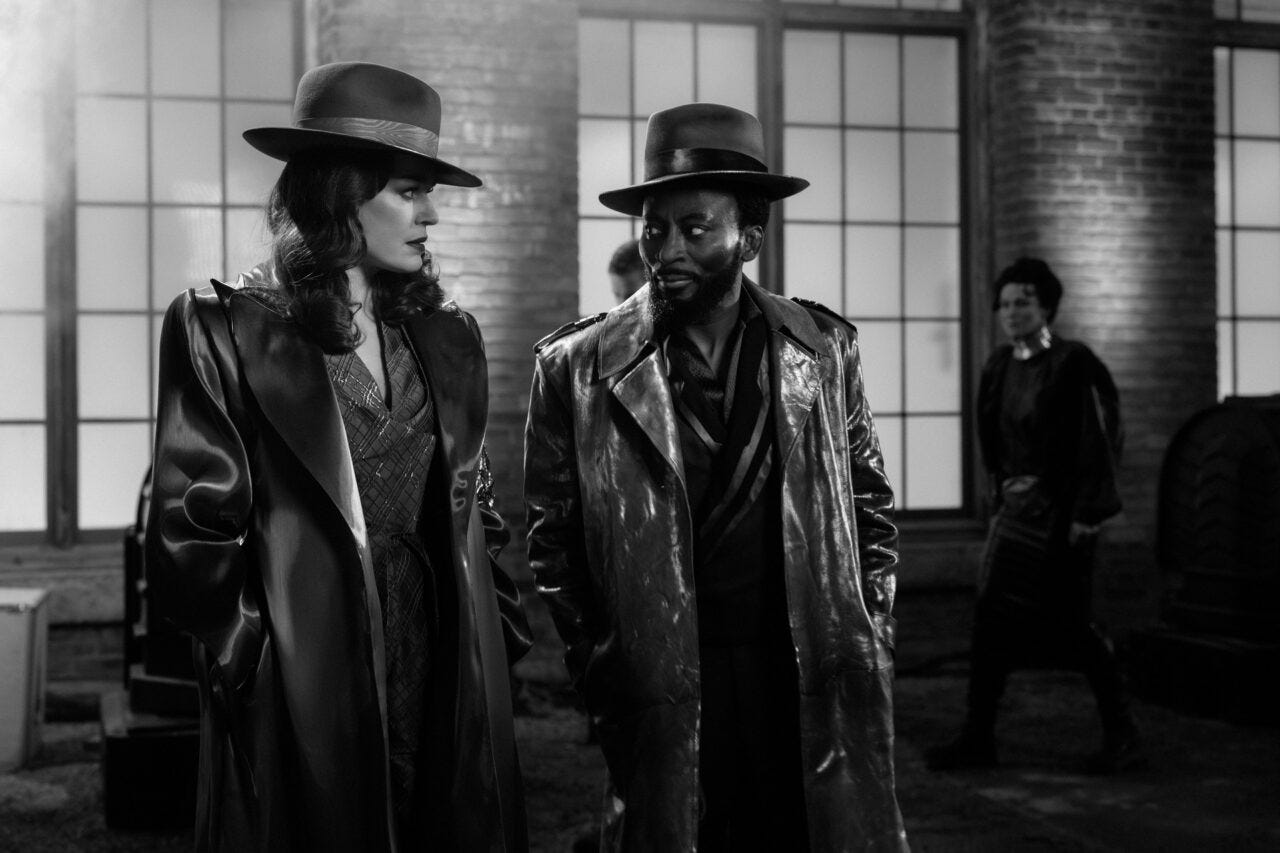
Star Trek: Strange New Worlds aired its fourth season, fourth episode, “A Case of Chiaroscuro,” on Paramount+ this week. The episode drops three of the show’s leads into a black-and-white world built on a scene-by-scene homage to the 1942 film Casablanca, and the results expose everything wrong with how this series handles emotional stakes.
Number One, Dr. M’Benga, and Uhura beam down to retrieve a malfunctioning Starfleet probe on Mat’aar, a planet occupied by the Klingons. The entire episode plays out in black and white, explained away as a side effect of the region of space the planet sits in. Once on the ground, Una is mistaken for Nevette, the owner of the local nightclub, a woman who publicly collaborates with the Klingon occupiers while secretly running the resistance underneath them. Una gets pulled into Nevette’s double life and has to survive as her stand-in while the real Nevette’s war against the occupation keeps moving around her.
Back on the Enterprise, La’an investigates why the probe malfunctioned in the first place and starts to suspect sabotage. Her investigation leads her to Christine Chapel, who admits she intercepted the probe’s transmission and deleted a record showing that another Starfleet ship crossed into Klingon territory to answer a distress call, an act that would violate the treaty keeping the peace. Captain Pike is aware the situation is unfolding and does little more than watch it happen from the chair.
The episode ties Una’s Casablanca stand-in role back to her own history, framing her time on Mat’aar as a chance to make up for a moment in her past when she failed to fight for something that mattered.
Technically, none of this is in question. The cinematography sells the black and white format. The production design nails the 1940s Casablanca look, down to the trench coats and the nightclub set. Strange New Worlds continues to be a well made show on a shot by shot basis.
The Chapel Subplot Never Had Any Tension
Chapel falsifying Starfleet records and hiding a treaty violation from her own crewmate is the kind of decision that should carry real consequences. It’s a court martial offense wrapped in a moral dilemma. The episode never treats it that way. La’an gets close to the truth, confronts Chapel, and at no point does the story suggest La’an was ever going to report her. The outcome is settled before the conflict even starts. Pike, the man whose command authority this directly threatens, barely reacts to any of it. If the captain can’t be bothered to care that a senior officer broke the law and covered it up, there’s no reason the audience should either. The subplot exists because the episode needed a subplot running in parallel to the Una story, not because anyone writing it had a reason for the audience to feel anything about it.
Una’s Casablanca Arc Runs On The Same Empty Fuel
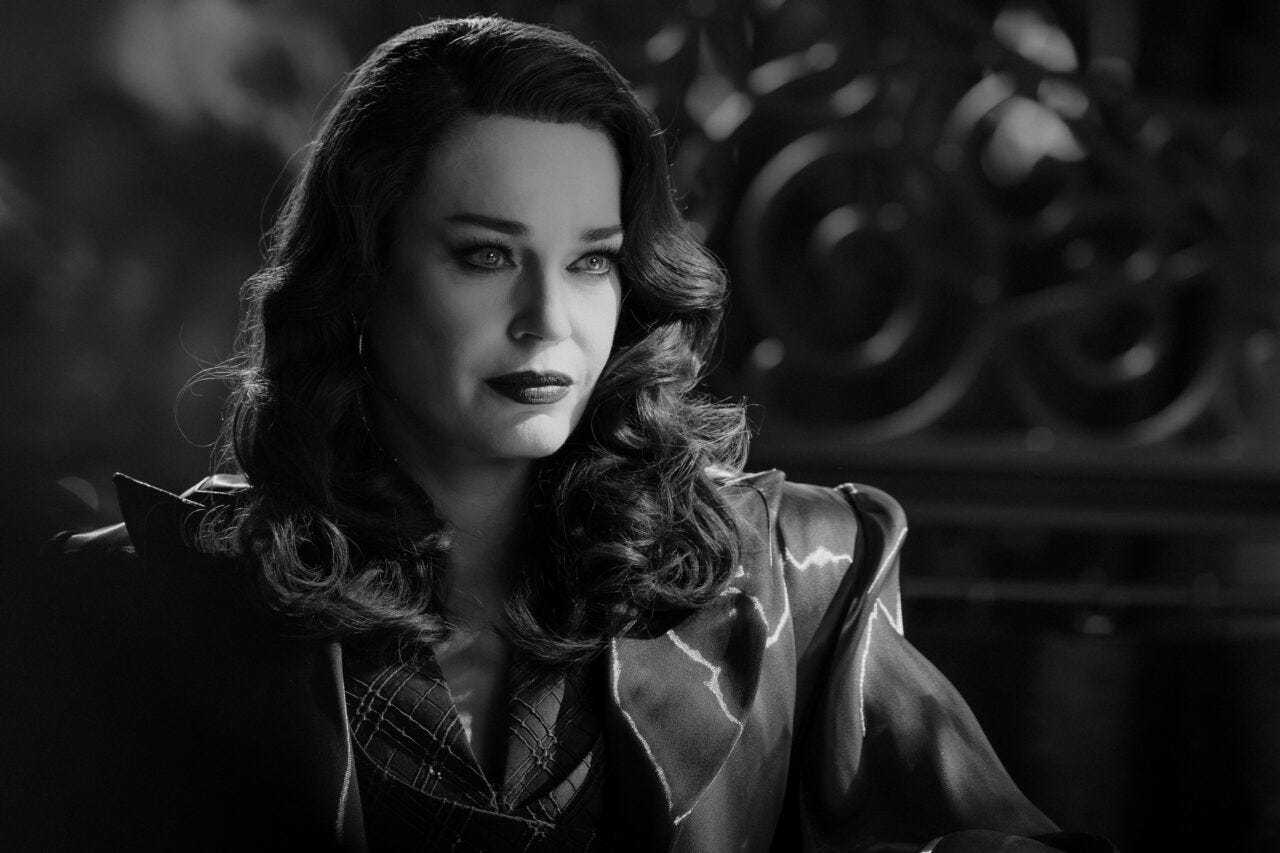
The Casablanca framework hands Una a doppelganger, an occupied planet, and a script that keeps insisting this is personal for her. The writers, Skylar Ojeda and Dana Horgan, tie Nevette’s resistance story back to Una’s past: the idea that she didn’t fight when she had the chance before and now gets a second shot at it. That’s the correct emotional setup for this kind of story. Casablanca ran on exactly that tension: a man who once stood for something and has to decide whether to stand for it again.
None of it lands here. Rebecca Romijn plays the role the way every actor on this show plays every role, competently, but the danger never feels real. Una’s time on Mat’aar reads like a costume she’s wearing rather than a life she’s risking. The episode wants the audience to feel the weight of occupation, betrayal, and a second chance at courage, and instead delivers a well-lit reenactment of those ideas.
Pseudoscience As A Crutch
The in-universe explanation for the black-and-white presentation, a quirk of local space that strips color from everything on the planet, gets a lampshade from M’Benga, who jokes about how unlikely it is that Una happens to look exactly like Nevette. That’s the same move Strange New Worlds pulls constantly: introduce a thin scientific excuse, have a character joke about how thin it is, and move on without ever making the excuse hold weight. It works fine as a justification for the visual gimmick. It does nothing to justify the story built on top of it. The end line of “life isn’t black and white” makes a viewer roll their eyes, despite the fact that M’Benga does acknowledge the irony of it as a dialogue measure right before it just to try to soften the obviousness of it.
In the end, the episode has a complete pattern running through it, and arguably the entire series, that there’s simply no emotion to the whole show. Strange New Worlds is competent television. The sets look good, the actors hit their marks, the homage is recognizable at every turn. What it consistently fails to do is make any of it feel like it’s happening to real people with something to lose. “A Case of Chiaroscuro” had every ingredient Casablanca used to build one of the most quietly devastating endings in film history, and turned it into a well-dressed exercise instead. The occupation isn’t frightening. The betrayal isn’t costly. The romance isn’t a risk. It’s Star Trek playing dress-up in someone else’s classic, technically proficient and emotionally inert.
6/10.
Does Strange New Worlds keep reaching for classic film homages because the writers’ room has run out of original Star Trek stories to tell, or because the homage format lets them borrow tension they haven’t figured out how to build themselves?
First contact with the Oridians was supposed to be humanity’s proudest moment. Instead, their chief engineer is dead, their ship is sabotaged, and an ancient alien technology is stealing souls. Book one of the Valiant Frontiers series delivers exploration, mystery, and the kind of crew you’ll want to follow across the galaxy. Read The Soul Catcher on Amazon and start the adventure.
There are many aspects I have agreed with you while watching your videos on YouTube. I personally cannot wait until all things Kurtzman and Abrams are gone from Star Trek. I truly hope that all of Kurtzman Trek is relegated to its own timeline like the Abrams movies were, officially.
I had so much hope for this series when it was announced, and Kurtzman let us all down.
This episode, while it had its problems, i.e. ripping off Casablanca, the Metropolis look of the city, having Kor from "Errand of Mercy", etc., it was at least watchable. Episodes 2 and 3, on the other hand, I could not wait for the credits to roll.
The outfits from this episode, I sort of put that into a tribute to the TOS episode, "A Piece of the Action", so I was able to look past that part.
This season, more than any before, has done nothing but take another movie or TV show and slap a Star Trek skin on it.
Episode 1 - Jurassic Park, The Land Before Time, Dr. Who
Episode 2 - Event Horizon
Episode 3 - The Hangover, Dude Where's My Car
Episode 4 - Casablanca, Metropolis
Episode 5 - The Muppets, Pigs In Space (from the Muppet Show)
Wonder what other materials they will rip off before the season concludes. Wonder if the IP holders of all of these movies and franchises can sue Kurtzman for copyright the way that Paramount is going after Axanar. Just a thought.
I think Gary from Nerdrotic is right. Star Trek is about to enter its Buck Rogers and Flash Gordon era, where it’s era is just gone