



Marvel Comics Executive Editor Tom Brevoort recently revealed his philosophy toward fan reactions in a Word Balloon podcast interview: he’d rather make readers angry than indifferent. “I honestly kind of like it when they go all in like that because it just shows that they are invested in the story,” Brevoort explained, referencing extreme backlash to controversial storylines. “I’ll take that over studied indifference every time.”
This cynical approach treats comic book readers as captive consumers who will purchase any product as long as it provokes emotional response—positive or negative. Brevoort’s strategy assumes fans are paypigs who can be manipulated through outrage rather than customers who deserve quality storytelling. The declining sales figures suggest this assumption is catastrophically wrong.
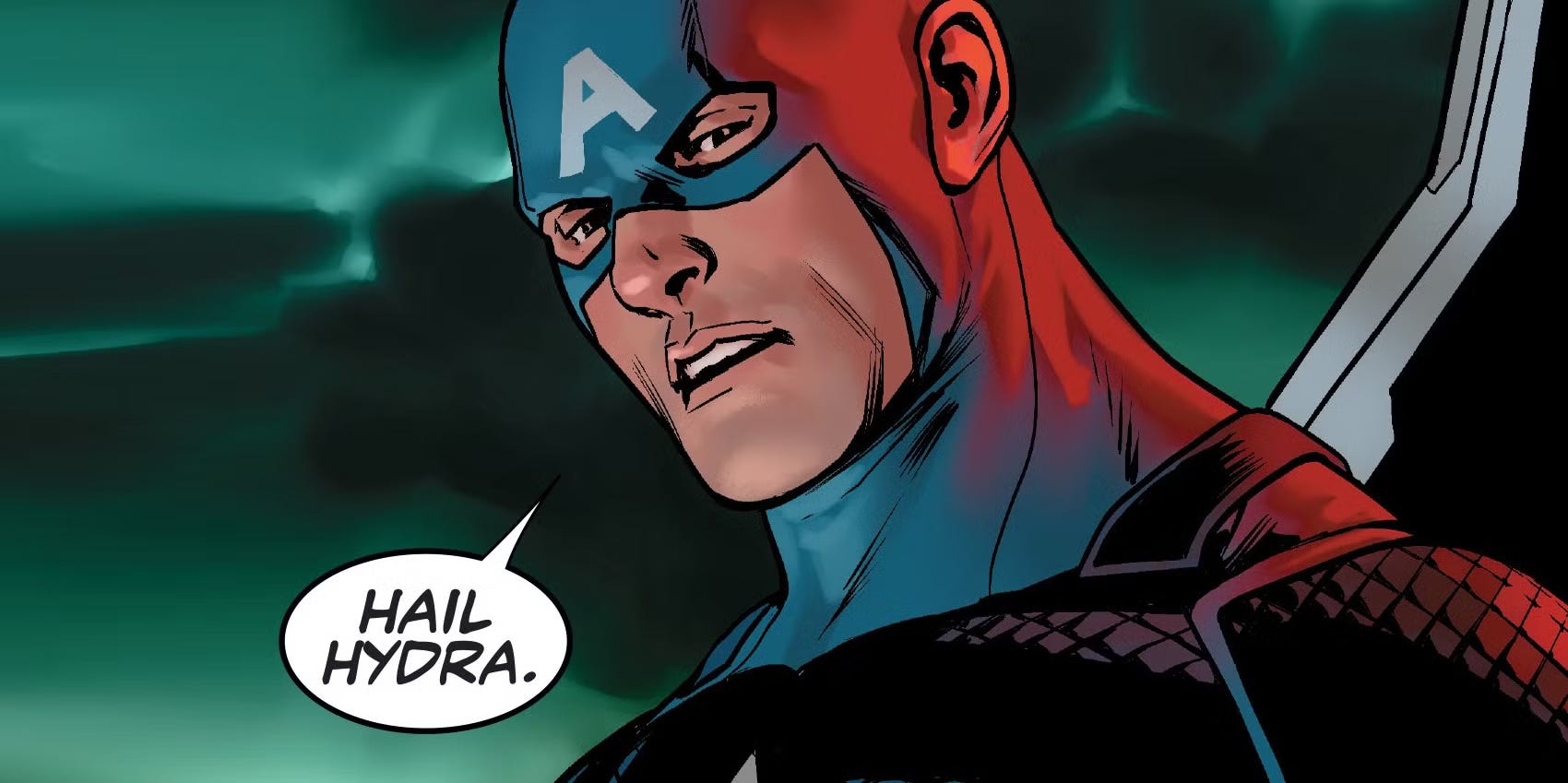
Brevoort’s comments came while discussing two of Marvel’s most controversial recent decisions: the 2017 Secret Empire storyline that revealed Captain America as a Hydra agent, and the ongoing Spider-Man saga involving Mary Jane Watson’s relationship with Paul Rabin. Both generated intense fan backlash, which Brevoort interprets as validation rather than warning.
“That was the only one that I got actual credible death threats for,” Brevoort recalled about Secret Empire. “I had to cancel at least one convention appearance because there were some sort of death threat letters that came in.” Rather than recognizing this as a sign the storyline had crossed a line, Brevoort celebrated it: “The fact that people were that upset meant on a certain level they were invested. They were on the ride whether they wanted to be on the ride or not.”
This reveals a disturbing mindset where reader distress equals success. Brevoort doesn’t distinguish between passionate engagement with compelling stories and anger at narrative choices that betray characters. Both register as “investment” in his calculus, making them equally valuable from a business perspective.
The editor was particularly emphatic about avoiding meta-commentary that acknowledges the temporary nature of comic book deaths or changes: “I don’t ever want to see another comic book story where a character dies and other characters stand around and go, ‘Don’t worry, he’ll be resurrected again soon.’ Because that’s crap. That’s trying to be more clever than the audience or trying to tip your hat or wink or go, ‘Yeah, you shouldn’t take this seriously.’”
This sounds reasonable until you recognize the contradiction. Brevoort demands readers take temporary changes seriously while simultaneously admitting “inevitably, invariably, eventually, Steve Rogers is going to come back.” He wants the emotional investment that comes from believing changes are permanent while knowing they’re not. This is manipulation, not storytelling.
The Paul Rabin situation exemplifies this cynical approach. After Joe Quesada’s 2007 “One More Day” storyline erased Peter Parker and Mary Jane Watson’s marriage through a deal with Mephisto, fans spent nearly two decades angry about the decision. The Zeb Wells Amazing Spider-Man relaunch in 2022 showed Peter and Mary Jane attempting reconciliation, only to reveal they’d been split up again, with Mary Jane now living with Paul Rabin and raising children in another dimension.
Brevoort loves the reaction: “For all that it’s driving a lot of people absolutely crazy, I like the reaction to Paul because it means they’re feeling something. They’re having a reaction to this piece of fiction, and I’ll take that over studied indifference every time.”
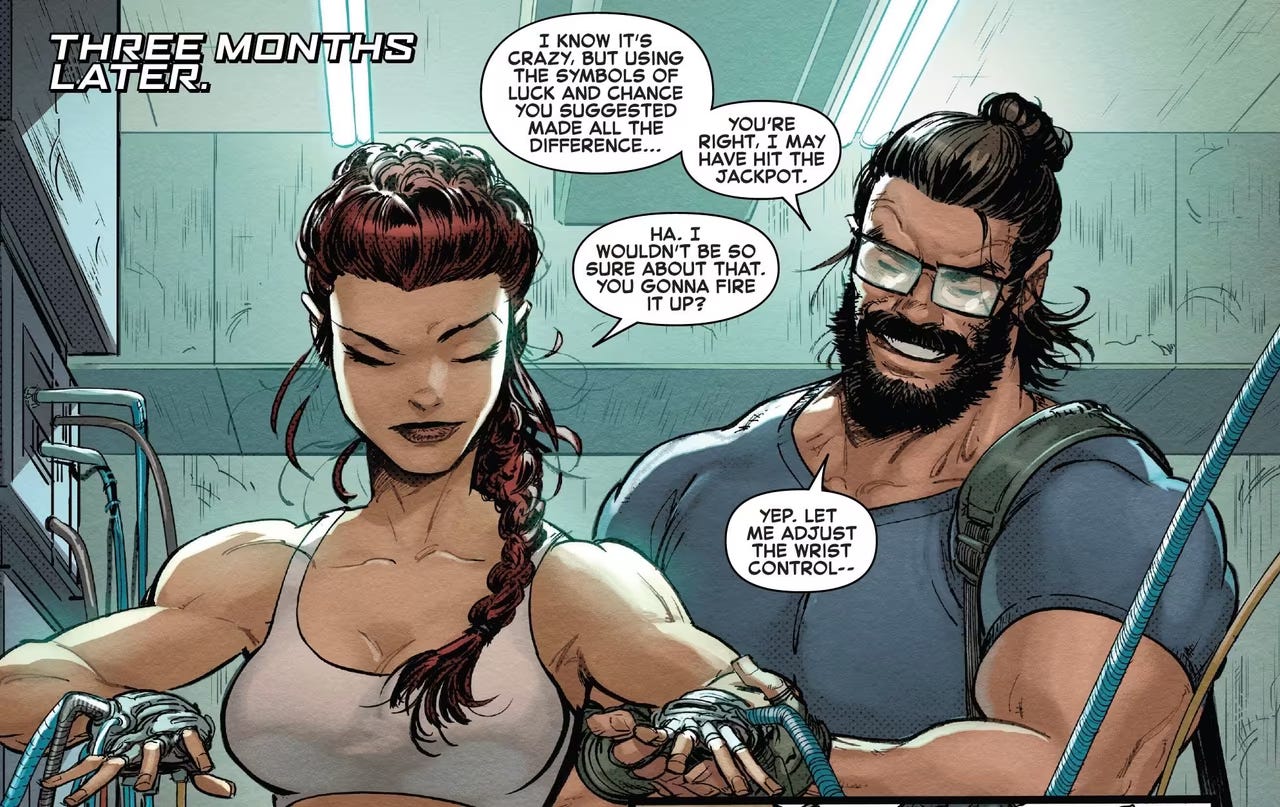
This treats decades of reader investment in Peter and Mary Jane’s relationship as a resource to be mined for controversy rather than a foundation to build compelling stories. Fans aren’t angry because they’re “invested”—they’re angry because Marvel keeps deliberately sabotaging a relationship readers care about, then celebrates their distress as engagement.
Brevoort’s tenure overseeing the X-Men line reveals how this philosophy plays out in practice. In July 2024, Marvel rebooted the entire X-Men franchise with the “From the Ashes” initiative. While main books like Uncanny X-Men and X-Men kept overt political messaging relatively subdued, Brevoort strategically launched the most controversial content later, apparently hoping readers would be invested enough in the line to tolerate it.
Exceptional X-Men, written by diversity hire Eve L. Ewing, barely functions as a team book. The first issue features Kitty Pryde in near-panic attacks about anxiety while fretting over her “girlfriend,” making the book’s LGBTQ focus immediately apparent. Ewing introduces a young black mutant who appears to be a self-insert, following her pattern with the character Ironheart.
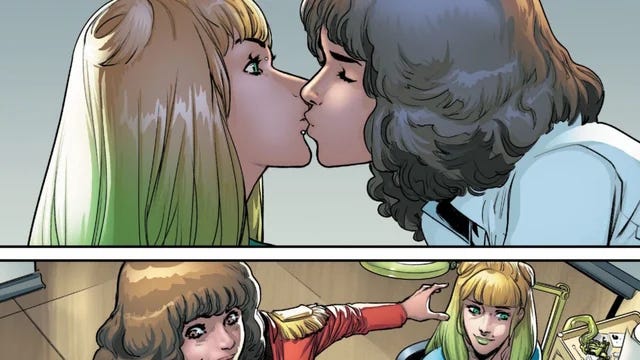
Dazzler #1 functions as an extended allegory for LGBTQ identity, with the pop star using terms like “normalizing Mutants”—language that mirrors activist rhetoric about “normalizing” various identities. The book’s final page plasters “Out and proud” across the entire spread multiple times as song lyrics, removing any subtlety about its purpose.
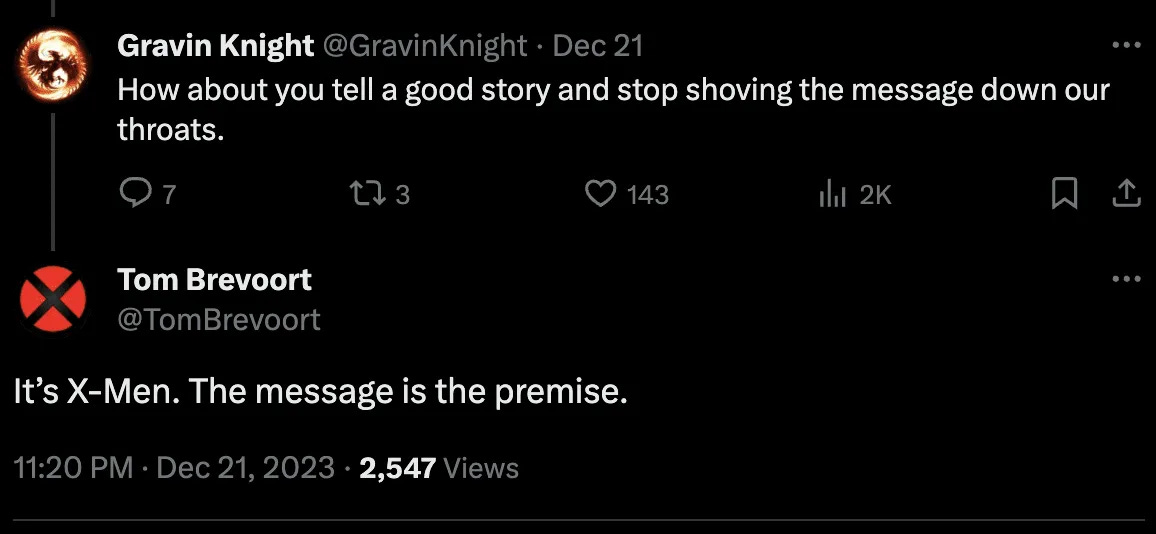
Brevoort warned readers last year that “the message is the premise” regarding X-Men as a vehicle for activism. He apparently wanted to keep that premise out of the main books to avoid killing sales entirely, while using secondary titles to push ideological content. This represents calculated manipulation—hook readers with relatively apolitical main books, then gradually introduce the propaganda once they’re invested in the line.
The strategy is failing. Comic book sales have declined steadily in recent years, with the direct market shrinking and readers increasingly abandoning Marvel’s output. Brevoort’s assumption that any emotional reaction equals success ignores the difference between passionate engagement and exhausted frustration.
Readers who feel manipulated don’t keep buying comics, they leave. When every major storyline becomes a controversy designed to provoke reaction rather than tell compelling stories, audiences recognize the pattern and disengage. “Studied indifference” is the inevitable result of it.
The sales figures suggest that the result is arriving faster than Brevoort realizes.
Three free books. No spam. Just new releases, deals, and the occasional update from the front lines of independent publishing. Sign up for the Jon Del Arroz newsletter and start reading today.
NEXT: ‘My Hero Academia Vol. 1’ Review: What It Means To Be A Hero
What a punchable twat. I guarantee he has a horrible, weird voice. He also strikes me as a Birkenstocks with socks and a fanny pack to round out the ensemble kind’a fella.
Coping is the last refuge of these insufferable dingleberries.
Whenever they slaughter, skin, and puppeteer the corpse of an IP, first they tell you it isn't happening, then they call you names for not liking that it's happening, then they blame you for the IP failing.
In the end, when they can't lie to you anymore, they begin lying to themselves. They always "meant" to do it this way. Isn't it edgy and daring?
They can't admit failure. Their ego and their cultish worldview won't allow it. So, if their thing gets rejected, it's because they always wanted it to be rejected you dumkopfs! Don't you understand ART?!?!!¿
It's amazing how incapable these people are of telling basic stories. Their fraudulent rise to creative overlords is testament to just how corrupt, captured, and nepotistic our society has become.
Looking at entertainment as a microcosm of the world, it's no wonder enshitification is the way of things