



For years, audiences have watched the gap between Rotten Tomatoes critic scores and their own experiences grow into a chasm. A film can boast a 90% Tomatometer while being broadly rejected by viewers who actually paid to see it. A streaming series can be hailed as groundbreaking by critics while audiences abandon it after one episode. The pattern has become so routine that the question is how credible are these mainstream reviewers?
James Carrick, founder of Worth It or Woke, has spent three years building an alternative. Now, his platform is launching an aggregation system designed to do what Rotten Tomatoes claims to do but increasingly fails at: give audiences honest signals about what’s worth their time and money.
“Rotten Tomatoes has positioned itself as a neutral arbiter of film and television quality,” Carrick told Fandom Pulse. “In practice, its critic scores have become a closed feedback loop—one dominated by ideological conformity, studio access politics, and a scoring system that masks bias rather than revealing it.”
The Access Problem
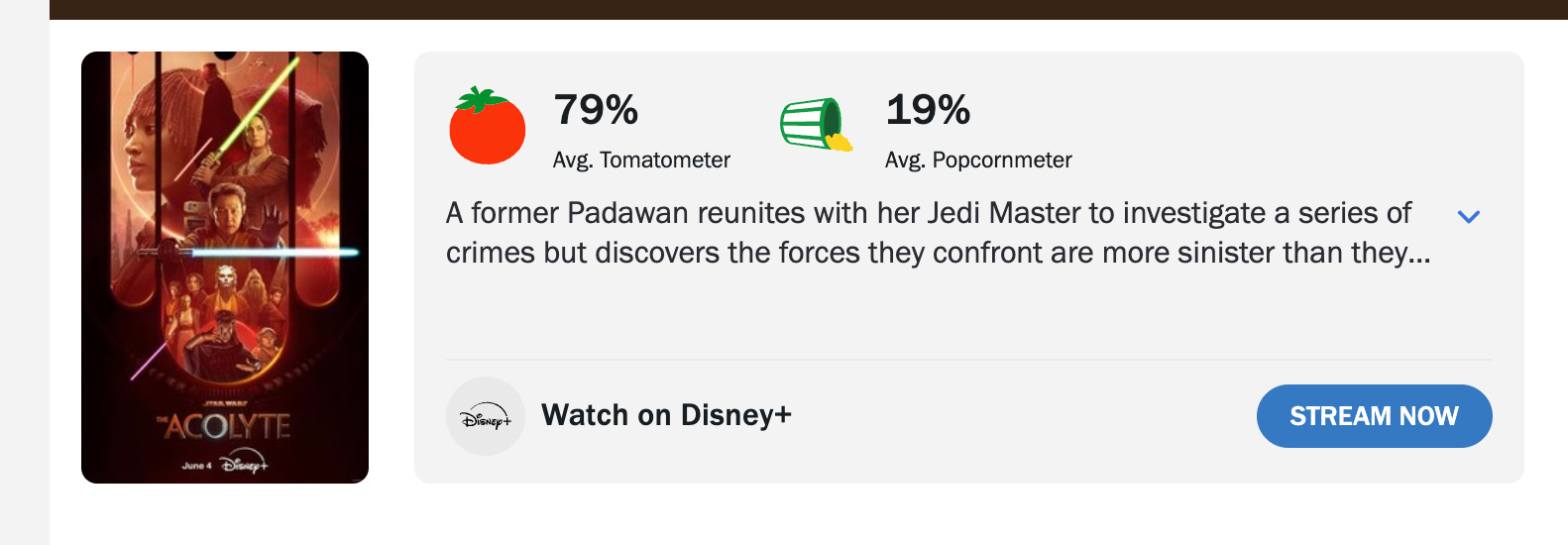
The mechanics of how Rotten Tomatoes scores are generated have become increasingly problematic as theatrical windows shrink and opening-weekend performance determines a project’s financial survival. Studios have learned to game the system. Press screenings are offered selectively. Critics most likely to deliver positive early coverage are prioritized. Access itself becomes currency.
The result is a critic consensus that often bears little resemblance to what actual audiences experience when they sit down to watch.
“When dozens—or hundreds—of critics mark a film as ‘just good enough,’ the system can produce a near-perfect score for a work that is, at best, mediocre,” Carrick explained. “That design not only skews results, it allows ideological bias to hide behind technical thresholds.”
The binary nature of Rotten Tomatoes compounds the problem. A critic who finds a film barely passable and one who believes it to be exceptional are treated identically. Both register as “fresh.” The nuance is lost. The aggregation becomes meaningless.
A Different Model
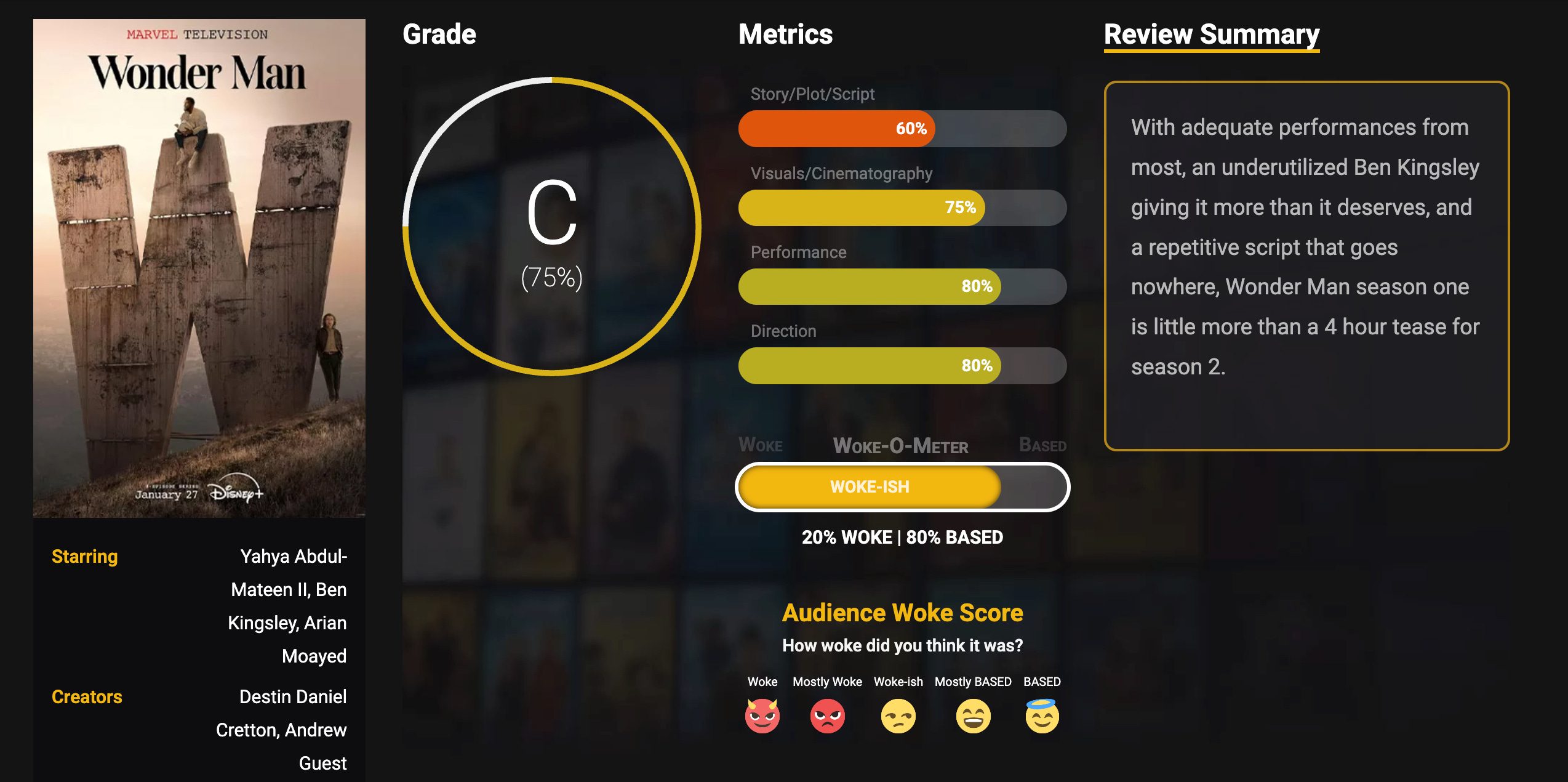
Worth It or Woke’s new aggregation system operates on a fundamentally different structure. Rather than reducing criticism to a binary, the platform evaluates each title across three distinct dimensions:
Worth It – A personal recommendation. Is this something the critic believes audiences should spend their time and money on?
Woke Percentage – An assessment of how ideologically driven a work is, and how much radical progressivism influences its storytelling.
Overall Quality – A traditional A+ through F grade measuring craftsmanship, execution, and technical merit, regardless of message.
“This structure allows bias to be visible rather than hidden—and gives audiences information they can actually use,” Carrick said. “Modern entertainment is openly politicized. Pretending otherwise serves neither critics nor audiences.”
Critics using the platform don’t submit original reviews to Worth It or Woke. Instead, they link to their existing work, provide a concise summary, and score the title. The platform’s purpose isn’t to compete with critics, but to amplify them, organizing their work into a system that restores clarity for consumers.
Curated, Not Crowdsourced
Participation is curated from the outset. Critics are evaluated based on the seriousness and consistency of their body of work, not popularity or ideological conformity.
“The aim is not to assemble a monolith, but to cultivate a network of critics capable of honest disagreement without sacrificing standards,” Carrick explained.
Among the first critics to adopt the new system is Christian Toto, a veteran reviewer whose work has appeared at The Daily Wire, The Blaze, and alongside figures such as Dennis Miller. Toto has no formal relationship with Worth It or Woke and wasn’t involved in the development or operation of the platform. He has, however, been generous with informal advice since the site’s early days, and now participates as a critic by submitting scores and linking to his reviews through the system.
At launch, the platform covers theatrical films, streaming films, and streaming television series. Video games are already in limited coverage and positioned for expansion as additional critics come aboard.
Transparency Over Neutrality
Worth It or Woke is unapologetically an openly Christian, conservative platform. That transparency is intentional.
“The audience we serve—viewers and gamers weary of being lectured, misled, or dismissed by cultural gatekeepers—deserves a system aligned with its values,” Carrick said. “Not every reader shares the same thresholds or priorities, and the platform reflects that range, but it does not pretend to be ideologically neutral.”
This is the key distinction. Rotten Tomatoes presents itself as neutral while operating within an ecosystem where access journalism and ideological groupthink determine which critics get early screenings and which don’t. Worth It or Woke acknowledges its perspective upfront and builds a scoring system that separates personal recommendation from objective quality assessment.
A viewer can see that a film is technically well-made (high Overall Quality score) while being heavily ideological (high Woke Percentage) and decide for themselves whether it’s worth their time. That’s information Rotten Tomatoes doesn’t provide—and increasingly, information audiences need.
The Rotten Tomatoes Problem
The widening gap between critic and audience scores on Rotten Tomatoes has become a cultural punchline. When The Last Jedi earned a 91% critic score and a 42% audience score, the disconnect was impossible to ignore. When Rings of Power was praised by critics while audiences rejected it, the pattern repeated. When She-Hulk was defended by access media while viewers abandoned it, the credibility gap became a chasm.
The issue isn’t that critics and audiences sometimes disagree. The issue is that the disagreement has become predictable and ideological. Critics who depend on studio access for their livelihoods are incentivized to praise projects that align with progressive messaging, regardless of quality. Audiences who paid for tickets or subscriptions are free to judge based on whether the product delivered entertainment value.
Rotten Tomatoes’ aggregation model obscures this dynamic. Worth It or Woke makes it visible.
A Movement, Not Just a Site
“Worth It or Woke represents a shift—from being simply another review site with a distinct perspective to becoming a movement-based platform designed to challenge a broken critic economy,” Carrick said. “We’re sending a clear message to Hollywood and the gaming industry alike: audiences are no longer willing to waste their time and money on products propped up by access journalism and ideological groupthink.”
The platform’s tagline captures the mission: “If it ain’t Woke, don’t miss it.”
For three years, Worth It or Woke operated as a review site building trust with readers. The launch of the aggregation system marks an evolution—from a site that publishes reviews to a platform designed to organize and amplify critics’ voices into something audiences can actually use.
The timing is deliberate. As legacy outlets continue to lose credibility and audiences grow increasingly skeptical of critic consensus, there’s an opening for a system that operates with transparency rather than pretending neutrality while serving studio interests.
What’s Available Now
A visit to WorthItOrWoke.com shows the system already populated with scores for recent releases across film and television. Sonic the Hedgehog 3 sits alongside The Princess Bride. Mufasa: The Lion King is scored next to Wish. Streaming series like The Thundermans: Undercover and A Knight of the Seven Kingdoms have full breakdowns across all three scoring dimensions.
Each title displays the Worth It percentage, Woke percentage, and Overall Quality grade prominently. Critics’ individual scores are visible, along with links to their full reviews. The system is transparent about who’s scoring what and why.
For audiences tired of being told that a 90% Tomatometer score means they should love something they found unwatchable, Worth It or Woke offers an alternative: honest signals in a dishonest system.
The Road Ahead
The platform’s success will depend on whether it can attract enough critics to provide meaningful aggregation while maintaining curation standards. Too few critics and the scores lack weight. Too many without proper vetting and the system becomes as compromised as what it’s trying to replace.
Carrick seems aware of the balance required. The platform isn’t trying to be everything to everyone. It’s serving a specific audience—one that’s been underserved by legacy outlets and access-driven criticism for years.
“Worth It or Woke exists to give that audience something it has been denied for too long,” Carrick said. “Honest signals in a dishonest system.”
As Rotten Tomatoes continues to lose credibility with audiences who’ve learned to ignore critic scores entirely, the opening for an alternative has never been wider. Whether Worth It or Woke can fill that space remains to be seen. But for viewers who’ve spent years watching the gap between what critics praise and what audiences enjoy grow ever wider, the platform offers something increasingly rare in entertainment criticism: transparency about what it is and who it serves.
What do you think? Can a curated, transparent aggregation system challenge Rotten Tomatoes’ dominance, or is the access-driven critic economy too entrenched to disrupt?
What excites critics at Rotten Tomatoes? Here are the top rated films now in theaters.
“Pillion” - Gay drama - “A timid man is swept off his feet when an enigmatic, impossibly handsome biker takes him on as his submissive.” Eighty-three critics, each of whom loved it: 100%.
“Killer of Sheep” - Life as a wonderful Black man in LA, and his oppression: 98%.
“Young Mothers” - Single mothers are wonderful and triumphant: 95%.
“Put Your Soul on Your Hand and Walk” - Palestinians in Gaza are wonderful and oppressed: 98%.
“Send Help” - Feminist revenge horror film: 93%
For comparison:
Fellowship of the Ring: 91%.
Don't know why the article didn't include the link (not that it would be hard to find), but here it is:
https://worthitorwoke.com/