


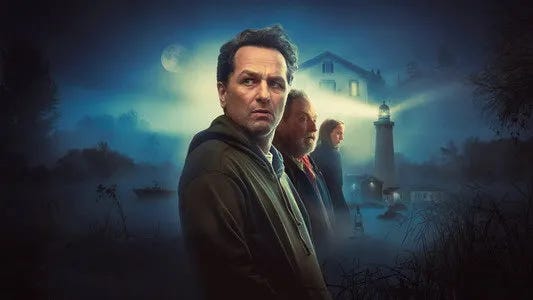
Widow’s Bay walked away from the 78th Emmy Awards with six statuettes, more than any other program that night, and made Matthew Rhys the first actor in Emmy history to win lead-acting awards across all three major genre categories, drama, comedy, and limited series, over the course of his career. That’s a rare feat, but the reason it gets even more interesting is what kind of show just pulled it off. Widow’s Bay looks noticeably different from most of the Apple TV+ programming that’s dominated awards conversations in recent years.
Created by Katie Dippold, the Parks and Recreation veteran who also wrote shockingly wrote the wildly feminist and controversial 2016 Ghostbusters remake, and directed largely by Atlanta’s Hiro Murai, Widow’s Bay premiered April 29, 2026 to strong critical acclaim. The premise: Tom Loftis, a widower mayor played by Rhys, is desperate to drag his sleepy, Wi-Fi-less New England island town into the tourism era, convinced the local legends about a curse are just superstition standing in the way of progress. He’s wrong. Once tourists actually start arriving, decades of dormant supernatural horror wake back up with them. NPR described the show as landing somewhere between Parks and Recreation’s small-town warmth and a Stranger Things built for adults, while The Hollywood Reporter called it a mashup of “Pawnee-style coziness and Derry-esque chills.” Variety praised its deadpan tone, noting it never tips into outright parody the way something like Scary Movie would, instead playing the horror completely straight while Rhys’s Tom stays the flustered, cowardly straight man against an ensemble of true believers. Fans circulating early reactions compared it favorably to Midnight Mass, a genuinely high bar for a network still best known for The Morning Show and Ted Lasso.
That tonal balance, real scares married to character-driven comedy rather than either genre undercutting the other, is a difficult needle to thread, and the reviews suggest Widow’s Bay threaded it about as well as anything on television this year. It’s a genuinely well-crafted show on its own merits, deadpan without being smug, scary without losing its warmth, anchored by a cast that clearly understands the tone they’re playing.
What makes its Emmy sweep stand out further is the company it’s keeping. Apple TV+’s biggest awards-season players over the past several years have leaned heavily into LGBTQ storylines as a defining feature of their prestige output. Severance, the streamer’s other flagship Emmy darling, is frequently highlighted by critics specifically for its late-blooming gay romance subplot. Ted Lasso built an entire arc around Keeley’s bisexuality and, by Season 3, drew a wave of viewer backlash, plenty of Rotten Tomatoes and Metacritic reviews calling the identity-focused storylines “shoehorned in” and prioritizing “virtue-signaling over organic character growth,” criticism sharp enough that even Jason Sudeikis had to publicly respond to it. Dickinson built its entire premise around Emily Dickinson’s queerness. Apple’s own retrospective coverage of its slate consistently points to these threads as central to what the platform is “known for” in the prestige space.
Widow’s Bay doesn’t do any of that. It’s led by a straight, white, male mayor whose defining conflicts are grief over his late wife, parenting a teenage son alone, and being a coward who has to find his nerve. It has no identity-driven subplot, nor a message-first storyline, just a well-built genre show that trusts its tone and its ensemble to carry the weight. In the current television landscape, and especially in the current awards landscape, that’s a genuinely unusual thing for a flagship hit to be, let alone one that just outperformed every other show at the Emmys.
It seems like people notice when something wildly creative hits the screens, regardless of the politics involved.
Ted Lasso and Severance also both have straightforward white male leads…