There used to be a time when entertainment was built around a story. A real one. Someone sat down with an idea worth exploring, characters worth rooting for, and a journey worth following. That was the foundation. That’s where everything started. The story was the reason the project existed. Everything else like casting, marketing, and visual effects came later, built on the bones of a compelling narrative.
These days? It’s the exact opposite. Now the story is an afterthought—something hastily assembled after the trailer has dropped, the teaser poster has trended, and the casting announcement has divided Twitter. It’s not art anymore. It’s content. Algorithm-approved, boardroom-tested, message-forward content. And in the process, something essential has been lost.
You can feel it in nearly every major franchise reboot. The heart is gone. The soul is missing. What we’re left with is a product that is polished, promoted, and painfully hollow.
Nowhere is this shift more obvious than in the modern reboot.
We’re living in a cultural moment where studios aren’t reviving beloved franchises because they have something meaningful to say. They’re reviving them because the name still holds just enough nostalgic power to get someone to click, to stream, to pre-order. It’s not about honoring what made the original matter. It’s about monetizing the memory.
And to make sure it checks all the right boxes, they reshape the reboot around whatever message or movement is trending that week. But instead of breathing new life into the story, they gut it, dress it up in modern buzzwords, and call it progress. Then, when the backlash inevitably comes, the response is always the same: “Audiences just aren’t ready for this.”
No. Audiences just wanted a good story.
A story that respected the characters. A story that understood why the original mattered in the first place. A story that wasn’t written by a committee trying to maximize engagement metrics.
Let’s look at the clearest examples.
If there’s a case study in how storytelling has been replaced by content, it’s Disney. Their live-action remakes aren’t just creatively bankrupt, they’re emotionally tone-deaf. The Little Mermaid, Peter Pan & Wendy, Snow White, each of these took a timeless story, stripped it of its wonder, and injected just enough modern commentary to derail everything that once made it magical.
Peter Pan didn’t need to be reinterpreted as a metaphor for colonial guilt. It was a story about childhood. About freedom. About the untethered joy of imagination. Nobody watches Peter Pan to unpack postcolonial trauma. They watch it because they want to feel like they can fly again, if only for an hour or two.
Then there’s Snow White. The live-action remake has been retooled so many times it barely resembles the story it claims to be inspired by. The lead actress publicly mocked the original, calling it outdated and creepy. The studio seems embarrassed by the very thing they’re adapting. That’s not reinvention—that’s erasure.
And that’s the core problem: you don’t get to wear the skin of something iconic and then act offended when the audience expects it to be the thing it’s named after. You can’t sell nostalgia while sneering at the past. These remakes don’t feel like they were made by people who loved the originals. They feel like they were made by people who were embarrassed by them and it shows.
This is where things get complicated, not because it’s difficult to understand, but because people want it to be difficult. Let’s be clear: diversity is a strength. Representation matters. But when you change a character’s identity solely to send a message—and not because it serves the story—you’re not storytelling. You’re signaling. And audiences can tell the difference.
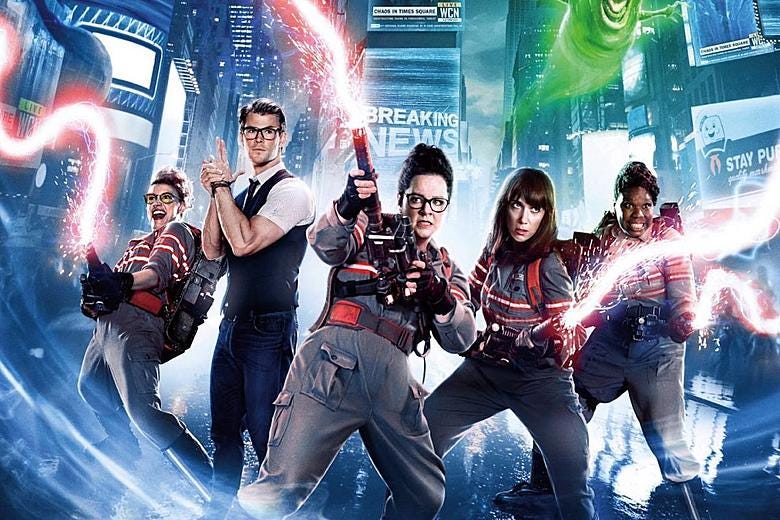
Ghostbusters (2016) didn’t fail because it had an all-female cast. It failed because it forgot to tell a compelling story. The Craft: Legacy didn’t flop because it had inclusive themes. It flopped because it had no themes beyond the most surface-level slogans about empowerment. Velma didn’t spark backlash because it centered a queer woman of color—it fell apart because it tried to mask its hollow core with self-aware sarcasm and smug commentary.
If your entire story falls apart the moment someone questions your casting choice, then maybe you didn’t have a story to begin with.
Changing a character’s race, gender, or sexuality doesn’t automatically make them interesting. What makes a character great is depth, conflict, humanity. The things that make us care. That’s what most of these reboots skip entirely. They focus so much on identity that they forget personality. They spend so much time sending messages that they forget to tell a story.
Another troubling trend in modern reboots is this obsession with deconstructing legacy characters. Not to challenge them. Not to evolve them. But to break them. To tear down what they stood for. To rewrite them as cynical, broken, bitter relics of a “less enlightened” time, all so the new characters can shine brighter by comparison.
Luke Skywalker didn’t need to become a disillusioned hermit who gave up on everything he believed in. Indiana Jones didn’t need to be dragged through Dial of Destiny like an afterthought in his own saga. He-Man didn’t need to be killed off in the first episode of Masters of the Universe just to make room for someone newer, someone better, someone more in line with today’s messaging.
These aren’t brave choices. They’re lazy ones.
They don’t add complexity. They subtract meaning. They don’t offer growth. They replace inspiration with resentment.
When a hero is torn down without being rebuilt, what’s the point? What are we left with, other than a vague sense that we’re supposed to feel ashamed for ever liking them in the first place?
We’re not adding depth—we’re just burning the mythology to make room for a lecture.
And audiences see it. They feel it. Even if they can’t always explain what’s wrong, they know when something’s missing. And more and more, they’re deciding they’d rather not tune in at all.
The good news? People are waking up. And they’re pushing back.
Not because they’re bigots. Not because they can’t handle change. But because they love stories. Real ones. The kind that make you feel something. The kind that make you care. And they’re tired. Sick and tired of being told that if they don’t like the reboot, they must be the problem.
That argument doesn’t work anymore.
People want progress. But they want it delivered with sincerity, not condescension. They want characters who feel real, not checkboxes brought to life. They want conflict and resolution. Joy and sorrow. Flaws and redemption. They want to see themselves in the story. Not as a product of corporate demographic targeting, but as human beings.
When stories get that right, audiences follow. No matter the cast. No matter the theme. But when the writing is lazy, when the structure is weak, when the message is louder than the plot, people tune out.
This isn’t about being “anti-woke.” It’s about being anti-shallow.
Most of these modern reboots don’t start with a writer. They start with a spreadsheet. A boardroom meeting. A list of IPs and a deadline. Someone in a suit says, “What haven’t we rebooted yet?” And once the title is locked in, they build backwards. Writers are hired to retrofit a plot around a marketing campaign. Not the other way around.
That’s why these stories feel hollow. That’s why they feel like paint-by-numbers morality tales dressed up in borrowed costumes.
There’s no arc. No risk. No growth. No reason to care.
Just familiar names reciting unfamiliar dialogue in a world that no longer makes emotional sense.
That’s what happens when storytelling becomes content. When the message becomes the goal, and the meaning gets left behind.
So how do we fix this?
We remember why stories matter. We stop asking what a story says and start asking what it means. What it feels like. What it makes us feel. Because that’s the part the spreadsheets can’t calculate. That’s the part the trend reports can’t engineer.
We don’t fall in love with franchises. We fall in love with characters. With arcs. With worlds built on sincerity and shaped by meaning. And if studios want to recapture that magic, they have to stop selling us nostalgia and start giving us stories again.
Because stories aren’t sermons. They’re mirrors.
And when they’re done right, they don’t just reflect the world. They reflect us. Our fears. Our hopes. Our failures. Our longing to become something more.
That’s the power of story.
And no reboot can fake it, because deep down, we don’t just want to be entertained—we want to be moved. We want to believe in something again. A hero. A quest. A truth. And until storytellers remember that, we’ll keep getting content instead of cinema. Noise instead of meaning. But the moment someone dares to tell a real story again? We’ll all be ready.
We’ve been waiting long enough for it.
I’ve got a smuggler with a knack for finding trouble, a handful of cutthroats on his tail, and a world full of secrets that won’t stay buried. If you want to help keep the adventure going, grab a book or send someone my way. You can find it all in The Cole Harper Adventures.
The idea of a reboot already implies that there is something wrong with the original version and something that needs to be changed, so it's a derivative work from the start. I can't think of any which really improved things and of course there's the propaganda angle, which will subvert the message of the source.





The idea of a reboot already implies that there is something wrong with the original version and something that needs to be changed, so it's a derivative work from the start. I can't think of any which really improved things and of course there's the propaganda angle, which will subvert the message of the source.