


Game launches used to be simple.
You shipped. Magazines like GamePro or EGM gave their review. Players played.
The market decided.
I’ve been playing games since the late 1980s, and I can confidently say the era of simple, clean launches is over.
Today, every major release has become a cultural battleground. Before a single review is published, before a single player logs in, the discourse machine fueled by social media has already sorted a game into a side.
The game is either a symbol of social justice and inclusion, or a symbol of regression appealing to ‘manchildren’.
There’s no neutral ground.
The core of what defines a game, it’s gameplay, is overshadowed by cultural controversy.
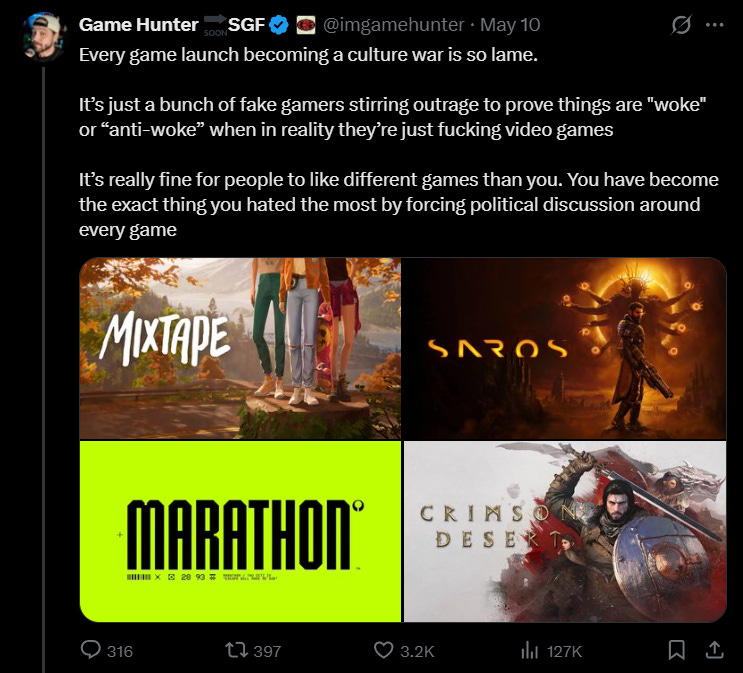
Game Hunter on X mentioned this recently:
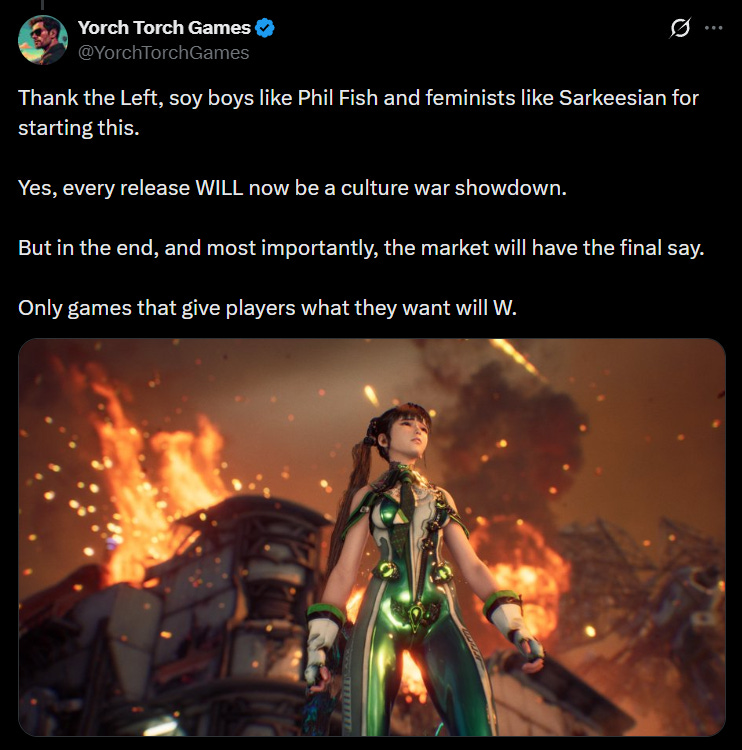
To which I replied in my characteristically candid and raw style on X:
But the phenomenon both Game Hunter and myself talked about didn’t happen by accident.
It was built and perfectly engineered.
Let’s see how.
How We Got Here
In the early 2010s, a particular strain of cultural criticism found a new target: video games. Figures like Anita Sarkeesian, funded by crowdsourced campaigns and amplified by sympathetic media and even the UN, introduced a framework that treated games primarily as political texts.
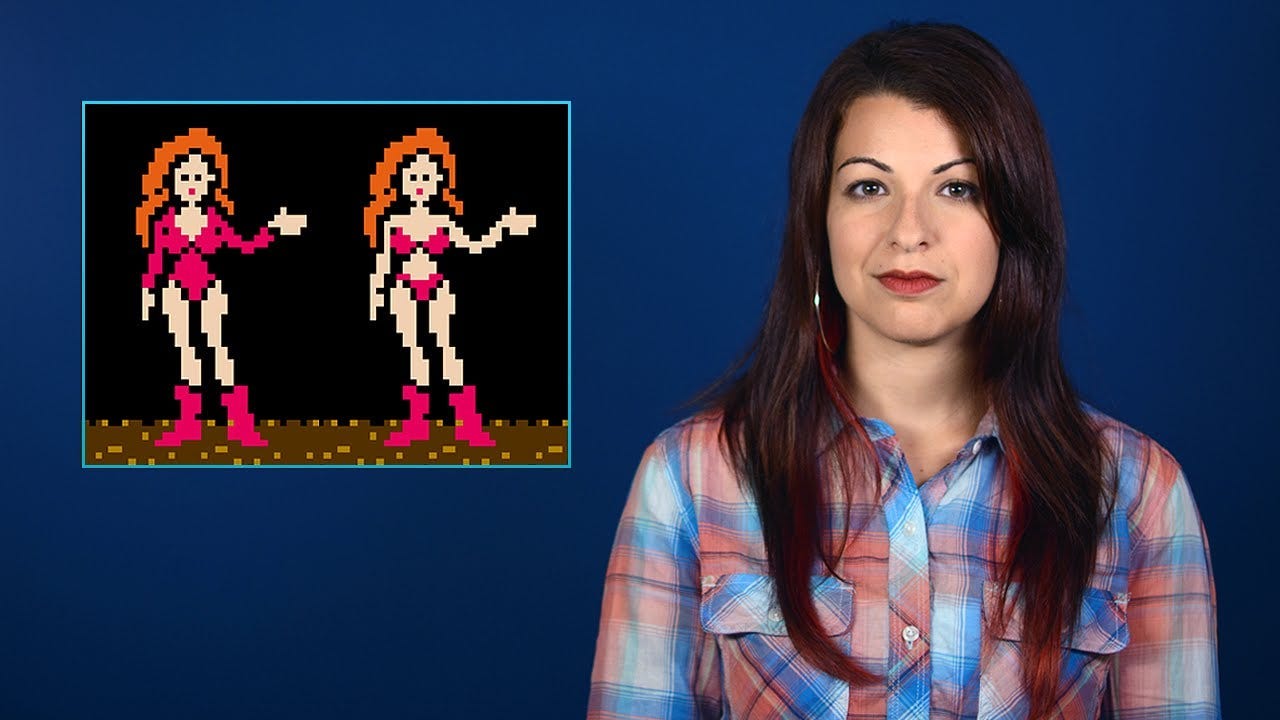
Characters weren’t characters anymore. They were symbols of systemic power and heteropatriarchal oppression. Stories weren’t stories. They were ideological statements requiring correction and sanitization.
The games industry, concentrated in western studios staffed by people who wanted cultural legitimacy and a bizarre concern that ‘there weren’t enough women in the gaming scene’, did what insecure industries always do: it listened.
As a consequence, diversity consultants entered pre-production pipelines.
Narrative teams began running scripts through ideological filters before they ran them through playtesting.
Writers even became narrative designers.
The question shifted from will players love this? to will this get us criticized?
The game industry, once defined by its creativity and irreverence, was now afraid.
Afraid of the backlash orchestrated by social justice warriors on social media.
Afraid of being ridiculed.
Afraid of… being itself.
And the results were inevitably visible in the release slate.
Let’s take a look at the output.
The Evidence
Concord launched as a hero shooter with a roster that read more like a corporate diversity statement than a cast of characters players wanted to play.
Even robots featured he/him pronouns.
The game only lasted 9 days on the market. It was one of the fastest commercial failures in AAA history. The game was not bad because it was diverse per se. It was bad because the people making it had forgotten what players truly want.
And no one wanted to play as this.
No one.
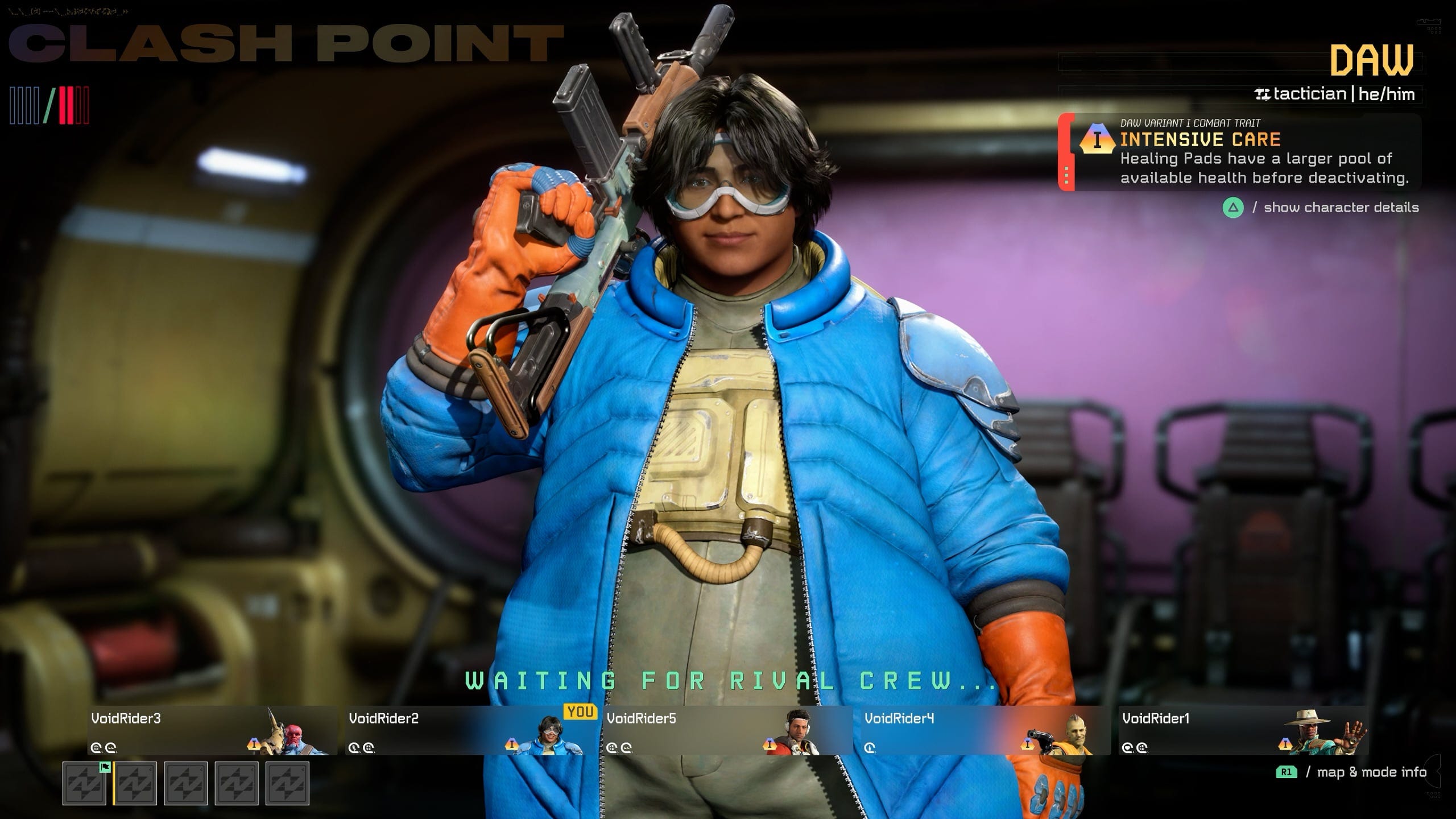
Marathon entered its marketing cycle and immediately triggered the same pattern… Screenshots of Bungie supporting BLM and Pride month were part of the game’s release discussion.
Marathon’s character designs were analyzed for ideological intent before gameplay was evaluated on its merits.
Asmongold went viral for saying this:
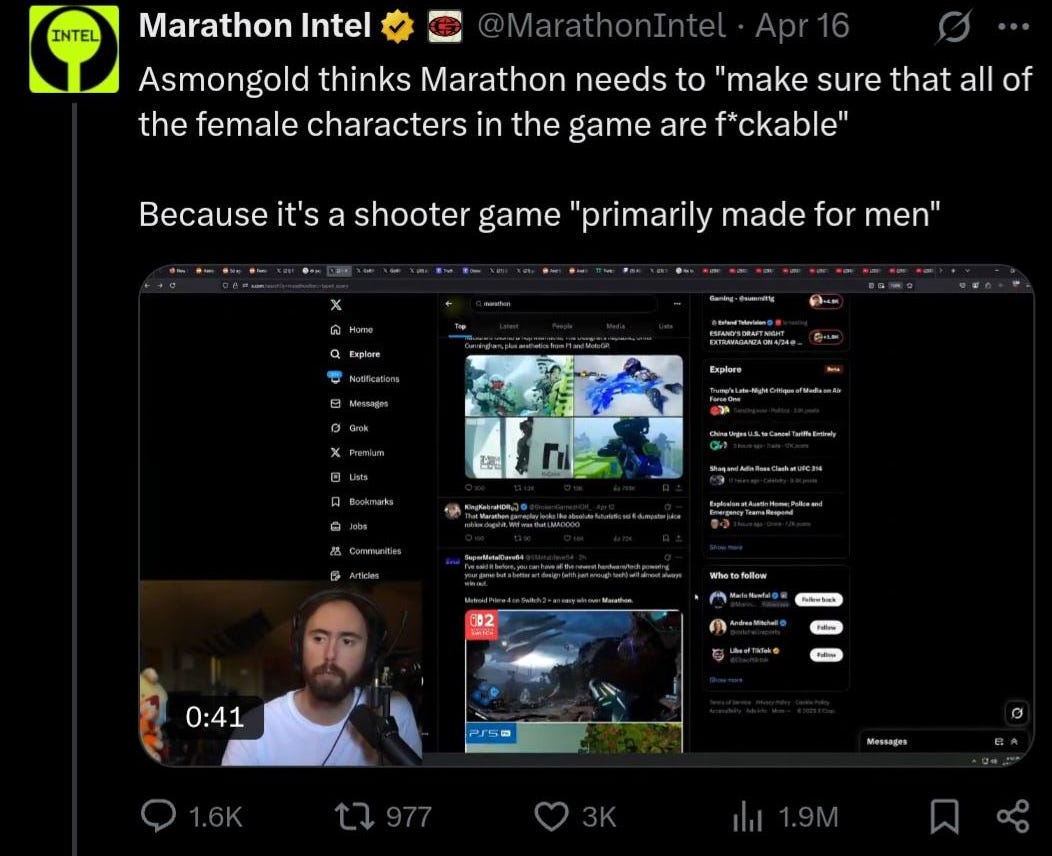
The cultural pre-sorting had already begun before Bungie shipped a single build.
Mixtape and Saros followed the same trajectory: games that arrived carrying political weight they hadn’t earned through the quality of play or character design.
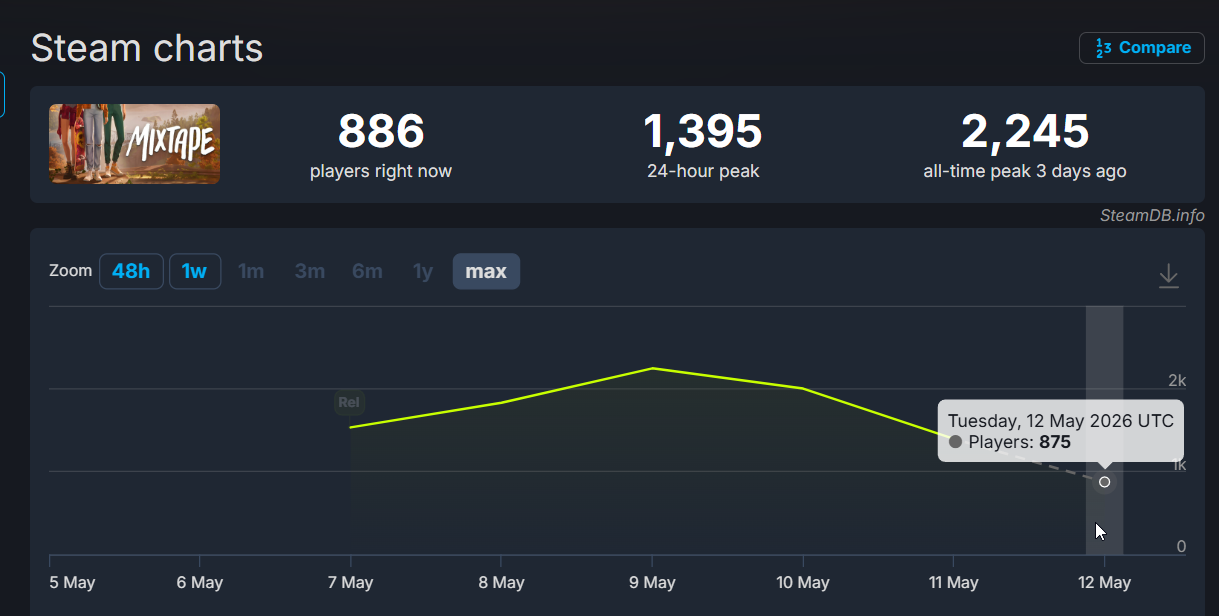
Mixtape in particular was received with a tapestry of 10/10 reviews by major media outlets, including IGN, that felt inauthentic. Players noticed and the game peaked at only 2.2k concurrent players on Steam.
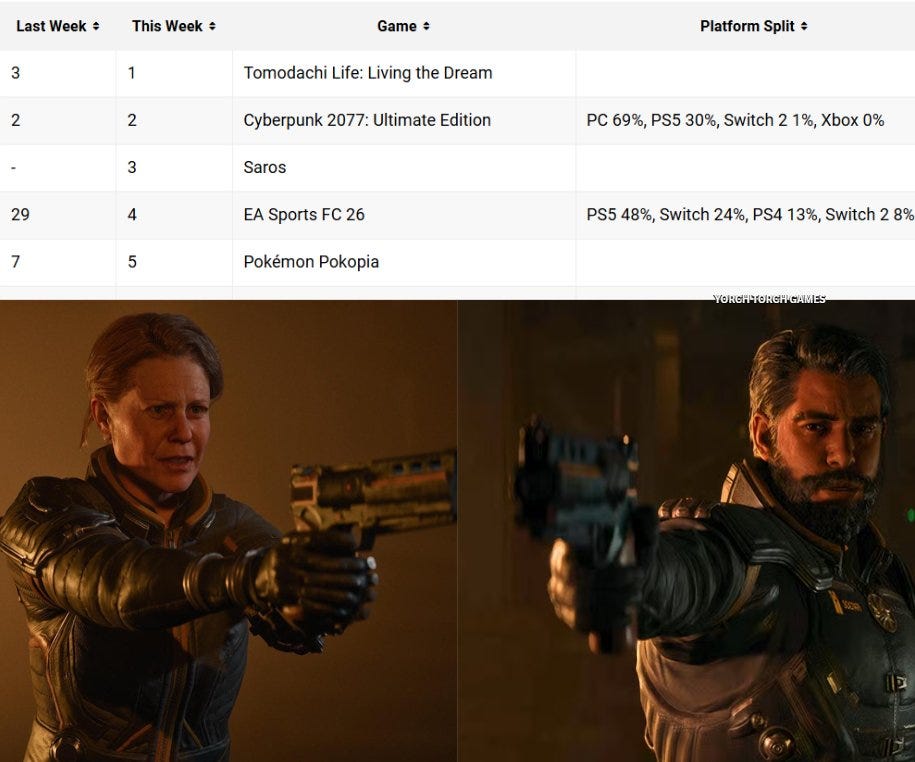
Saros, a game criticized by its character designs and motifs centered around a conflicted man who ends up being taught a lesson by a lesbian couple, underperformed in the UK sales charts at launch (sitting behind Cyberpunk 2077, a game released 6 years ago) and couldn’t make it to the top 5 digital downloads according to PS Store data in the US.
Meanwhile, Crimson Desert showed a different path. Aggressive. Visually distinct. Mechanically brutal. A game that communicated a clear creative vision to players who wanted exactly that. No apologies. No consultation about whether the tone was appropriate. Just a game made by people who believed in what they were making.
The game would sell 2 million copies in its first 24 hours, even if biased outlets like IGN gave it a 6/10.
Pragmata, a game revered by its gameplay, was praised by players selling over 2 million copies in 16 days, while activists immediately complained about the game celebrating the joy of fatherhood and mentorship.
I even created a meme to illustrate the difference between Pragmata and Saros.
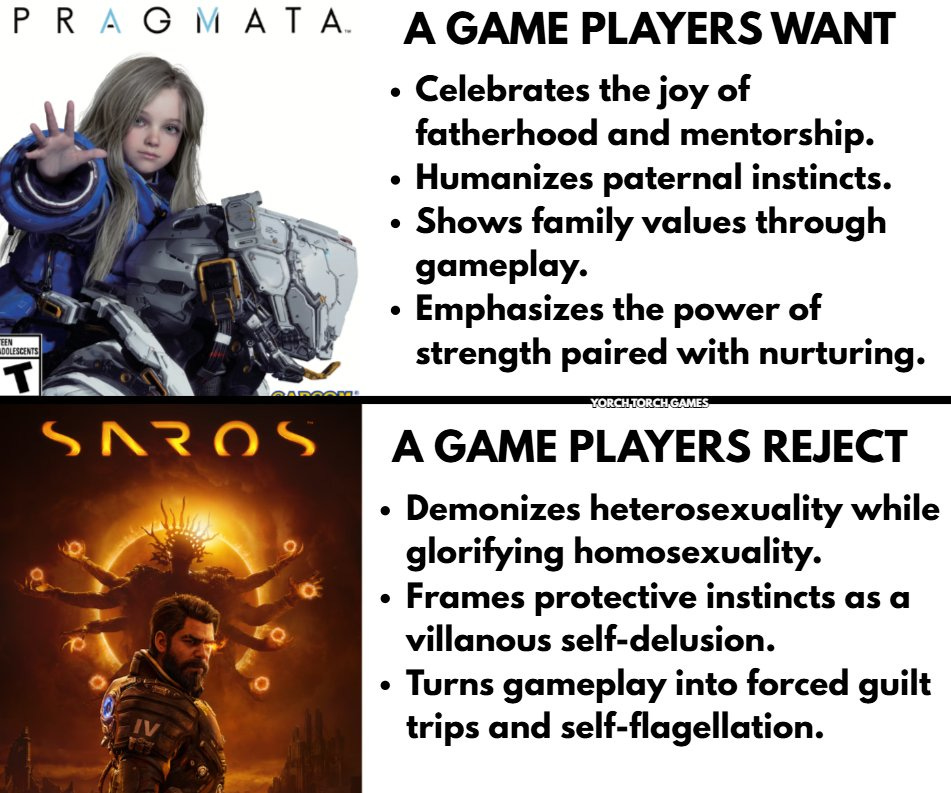
Both Pragmata and Saros were part of the culture war. Pragmata won. Saros lost.
And who was the ultimate judge? The market.
The Actual Problem
Game Hunter was right to be frustrated. But the culture war isn’t the disease, it’s the symptom. The disease is that a generation of western studio leadership learned to optimize for cultural approval and inclusion checklists rather than player desire.
When you build for critics and DEI consultants first and players second, you get games that win arguments and lose markets.
The eastern studios, Shift Up with Stellar Blade, Pearl Abyss with Crimson Desert, didn’t absorb the same decade of ideological input.
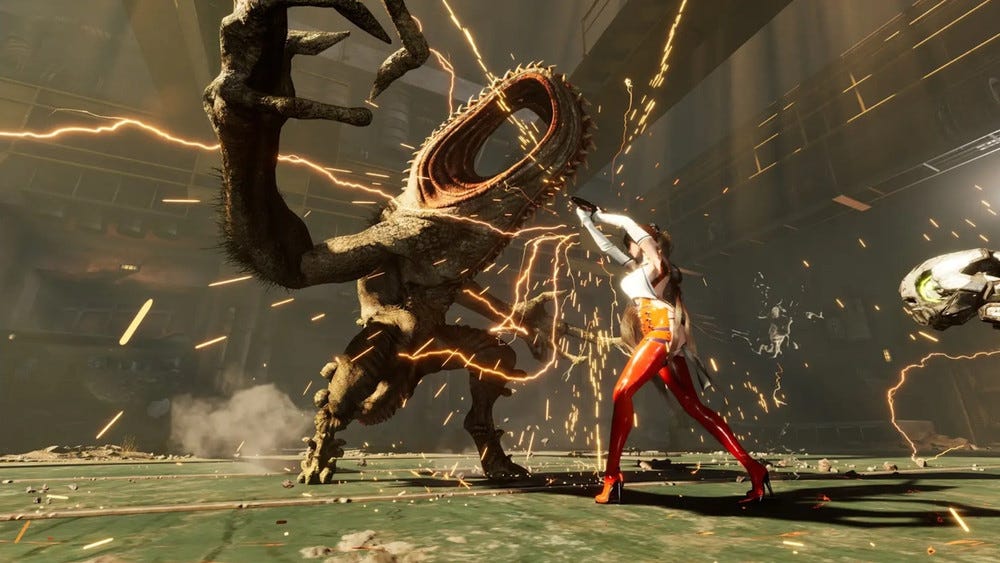
They were insulated from it by geography, language, and a fundamentally different relationship with their audience.
They asked one question: what do players want to experience? Then they built that.
The Verdict
Sarkeesian and her successors didn’t destroy the games industry. After all, we wouldn’t be talking about games if they had actually succeeded.
They colonized a part of it: the part that was already insecure about its cultural status.
The games that failed didn’t fail because of politics.
They failed because the politics displaced the craft and the incentive to give players what they want.
The market ultimately cares about one thing: did this game give players something they wanted badly enough to pay for?
Every game that forgot that question paid for it at launch.
Every game that answered it correctly is still being played, shared and remembered for all the right reasons.
The culture war will continue.
The outrage accounts will keep sorting releases into sides.
The think pieces will keep arriving.
But the scoreboard is public.
And the market is already delivering its verdict, one launch weekend at a time.
ONE LAST THING: The Forge by Yorch Torch Games is the leading newsletter on market intelligence and design strategy for the game industry. Consider becoming a free or paid subscriber.
I'm really starting to think the gameplay is no longer the most important part of a game now, which is crazy. Silent Hill F (great hybrid of a survival/dark souls game), Saros (more innovative Eternal with crafting in a rogue lite), Expedition 33 (Mario and Luigi on roids), all had great gameplay but they pushed the gay message so I had to give them a -1/10. They're actually giving me everything I want, gameplay wise, in a game but I can't support it cause they'll just continue making games with good gameplay but DEI and SJW messaging.
Awesome article Yorch Torch. Thanks for always showing awareness on these topics. Totally understand where you're coming from.
I've been "done" with leftist games for about 9 years now. If I see blue and pinks, girl-bosses, and the like, I won't give the game a chance - and I'm always proven right.
"But-but-but, you're missing out!" No, I'm not. Missing out on an unfun, boring gender-journey lecture is time well spent and money well saved.
GTA6? Forget it. No FOMO. Don't care. Can't be coerced, no matter how loudly the game review sites push the crap.
But another aspect of modern games was ignored here: the corporatization of the development process. Public corporations that hold these studios don't want risk - they want return. So the studios are forced to regurgitate previous cash flows and avoid risk that delivers a fresh gaming experience. At that point, the only thing making the game stand out is the idiotic social lectures.