


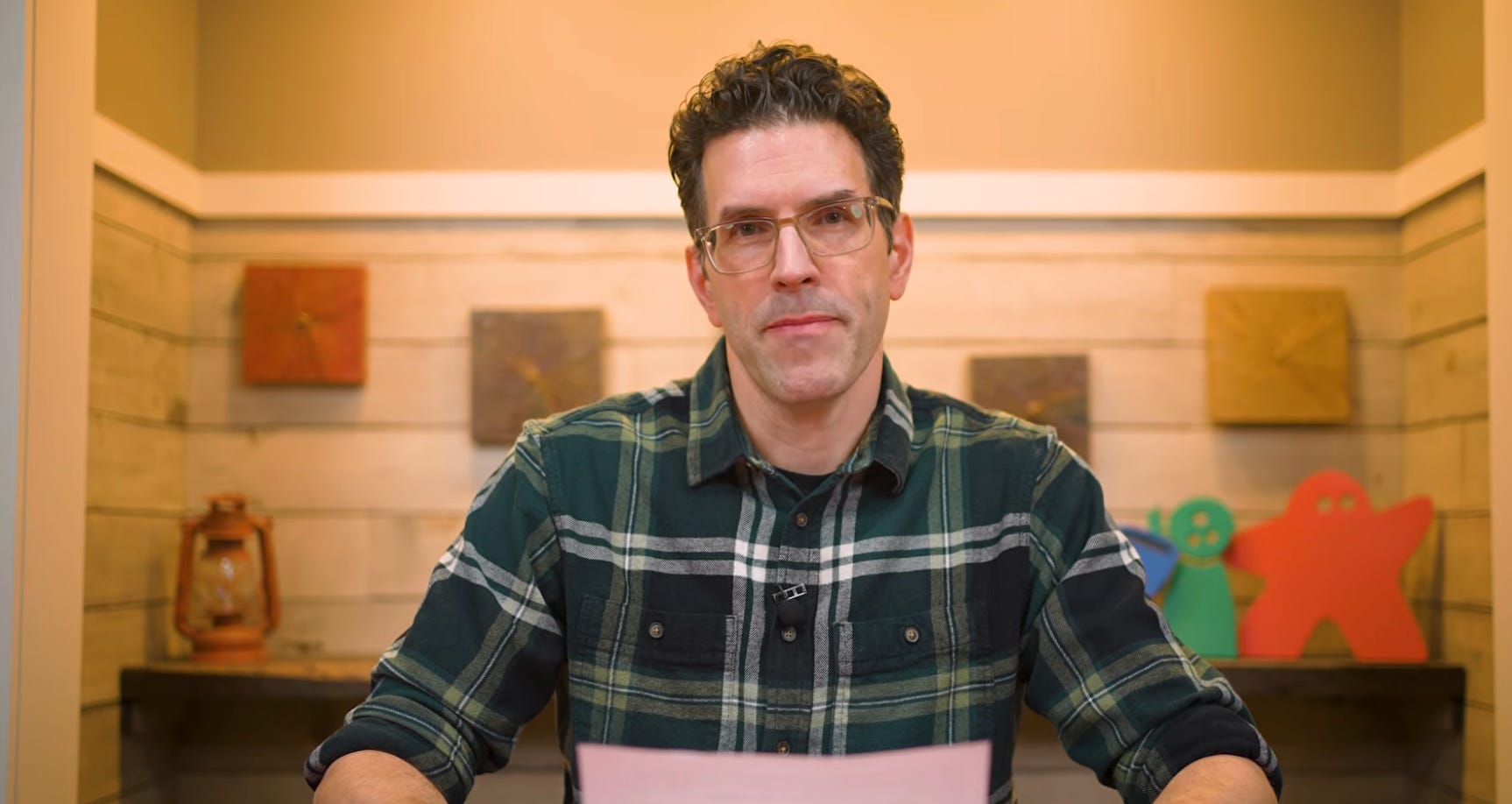
Rodney Smith of Watch It Played has released a detailed exposé revealing how a former collaborator systematically defrauded board game publishers through an advertising scheme that artificially inflated viewer numbers while ensuring most viewers never saw the ads they paid for. The scandal exposes the corrupt underbelly of the board game reviewing cottage industry, where clout-chasing and financial manipulation have replaced honest content creation.
Smith published a comprehensive document detailing how the owner of Game Night Picks, a channel where Smith’s former collaborators appeared for six years, used YouTube’s paid advertising features to artificially boost video views and subscriber counts while charging publishers per-view fees for advertisements. The scheme worked because only the channel owner had access to analytics showing that approximately 90-95% of viewers left videos before the paid advertisements aired.
The fraud operated through a simple but effective mechanism: Game Night Picks adopted a “per view” fee structure where publishers paid based on total video views over a fixed period. Videos that normally received 1,000-3,000 organic views suddenly jumped to averaging 36,700 views after the channel owner began paying YouTube to promote content through the platform’s integrated advertising system.
The financial impact was enormous. A publisher paying 4 cents per view on a video with 3,000 organic views would pay $120 for their advertisement. The same video with 36,000 artificially boosted views would cost $1,440 - an increase of $1,320 for an ad that 90-95% of viewers never saw because they left before it played.
Smith’s document includes audience retention graphs showing the massive viewer drop-off that characterized videos using YouTube’s paid promotion. The blue line representing viewer retention plummets within the first minute, with only 5-10% of viewers remaining by the time publisher advertisements appeared later in the videos.
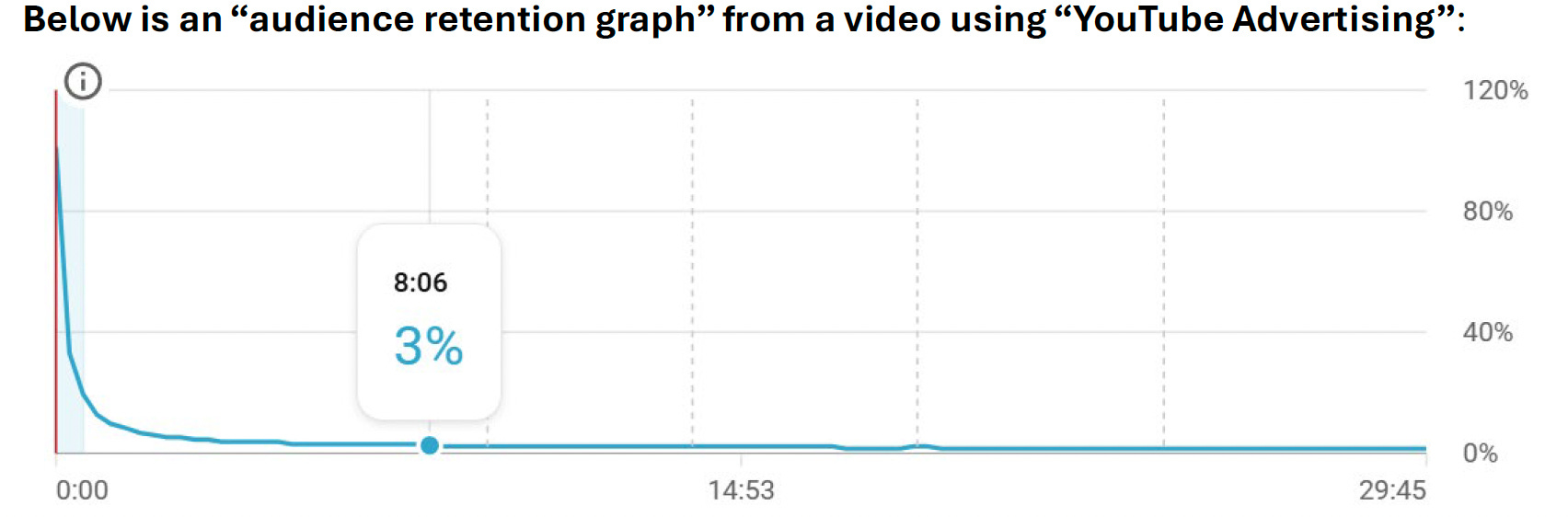
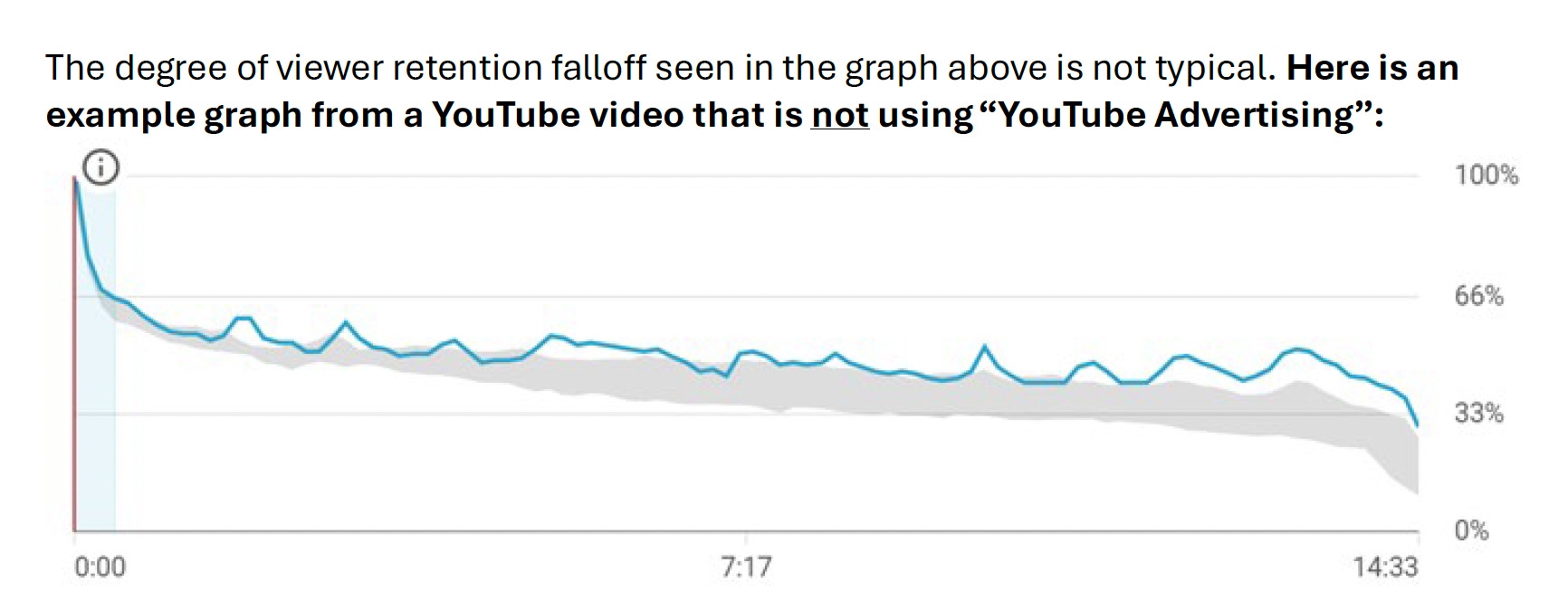
This data was only visible to the channel owner, creating an information asymmetry that enabled the fraud. Publishers had no way of knowing that the impressive view counts they were paying for represented viewers who never saw their advertisements. The channel owner could point to high view numbers while concealing that those views were worthless for advertising purposes.
The scheme extended beyond view manipulation to subscriber fraud. Game Night Picks grew its subscriber base by over 140,000 in just two months using YouTube’s paid promotion features - growth that typically takes board game channels several years to achieve organically. Monthly subscriber growth jumped from around 200 to over 70,000 during the period when paid promotion was active.

Despite this massive subscriber influx, behind-the-scenes analytics showed that traffic “from subscribers” didn’t increase at all. If even 1% of the new subscribers had returned to watch future videos regularly, traffic from subscribers would have increased by roughly 1,453 viewers. The lack of any noticeable change proved that the paid subscribers weren’t actually engaging with content.
Smith’s document contrasts this artificial growth with Watch It Played’s organic metrics over its 15-year history. Watch It Played has never used YouTube’s paid advertising features, with all views and subscribers coming from genuine audience engagement. The comparison makes clear that Game Night Picks’ explosive growth was purchased rather than earned.
The ethical problems extend beyond simple fraud. When Smith confronted the Game Night Picks owner in December 2025 about the data he had observed, the owner’s response was to offer discounts to affected publishers rather than acknowledge the fundamental deception. Smith pointed out that even a 70% discount would still constitute fraud if only 5% of total viewers actually saw the advertisements.
The discounts also created a misleading impression that Game Night Picks was doing publishers a favor by reducing fees, when in reality the publishers were still overpaying for advertisements that reached a tiny fraction of the claimed audience. A 70% discount on worthless advertising is still worthless advertising.
Smith’s decision to go public came after the Game Night Picks owner showed no willingness to fully disclose the situation to affected publishers or cease the deceptive practices. Smith realized that his six-year association with Game Night Picks through Watch It Played could lead publishers to assume he was complicit in or aware of the fraud, potentially destroying the reputation he had built over 15 years.
The timing of Smith’s disclosure is particularly notable. He released the information through an unlisted YouTube video and accompanying document, making it accessible only to those with direct links rather than promoting it widely. This approach suggests Smith wanted to inform affected parties without turning the situation into a public spectacle, though the unlisted format also limits the reach of his warning to the broader board game community.
The scandal reveals the insular nature of the board game reviewing industry, where a small group of content creators operate within overlapping networks of collaboration and cross-promotion. Game Night Picks featured multiple hosts who also appeared on other channels, creating a web of relationships that made it difficult for outsiders to understand who was responsible for what content.
This cottage industry operates largely on clout and perceived influence rather than transparent business practices or verified metrics. Publishers make advertising decisions based on subscriber counts and view numbers without access to the engagement data that would reveal whether those numbers translate to actual advertising value.
The lack of industry standards or oversight enables schemes like the one Smith documented. There’s no board game reviewer equivalent of the FTC’s influencer marketing guidelines or the advertising industry’s verification standards. Publishers are left to trust that content creators are honestly representing their audience reach and engagement.
Smith’s document also reveals the legal implications of the advertising scheme. He consulted with lawyers who confirmed that failing to disclose the use of paid promotion while charging per-view fees carries both civil and criminal legal implications.
The Game Night Picks owner’s claim that discounts had been issued to “some publishers” raises additional questions about selective treatment and whether certain publishers received preferential disclosure while others remained in the dark about the true nature of the view counts they were paying for.
Smith’s warning that the owner’s activities “would be discovered due to the overt and unnatural viewer and subscriber growth” proved prescient. The channel’s metrics were so obviously artificial that anyone with industry knowledge could recognize something was wrong, even without access to the behind-the-scenes analytics that proved the fraud.
The document notes that as of January 29th, 2026, Game Night Picks was still gaining approximately 1,000 subscribers daily - growth that no board game YouTube channel achieves naturally. This suggests the paid promotion scheme may have continued even after Smith’s confrontation with the owner.
Smith explicitly states that he doesn’t believe other people appearing in Game Night Picks videos had knowledge of the underlying data showing how the inflated numbers were achieved. Only the channel owner would have access to the analytics proving that paid promotion was driving the growth and that most viewers were leaving before advertisements played.
Smith’s decision to end his working relationship with the Game Night Picks owner came after concluding that the association threatened to undermine the trust he had built with publishers and viewers over 15 years. Even though Smith never engaged in the deceptive practices himself, his professional connection to someone who did created reputational risk he couldn’t accept.
The board game reviewing industry now faces a reckoning about transparency and ethical advertising practices. Publishers need to demand more detailed performance data before paying for advertisements, and content creators need to disclose when they’re using paid promotion to boost their metrics.
The question now is whether the board game industry will implement reforms to prevent future fraud or whether this scandal will be quietly forgotten as the cottage industry returns to business as usual.
Rodney did the right thing. Hopefully the owner involved will follow suit. If not, the lawyers will have a field day with it.
$10 says Rodney was absolutely aware of this and 100% cool with it up until he had some underlying philosophical disagreements with Game Night Picks that had nothing to do with this.