


This article comes in response to Graham Nolan calling John Trent’s interview with him, “divisive.” Hopefully, with the following analogy and explanation, you can better understand how this response is less indicative of Graham Nolan and more a testament to how X works as a digital town square.
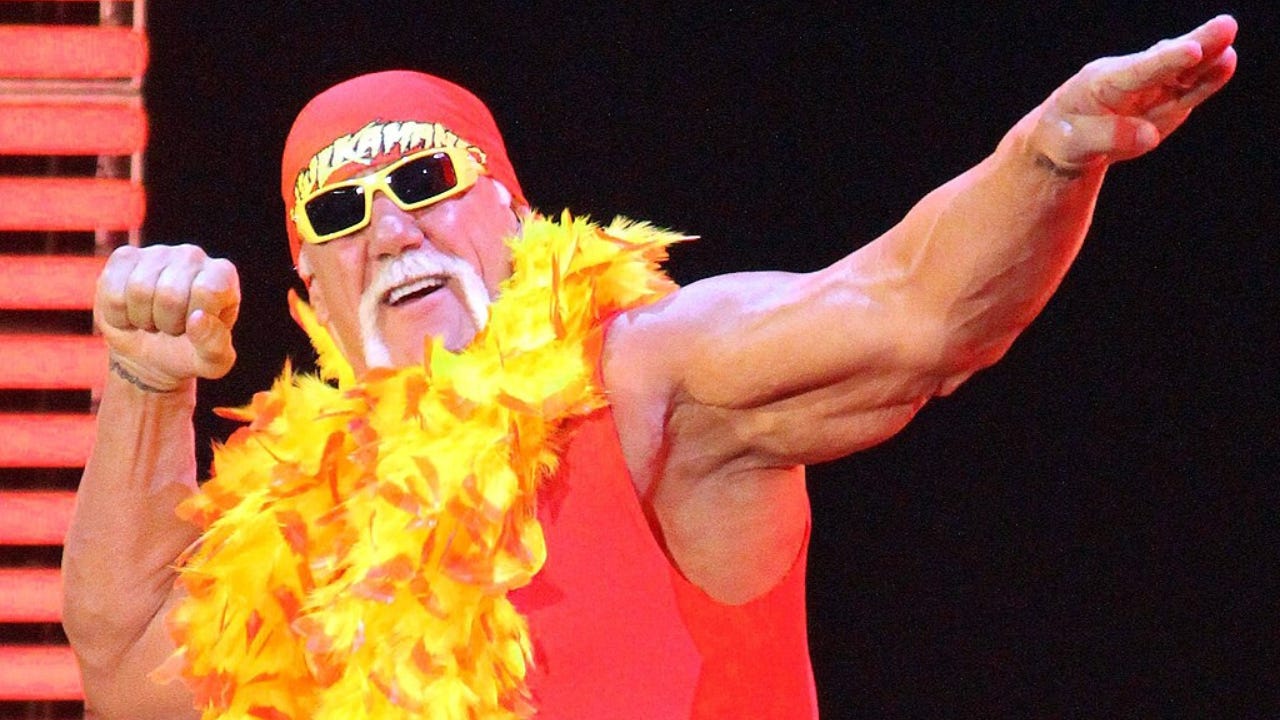
An Analogy: Performative Behaviors in Wrestling
In 1984, journalist John Stossel was interviewing WWF wrestler David “Dr. D” Schultz backstage at Madison Square Garden for an ABC 20/20 segment. When Stossel remarked that he thought wrestling was “fake,” Schultz slapped him hard across the head twice, knocking him down. Stossel later claimed lasting ear injuries and sued the WWF’s parent company, which settled out of court. The incident became infamous as an example of wrestlers defending the “kayfabe” illusion of wrestling’s reality through violence.
When people call WWE “fake,” they are responding to the unique hybrid nature of professional wrestling: it is neither pure sport nor pure theater, but a fusion of both. The accusation of falseness arises because audiences expect athletic competition to be unscripted, governed by chance and skill alone. WWE, however, operates under a different logic. Outcomes are predetermined, storylines are written in advance, and rivalries are choreographed to maximize drama. In this sense, WWE is not a sport in the traditional sense but a form of “sports entertainment,” where athletic performance is subordinated to narrative spectacle.
Wrestlers know who will win before the match begins, and sequences of moves are rehearsed to create tension and release. The taunts, betrayals, and alliances are part of a larger storyline designed to keep audiences invested week after week. Culturally, WWE thrives precisely because it transforms sport into narrative. The matches are not about determining who is the best athlete but about dramatizing archetypal conflicts: hero versus villain, pride versus humiliation, tradition versus rebellion. The scripted nature allows WWE to function as modern mythology, where outcomes serve an ongoing story.
Performative Politics
WWE presents an interesting analogy for understanding performative politics in the online environment. Both phenomena operate within a framework where spectacle displaces substance where audiences are invited to participate in narratives that are made to be emotionally compelling rather than substantive. Wrestling and online politics share a structural logic: they transform conflict into theater, privileging visibility and drama over consequence.
In WWE, the outcome of a match is decided before the wrestlers enter the ring. The taunts, betrayals, and alliances are scripted to maximize audience engagement. The athleticism is real, but the competition is staged. Similarly, in online politics, much of the conflict is choreographed. Politicians and influencers craft viral moments (soundbites, memes, outrage cycles) that function less as genuine deliberation and more as performances designed to capture attention. The “debate” is often secondary to the optics; the goal is not persuasion through reason but amplification through spectacle. Just as WWE thrives on the crowd’s cheers and boos, online politics thrives on likes, shares, and retweets.
The comparison deepens when we consider the role of audience complicity. Wrestling fans know the matches are scripted yet they suspend disbelief because the drama provides meaning. Online political audiences likewise recognize the theatricality of viral stunts, yet they participate because the performance affirms their tribal or political identity. In both cases, the spectacle is a modern ritual. The fakery is the condition of engagement: it allows narratives to be controlled, stakes to be dramatized, and identities to be reinforced. The audience therefore becomes enlisted in the performance themselves
Performative politics, however, operates within the sphere of governance. When political discourse becomes spectacle, the risk is that policy and accountability are subordinated to optics. The viral moment replaces deliberation, and the appearance of action substitutes for action itself. Just as a wrestler’s victory is predetermined, a politician’s online performance may be designed to signal virtue or dominance without altering material conditions. The danger is that politics has become theater without consequence, a ritual of visibility that has eroded trust in institutions.
The Meta of Performative Behaviors
Spectacle’s ascendancy has attained a system of logic in our time. Performative antics proliferate because they compress meaning into instantaneous visibility. Visibility implies importance.
However, not all performances are bad. Sunday worship is a type of performance, after all, and is useful in that our lives can be structured appropriately by liturgical processes in addition the Word Himself. Worship is important because it is a ritual that requires time, repetition, and community. What is concealed by the poetry of Scripture is, in fact, made to reveal Christ to us. God is a mystery to us, but one that we must engage in so that meaning can ripen.
In short, the purpose of worship is to respond to Christ, affirming His reality in a grand act of recognition and devotion.
Now, when we consider political performances, or secular performances in general, what we see is a hollowed-out replacement of old rituals. Performative politics on social media has become a form of discourse that offers the intensity of old rituals without initiation of the meaning behind them. In other words, people constantly display their ideals without dwelling within them.
This is where the WWE analogy strikes again. In WWE, wrestlers constantly display their personas (heroes, villains, rebels) through taunts, costume aesthetics, and scripted rivalries. Yet these displays are not lived identities; they are performances designed to capture attention in the moment. The wrestler does not dwell within the character as a way of life; he inhabits it only long enough to dramatize conflict for the crowd.
This is precisely the logic of online performativity. People project ideals through posts, memes, videos, and outrage cycles. But these ideals are rarely dwelt within as practices or commitments. They are displayed like a wrestler’s promo: exaggerated, stylized, and designed to elicit reactions. Just as the WWE match is scripted to end in a predetermined outcome, online gestures are structured by algorithms to maximize visibility.
The Scapegoating of Jon Del Arroz
The WWE analogy sharpens when we consider the audience. Fans cheer and boo knowing the spectacle is scripted. They do not expect the wrestler to live as the character outside the ring. Online, audiences likewise participate in the spectacle of ideals, liking and sharing without expecting consistency beyond the moment.
This is the logic I extend to Graham Nolan’s response on X. Online politics and discourse on X (Twitter) operate under a tribal logic. Generally-speaking, performative antics on X have proliferated to the extent that I doubt very little of what people say there is in any way reflective of their deeper convictions. Instead, this was a reflex designed to appease the negative attention drawn to John Trent’s interview.
I even hesitate to call it “negative” because the word would add some measure of legitimacy to it. More like this was a projection of ill will toward Jon simply because Jon is a convenient tribal enemy.
Jon Del Arroz has been turned into such an exaggerated boogeyman on X that it borders on absurd. The confrontations that arise around him are equally ridiculous since the supposed “evidence” of his wrongdoing is easily dismantled. Yet his critics remain more committed to preserving their narrative than to pursuing truth. In effect, Jon has become too convenient a “villain” in the imagined wrestling ring of X, serving as a perpetual foil for those who despise him.
The lies about Jon persist because they serve a structural function. His critics are not primarily concerned with truth but with maintaining solidarity through opposition. By casting Jon as the perpetual antagonist, they create a symbolic “Other” who can be attacked to reaffirm their own identity. In short, the reason Jon’s critics cannot be proven wrong, even in light of clear evidence, is because his vilification stabilizes their community.
Having an enemy you can rely on is nice. In tribal societies, this is known as “boundary enforcement.” Having an outcast marks the edge of acceptable behavior or belief. By repeatedly “punishing” your enemy, your respective group can reaffirm its mythic order and continue to purify itself.
This compounds the kind of pressure Graham Nolan has to signal against Jon on X.
Conflict resolution is anathema to online discourse. The reality is that most conflicts are built on hot air and could easily be reconciled but that would miss the point. The real goal is to create a mythology in your mind that gives you a reason to live. Millennial Woes captured this idea succinctly:
It’s amazing how much leftist discourse is just them pretending not to understand things, thus making discourse impossible.
This line is emblematic of a broader critique: that progressive rhetoric often operates through strategic incomprehension: a ritualized denial that forestalls meaningful engagement. In a nutshell, this is a performative refusal to acknowledge foundational truths, thereby intentionally sabotaging what ought to be a normal mode of human communication.
Utilizing the Attention Economy
While Nolan’s response is disappointing, I would advise all readers not to mistake a performative response for an essential one. In wrestling, the audience suspends disbelief knowingly; but in online discourse, the suspension of disbelief is less conscious and people take performative gestures as literal testimony.
Words cast casually from far-off distances on platforms that reward visibility should not be taken to heart as a person’s dwelling identity. Instead, they are simply part of the performative economy that governs attention. Even Jon himself is aware of this and he readily utilizes the potential of systems of attention as viable market forces. He’s good at it too, which is why his competitors hate him so much.
The platforms we use go beyond amplifying spectacle; they ontologize it. Algorithmic governance converts human presence into data and ranks that data by excitability. What circulates is what can be made countable. These are not accidental preferences but the outcome of psychopolitics: the soft governance of souls by metrics. The attention economy is not neutral; it weaponizes affirmation. It rewards whatever interrupts and interruption favors the loud and the theatrical (like constantly promoting the use of AI in writing books).
NEXT: No Hugging, No Learning - ‘Seinfeld’ and the Cultural Poison of Ironic Self-Awareness
