


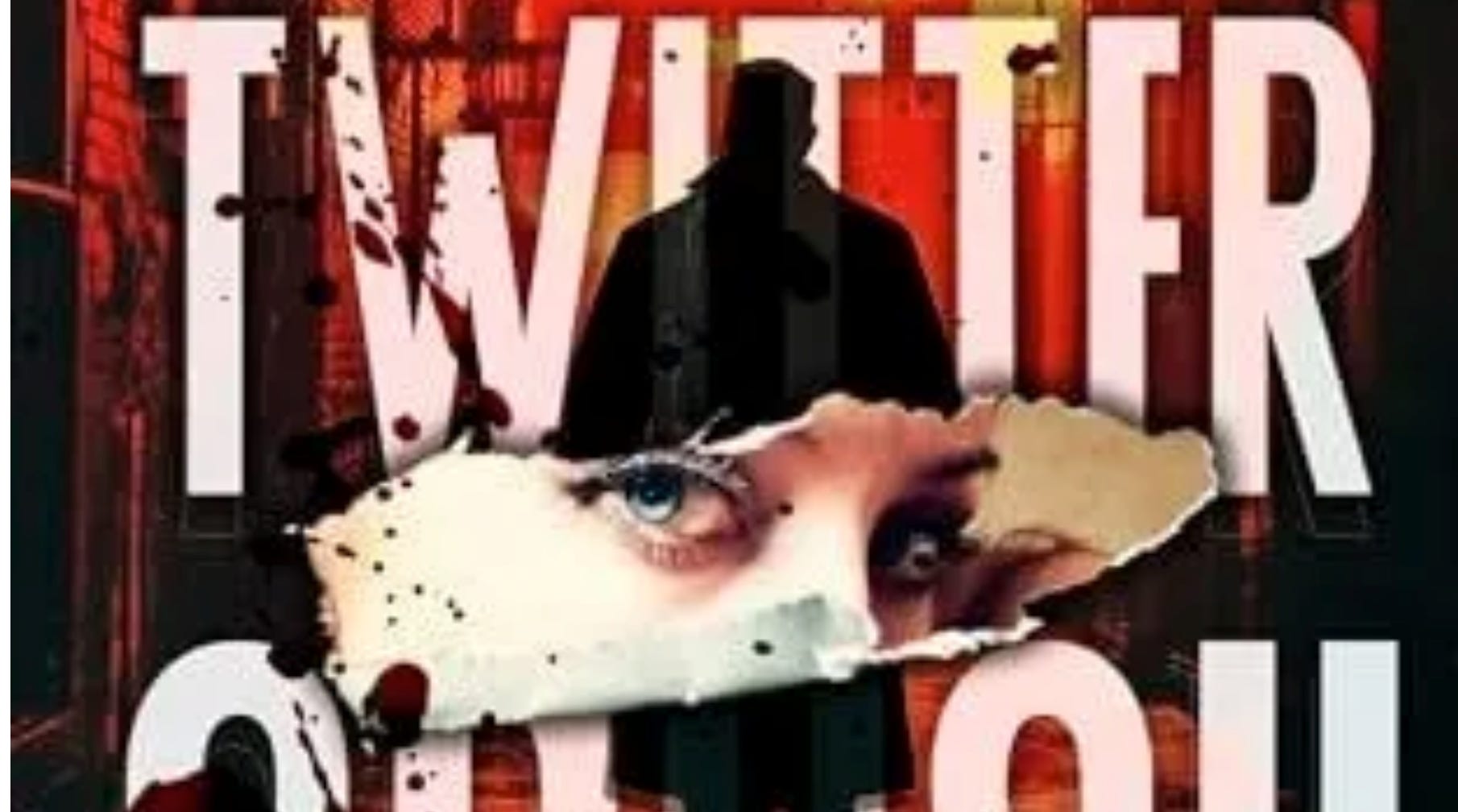
I read fantasy & science fiction primarily, but I take a dive outside my preferred genres every now and again. Such was the case when fellow indie author & editor Kristin McTiernan with the release of her latest indie novel, a crime thriller called The Twitter Crush.
Its a crime thriller for readers who are terminally online.
The last crime thriller I read was a random shelf pick, one of the Rizzoli & Isles books: The Mephisto Club. I recall liking it. Crime dramas on TV were also a favorite. Back when procedural TV was worth watching, I was a frequent viewer of all the CSI shows and some Law & Order, Dangerous Minds, etc. This outta feel like putting on an older pair of comfy pants. Not quite as I discovered.

The Twitter Crush is a simple narrative idea executed in a unique way. It’s very much a modern story with modern sensibilities that feels like it could only have happened in this era, so take note if you’re not a fan of modern politics. Although it deals with them, it isn’t making a statement about them either.
On the surface, I can tell you that it’s about Jackson Reed, a highly paid ghostwriter pretending to be a male feminist, pumping out vapid girl power screeds for feminist icons to take the credit for—even though he despises them and their movement. So long as he gets the money, he doesn’t care. His dealings with Irina Sterling, an up-and-coming feminist icon, lead to a series of events that take him down a trail of missing persons and evidence that Irina not only might not be who she claims but is responsible somehow.
Not an uninteresting idea, but where the book shines is HOW the story is told. Rather than a straightforward third or first person POV, the narrative is told via a series of short, alternating chapters each with a different social media delivery. One chapter might be a personal log, one is a chat transcription, another might be a transcript of a YouTube interview, or an excerpt from a book, sometimes a series of texts between characters, or a clip from a documentary. Sometimes these are done after the fact or during the events. It makes for a unique unreliable narrator because, despite feeling like a collage of clips and snippets done after the story, you’re never quite sure who makes it to the end, so the tension stays as the book ramps it up.
It can feel like you’re watching a documentary ABOUT the case at hand, just in short chapter form. It’s the kind of idea that makes this book one of the most unique books I’ve ever read. One that could only have happened in our current era of social media.
This kind of narrative delivery device depends entirely on the execution and Kristin nails it. This works largely thanks to her knowledge of how social media users and content creators work and think. A lot of commentary will feel very familiar to readers who are on social media who are embroiled in the mosh pit we call cultural discourse. It goes a long way in presenting a main protagonist and antagonist who are multiple layers of not-what-they-seem. Depending on your views, you might have sympathies or disdain for characters you didn’t anticipate. She trusts the reader to be smart enough to reach their own conclusion. I appreciate that.
If there’s anything to criticize, it would be that this narrative format is not going to land with every reader. It’s very unconventional, and that’s what helps it stand out, but also what could work against it depending on what kind of reader you are. Not so much a criticism as being aware of what’s in store.
If you’re not familiar with Kristin, she runs a YouTube channel called Nonsense-Free Kristin with commentary about the trad and self-publishing spaces, as well as author interviews. When she’s not breaking authors’ hearts by editing their work, she’s also a self-published author.
