


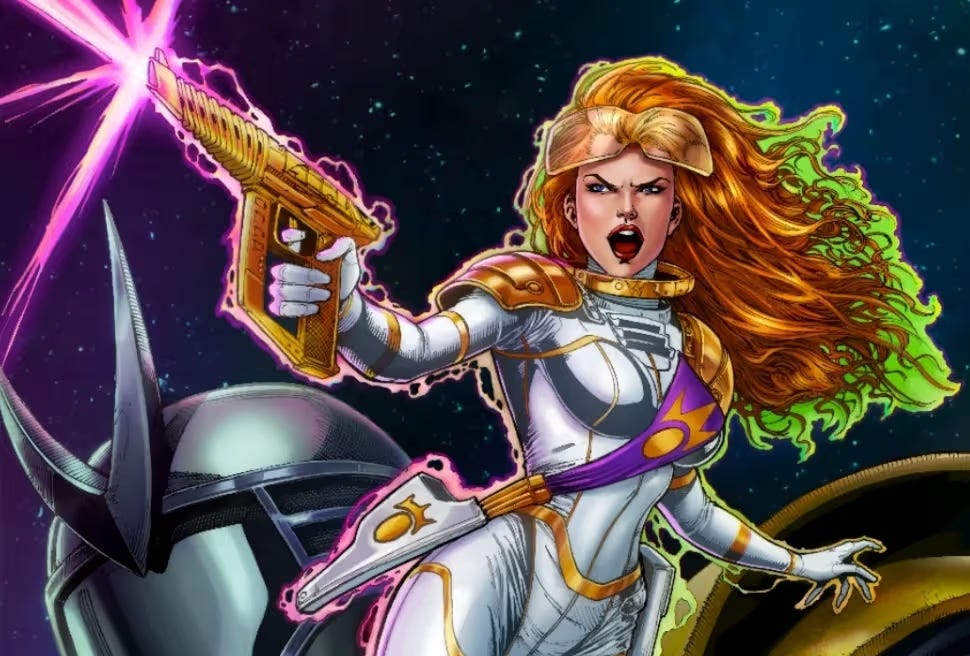
Ayla Rin: Gateway to Doom Part 1 is live on IndieCrowdfund with two weeks left in the campaign. The Terran Imperium series has raised over $125,000 across its previous campaigns, and this entry carries a special variant cover from Ethan Van Sciver. It’s probably the best comic we’ve made to date, and I hope you’ll check it out!
What I don’t get to talk about a lot in these spaces because of a lack of time, is where books like this come from creatively, and why that lineage stopped appearing in mainstream American comics a long time ago.
The Terran Imperium draws from a specific tradition of science fiction that the American comics industry abandoned when it decided superhero books were the only product worth printing. Before that, before Marvel and DC consumed the oxygen in every comic shop, the medium had room for stories about agents and explorers operating on the fringes of galactic empires. Poul Anderson wrote that version of sci-fi in prose. His Ensign Flandry series followed a young intelligence officer in the declining Terran Empire, running missions on frontier worlds where the politics were as dangerous as the aliens. The stories were fast, the stakes were personal, and the empire in the background felt lived-in because Anderson built it with the patience of a novelist who understood that civilizations have economics, religions, rivalries and rot.
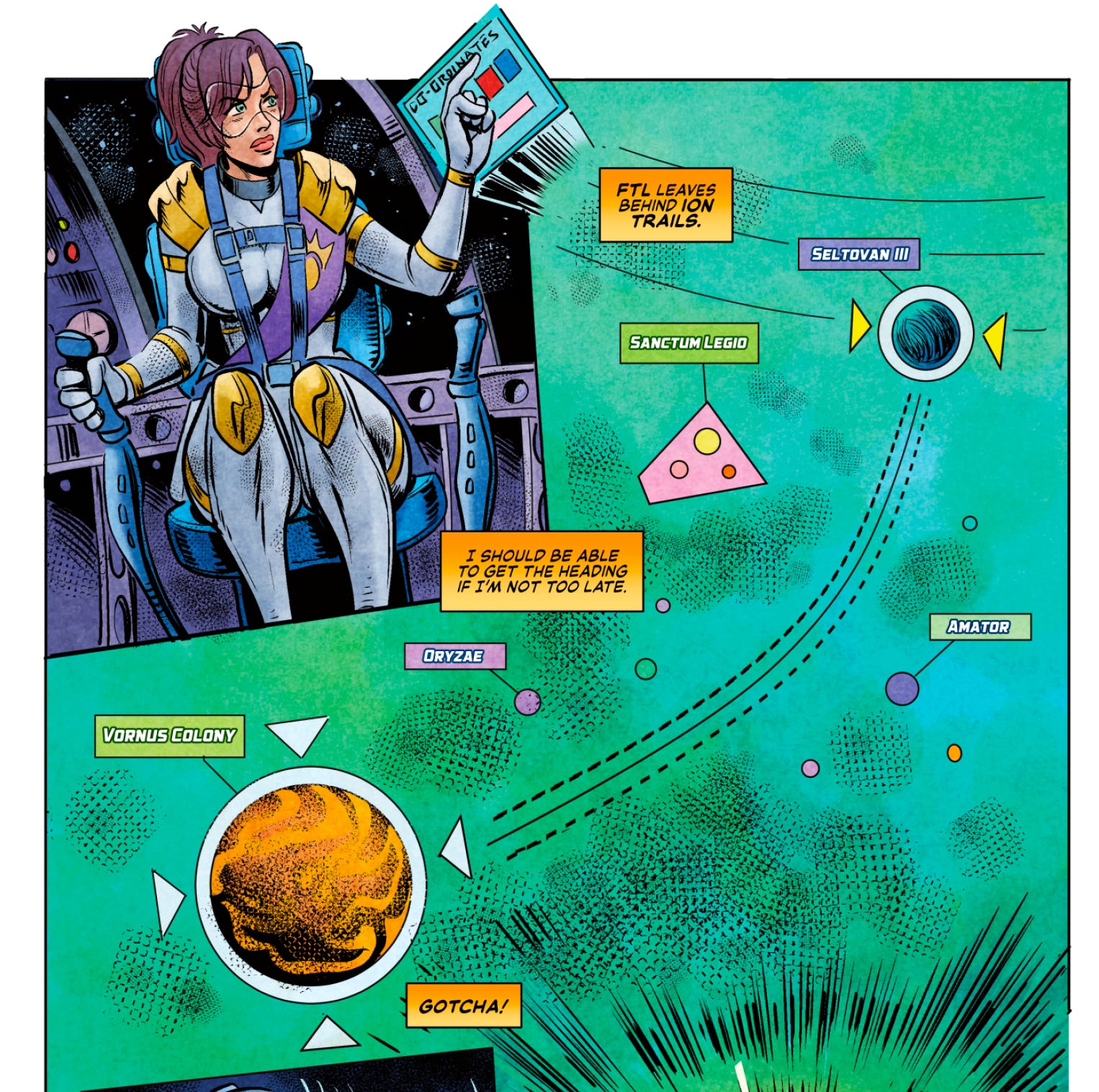
Ayla Rin lives in that same neighborhood. She is a Terran Imperium agent sent to places the empire would rather not think about, handling problems that don’t fit neatly into bureaucratic categories. Gateway to Doom puts her on a remote planet where two Imperial archaeologists have uncovered a buried gate. What lies on the other side pulls Rin into a situation without her usual resources, without backup, and without the institutional safety net that agents in stable empires take for granted.
The visual lineage runs parallel to the literary one. The Terran Imperium books take their look from two sources that modern American comics have largely forgotten. The first is the Franco-Belgian tradition, specifically Valerian and Laureline, the Mezieres and Christin series that ran from 1967 to 2010 and built an entire galactic civilization in sequential art decades before Star Wars borrowed its cantina scene from a Mezieres panel. Valerian’s universe was crowded with alien species, ancient technologies, and political intrigues that played out across dozens of albums. The art was dense with detail. Every planet looked different. Every species had its own architecture and body language. The series trusted readers to keep up with a universe that grew more complicated with every volume.
The second visual source is older. Steve Ditko and Jack Kirby drew space comics in the 1950s for Atlas and other pre-Marvel publishers. Those books had a specific quality that disappeared when the superhero genre took over: they treated space as strange. Alien landscapes looked alien. Technology looked like it came from a civilization that didn’t think the way humans think. The color palettes ran hot and weird. Kirby’s monster comics and Ditko’s surreal dimensional spaces carried a visual vocabulary that said “you have never seen this before” on every page. When superheroes ate the industry in the 1960s, that vocabulary got folded into costume design and fight choreography, and the pure science fiction application of it dried up in American comics almost entirely.
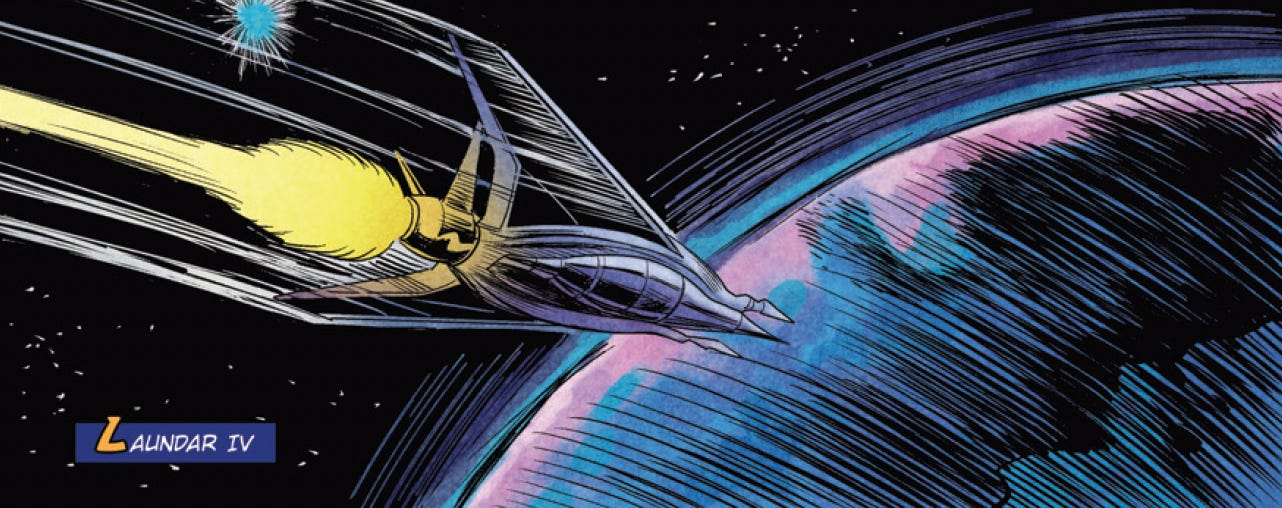
The Terran Imperium books are an attempt to bring both traditions back. The art team, led by Miz Krimzon, works in a style that sits between the European album tradition and the Ditko-era sense of alien strangeness. The result is a comic that looks like it comes from a parallel history where American sci-fi comics kept developing alongside the superhero genre instead of being swallowed by it.
Gateway to Doom is the third Ayla Rin story following Overmind and The Hidden Emperor. The previous entry, Hidden Emperor, funded in under three hours on Kickstarter and finished at over $51,000 from 679 backers. The series has built its audience through crowdfunding after mainstream platforms like Kickstarter removed the creator’s campaigns over political targeting.
For longtime readers, Gateway to Doom includes a connective element to the broader Terran Imperium fiction line that ties the comics and the novels together. The specifics are being kept under wraps for readers to discover on their own, but the series has a track record of planting callbacks and payoffs across books that reward readers who follow the full line. Those who have been reading since Overmind and the original Ayla Rin prose novels know what that looks like.
The campaign features multiple tiers including digital, physical copies, and the Van Sciver variant cover. Two weeks remain.
https://indiecrowdfund.com/projects/jda/ayla-rin-gateway-to-doom-part-1
Can indie sci-fi comics reclaim the tradition that Poul Anderson and Valerian built, or has the American market moved too far toward superheroes for that kind of storytelling to find an audience again?
It's too bad they did such a lousy job with the Valerean movie. You would think with the amount of money it costs to make a space opera movie there would be some desire to have a quality product. But they miss it. Right now I am more intrigued by videos on you tube made with AI then anything Hollywood puts out
Good to see real storytelling is making a comeback.