


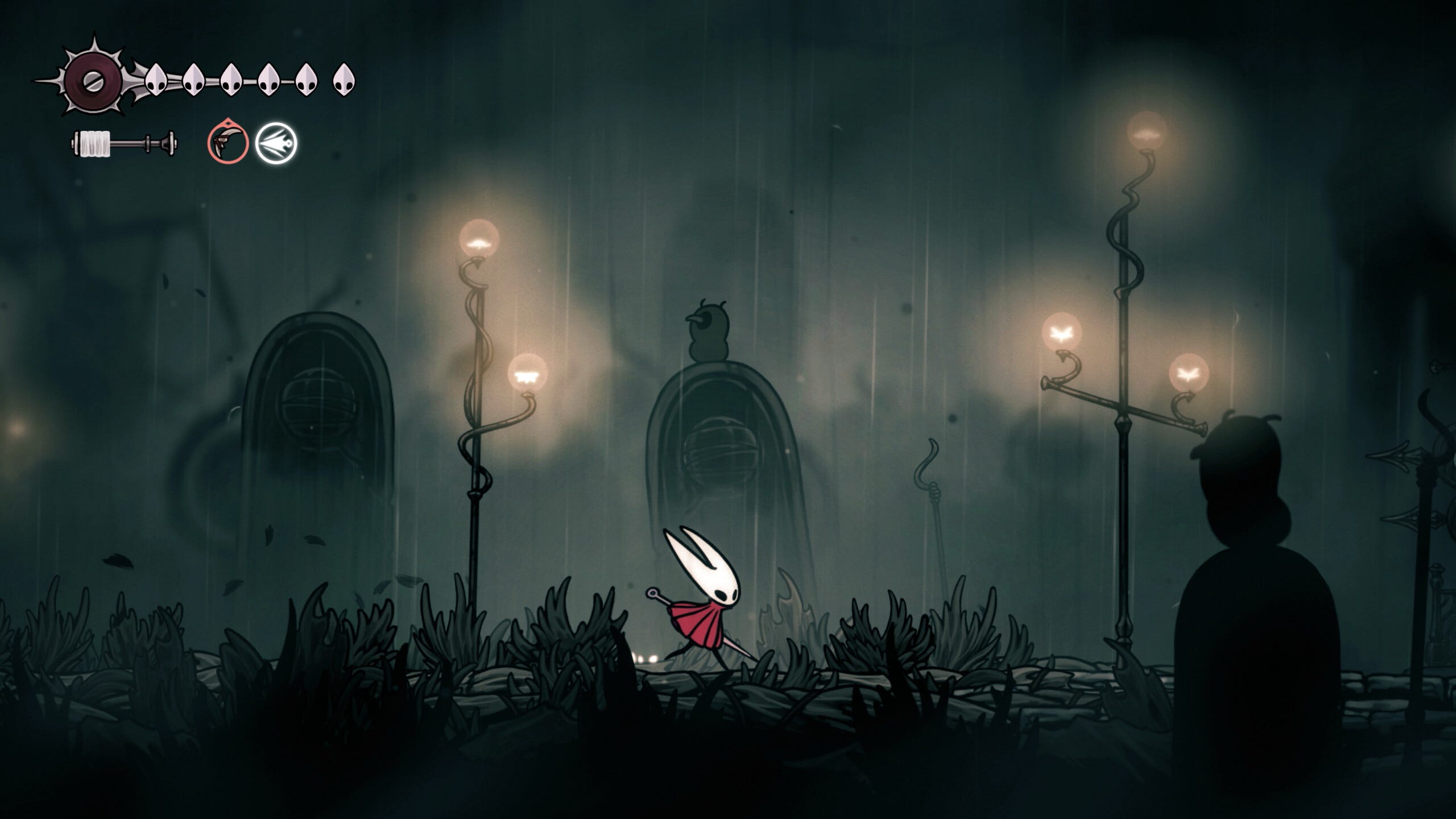
We’ve hit the point where reviews exist without the game because content waits for no one.
There was a time when game reviewers played the games they talked about. Journalists wrote from experience and didn't just quote trending charts. Criticism was grounded in encounter with the material at hand, hours spent exploring mechanics, testing systems, and reflecting on what worked and what didn’t.
A video game review was not a reaction, it was a reckoning.
That time, unfortunately, is long since gone. And we are slowly catching up to that fact.
The content treadmill doesn’t care if you played the game. It only cares that you posted about it.
We now live in an economy of attention spans. Speed is currency. The reviewer must be first, not thorough. The journalist must be visible, not invested. The critic must be optimized for the algorithm, not for insight. And in this new economy, the game itself becomes secondary. What matters is the performance of engagement, not the substance of it.
Steam Charts now replace playthroughs. Reddit consensus replaces personal reflection. A thumbnail with a furrowed brow and a title in all caps replaces the slow work of playing through and understanding the medium. Today's most popular reviewers need not touch any game they review now. They need only gesture toward its popularity or its decline. And their audience will just eat it up without question.
This is the gamification of online criticism. The review itself has become a spectacle and the game is the backdrop. The current job of the review is to look at the audience for his metrics, all the while giving them a brand through which they can be reflected. And the feedback loop this provides is one of the biggest reasons why we are repeatedly fed slop after slop after slop.
None of this is actual analysis. It is choreography to the tune of upvotes and downvotes. It is a ritual of numbers, a liturgy of engagement, and an act of belonging in a world of loneliness.
Latina Parfait’s recent video, "Based" SHILLS grifting off Success of Hollow Knight Silk Song, exposes this collapse with surgical precision. The problem is not that reviewers are right or wrong about their criticism. The problem is that they are not reviewing at all. Instead, they are reacting to reviews. They are responding to metrics. They are interpreting charts. They are reading Steam player counts like sacred texts.
They do not play the games. They do not need to. They believe the numbers speak for themselves.
This is the gamification of online criticism. The most ironic thing is that the games themselves become irrelevant and nobody really talks about them. A high player count means the game is good. A low player count means the game is bad (maybe even woke.) Meanwhile, the reviewer need not engage with the game at. All engagement occurs with the discourse surrounding the game.
Reviewers just need to be first. They need to be loud. And, above all, they need to be monetized.
Astonishingly, audiences accepts this. These are bugmen. They do not ask whether the reviewer has played the game. They ask whether the reviewer is on their side. The review becomes a proxy battle in a larger war against anyone who doesn't share a consensus opinion. The content machine is so ravenous that reviewers don’t even bother playing the games they’re reviewing.
There are numerous problems with this type of engagement. Aggregate reviews can be botted. Sentiment can be manufactured. A flood of positive or negative ratings may reflect coordination and not genuine experience. Even when the reviews are organic, they often mirror the Reddit “updoot” mindset where someone says the right phrase, hits the right emotional note, and is rewarded with visibility. In short, the review becomes a performance of consensus and not a record of encounter.
A highly upvoted negative review may not necessarily signal a deep analytical appraisal, but a chorus of agreement rooted in shared frustration. Furthermore, the loudest voices may drown out more nuanced or thoughtful perspectives. While it can be fun to get wrapped up in criticism as venting ground for righteous fury and indignation, there is a point at which criticism cease to be a space for sincere reflection or understanding.
We are at that point. Nuanced or in-depth reflections are buried. Few people take the time to read them and fewer still finish the game before writing their own blurbs. The result is a feedback loop where shallow impressions are amplified and the thoughtful critique is drowned out. The reviewer, seeing this loop, learns to mimic it. He does not need to play the game, he just needs to echo the crowd.
This is not real criticism. Rather, it is crowd choreography and the illusion of insight built on the scaffolding of algorithmic affirmation. Take figures like the YouTuber, Dr. Disaster, whose commentary is all strategic manipulation of discourse and all without ever having played any (or many) of the games he talks about on a regular basis.
Dr. Disaster's claim to fame is to squint at Steam Charts like a Wall Street analyst. Most of his speculative nonsense is indicative of consensus, of simply reading and repeating what most voices in his audience already say and agree with anyway. It is the eternal shield of the pundit who wants to sound plugged-in without risking being wrong.
What's more, Dr. Disaster will invoke the word "gamers" time and again, even while admitting he hasn't played a particular game he is talking about. This has never ceased to baffle me. What it reveals that the title is all posturing and nothing more. Being a "gamer" is just the cheap performance of belonging to a group whose hobby you don't even engage in. These are not people who play, explore, test, struggle, or reflect on the medium at hand.
One of the most telling examples of this dynamic is the meme that began as a sincere remark: “Huge fan of [title], excited to play it for the first time.” It originated from a satirical Hard Drive article in 2017, mocking a self-proclaimed Earthbound superfan who had never actually played the game. The irony was too rich to ignore. Over time, the phrase became shorthand for a kind of hollow enthusiasm, where identification with a game’s cultural aura replaces actual engagement.
It’s not about playing. It’s about belonging.
And these are the people reviewing the games on any given chart. How many of them played the game more than five minutes? How many of them understood the systems in place? See, the problem with looking at a number, however large, is that you can't make any hardline distinctions. The problem with aggregate scoring is the assumption is that every review is equal simply because they are equally measured. Hardly anyone questions if a review is in support of a conclusion already drawn before the game even came out and before anyone actually played the game.
We live in an age where everyone is a media critic now. But that ubiquity alone cannot elevate the quality or depth of online discourse. The assumption that every critique carries equal weight or substance is a mistake. Popularity is no proxy for insight or rigor. Not every popular opinion deserves to be treated as the definitive judgment.
The tragedy, however, is that this reliance on democratic popularity is now distinctly tied to the algorithm game which means, essentially, that content creators are being rewarded for not playing the games they review. Gone are the hard-earned, sweat-drenched analysis forged through hours of engagement, wrestling with nuance, and wrestling with the medium itself. What we have now is a shallow hustle: a glance at Steam Charts, an echo chamber chorus of crowd analytics, and a dash of whatever gimmicky channel branding will rake in the views. Lather, rinse, repeat.
Video game reviews aren’t about video games anymore. They’re about generating content.
NEXT: Asmongold Announces He's Pausing Streaming To Take Care Of His Dad Who Has Cancer

The video listed in this article isn't one I'd give much credence to. Guy comes off as just being another kind of hater and not someone with real genuine and or valid criticism.
hollow knight is a talmud and kabbalah seminar.
Earthbound was so censored in the localized release that playing it uncensored is objectively a different experience.
The game is only "weird" or "quirky" because all the Pro-Life, Religious, and genuinely-adult themes (ie. not pornographic, but things that require hard thinking) that provide context are just not there. Game would probably be rated AO or a HARD M if the uncensored version was released in the US.