



We live in an age that trains us to speak before we have learned to listen. Nowhere is this more evident than in the way we “review” all contemporary media. Books, films, video games, and even entire human lives are constantly subjected to instantaneous verdicts and scoring, often before they have been allowed to properly unfold.
We have become a people who judge the seed before it has broken the soil.
To say this is a matter of impatience is to miss the the point; this is a symptom of a deeper cultural formation. Modern consumer culture teaches us that meaning is shallow and to be extracted quickly, efficiently, and with minimal cost. Therefore, we have been habituated to expect immediate returns: a book must “grab” us in the first chapter, a film in the first ten minutes, and a person with their first impression. And if we aren't satisfied, we move on.
Media has been reduced to a catalogue of sensations, all vying for the briefest glance of our attention. But even when our attention is captured, it has been trained to depart almost immediately.
Consider works that have endured, ones that have shaped imaginations across generations. They rarely conform to this logic. Herman Melville's Moby Dick is a text that seems unwieldy until its metaphoric world begins to take hold. Hayao Miyazaki's Spirited Away is one of those rare works that unfolds itself the way a memory does: slowly, indirectly, and in a way that resists the rapid consumption of modernity. Shakespeare’s plays continue to shape our imaginations to this very day, invite us into worlds where language, character, and moral tension meticulously unfold.

Ridley Scott’s Alien, on its surface, is a science‑fiction horror film about a man-killing monster, but its real power comes from a meticulous cultivation of dread. The film unfolds in the cramped corridors of the Nostromo, where every hiss of steam and flicker of fluorescent light deepens the sense of unease. Scott lets the camera linger on empty hallways, on the hum of machinery, on the oppressive stillness of deep space, until silence itself becomes a kind of antagonist. Alien does not rely on sudden shocks; its terror grows from the slow recognition of how small, unprotected, and profoundly alone the crew truly is. It is a film that discloses its meaning only to those willing to sit within its quiet, suffocating tension.
Star Trek: The Original Series, with all its mid‑century earnestness, endures because it asks viewers to linger with ideas rather than consume them. Its episodes unfold like moral parables, not in the abstract but through concrete dilemmas: Captain Kirk wrestling with whether to destroy a god‑like machine that has enslaved a planet; Spock navigating the tension between logic and compassion when confronted with the suffering of another species; the crew debating the Prime Directive when intervention might save lives but violate another culture’s autonomy. Again and again, the show forces its characters (and invites its viewers) to confront questions of justice, the abuse of power, the dignity of persons, and what a genuinely humane future might require. It is science fiction used not for escapism but for moral inquiry.

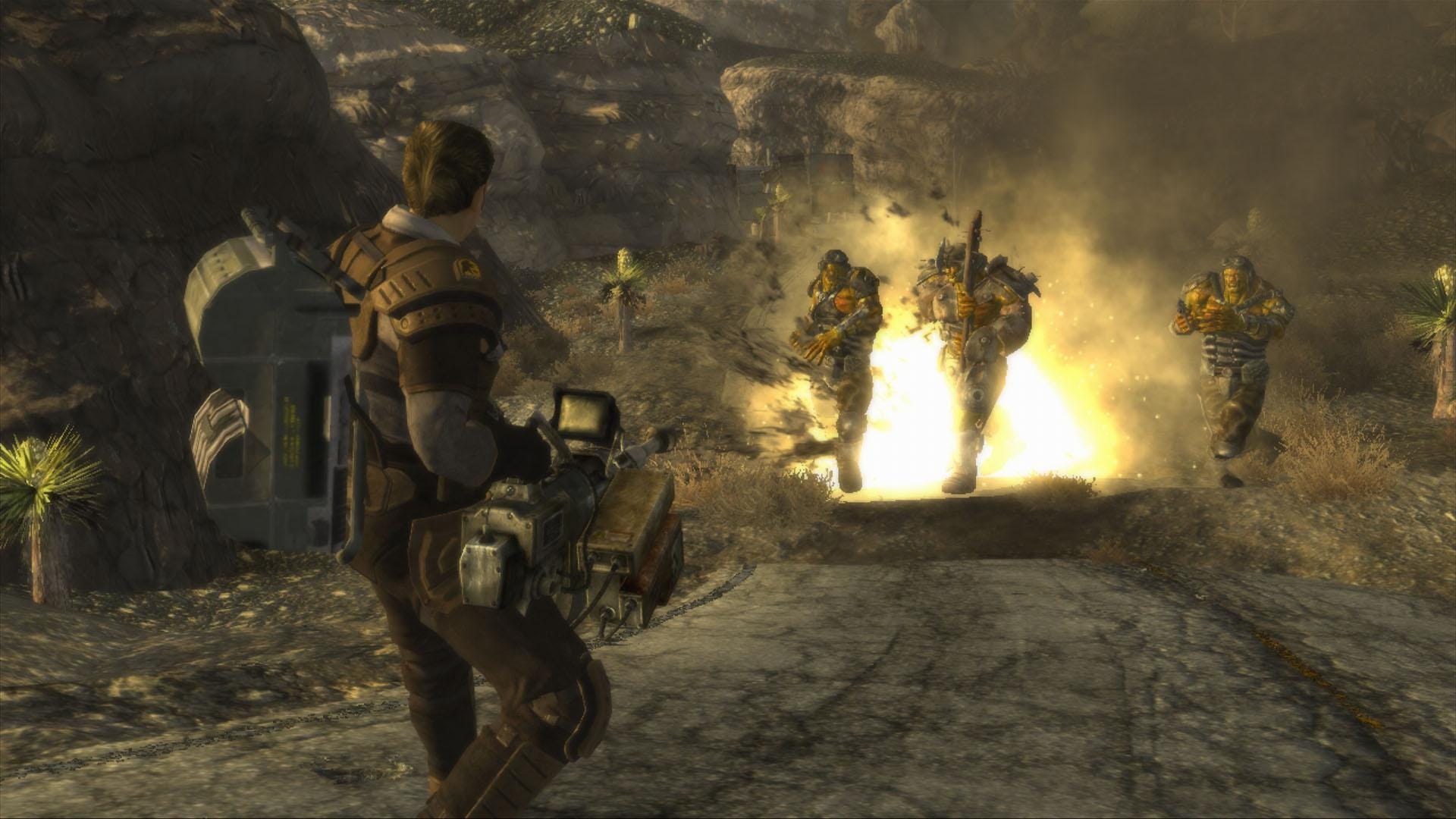
And, yes, even in the realm of video games, a medium often dismissed as disposable entertainment, there are works that invite deep and contemplative posturing. Obsidian Entertainment's Fallout: New Vegas is one such work. It does not reveal itself to the hurried player. Its opening hours can feel sparse, even desolate, as if the Mojave itself is testing your willingness to dwell in a world that refuses to flatter or entertain on demand. But for those who remain, the desert begins to speak.
The game’s moral architecture unfolds slowly, through choices that cannot be reduced to simple binaries of good and evil. Its factions are not caricatures but communities shaped by history, trauma, and competing visions of order. Understanding them requires more than a glance; it requires time and the ability to stay awhile and listen. The player must learn to inhabit the Mojave with the same patience one brings to a difficult text or a demanding film. Meaning emerges not through spectacle but through attention.
Such a work reminds us that even in digital spaces, meaning is not something extracted efficiently but something received slowly.
They are not commodities engineered for rapid consumption, the way our economy prefers its goods to be. As William T. Cavanaugh observes in Being Consumed, the modern marketplace thrives not on satisfaction but on perpetual desire. Commodities are purposely designed to be fleeting, to lose their luster almost as soon as they are acquired. The goal is not to buy but to keep shopping, to remain in motion, and to stay hungry. Shopping itself has become our new cultural liturgy: a ritual that promises communion but delivers only momentary stimulation and satisfaction.
Yet, there are works that stand in quiet opposition to that logic. The classics that have stood the test of time exist more as sacraments than commodities; outward signs that invite us into a deeper reality rather than distracting us from it. Their meaning is not exhausted by a first encounter and a brief review for a public with low attention spans.

Works that have lasting value require a posture of receptivity, and a willingness to dwell--to be formed rather than solely entertained. Where the modern marketplace offers experiences meant to be consumed and forgotten, there still exist works that demand we remain, in order to attend and to allow ourselves be changed.
The irony is that we often mistake our current formation for freedom. In a slough of reviews and critiques throughout social media, we believe we have been offered “honest reactions” and informed takes when, in fact, pop culture works under the liturgy of platform algorithms that reward speed and not depth. Survival means offering our judgments in haste, fearing that silence will render us invisible in the digital clamor.
We have been catechized into a cult of immediacy.
This is also why people review works they may have not finished nor even properly started. The goal is not understanding but participation; to be seen and to signal one’s place in the great churn of cultural commentary. The unfinished video game or half‑watched film becomes a prop in the performance of the self. We are no longer formed by the work; the work is just conscripted into the formation of our online identity.

To recover this posture is not simply an aesthetic preference. It is a spiritual discipline: a refusal to let our attention be colonized by forces that profit from our restlessness and impatience. Patience is a small act of resistance against a culture that confuses immediacy with insight.
Perhaps, then, the first step is simply to wait. Finish a work before you judge it. Work through a piece of media several times to allow it to speak in its own time rather than our own. In doing so, what will be rediscovered is something many have seemingly forgotten: that the most meaningful things in life do not reveal themselves to the hurried; they require longsuffering.
Patience, rightly ordered, is a form of love.
It is also tempting to think that this posture is necessary only for the great works, but the discipline of attention is just as important when we encounter works that are, quite simply, not good. If we rush to praise or condemn, we risk mistaking novelty for depth or dismissing something merely because it did not gratify us immediately. Haste makes us poor judges in both directions.
Cavanaugh reminds us that consumer culture thrives on this very instability. Commodities are designed to be fleeting, to lose their appeal quickly, so that we move on to the next thing without ever asking what made the last one hollow. Shopping replaces communion because it keeps us in motion; we never stay long enough with anything to discern its true worth. A culture trained to skim cannot tell the difference between the profound and the trivial.
When we give even a mediocre work the dignity of our attention, we learn to see why it fails. And when we dwell with a genuinely good work, we begin to perceive the quiet strengths that a hurried glance would miss. Patience sharpens our senses and teaches us to distinguish between what merely entertains and what genuinely nourishes.
Discernment is not a talent; it is a habit. And like all habits, it is formed through repetition — through the slow, deliberate act of attending to the world as it is and not as the marketplace packages it for us. To linger with both the good and the bad is to recover the ability to judge rightly, to see clearly, and to love what is truly worthy of love.

What?
you make your entire presence on this site based on articles that have nothing to do with their titles and personal attacks. you understand nothing of what you speak of and are desperately proud of it. Also stumping for a gay porn addict on youtube.
you have all the posturing and lifestyle of a demoniac, and the friend group of a satanist and a pervert: why then pretend to be AT ALL small-c “christian?”
an honest devil worshiper suffers less in hell than whatever this tripe is.
your curses are Consummately Returned back to whence they came with A St Michael Prayer and A St Benedict Prayer.