


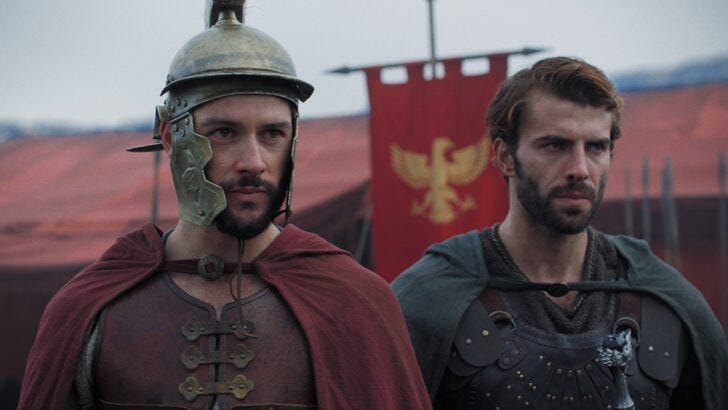
Episode five of The Pendragon Cycle accelerates toward what appears to be the season’s climax with two parallel narratives that showcase both Merlin’s supernatural authority and Aurelius’ martial legitimacy. With only two episodes remaining in The Rise of Merlin, the show is positioning these characters for a confrontation with the Saxon threat that has loomed over the entire season.
The pacing is relentless. Each episode has built on the last, and this installment maintains that momentum while delivering complete narrative arcs within the episode itself. It’s masterful television writing—propulsive without feeling rushed, episodic without sacrificing serialized storytelling.
Merlin in the North
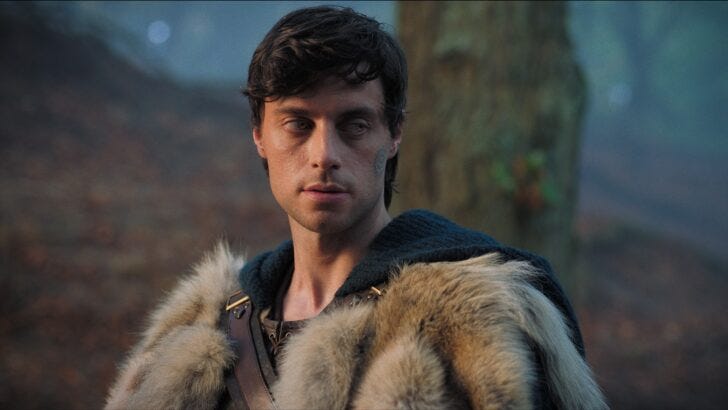
The Saxon threat is imminent. Merlin travels north to plead with a king he abandoned long ago, seeking to unite the fractured kingdoms before the invasion destroys them individually. The king is understandably hostile. Merlin’s past abandonment hasn’t been forgotten, and his return asking for military support is received with suspicion and anger.
Merlin ends up imprisoned. His companion—likely Pelleas, though the show doesn’t emphasize the name—is sentenced to death by drowning. The execution is brutal and medieval: weighted and thrown into water to sink.
Then Merlin acts.
The episode opens with a flashback to Merlin as a child among the Hill Folk, standing before the ancient druid stones. The young Merlin lifts all the stones simultaneously, demonstrating power that terrifies and awes the druids who witness it. It’s a brief sequence, but it establishes the scope of Merlin’s abilities in a way the show has only hinted at until now.
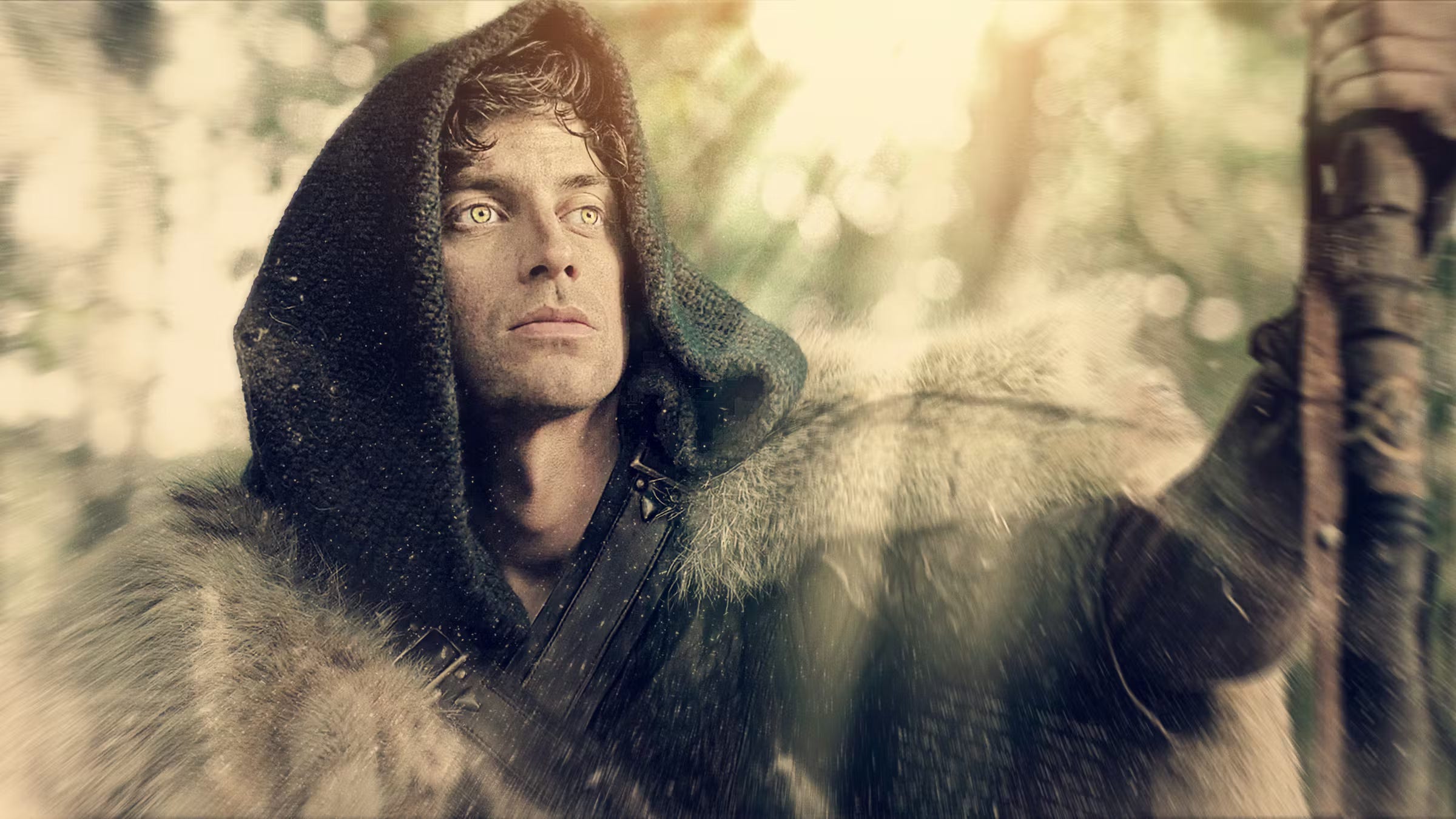
When his companion is drowning, Merlin uses that same power. He lifts the man from the water—not physically, but through sheer force of will. The stones around them tremble. The king and his court watch in stunned silence as Merlin demonstrates that he is not simply an advisor or a prophet. He is something else entirely.
It’s a full-circle moment, beautifully executed. The flashback at the episode’s opening wasn’t random—it was setup for this payoff. The show trusts its audience to make the connection without spelling it out. The visual parallel between young Merlin lifting the stones and adult Merlin lifting a drowning man is striking and thematically resonant.
The king changes his mind. The kings of the north will ride with Aurelius. Hope is established for the coming battle.
Aurelius and Single Combat
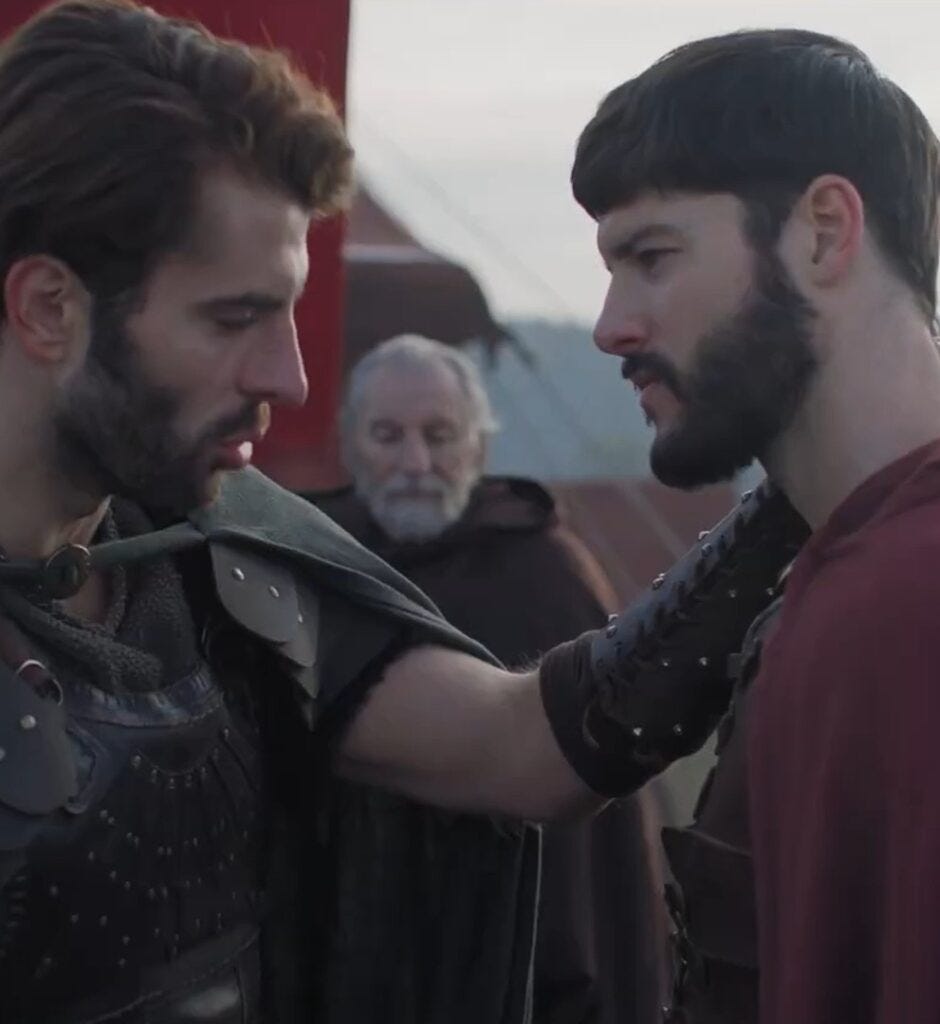
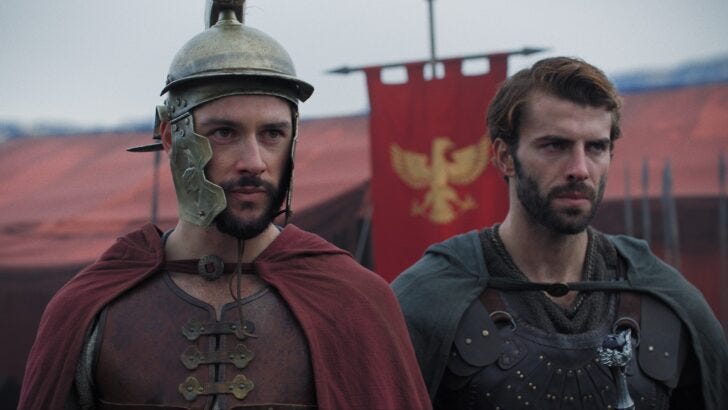
Meanwhile, Aurelius faces a different challenge. He’s gathered support from multiple lords, but one refuses to bend the knee. This is Eldol, a powerful lord whose daughter Ygraine will eventually become central to the Arthurian legend (though the show hasn’t revealed this yet). Eldol doesn’t trust Aurelius and won’t commit his forces without proof of the man’s worthiness.
Aurelius responds in the old way: single combat.
The fight is brutal and grounded. No choreographed flourishes, no Hollywood acrobatics—just two men in armor trying to kill each other with swords. Aurelius wins, but not cleanly. He cuts off several of Eldol’s fingers in a moment that’s genuinely shocking in its violence.
Eldol bends the knee. Aurelius has proven himself not just as a claimant to the throne, but as a warrior willing to fight his own battles. The armies are united. The stage is set.
The contrast between Merlin’s approach and Aurelius’ approach is deliberate and effective. Merlin avoids violence, shuns leadership, and uses power only when absolutely necessary to save a life. Aurelius embraces the warrior’s path, proves himself through combat, and consolidates power through strength. Both are necessary. Both are effective. And both are building toward a confrontation that will require everything they can bring to bear.
The Morgain Problem, Slightly Corrected
Episode four drew criticism for a scene where Morgain kissed a young man in a way that strongly implied incestuous intent. The assumption was that this was her son, leaning into the darker elements of Arthurian legend where Morgain is an incestuous witch.
This episode clarifies that the young man is not her blood son. It’s still inappropriate—Morgain is clearly grooming him for something—but it’s not quite the full Game of Thrones descent into explicit incest that the previous episode suggested.
This is a minor correction, but a welcome one. The show can explore Morgain’s corruption and her willingness to use seduction and manipulation as tools without going to the extremes that would make the series unwatchable for families. Morgain remains a threat, her methods remain disturbing, but the content rating stays just shy of the line that would alienate a significant portion of the audience.
Morgain’s storyline continues to be the most explicitly dark element of the series. The animal sacrifices, the provocative behavior, the manipulation—it’s all building toward something, and the show is making clear that Morgain represents a different kind of evil than Sauron-style Dark Lords. She’s human, corrupted by ambition and dark magic, and her threat is personal rather than apocalyptic.
Flashbacks and Book Adaptation

For readers of Stephen R. Lawhead’s Merlin, this episode offers a particularly satisfying element: the show is layering in flashbacks to cover material from the first half of the book that was initially skipped.
The series jumped ahead after the first two episodes, bypassing much of Merlin’s early life to get to the political conflict surrounding Aurelius’ claim to the throne. That was a smart structural decision for television—starting with action and intrigue rather than extended backstory. But it meant losing some character development and world-building from the novel.
The flashbacks remedy this without slowing the present-day narrative. We see young Merlin with the Hill Folk, demonstrating his power and being recognized by the druids. These aren’t extended sequences—they’re brief, targeted moments that add depth without disrupting pacing.
This approach is elegant. The show gets to have its cake and eat it too: a propulsive main narrative that doesn’t bog down in exposition, plus character moments from the source material woven in as context for present-day events. It’s smart adaptation, respecting both the needs of television storytelling and the expectations of book readers.
Merlin’s Restraint
One of the episode’s strongest thematic elements is Merlin’s deliberate avoidance of leadership. He has the power to dominate. When he lifts his companion from the water, the northern king and his entire court witness abilities that could easily be used to seize control. Merlin could declare himself king. He could rule through fear and awe.
He doesn’t. He uses his power to save a life, proves his point, and then steps back. He asks the king to join Aurelius, but he doesn’t demand it. He doesn’t threaten. He demonstrates what he can do and then trusts the king to make the right choice.
This restraint is central to who Merlin is in Lawhead’s novels and in the broader Arthurian tradition. He’s a kingmaker, not a king. He has the power to rule but chooses to serve. He could use violence but prefers wisdom. The temptation to become a leader himself is real—he’s more powerful than any of the kings he’s trying to unite—but he shuns it.
This is a deeply Christian theme, though the show doesn’t make it explicit. Power used in service rather than domination. Strength exercised through restraint. The greatest among you will be the servant of all. Merlin embodies these principles without preaching them, and Tom Sharp’s performance captures the character’s quiet authority and deliberate humility.
Where This Is Headed
The show is approximately 75-80% through Lawhead’s Merlin novel with two episodes remaining. That’s a compressed timeline. The book continues well beyond this point, covering Aurelius’ reign, the construction of Stonehenge as a memorial, and events that set up the birth of Arthur.
It’s unclear how the show will handle this. The season is titled The Rise of Merlin, suggesting it’s focused specifically on Merlin’s emergence as a key figure in British history rather than covering the entire novel. The next season, if there is one, might adapt Arthur and continue the story.
What’s clear is that the show is building toward a climactic battle. The Saxons are coming. The kings are united. Merlin and Aurelius have both proven themselves in different ways. The stage is set for a confrontation that will determine the future of Britain.
For viewers unfamiliar with the source material, the tension is real. For those who know what’s coming, the dramatic irony is powerful. Aurelius is being built up as the rightful king, the leader everyone can follow, the man who will save Britain. And anyone familiar with Arthurian legend knows his time is limited.
Production and Performance
The production values remain impressive. The single combat between Aurelius and Eldol is well-choreographed and visceral. The moment when Aurelius cuts off Eldol’s fingers is shocking, for certain.
The flashback sequences with young Merlin are beautifully shot. The druid stones, the Hill Folk, the visual of stones lifting into the air—it’s all handled with restraint and effectiveness. The show doesn’t over-rely on CGI. The effects are there when needed, but the focus remains on character and story.
Tom Sharp continues to excel as Merlin. His performance is understated and powerful, conveying intelligence, weariness, and moral authority without grandstanding. The supporting cast is strong across the board. Of particular depth is the actor who plays Aurelius’s brother, Uther, who has to balance being somewhat of a foil/villain and also a good honorable brother in one of the most complex characters of the series.
Final Thoughts
Episode five is the strongest installment yet, earning a 9.5/10. The dual narratives of Merlin in the north and Aurelius consolidating power work in parallel and thematic harmony. The flashbacks add depth without disrupting pacing. The action sequences are brutal and effective. The character work is excellent.
The show continues to improve with each episode, building momentum toward what promises to be an epic conclusion. The writing is tight, the performances are strong, and the adaptation respects the source material while making smart changes for the medium.
For viewers who’ve been following the season, this episode delivers on the setup from previous installments. For book readers, the layering of flashbacks and the faithful adaptation of key moments (even when the sequence is rearranged) demonstrates that the creative team understands what made Lawhead’s novels work.
With two episodes remaining, The Rise of Merlin has established itself as one of the most compelling fantasy series in recent years. It’s not trying to be Game of Thrones. It’s not chasing trends. It’s telling a specific story with clarity, purpose, and respect for its source material. That’s increasingly rare in modern television, and it’s worth celebrating.
Rating: 9.5/10
What do you think of this show so far?
If you’re interested in a fun fantasy world, read The Adventures of Baron von Monocle six-book series and support Fandom Pulse!
NEXT: The Lost Final Chapter: What Anne McCaffrey’s Unpublished After the Fall Is Over Might Have Been