


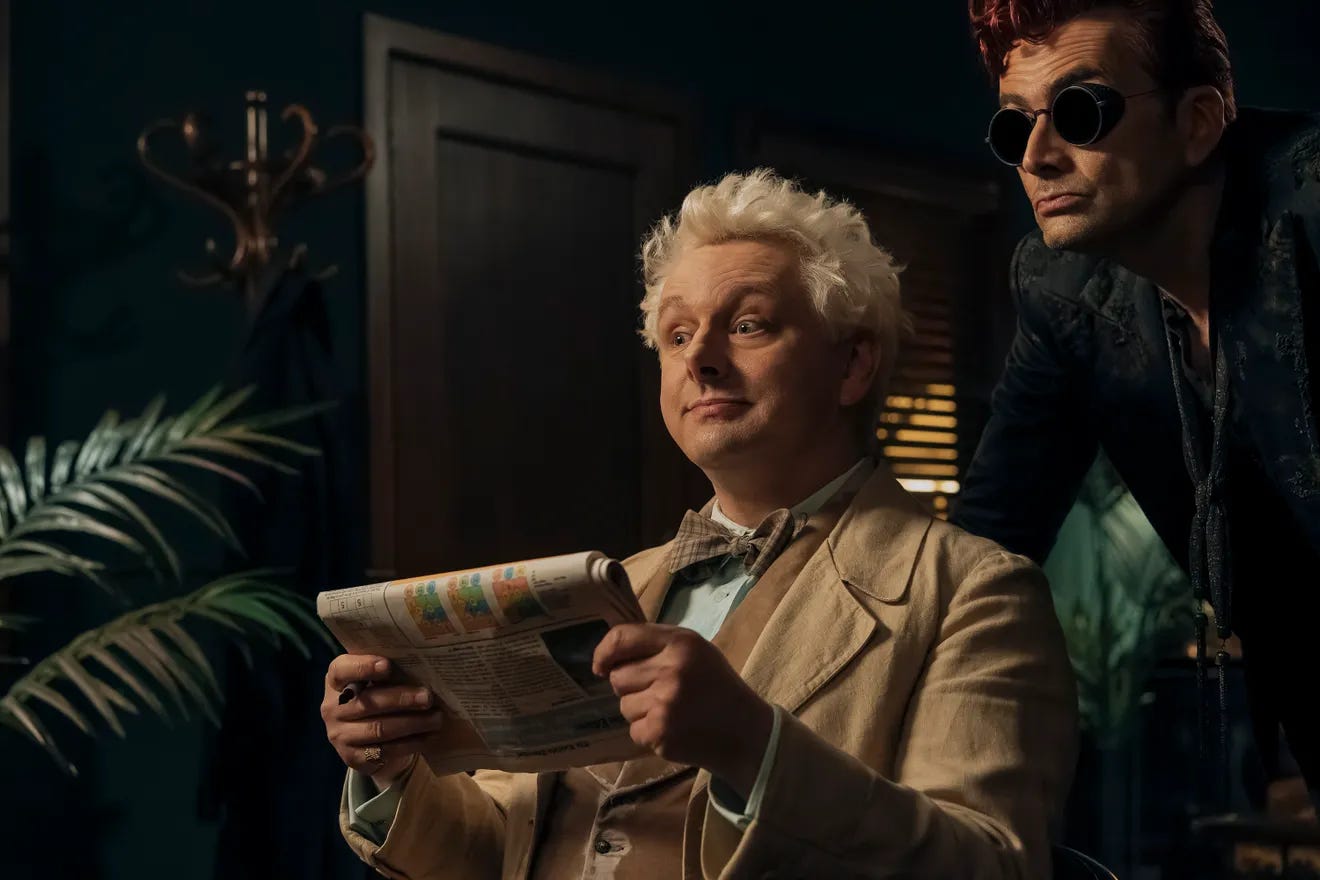
Good Omens Season 3 premiered on Prime Video this week. It is not a true seaso, but instead a 90-minute finale episode, the compressed wreckage of what was supposed to be a six-episode third season before the show’s creator was accused of sexual assault by multiple women and removed from production.
The Guardian gave it two stars, calling it “possibly the biggest imbalance in TV history between dazzling cast and stale script.” Mama’s Geeky: “messy execution leaves much to be desired. It struggles to find its footing as a rushed finale.” A Medium writer called the script “abysmal” and wrote that Michael Sheen and David Tennant’s real-life friendship was “the only reason to watch.” The Guardian’s Jack Seale called it a “puzzling mess.” Rotten Tomatoes currently sits at 60% from critics — the lowest score in the series’ history. Season 1 held 85%. Season 2 held 88%.
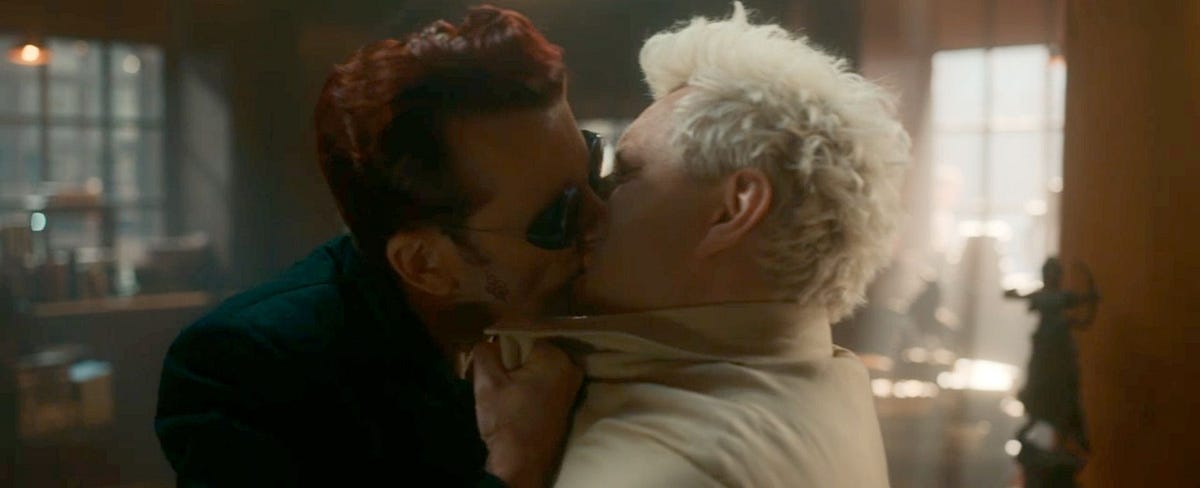
To understand why Season 3 is what it is, you need to understand where Season 2 left off. Season 2 went beyond the source material, following Aziraphale and Crowley as they contended with an amnesiac angel Gabriel, matchmade for some humans, and navigated their own romantic feelings for each other. It ended on a devastating cliffhanger: Crowley professes his love for Aziraphale and begs the angel to run away with him, leaving the fight between heaven and hell behind. Aziraphale turns him down and chooses to return to heaven to become Supreme Archangel, tasked with organizing the Second Coming of Christ. That cliffhanger is what Season 3 was supposed to resolve across six episodes. It resolved it in 99 minutes.
The reason is Neil Gaiman.
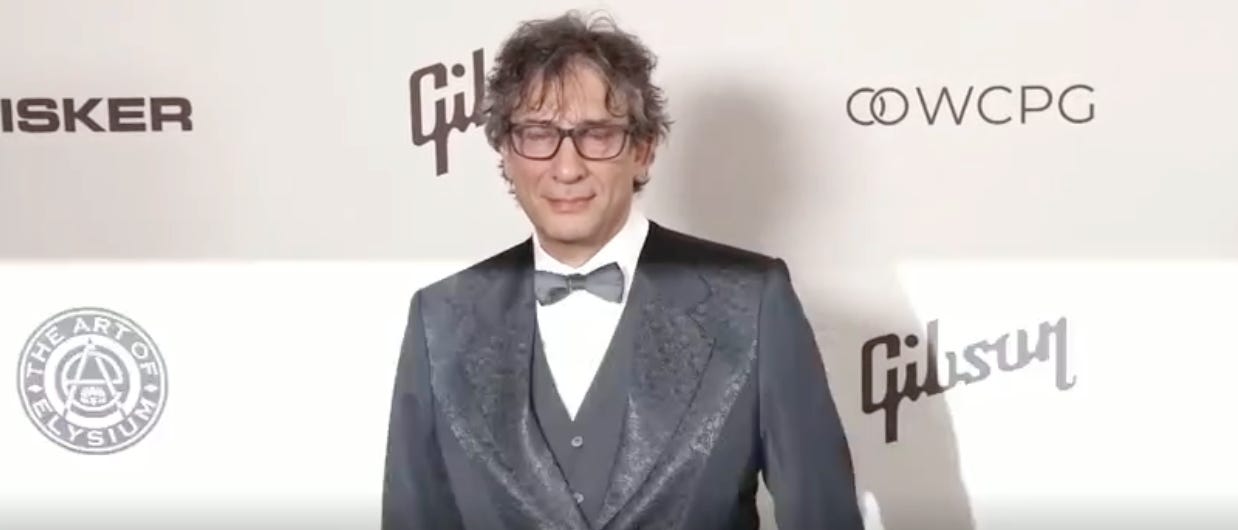
In July 2024, investigative media outlet Tortoise Media published a six-episode podcast, “The Master: The Allegations Against Neil Gaiman.” Five women accused the author of unwanted sexual behavior, some alleged to be violent. Gaiman denied the accusations. No criminal charges have been filed. New York Magazine followed with a cover story in which eight women spoke on the record. One accuser, Scarlett Pavlovich, alleged that Gaiman sexually assaulted her on multiple occasions during the period she babysat his son. A second accuser, Caroline Wallner, alleged that Gaiman used her housing dependency on his Woodstock, New York property as coercive pressure for sexual contact while she lived there with her three daughters. Wallner described him telling her to call him “master” and choking her during encounters. She received a $275,000 payment and signed an NDA. Pavlovich received $9,200 across nine separate payments and also signed an NDA. In February 2025, Gaiman and his estranged wife Amanda Palmer were sued for human trafficking by a former live-in nanny.
Gaiman responded with a lengthy post on his website: “I have never engaged in non-consensual sexual activity with anyone. Ever.” His crisis management team hired lawyer Andrew Brettler, who has represented Danny Masterson and Prince Andrew.
Amazon halted Good Omens Season 3 production in September 2024. Rather than cancel it, the studio compressed Gaiman’s scripts into a single episode. Deadline reported in 2024 that “Gaiman contributed to the writing of the series finale but will not be working on the production and his production company the Bad Robot Corporation is no longer involved.”
The cascading effect on his other properties was immediate. Dead Boy Detectives was cancelled in August 2024 after one season. The Sandman wrapped with Season 2 in 2025 despite substantial source material remaining. Anansi Boys, which wrapped production in 2022 with a largely Black cast, was shelved entirely. Actor Delroy Lindo told Entertainment Weekly: “I don’t think that’ll ever see the light of day. It’s too bad on many levels.” Consequence’s Liz Shannon Miller noted the uncomfortable reality: “There’s something uncomfortable about it being shelved while the final installments of Good Omens and The Sandman, led by white actors, did manage to make it to our screens.”
That Anansi Boys detail is worth sitting with. A finished production, fully shot, featuring Black leads, sits in a vault while two other Gaiman properties received closure specifically because their predominantly white casts could carry the story to an end without him. Nobody at Amazon has explained that calculus publicly.
Good Omens was Gaiman’s. Terry Pratchett, his co-author on the original 1990 novel, died in 2015. The Season 3 scripts were reportedly informed by an unpublished sequel novel Gaiman and Pratchett sketched before Pratchett’s death. None of that material could survive the structural compression forced on it by Gaiman’s removal. Reviews across the board land on the same point: Tennant and Sheen’s chemistry is the only reason to watch. The script gave them nothing.
Consequence put it plainly: “That feels like a distant memory now, highlighted by the release of Prime Video’s Good Omens Season 3, which could be the last TV project ever released with Gaiman’s name on it.”
For a creator who was once described as a pop culture deity on the level of Joss Whedon, the comparison is instructive. Whedon survived his exposure for years before his career collapsed. Gaiman’s fall has been faster. Both men built creative empires on reputations for empathy and progressive values. Both men’s private conduct told a different story.
Good Omens is over. The show ends with Aziraphale and Crowley devising a new plan for the universe: no heaven, no hell, no celestial forces. A world without gods. The show’s own conclusion is an accidental metaphor for what happened to its creator.
Did Amazon handle the Gaiman situation correctly, or was there a better way to close out these stories?
Epic Fantasy hasn’t been this hard-hitting since Tolkien. In a world where humanity is akin to a Roman legion, a great darkness arises. Read A Throne Of Bones today.
The "angels" are gay? SMH. Only watched season 1 it was ok but missed 2 & 3. Thank God.
Oh, boy. Glad I missed it.