



I was recently inspired by Brian Niemeier’s commentary on the death of twentieth-century mass media. Convincingly, he argues that comics, television, and cinema were products of a particular cultural and technological moment, and that the attempt to revive them through nostalgia inflation has failed. The superhero industrial complex is out of gas, Hollywood has become addicted to necromancy, and the old models of distribution have collapsed. As Niemeier puts it, these forms now twitch and rattle as grotesque parodies of their former glory. He is right that the temptation to play “Weekend at Bernie’s with Batman” is strong, but futile.
Where I wish to press further is on the question of what has replaced them. Niemeier points to digital distribution, serialization platforms like Royal Road, visual novels, and hybrid forms as the frontier of new storytelling. He is surely correct that these open possibilities for creators who bypass the old gatekeepers. Yet I think he misses a deeper point: stories have always been meta-commentaries on lived fears and hopes, and in our time the meta has moved decisively away from structured narrative into the parasocial theater of life itself.
Take the 1951 film The Day the Earth Stood Still. At one level it is a science fiction tale of alien visitation. At another, it is Cold War commentary, an imaginative reframing of the dread of nuclear annihilation. The film gave voice to collective anxieties by creating a narrative in which salvation arrived from the skies. Boomers were catechized by such spectacles on the television screen, absorbing their moral coordinates through mediated fiction.
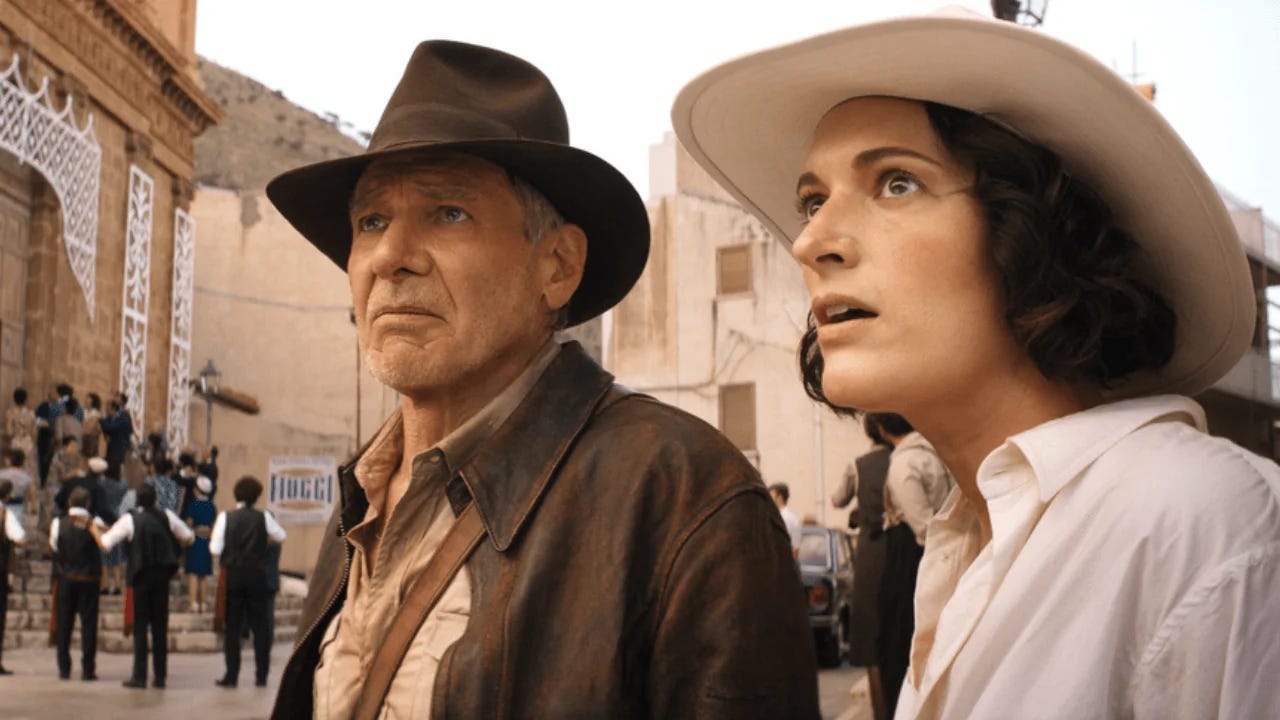
Today, by contrast, we recognize the old stories as hollow spectacle. The retellings of Star Wars, Indiana Jones, or Ghostbusters no longer function as myths. They are recognized as propaganda mods, exercises in nostalgia inflation, and the audience turns away. What occupies attention instead are the dramas of the playground and the podcast studio: a woman shouting the N-word word at a public playground, feuds between Ethan Klein and Hasan Piker, rivalries between Ethan Van Sciver and Eric July. These are not stories crafted by a studio system. They are parasocialized lives consumed as narrative. The content is no longer the comic book or the feature film. The content is the person or their online persona.
This explains the fascination with VTubers and streamers who create on the fly. They are not producing carefully scripted art but inhabiting avatars through which their daily improvisations are received as mythic. The new media is not only serialization on digital platforms, as Niemeier notes, but the serialization of hyper-reality. We live not through the latest franchise reboot but through the spectacle of ordinary people becoming symbols, villains, and heroes in the endless digital agora.
The theological implications are significant. If stories have always been about salvation, whether from the bomb, from boredom, or from irrelevance, then the present shift reduces salvation to the immediacy of parasocial attention. What was once mediated through myth and symbol is now played out directly in the lives of personalities who become icons of affirmation or outrage. Niemeier is right to call for new myths. But if we are honest, the myths are already here, and they are us.
The question, then, is not simply whether artists will have the courage to create new forms, but whether audiences can recognize the cost of consuming human beings as spectacle. The Church tells a story that does not collapse into this cycle because it refuses to make salvation parasocial. The Word becomes flesh, not content. It is only in such a story that we are freed from being endlessly consumed by each other’s lives.

I like this one!