


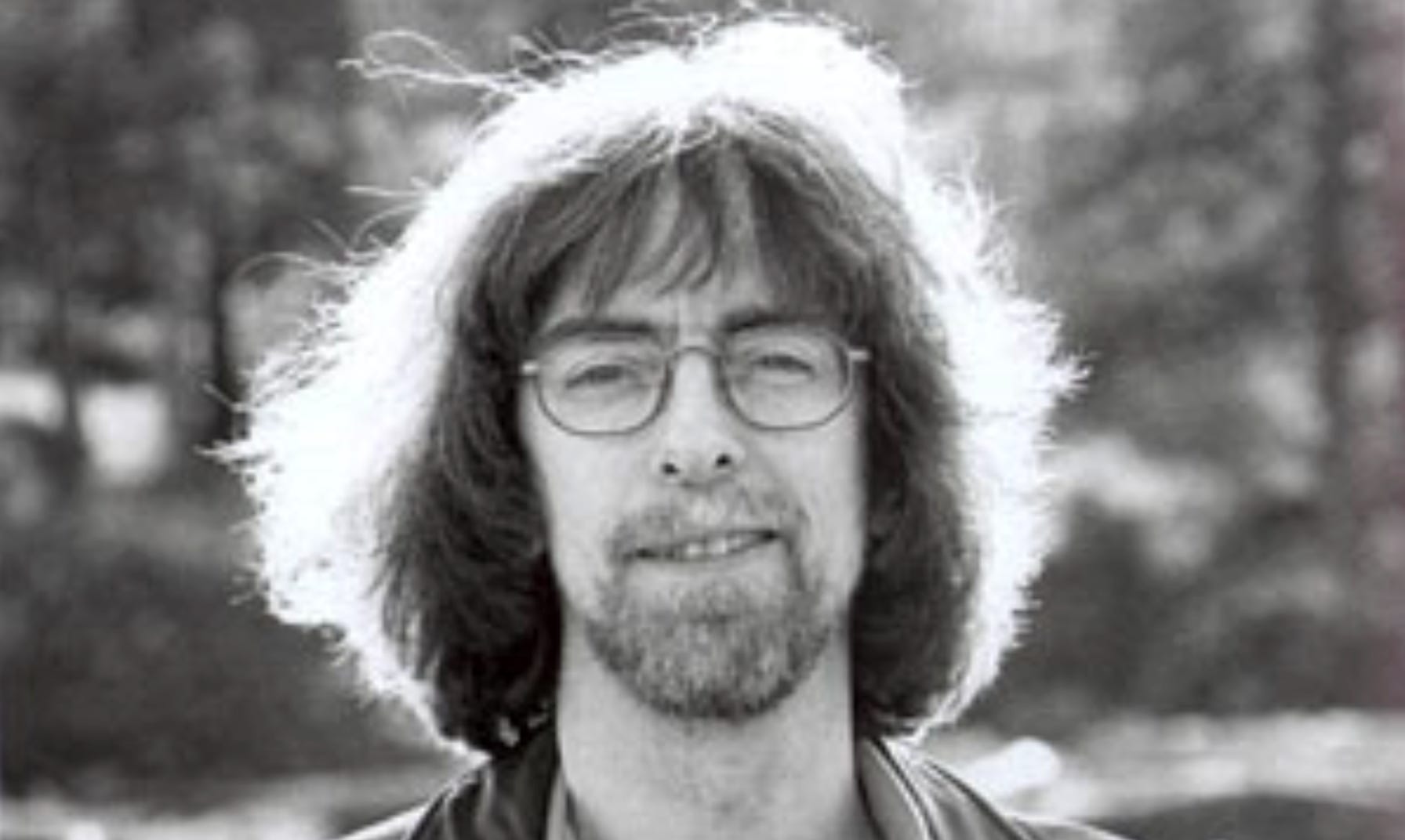
There was a time when science fiction readers spoke the name Spider Robinson with the same reverence they reserved for Niven, Pournelle, and Card. He won three Hugos. He won a Nebula. He took home the John W. Campbell Award for Best New Writer in 1974. Robert A. Heinlein’s own estate picked him to complete the Grand Master’s unfinished novel, passing over every other writer in the field. For a stretch in the late 1970s and 1980s, the publishing world treated him as Heinlein’s literary heir apparent.
Then he went quiet. And the genre that once celebrated him forgot he was still out there.
This is a writer worth remembering. The things Spider Robinson did well are the things modern science fiction has stopped doing.
From Night Watchman to Hugo Winner
Robinson’s origin story reads like something he’d have written himself. Born in the Bronx in 1948, he attended Catholic high school, spent a year in seminary, did two years at a Catholic college, and finished his English degree at SUNY Stony Brook. After college he spent years living without technology in the woods. In 1971 he took a job guarding sewers in New York City at night. The job was so miserable he wrote a science fiction story to escape it.
That story was “The Guy with the Eyes,” published in Analog in February 1973. It introduced readers to a curious little bar called Callahan’s Place. It also launched one of the most beloved series in modern SF.
Before he was a novelist, Robinson was a critic. He held down the “Galaxy Bookshelf” column at Galaxy magazine from 1975 to 1977, then reviewed for Analog and New Destinies across nearly a decade. He topped the 1977 Locus Award poll for Best Critic on the strength of that work. He knew the genre cold before he ever published a novel. When you read his fiction, that grounding shows up on every page. Robinson wrote like a man who had absorbed every Heinlein juvenile, every Sturgeon story, every Sheckley quip, and figured out how to synthesize them into something of his own.
The Major Works

Telempath (1976) is the novel that should top every underread classics list. Built out from his Hugo-winning 1976 novella “By Any Other Name,” it’s a post-apocalyptic story set after a bioengineered virus has amplified human olfactory sense a thousandfold, collapsing civilization because no one can stand to live in a city anymore. The protagonist, Isham Stone, is a young Black assassin sent to kill the scientist responsible for the collapse, who happens to be his own father. The book moves from revenge thriller to first-contact story to reconciliation parable, and it pulls off all three. The Muskies, airborne sentient beings humanity never knew were there, count among the more inventive alien concepts of the 1970s. The book ends on hope. Reconciliation. Rebuilding. This was 1976, the high tide of New Wave nihilism, and Robinson was writing about humans choosing to fix what they had broken.

Stardance (1979), co-written with his wife Jeanne, a dancer, choreographer, and Sōtō Zen monk, won the Hugo, Nebula, and Locus. It tells the story of a dancer whose art can only fully exist in zero gravity, and what happens when humanity’s first peaceful contact with an alien intelligence turns out to be a dance. The novella that anchors the book won both major awards in 1978. The full trilogy of Stardance, Starseed, and Starmind built out a future in which a symbiotic relationship with an alien lifeform lets humans live indefinitely in vacuum. The premise sounds bizarre on paper. On the page it works because the Robinsons grounded the cosmic scale in genuine love for what dance is and what art is for. No other husband-and-wife team in SF produced anything like it.

Callahan’s Crosstime Saloon (1977) and the dozen-plus volumes that followed are what Robinson is best known for, and probably what gets him most unfairly dismissed. Yes, the puns are aggressive. Yes, the sentimentality is laid on thick. Yes, Callahan’s regulars solve interstellar problems by buying each other drinks and crying about it. But these stories built one of the largest non-pornographic communities on early internet. Usenet’s alt.callahans newsgroup, and the countless cyber-bars it spawned, were readers trying to recreate the fictional space Robinson had imagined. That is a writer who understood, decades before the term parasocial community existed, that readers wanted somewhere to belong. The Callahan’s books are a club story tradition descended from Lord Dunsany and Arthur C. Clarke’s Tales from the White Hart, refined into something warmer and more American.
Beyond the headliners there’s plenty more. Night of Power (1985) is a tight, controlled near-future thriller about a Black-power revolt in New York that took heavy critical fire on release for daring to engage the subject at all. Mindkiller (1982) and the Deathkiller / Lifehouse trilogy explore consciousness, addiction, and what it means to record a human mind. The Russell Walker novels, Very Bad Deaths (2004) and Very Hard Choices (2008), are mature, autumnal books about telepathy, friendship, and the cost of seeing too much. His short-story collection Melancholy Elephants (1984) contains a title story so good it took the 1983 Hugo for Best Short Story, and stands as one of the finest meditations on copyright and cultural exhaustion ever put on paper.
Variable Star: The Heinlein Project

In 2003, after Virginia Heinlein’s death, an outline turned up in the Heinlein papers. Eight pages, written in 1955, for a novel originally titled The Stars Are a Clock. Heinlein had set it aside to write Tunnel in the Sky, Double Star, and Time for the Stars, and never returned to it. Seven of the eight pages survived.
The Heinlein Prize Trust picked Spider Robinson to finish it. That choice tells you exactly how seriously the Heinlein estate took him. Robinson published Variable Star in 2006, the coming-of-age story of Joel Johnston, a young composer who signs on to a colony starship after his fiancée turns out to be the granddaughter of the wealthiest man in the solar system and breaks his heart. The novel reads like late-period Heinlein filtered through Robinson’s optimism. Critics divided on it. Some thought it too constrained by the outline. Others thought Robinson’s own voice intruded on Heinlein’s. The truth is the book reads like what it is: a respectful collaboration across half a century between two writers who loved the same things.
Then comes the heartbreak. In 2009 Robinson posted on his website that his agent had sold a trilogy of sequels based on Variable Star‘s characters and setting. Three more novels in the universe. Built out from Heinlein’s framework. Written by Spider Robinson at the height of his late-career powers.
They were never released.
Jeanne Robinson died in 2010 after a battle with biliary cancer. The Robinsons had been married thirty-five years, and they had been creative partners for nearly all of it. The Variable Star trilogy disappeared. The Russell Walker series stopped at two books. The Callahan’s stories trickled to a halt.
The Quiet After
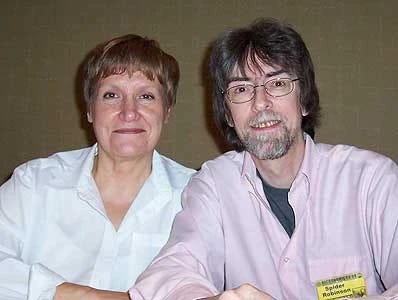
The Science Fiction Encyclopedia notes plainly that his reduced activity after 2010 was caused by family health issues. He hasn’t been totally silent. My Favorite Shorts came out in 2016. He co-edited Tesseracts Twenty in 2017. His podcast Spider On The Web ran for years. He still appears at conventions and writer-in-residence posts. But the steady novel-a-year cadence that produced more than thirty books between 1976 and 2008 is gone.
You can read the situation a few different ways. The kindest reading is that grief reshaped a man whose creative identity had been forged in partnership with his wife. The more pragmatic reading is that the industry that championed him in the 1970s and 1980s is not the industry that exists today. A writer whose stock-in-trade is unironic optimism, redemption arcs, and stories where humans solve their problems has fewer obvious homes in the contemporary trad-pub landscape than he did forty years ago.
Either way, the result is the same. A writer who belonged in the conversation with Heinlein and Sturgeon, a man with three Hugos, a Nebula, the 2008 Heinlein Award for Lifetime Excellence in Literature, and a body of work that built actual reader communities, has slipped to the margins of genre memory.
Why He Matters Now
Robinson wrote science fiction in which problems had solutions. His characters argued, drank, smoked, joked, and worked things out. The Muskies in Telempath don’t get exterminated. They get understood. The Stardancers don’t conquer humanity. They invite it forward. The barflies at Callahan’s don’t tear each other down. They hold each other up. Even his thrillers end in hard-won grace rather than cynical defeat.
This is a mode of storytelling the genre needs back. The indie SF and crowdfunded fiction space has been steadily rebuilding the kind of optimistic, character-first, problem-solving science fiction Robinson was writing forty years ago. He was doing it before anyone called it a movement. He was doing it when the prestige establishment of the genre had moved on to bleaker territory.
He is not dead. He is not finished. He may yet surprise us. But even if he never writes another novel, the catalog is sitting there. Thirty-plus books. Three decades of stories. An alternate-history Heinlein collaboration that should have been four books. All waiting for readers to find them again.
If you have never read Telempath, that is where to start. If you have never read Stardance, that is where to go next. If you have only ever encountered Robinson through one bad pun at Callahan’s bar, you owe yourself a closer look.
Which forgotten science fiction author do you think deserves a full retrospective treatment next, and what’s the one book of theirs you would put in every reader’s hands?
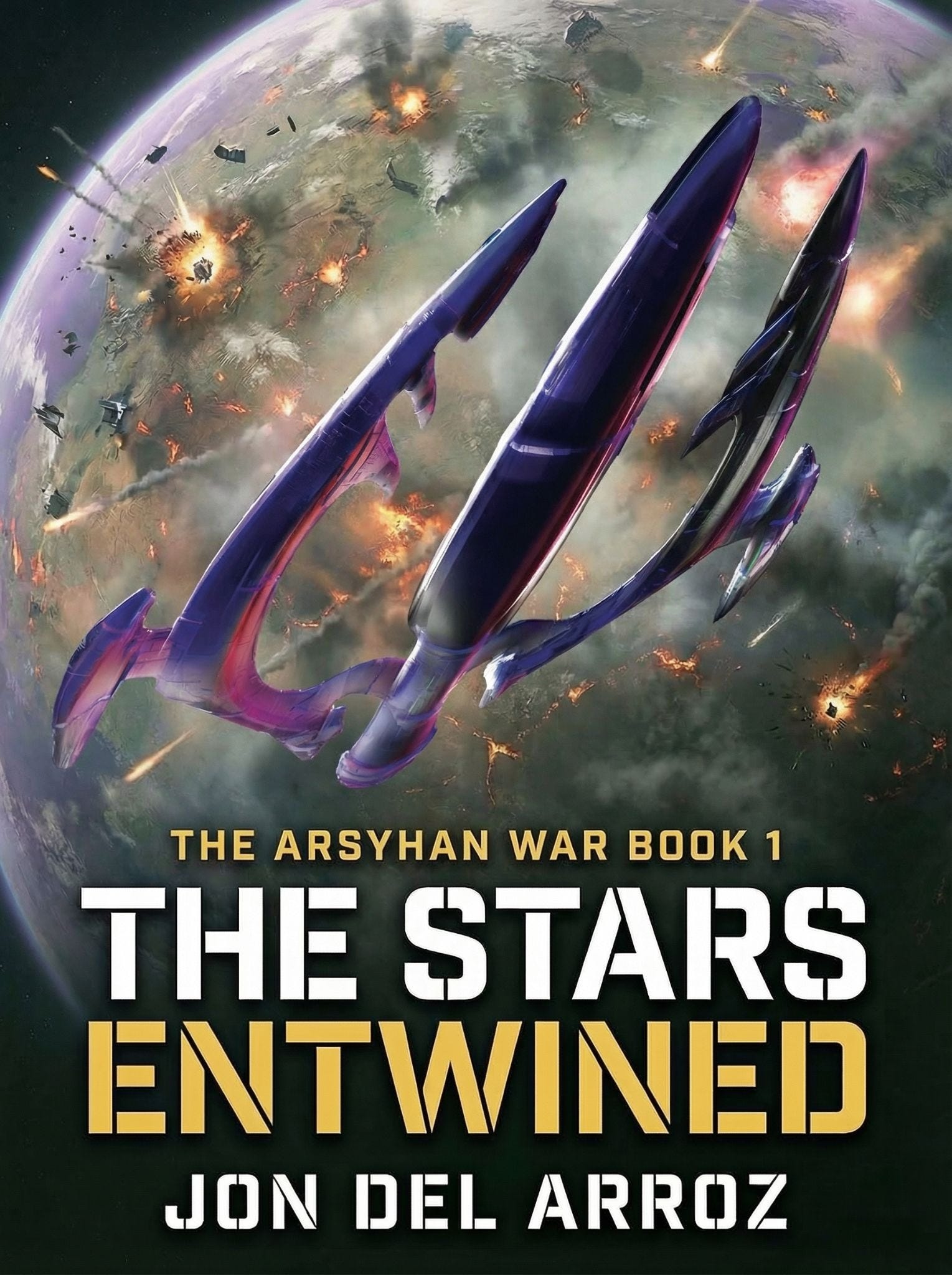
If the golden age of Trek and Babylon 5 left a hole in your sci-fi diet, The Stars Entwined fills it — interstellar espionage between two civilizations on the brink of war. Read The Stars Entwined on Amazon!
NEXT: Lois McMaster Bujold Is Done With The Machine, But Not With the Work
I read By any other name when it came out, I still remember it. I did not realize that it had been expanded into a book. Thanx, like my 2 be read stack didn't need to get any higher.
Thank you for the tribute.