


This essay comes in response to the article, “Decompressed Storytelling Is Killing Modern Science Fiction” here on the Fandom Pulse.
A few questions were posed at the end:
“What do you think? Should modern science fiction return to episodic storytelling, or is decompression here to stay?”
I pick the third option.
Chiasm
A chiasm! Have you ever heard of a chiasm?
Modern storytellers congratulate themselves on “prestige pacing,” on the slow drip of atmosphere stretched across eight or ten episodes. But this decompression is not but a drift and an abdication of form. The Bible, Homer, and the great traditions of Western storytelling are not outlasting because they meandered but because they moved. They moved with pattern, with rhythm, with destination.
The Scriptures are not random anecdotes strung together. They are chiastic. Genesis begins with a garden and ends with Joseph ruling in Egypt, a reversal and fulfillment of the opening. The Gospels pivot around the cross, the hinge of history, with resurrection mirroring incarnation. The Odyssey is not “and this happens and that happens,” it is a spiral: departure, wandering, descent, and return. The beats are circular, but not stagnant. Instead, they progress. They evolve. They stick in memory because of their poetry, their repetition and their inversion.
Chiasm is a covenantal architecture that binds the beginning to the end, the alpha to the omega, so that the story itself becomes a testimony to the work of Christ. Every movement is accountable to its mirror. Every scene is judged by its fulfillment. This is why Biblical stories endure: they are written into the memory of the Church, into the liturgy, into the very cadence of human life. Every worship service is a story, a movement from beginning, to middle, and to end. But even after the end, a new day begins, the week restarts. Death ends in resurrection.
Even the secular world once knew this. Aristotle’s Poetics gave rise to the three‑act structure: setup, confrontation, resolution. Act I establishes the world and the conflict. Act II deepens the tension, testing the hero against obstacles. Act III resolves the conflict, bringing consequence to bear. This is a patterned methodology, true to life. It mirrors the biblical rhythm of creation, fall, and redemption. It mirrors the chiastic movement of descent and ascent. It is narrative discipline, forcing the storyteller to cut filler and drive toward resolution.
Virgil’s Aeneid is built on this same architecture. The first half mirrors Homer’s Odyssey while the second half mirrors the Iliad. The hinge is Rome’s destiny, binding the wandering of Aeneas to the founding of empire. Dante’s Divine Comedy is tripartite, but also chiastic: Inferno descends, Paradiso ascends, and Purgatorio stands as the hinge of transformation. Shakespeare’s plays, even sprawling ones like Hamlet, are five‑act structures with mirrored pivots. The play‑within‑the‑play in Act III mirrors the ghost’s revelation in Act I and anticipates the duel in Act V. These are covenantal architectures, designed to be remembered, to fit snugly within our minds, and carried forward to be retold to future generations.
Tolkien understood this instinctively. The Hobbit is subtitled There and Back Again. Bilbo departs from the Shire, descends into danger, faces death and a dragon, and returns home transformed. The journey is not endless wandering; it is patterned pilgrimage. The “back again” is as essential as the “there.” Without return, the story would collapse into drift. With return, it becomes memory.
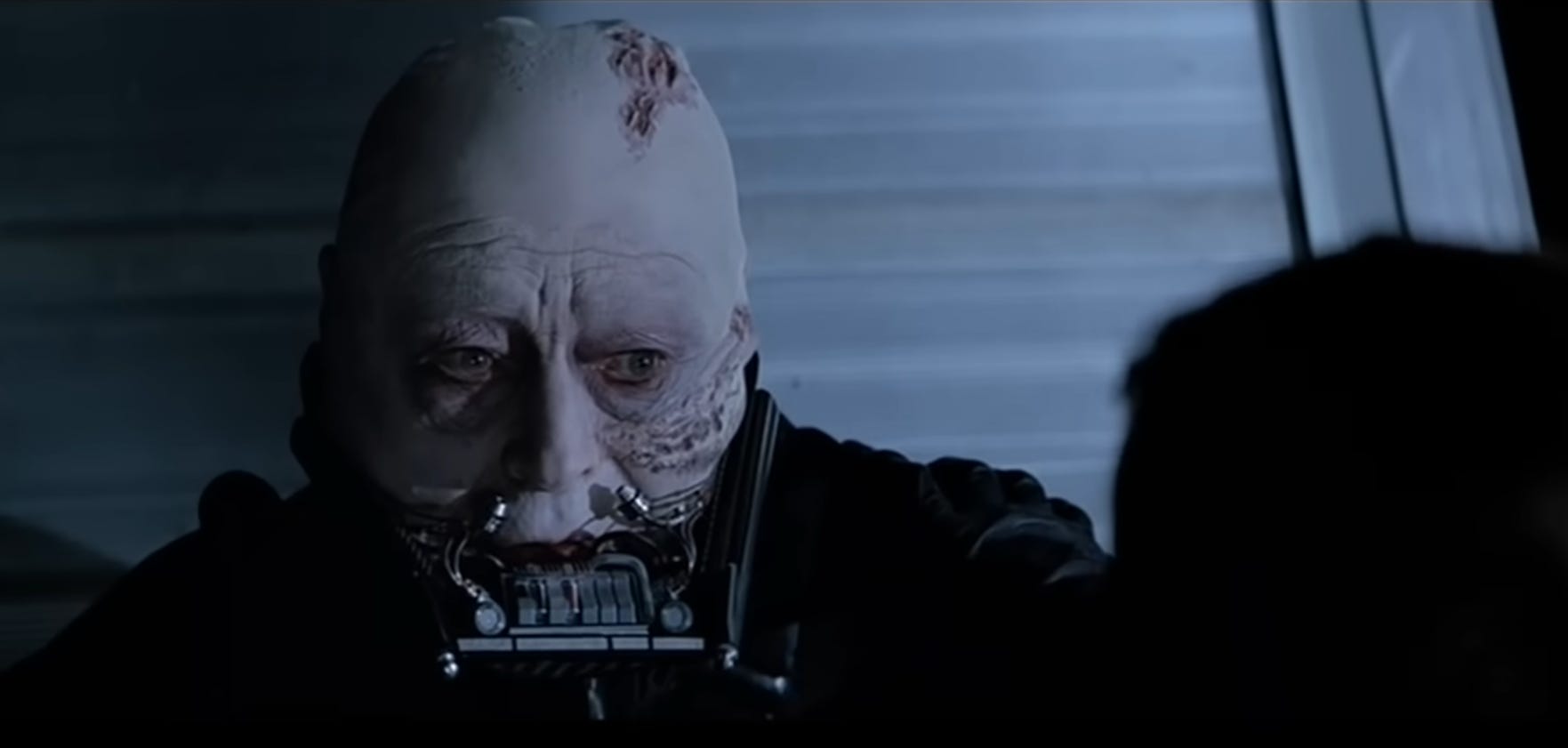
Even modern mythmakers once honored this discipline. The original Star Wars trilogy is chiastic in its bones. A New Hope begins with a desert orphan and ends with a triumphant assault on the Death Star. The Empire Strikes Back inverts the victory, plunging the heroes into defeat and revelation. Return of the Jedi resolves the arc, mirroring the first film’s triumph but deepening it with generational consequence: the son redeems the father, the empire falls, the circle closes. This is why those films endure. They are patterned. They are covenantal. They respect the audience’s memory.
Decompression vs Chiasm
Modern decompressed storytelling rejects both chiasm and the three‑act discipline. It offers atmosphere without architecture and mystery without resolution. It is the endless corridor, the slow stare, the filler episode where nothing happens except the author’s refusal to cut. It is narrative entropy. And entropy cannot be remembered, nor can it be carried forward by a people.
The irony is that decompression pretends to be “realistic,” but realism without pattern is not truth; it is noise. A man eating an omelet is not a story unless the omelet is poisoned, unless the breakfast is mirrored by a supper and,--ultimately--unless the act participates in a much larger rhythm. Without a chiasm or three‑act discipline, the omelet is just calories. With them, it is a covenantal breakfast.
The Bible teaches us that stories must move like music. The Psalms are structured to be sung, not skimmed. The prophets speak in cycles, not in filler. The Church calendar itself is chiastic, circling back each year to Advent, to Easter, to Pentecost, so that time itself is remembered in rhythm.
Prestige television and decompressed comics have abandoned this covenantal discipline. They stretch a premise until it breaks and shrug when the audience revolts. They have forgotten that storytelling is best when it is liturgical. A story must honor the memory of those who listen to it, binding beginning to end.
The solution is not nostalgia for “episodic television.” Like all things in life, the solution to failure is repentance. We must return to chiasm, to covenantal architecture, and to stories that move with rhythm and consequence. Let science fiction, comics, and all modern media learn again from Moses, Homer, Virgil, Dante, Shakespeare, and even George Lucas:
Stories must be patterned, mirrored, and resolved. Only then will they endure. Only then will they be remembered.

Perhaps there are other Chiasma in the Bible. The story starts in a garden and ends in a garden city. The Bible begins with the trees of knowledge and of life, then comes the cross, and ends with the tree of life with twelve kinds of fruit and leaves for the healing of the nations.
The end is better than the beginning.
God is a storyteller. That's why His Holy Scriptures have so many internal connections. It's why Jesus Christ was not only prophesied but also prefigured throughout the Old Testament. That's why He can use an event in the lives of multiple people with different profound significances. He's the Great Author, penning 10 billion simultaneous storylines. It's the reason I laugh when someone says they could "do it better" if they had the throne.