



The Daily Wire is adapting Stephen Lawhead’s Pendragon Cycle into a seven-episode series titled The Pendragon Cycle: The Rise of Merlin, marking the conservative media company’s first venture into fantasy programming. The series will cover the first two books, Taliesin and Merlin, compressing three generations of Arthurian prehistory into a single season. Advanced screeners have been sent to reviewers, and the production is an ambitious attempt to bring literary fantasy to television without the bloated budgets and graphic content that have defined the genre’s recent adaptations.
The question is whether Lawhead’s novels, which read more like historical chronicles than action-adventure, can translate to a medium that demands visual spectacle and narrative momentum.
What Makes Taliesin and Merlin Challenging to Adapt
Lawhead’s Pendragon Cycle is unusual in fantasy literature. The first book, Taliesin, is essentially a prologue with the story of Merlin’s parents rather than Merlin himself. The novel follows Charis, the last princess of Atlantis, as she escapes her civilization’s destruction and arrives in ancient Britain. There she meets Taliesin, a Celtic bard, and their romance becomes the foundation for Merlin’s birth and the eventual rise of Arthur.
The book is deliberately paced, focusing on character relationships, cultural clash, and the spiritual transformation of Britain as Christianity arrives. There are battles and raids, but they’re not the focus. The story prioritizes internal conflict—Charis reconciling her Atlantean heritage with Celtic culture, Taliesin’s father Elphin navigating political intrigue, and the slow build toward Merlin’s birth in the final chapters.

Merlin, the second book, continues this approach. It follows Merlin’s childhood, his training, and his early involvement in British politics as the Roman Empire collapses and Saxon invasions threaten the island. Arthur doesn’t appear until late in the book, and even then, he’s a child. The novel is about Merlin becoming the figure who will eventually guide Arthur, not about Arthur’s adventures.

This structure creates problems for television. Modern audiences expect protagonists to drive the narrative from the beginning. Taliesin spends half its runtime on Charis’s escape from Atlantis and her adjustment to Britain before Taliesin even becomes central. Merlin spends most of its pages on the protagonist’s youth and education before Arthur is born. The books are prequels to the story audiences expect: the rise of Arthur and the Knights of the Round Table.
Compressing both books into seven episodes means the series must either rush through the early material to get to Merlin and Arthur, or commit to telling a slower, character-driven story that trusts audiences to invest in setup without immediate payoff. The latter is risky for a new fantasy series, especially one from a production company without an established track record in the genre.
The multi-generational structure is another challenge. Taliesin covers Charis and Taliesin’s romance and Merlin’s birth. Merlin covers Merlin’s childhood, adolescence, and early adulthood, ending with Arthur’s birth. That’s three generations across two books, requiring either significant time jumps or aging up actors across episodes. Television struggles with this. Game of Thrones aged up its child characters to avoid the problem, and The Rings of Power compressed thousands of years into a single timeline. Neither solution is ideal, and both require narrative compromises.
What Makes These Books Perfect for Lower-Budget Adaptation
The lack of action-heavy spectacle is actually an advantage for The Daily Wire. The company doesn’t have HBO or Amazon money. They can’t afford the massive battle sequences, elaborate CGI creatures, and sprawling set pieces that define modern fantasy television. Lawhead’s books don’t require them.

Taliesin and Merlin are relationship-driven stories. The most important scenes are conversations: Charis and Taliesin falling in love, Elphin navigating court politics, and Merlin learning from his mentors. These are small-scale, character-focused moments that work on limited budgets. A well-written dialogue scene between two actors in a single location is cheaper and often more effective than a CGI battle involving thousands of digital soldiers.
The books also feature strong, distinct characters. Charis is a displaced princess adapting to a foreign culture. Taliesin is a bard navigating the collision between Celtic paganism and Christianity. Elphin is a minor king trying to protect his people during political upheaval. Merlin is a gifted child burdened with prophetic visions. These are compelling characters with clear motivations and internal conflicts. Good actors can carry these roles without needing expensive effects to make them interesting.
The historical setting helps, too. Lawhead grounds his Arthurian legend in post-Roman Britain, a period of cultural transition and political fragmentation. The world feels real because it’s based on actual history, and that realism reduces the need for elaborate fantasy worldbuilding. The sets can be relatively simple—Celtic villages, Roman ruins, forests, and coastlines. The costumes are period-appropriate rather than high-fantasy elaborate. The production can look authentic without breaking the bank.
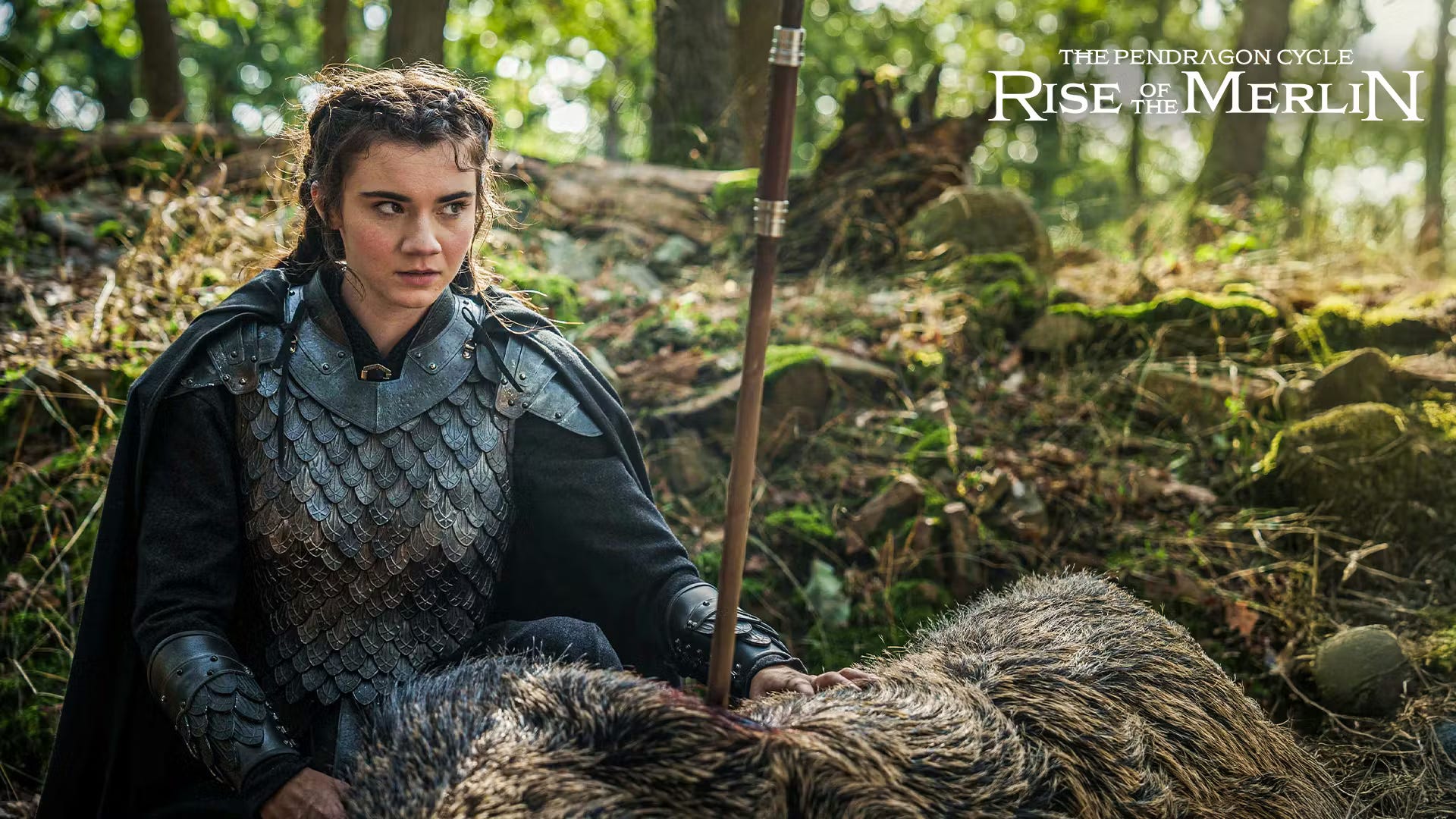
The spiritual and philosophical themes give the story depth that modern fantasy often lacks. Lawhead, an evangelical Christian, explores the arrival of Christianity in Britain and its interaction with Celtic paganism. The books treat both traditions with respect, showing how Christianity fulfilled pagan longing rather than simply replacing it. This thematic richness elevates the material beyond simple adventure, giving the series substance that can appeal to audiences tired of empty spectacle.
The Family-Friendly Advantage
Lawhead’s books are not graphic. There’s violence, but it’s not gratuitous. There are romantic relationships, but they’re not explicit. The content is appropriate for families, which distinguishes The Pendragon Cycle from Game of Thrones, The Witcher, and other fantasy series that rely on sex and gore for shock value.
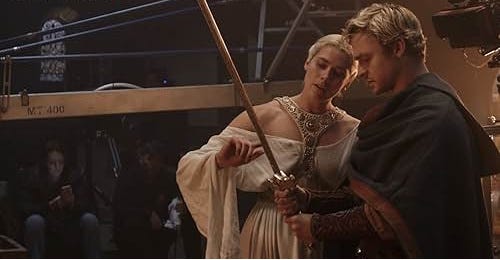
This is a strategic advantage for The Daily Wire. Their audience includes families looking for quality entertainment that doesn’t require content warnings. The success of shows like The Chosen demonstrates that there’s a market for well-made, faith-friendly programming that tells compelling stories without resorting to HBO-style excess.
Modern fantasy television has become synonymous with TV-MA ratings. Game of Thrones normalized graphic violence and explicit sex as genre requirements, and subsequent shows followed that template. But that approach alienates viewers who want fantasy adventure without the content baggage. The Pendragon Cycle can fill that niche, offering Arthurian legend that families can watch together.
Lawhead’s Christian themes also align with The Daily Wire’s audience. The books don’t preach, but they present Christianity as a positive force that brings civilization, hope, and moral clarity to a chaotic world. That perspective will resonate with conservative viewers tired of Hollywood’s hostility to traditional faith.
Can It Work?
The success of The Pendragon Cycle depends on whether the creative team understands what makes Lawhead’s books work and what needs to change for television. The novels are deliberately paced, literary, and focused on internal character development. Television demands external conflict, visual storytelling, and narrative momentum.

The series will need to compress timelines, add action where the books have contemplation, and find ways to make Merlin’s childhood and Arthur’s birth feel like satisfying payoffs rather than setup for future seasons. That’s a difficult balance. Compress too much, and the story loses the character depth that makes the books compelling. Add too much action, and it becomes a generic fantasy show that betrays the source material.
The multi-generational structure is the biggest challenge. Seven episodes isn’t much time to cover Charis’s escape from Atlantis, her romance with Taliesin, Merlin’s birth, Merlin’s childhood, Merlin’s training, and Arthur’s birth. Something will have to be cut or condensed, and those choices will determine whether the series works.
But there’s reason for optimism. The Daily Wire has proven they can produce quality content on limited budgets. Their documentaries and talk shows are professionally made, and their fiction projects like Terror on the Prairie demonstrated competence in narrative filmmaking. They’re not amateurs trying to play in a space they don’t understand—they’re a media company expanding into a new genre with properties that fit their strengths.
Lawhead’s books are also genuinely good. They’re well-written, thematically rich, and built on compelling characters. The source material is strong enough to support a quality adaptation if the creative team respects what makes the books work.
The lack of graphic content is a feature, not a bug. Families are hungry for fantasy programming they can watch together, and The Pendragon Cycle can deliver that. The Christian themes will appeal to The Daily Wire’s core audience while remaining accessible to general fantasy fans who appreciate stories with moral and spiritual depth.
Final Thoughts
The Pendragon Cycle: The Rise of Merlin is an ambitious project that could succeed if the creative team navigates the adaptation challenges carefully. Lawhead’s books are not easy to adapt, being slow, literary, and structured in ways that don’t naturally fit television. But they’re also character-driven, thematically rich, and built on a budget-friendly foundation that doesn’t require expensive spectacle.
What do you think? Can The Daily Wire pull off a successful fantasy adaptation, or is the source material too challenging for television?
If you enjoy great fantasy fiction with great worldbuilding and a classic D&D feel, read The Adventures of Baron von Monocle six-book series and support Fandom Pulse!
NEXT: Joe Abercrombie Passes $2 Million On His “The First Law” Premium Edition Kickstarter
The material in the first two books is solid.
Arthur is kind of a problem.
Epic fantasy wasn't as big in a pre-Jordan world.
Lawhead knew there was a good chance the third book would be the last, so it had to do too many things at once: Conclude the Taliesin–Merlin mythic arc, provide emotional closure in case the series died (which it did), and soft-launch the Arthurian legend in case his publisher gave him the green light. These objectives were in conflict.
Arthur was just presented as complete instead of developed as character, because something had to go.
I'm hoping the TV series does well enough to justify telling Arthur's story the way Stephen Lawhead wanted to originally.
Hope the they can pull this off, I remember reading the books back in the late 80s and loved them! If the series is successful maybe they'll put it out on DVD? I can't afford yet another monthly subscription :(