C.J. Cherryh wrote over 80 novels across four decades. She won the Hugo Award twice, for Downbelow Station and Cyteen. Her Alliance-Union future history alone spans 27 novels, seven shared-world anthologies, and a collected short fiction volume. If you’re standing at the edge of that and wondering where to jump in, this is your map.
Cherryh herself put it plainly on her website: the Alliance-Union books “can be read completely out of order...just like real history.” Two exceptions apply. Heavy Time and Hellburner must be read in that sequence. Cyteen and Regenesis must be read in that sequence. Everything else is fair game. Here’s how to make the most of that freedom.
Start Here: The Company Wars
Step 1: Downbelow Station (1981)

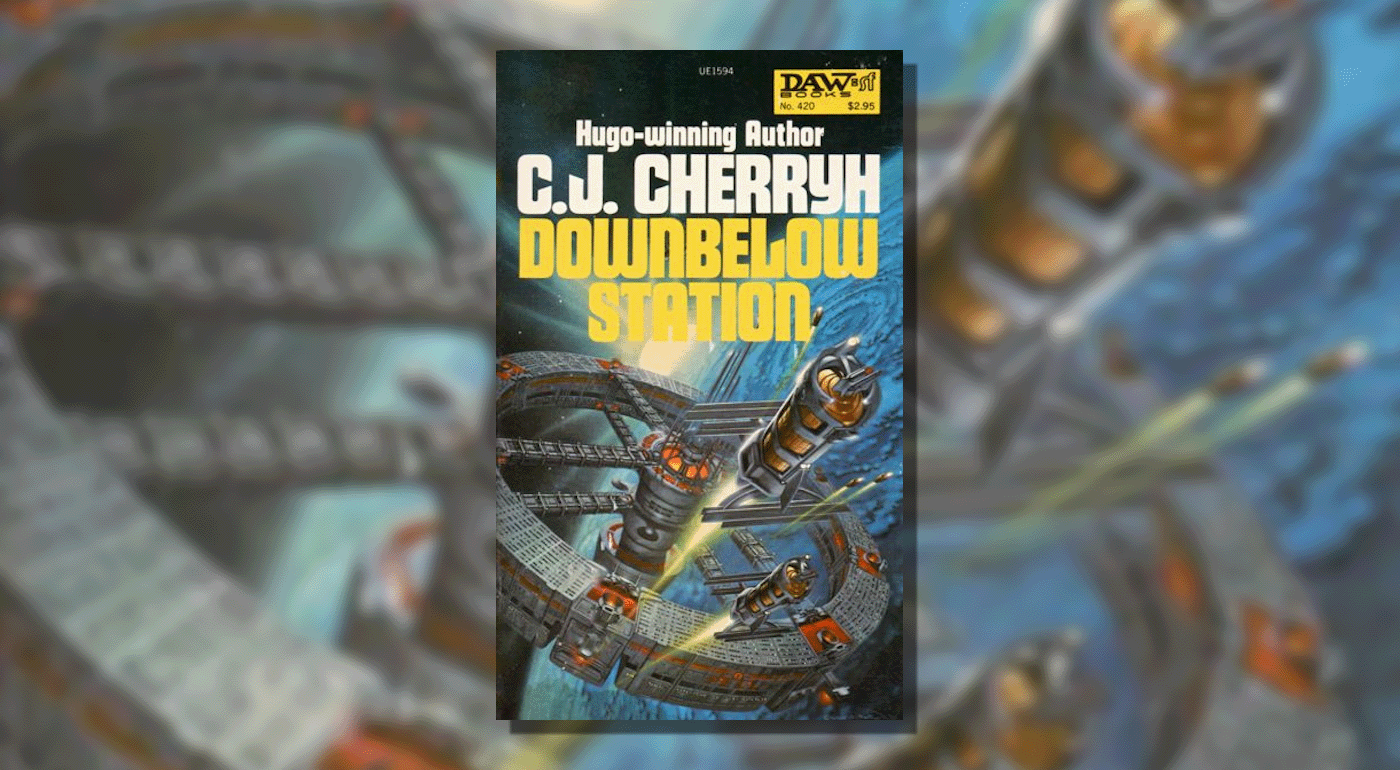
This is the hinge of the entire Alliance-Union universe. Set in 2352-53 at Pell Station during the final collapse of the long war between Earth Company and Union, it covers the birth of the merchant Alliance as a third power in human space. Cherryh won the Hugo for it. The political and human stakes are immediate. Read this first and everything that comes after clicks into place.
Step 2: Merchanter’s Luck (1982)

A short, sharp novel about a single small trader ship in the new post-war economy. It shows how the Alliance actually works at ground level, away from the grand politics of Downbelow Station. Good for momentum.
Step 3: Rimrunners (1989)

Follows Bet Yeager, a former Earth Fleet marine stranded in the peace her side lost. Hard-edged and claustrophobic, set almost entirely aboard a single ship. Shows the human cost of the war’s end without sentimentality.
Step 4: Tripoint (1994) and Finity’s End (1997)

These two round out the post-war merchanter world. Tripoint digs into the inter-family politics and old grudges that define Alliance commerce. Finity’s End brings the legendary merchant ship of the same name to center stage and ties together threads running back to Downbelow Station. Read them in order.
The Hinder Stars: The Newest Entry Point
Cherryh and co-author Jane S. Fancher launched a new series in 2019 that sits earlier in the timeline than anything else in the main sequence.
Alliance Unbound (2024)

Both are co-credited to Cherryh and Fancher. Alliance Rising won the Prometheus Award for Best Novel in 2020. The series is set at Alpha Station, the oldest of the Hinder Stars, the original stations built before FTL travel changed the shape of human space. Earth Company still holds power. The merchant culture that will eventually form the Alliance is just beginning to take shape.
Chronologically these books precede Heavy Time and Hellburner, which precede Downbelow Station. For a first-time reader, the same advice applies: read Downbelow Station first so the political stakes are already clear, then come back to see how the pieces were put in motion. For readers who have already been through the Company Wars arc and want more, Alliance Rising reads as a satisfying prequel that gives the whole conflict deeper roots.
The Prequels: When to Read Heavy Time and Hellburner

Chronologically, Heavy Time (1991) and Hellburner (1992) precede Downbelow Station. They follow test pilots and the Fleet’s early program, the ground-level human story of building the war machine that eventually tears itself apart at Pell.
Cherryh says these can be read before or after Downbelow Station. The smarter approach is to read Downbelow Station first. Once you know what the Fleet became and what it cost, going back to see it being built hits harder. The two-in-one omnibus Devil to the Belt is the easiest way to get them.
The Union Side: Cyteen, Gehenna, and Regenesis
Once you understand what the Company Wars produced, follow Union’s side of that history.
Forty Thousand in Gehenna (1983)

Union dumps a colony of cloned workers and a handful of free humans on a planet and walks away. What grows there has implications that run forward into the political order of Cherryh’s whole future history. Read this before Cyteen.
Cyteen (1988) followed immediately by Regenesis (2009)

Cyteen is the major Union novel. It covers the ruling structures of Union, the azi cloning system, political assassination, and psychological reconstruction. Long, dense, and worth every page. Cherryh won the Hugo for it. Regenesis is its direct sequel and should be read immediately after. Do not separate them.
Chanur: The Alien Trade Confederation
The five Chanur novels run alongside the late Company Wars period but in an entirely different region of space. Hani, kif, mahendo’sat, tc’a: Cherryh builds out a full alien trade confederation and drops one stranded human into the middle of it.
Read these after Downbelow Station and at least one or two of the post-war merchanters. You need enough grounding in how human space works before Pyanfar’s problems start to resonate politically.

Chanur’s Venture (1984)
The Kif Strike Back (1985)
Chanur’s Homecoming (1986)
Chanur’s Legacy (1992)
Read them in order. Each book picks up from where the last ended.
Further Down the Timeline
Far down the Alliance-Union timeline, a lone human soldier encounters the last survivors of a warrior species called the mri. Military science fiction shading into something closer to a philosophical novel by the end.

Kesrith (1978)
Shon’jir (1978)
Kutath (1979)
Read in order. The trilogy forms a single arc.
Serpent’s Reach (1980)
A standalone set in the far future of Alliance space. A splinter colony, a genetically modified humanity, and the insectoid azi. Works as a companion piece to the Faded Sun era but stands alone.
Merovingen Nights
Start with the novel Angel with the Sword (1985), then move into the seven shared-world anthologies Cherryh edited: Festival Moon, Fever Season, Troubled Waters, Smuggler’s Gold, Divine Right, Flood Tide, and Endgame. The setting is the planet Merovin around 3400 CE. Low-tech, swashbuckling, science fantasy in tone. Multiple writers contributed to the anthologies. Cherryh’s own contributions are worth tracking down individually.
Brothers of Earth (1976) and Hunter of Worlds (1977)
These sit very far down the timeline, distant enough from the Company Wars that they feel like separate futures. Human space has evolved past recognition. Read them as deep cuts after you know the earlier eras well.
The Standalone Age of Exploration Novels
Three novels sit outside the main political arcs but share the same technological background. All can be read at any point.
Port Eternity (1982): An Arthurian scenario set in deep space among azi crew. Strange and haunting.
Voyager in Night (1984): An ancient alien and a human crew that may or may not be dead. Borrows from horror fiction.
Cuckoo’s Egg (1985): An alien raises a human child. The alien’s reasons are not what they seem.
The Gene Wars: A Different Arc
Hammerfall (2001) and The Forge of Heaven (2004) form a two-book arc set far in the future, after a war fought with nanotechnology. Earth has quarantined the survivors. A man named Marak survives on a world being terraformed by the nanobots that were meant to destroy it. Read Hammerfall first. The Forge of Heaven picks up the story from a station above Marak’s world, long after.
The Fantasy Universes
Four books, standalone fantasy that connects to Alliance-Union space only at the far margins of the timeline. Nhi Vanye i Chya swears himself to the liege Morgaine, who travels between worlds through ancient Gates built by a lost civilization. Pure sword-and-sorcery in feel, science fiction in underpinning.

Gate of Ivrel (1976)
Well of Shiuan (1978)
Fires of Azeroth (1979)
Exiles’ Gate (1988)
Read in order.
Fortress Series
Five-book secondary-world fantasy. A wizard named Mauryl summons something into the world. What he summoned does not know what it is. Political, medieval, and slow-building in the best sense.

Fortress of Eagles (1998)
Fortress of Owls (1999)
Fortress of Dragons (2000)
Fortress of Ice (2006)
Russian Fantasy Trilogy
Three novels built on Russian folklore: rusalki, wizards, and the spirit Babi. Quieter in tone than the Fortress books, more concerned with character and magical consequence.
Rusalka (1989)
Chernevog (1990)
Yvgenie (1991)
Arafel / Ealdwood
The Dreamstone (1983) and The Tree of Swords and Jewels (1983), collected in various omnibus editions under titles including Arafel’s Saga and The Dreaming Tree. An elf left behind when her kind retreated from the world watches over men. Celtic in atmosphere. Read The Dreamstone first.
Faery in Shadow (1993) and Goblin Mirror (1992) are standalone fantasy novels that can be read at any point.
Rider at the Gate (1994) and Cloud’s Rider (1996)
Science fantasy set on the colony world of Finisterre, where humans survive only because of their bond with native nighthorses. Read in order.
The Short Fiction

Cherryh’s collected short fiction is gathered in one volume: The Collected Short Fiction of C.J. Cherryh (2004), published by DAW Books. It incorporates her earlier collections Sunfall (1981) and Visible Light (1986), plus stories from Glass and Amber (1987) and a novella written specifically for the collection.
Two stories in the collection are set directly in the Alliance-Union universe and are worth flagging for fans of that setting. “The Sandman, the Tinman, and the BettyB” puts space miners near Pell Station in contact with a rogue missile left over from a long-past war. “The Scapegoat” builds an unusual joint operation between Union, the Alliance, and Earth to deal with the Elves, an alien species that launches suicide attacks on any human ship in range. “The Scapegoat” received a Hugo nomination for Best Novella.
Her Hugo-winning story “Cassandra” is also in the collection. It was nominated for the Nebula Award and named by Locus in 1999 as one of the fifty best science fiction short stories ever written.
The Merovingen Nights anthologies contain additional short fiction from Cherryh alongside contributions from other writers. If you’re reading that series, Cherryh’s own stories in those volumes are worth isolating.
Where to Start If You’re New
Read Downbelow Station. If space opera with real political weight is your target, stay in the Company Wars arc through Finity’s End before branching. If you want alien contact done properly, go from Downbelow Station straight to The Pride of Chanur. If you want Union’s side of the story, Downbelow Station then Forty Thousand in Gehenna then Cyteen.
The universe rewards patience and rewards re-reading. Books you read early land differently after you’ve seen what they lead to.
One major Cherryh universe is not covered here: the Foreigner series, her longest-running sequence, featuring diplomat Bren Cameron navigating the politics of the alien atevi. It’s a separate beast from the Alliance-Union material and deserves its own guide, which we’ll cover in a follow-up article.
What’s your entry point into Cherryh’s work? Let us know in the comments.
If the golden age of Trek and Babylon 5 left a hole in your sci-fi diet, The Stars Entwined fills it — interstellar espionage between two civilizations on the brink of war. Read The Stars Entwined on Amazon!