



Bill Fridge, a Magic: The Gathering content creator and streamer, went live recently to walk his audience through one of the more painful collector stories in the MTG community — a near-perfect counterfeit card purchased for $900 from Facebook Marketplace that hit every failure point in the peer-to-peer collectibles market at once.
Fridge had been pursuing the card for approximately nine months. It had been rising in value since its September release, and he’d done what any speculator does: identified an asset he believed would appreciate and moved when the price looked right. “If I sell these Magic cards I can afford to buy this at a very good price,” he explained on stream. “I thought I made a good investment. And since I got it, it went up like $200 in price.”
The seller looked clean by every available check. His Facebook profile showed years of activity, personal photographs with his girlfriend, and a professional LinkedIn presence. The platform’s AI vetting system flagged him as a trusted seller with multiple five-star reports and 17 years of account standing. “When I saw it, I pulled it out. I looked at it, I was like, ‘Oh, this is a beautiful card,’” Fridge said. “Based on everything the guy had on his Facebook page, I had no reason to think any otherwise.”
They met in person. The seller provided an address. The exchange happened face to face.
The counterfeit only revealed itself under close examination after the transaction. Fridge found three separate tells. The first was physical: the edges where the card was die-cut showed slight upward curling characteristic of proxy printing machines rather than Wizards of the Coast’s manufacturing process. “They kind of cut up right and that happens in proxy cards the way they die cut them. Very, very barely see it.”
The second was ink density. Held against legitimate cards from his collection, the printing was measurably lighter. The third and most definitive was a jeweler’s loupe test on the card’s back design — specifically the letter T. “There’s like some red dots that are on the green dot on the back. You can see the red dots if you like do a jeweler’s loop and zoom in. I use my phone to zoom in on the T and the T on the back will have these little ridges on the bottom of the T and all the other cards had them clear as day and this one was not clear. It was very muffled.”
The quality of the fake made it worse. “It looks so real, too. It’s like very well done. It’s the worst part about it.”
Fridge messaged the seller explaining his concerns and asking whether the seller knew the card’s authenticity was questionable. The response was immediate: the seller blocked him and removed him from the conversation.
“I was like, ‘Oh, he must know. He must know what happened,’” Fridge said.
Fridge contacted the payment platform to report the fraud and open a dispute. The platform suspended his account instead. The account held significantly more than the $900 transaction.
He had sent money through a friends and family transfer — the same feature he uses to pay his mother, sister, and roommates. That habit extended, fatally, to a Facebook Marketplace exchange with a stranger. Friends and family transfers carry no buyer protection. There is no dispute mechanism. The money moved and didn’t come back.
“I did friends and family like a dumbass,” Fridge said. “I just felt like everything lined up and I could trust the guy and I just wasn’t thinking.”
The fraud investigation is more complicated than a typical online scam because Fridge is not dealing with an anonymous seller. He has the man’s name, LinkedIn profile, apparent employer, and the physical address where they met. He looked this person in the face.
“I have the dude’s information. Like, I assumingly know where he works. I found his LinkedIn. I found everything,” Fridge said. “Which wise it doesn’t add up that he would scam like that.”
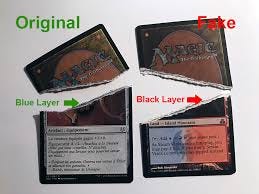
The ambiguity is what makes it so hard. The seller claimed to have obtained the card from a local game store, Mox Boarding House. If true, the seller may not have known the card was fake, and the counterfeit entered the chain of custody somewhere upstream. The immediate block when Fridge raised the issue suggests otherwise.
Filing a police report is the logical next step. Fridge acknowledged it while questioning its practical value: “I have the dude’s information and stuff, but even that feels like a lot — am I wasting police time doing it?” Interstate fraud at $900 falls under federal jurisdiction when conducted across state lines, which peer-to-peer marketplace transactions frequently do. A report creates a paper trail whether or not it produces immediate results.
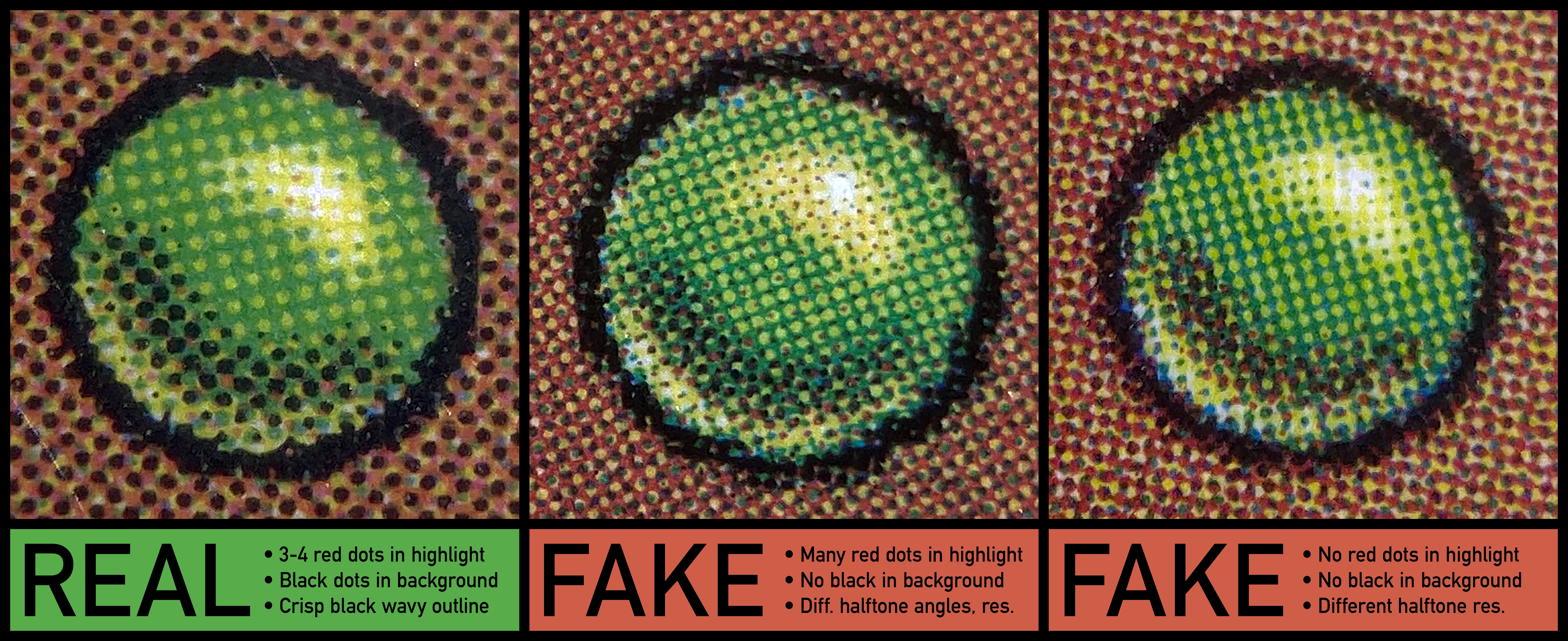
MTG counterfeits have become sophisticated enough that fakes pass casual inspection from experienced collectors. The card Fridge bought required a jeweler’s loupe and direct comparison against authenticated copies to identify. Visual inspection alone gives buyers near-zero protection against high-quality proxies.
Platform AI vetting systems assess behavioral patterns and account history — not the authenticity of what’s being sold. A seller who has conducted dozens of legitimate transactions before pivoting to counterfeit cards passes automated screening cleanly every time. The 17-year account standing that reassured Fridge was real. It said nothing about the card in the seller’s hand.
Friends and family payment transfers remain the sharpest vulnerability in private transactions. Sellers who request this method explicitly are eliminating the one mechanism buyers have for recourse — which is exactly why they request it. That request should function as a hard stop. Legitimate private sellers accept payment methods with dispute mechanisms because they’re confident in what they’re selling. Sellers who insist on friends and family are pricing in the possibility of a problem.
Fridge closed the stream hoping his account would be restored after identity verification. “My whole life is messed up,” he said. “I took a risk picking this up the way I did. I thought it was a calculated risk. I was wrong.”
What protections should peer-to-peer marketplace platforms be required to provide collectibles buyers?
Space marines on a holy crusade across the galaxy. If that sentence got your attention, Justified: Saga of the Nano Templar is your next read. Three books of relentless action Read Justified: Saga of the Nano Templar on Amazon!

NEXT: Games Workshop’s Female Custodes Are Sitting on Shelves and the Store Data Shows Why
Oh no, a speculator got burned speculating.
Me fewl so sowwy.
He didn't purchase that card to play Magic. He purchased it to sell later on to some other speculator or three until some Magic the Crackening whale loser buys it, imagining all the games he COULD win with it while it sits in some plastic sarcophagus, like Snow White, for fear some mote of dust, or the touch of an actual person might reduce its "value."
This human parasite needs to get a real job producing something of value to society.
And you MtG people who pay into this nonsense?
YOU JUST MADE THE LIST!
Selling fakes is shit behavior, not to mention illegal. He can and should sue.
That being said, if you are a serious collector and pay $900 via friends and family option, you are doing it wrong. Either you are incredibly naive or dont know what you're doing. Should have taken necessary (and honestly very common) precautions.