


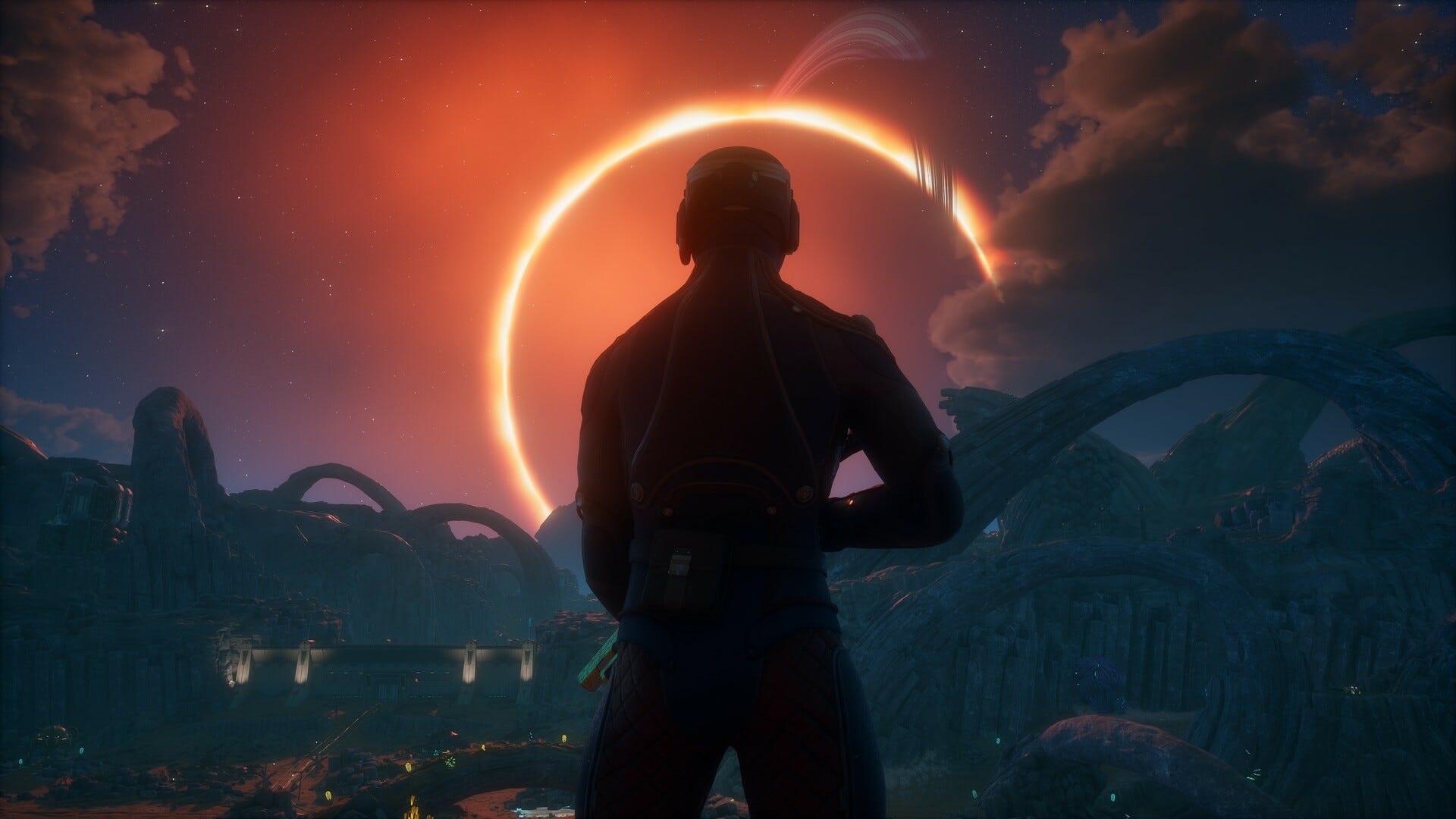
Synthetic Man recently uploaded a review of The Outer Worlds 2, calling it “a Smug Redditor’s Wet Dream.” True to style, he introduced the video saying that “I’m the only human being who’s playing this game. Like, there’s not a single other human, actual human, that is going to play this game to completion. So, I need to tell the world how shit it is because the nonhumans will tell you, ‘No, actually, it’s good, guys.’ And no one’s going to bother to prove them wrong. Nobody. Cuz no one’s going to play this.”
This highlights Synthetic Man’s capacity to stream modern games to completion before he reviews them, in contrast with many modern reviewers or critics who will praise a game mere days after release without proving they played more than a few hours.
The Outer Worlds 2, by Obsidian Entertainment, was produced on October 29, 2025. In the last two weeks since its release, Synthetic Man has painstakingly played through the entire game, including many of its side quests, and produced an almost 2-hour video covering everything from character creation, to combat, to story and themes.
Synthetic Man posits that the Outer Worlds games are a dystopian science fiction franchise that ostensibly mirrors the likes of Starfield while attempting a more deliberate critique of late-stage capitalism. At its core, the series imagines a future where corporations dominate the galaxy, purchasing star systems outright from Earth’s government. This premise should lend itself to biting satire, yet the execution falters. Instead of sharp commentary, the game delivers dialogue that feels artificial, as though generated by an algorithm trained on internet banter (the likes of which are more specific to Redditors). The intended humor rarely lands, leaving players cringing rather than laughing.
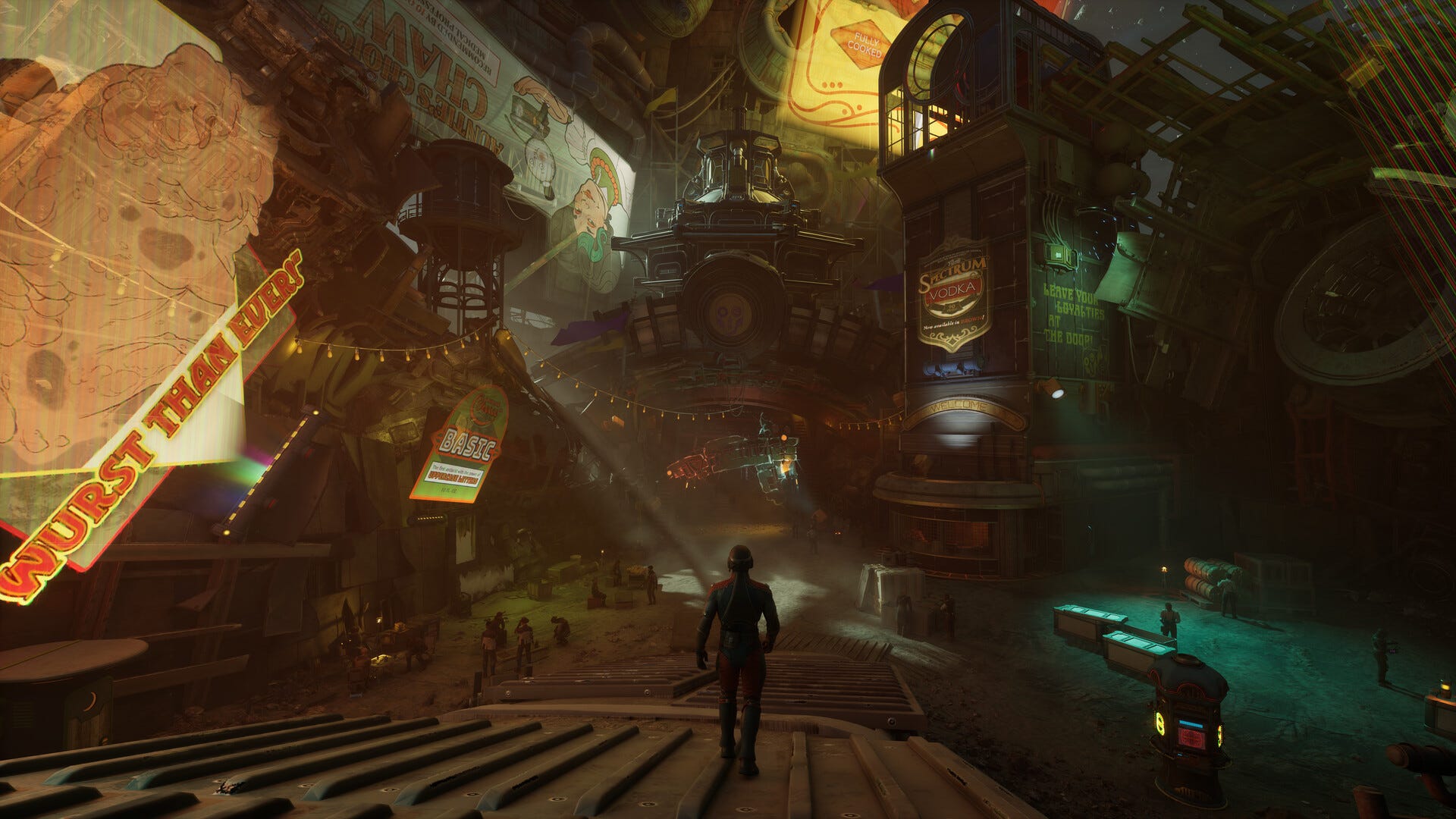
The problems extend beyond dialogue. Aesthetic choices a stylistic train wreck, with the retrofuturistic setting muddled by inconsistent design. Some elements lean toward steampunk, others evoke World War II, while certain factions appear to be direct imitations of Star Wars’ Empire, Soviet Russia, or even Judge Dredd. The Protectorate, for instance, is presented as a fascist faction but comes across as derivative and unserious. This patchwork of influences undermines any sense of originality, reducing the world to a collage of borrowed motifs rather than a distinct vision.
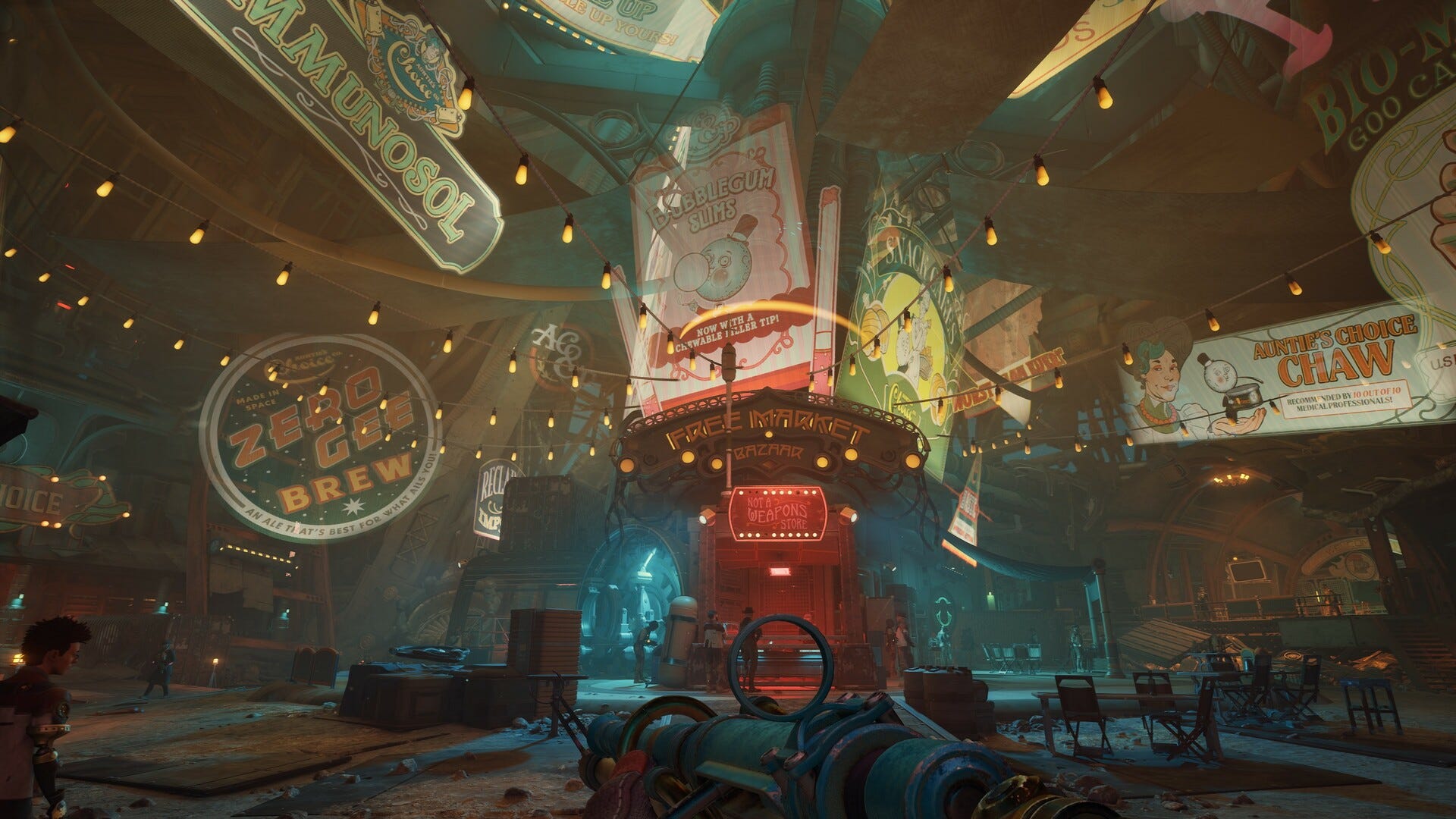
Equally troubling is the corporate dystopia’s visual presentation. Advertisements saturate the environment, yet none are persuasive or appealing. If satire is meant to exaggerate consumer culture to expose its absurdity, The Outer Worlds instead renders it repulsive without insight.
The corporate aesthetic fails to capture the allure of capitalism’s promises. Even nods to other media, such as the Futurama-inspired Auntie Cleo are incredibly shallow in their mimicry.
A Brief Synopsis of The Outer Worlds
To develop context surrounding his commentary about The Outer Worlds 2, Synth begins by talking about the first game, The Outer Worlds.
The first Outer Worlds game also had a setup that promised a dystopian critique of late-stage capitalism, but the execution quickly reveals itself as a derivative mess that cannibalizes its own premise. Instead of nuanced satire, the game offers exaggerated caricatures: citizens forced into 120-hour work weeks, subsisting on ultra-processed food that leaves them malnourished, and parroting corporate slogans in place of genuine dialogue.
The narrative is further weakened by the game’s structure. Exploration spans a handful of planets, each feeling like an empty sandbox rather than a living world. There is one modest city that stands out, offering more ambition than anything seen in the sequel, but even this settlement fails to elevate the experience. Despite investing forty hours into the story, players often find themselves struggling to recall its details, a testament to its forgettability.
One element that does distinguish the first game is its allowance for moral choice. Players can side with the Board, embracing its ruthless plan to cull the population in anticipation of mass starvation and unrest. This option, however bleak, at least acknowledges the complexity of dystopian narratives and gives weight to player agency. By contrast, Outer Worlds 2 removes such freedom, refusing to let players join the Protectorate faction. The absence of this choice underscores the sequel’s diminished ambition and its retreat from the uncomfortable questions that role-playing games should confront.
The conclusion of the first game sees the player defeating the Board and working with their eccentric scientist ally to awaken fellow colonists, with the ending hinting at Earth’s possible destruction.
Introduction to The Outer Worlds 2
The second installment of The Outer Worlds shifts the player’s role from colonist to Earth Directorate agent (essentially a “space fed”) tasked with investigating the Arcadia system. The central mission revolves around the manufacturing of “skip drives,” a thinly veiled stand-in for warp drives, whose use destabilizes space and threatens to unravel reality itself through rift-like black holes. On paper, this premise should raise the stakes beyond the first game’s corporate dystopia. Yet the execution falters almost immediately. The narrative neglects to resolve the cliffhanger of the original (whether Earth was destroyed) only to awkwardly remind players of that unresolved thread at the sequel’s conclusion, as if the writers themselves had forgotten their own setup until the last moment.
The game’s opening cutscene sets the tone with a recruitment propaganda film for the Earth Directorate, styled like an adventure serial. Synthetic Man is keen to notice that this introduction also establishes a recurring motif: the prominence of “girl boss” characters. Commander Zayn, a tall, muscular woman, appears alongside her ineffectual sidekick, a diminutive and effeminate young man. This dynamic is not an isolated case but rather the first of many similar portrayals throughout the game. Beyond the simple fact that these women are abrasive or antagonistic toward the player, the writers deliberately populate positions of authority with female leaders in a way that feels forced and insufferable. The pattern is unmistakable: across nearly every nonhostile faction, women occupy the highest ranks, including two elderly white women who lead two of the three major factions.
The Protectorate, ostensibly the central antagonist faction, is no exception. Despite its role in manufacturing the dangerous skip drives, Synthetic Man noticed that it too is saturated with diverse female leadership, mirroring the other factions rather than offering contrast or complexity. This repetition undermines the narrative’s credibility, reducing factional differences to cosmetic variations while reinforcing the fact that the writers prioritized representation over storytelling depth.
Character Creation
Following the opening cutscene, The Outer Worlds 2 introduces its character creation system, a feature that should allow players to craft avatars that reflect their vision of identity within the game’s world. Much like many modern character creators, it fails to balance flexibility with aesthetic appeal. While the player can go to such extremes as removing all limbs and replacing them with prosthetics, the tool makes it nearly impossible to create a conventionally attractive character. The result is a roster of avatars that resemble grotesque caricatures rather than believable human beings.
Synthetic Man also comments that the flaws are not limited to extremes of customization. Even basic facial features are mishandled. Male characters are saddled with oddly feminine eyes, producing an uncanny effect that undermines any attempt at realism. More baffling is the absence of a lip slider. Despite offering adjustments for most other facial features, the system forces players to select from preset faces to alter lips, with no option for further refinement. This omission suggests a technical rationale (Synthetic Man theorizes this was related to lip-syncing) but the justification collapses under scrutiny. Since the player character never speaks in-game, the restriction serves no practical purpose, leaving only the impression of careless design.
RPG Elements
At a glance, The Outer Worlds 2 appears to offer a robust role-playing system designed with replayability in mind. Much like its predecessor, the game emphasizes specialization, limiting players to two core skills unless they select a specific trait to expand further. Skill checks are abundant, surfacing every few minutes across a wide range of abilities, suggesting a depth of interaction that should reward varied play styles. On paper, this design seems superior to many RPGs, promising meaningful choices and diverse outcomes. Yet in practice, the illusion of depth evaporates as you continue to play. This became clearer and clearer as Synthetic Man continued to stream the game.
The abundance of skill checks proves deceptive. Despite their frequency, most have little impact on quests or progression. Players can complete nearly every objective without them, and often they fail to even streamline tasks. Only in rare cases, such as Lockpicking or occasional Engineering and Hacking, do skill checks gate access to content. This undermines the very purpose of specialization, leaving players with the sense that their chosen skills matter little. Even universally applicable abilities like Speech appear less frequently than expected, overshadowed by oddly prioritized Science checks. The presence of a faction that worships a universal equation underscores the game’s fixation on science, but this emphasis feels more like parody than design logic.
Backgrounds and traits, while offering flavor, suffer similar shortcomings. Skill checks rarely alter quests and all a background does is give you a bunch of cringeworthy dialogue choice. Choosing a background such as Renegade provides unique dialogue options, but these rarely substitute for actual skill checks, reducing them to cosmetic flourishes. Traits like Brilliant, Lucky, or Innovative offer some utility (additional specialization, unique checks, or crafting advantages) but their impact is muted by the game’s economic imbalance. Crafting becomes irrelevant once money loses value, and most traits fail to meaningfully alter play style.
Perks represent perhaps the most disappointing element. Borrowed from Fallout: New Vegas, they are awarded every other level, yet their progression feels stunted. Skills cap at twenty points, but perks do not unlock consistently across that range. Guns and Explosives, for example, fail to provide meaningful perks beyond a certain threshold, discouraging focused investment. The result is a system that nudges players toward spreading points across multiple abilities, even when specialization would logically yield greater rewards. This lack of design discipline leaves players questioning whether their choices matter at all.
What should have been the backbone of a role-playing experience instead becomes a decorative framework, reminding players that beneath the surface, the game’s systems are as forgettable as its narrative.
The Combat
Combat dominates The Outer Worlds 2, consuming as much of the player’s time as dialogue. While the shooting mechanics are not outright broken, Synthetic Man notes they are merely serviceable, functional enough to carry the game but lacking creativity. Enemies generally fall within a few shots and by the endgame, a reskinned M14 can dispatch nearly all foes with ease.
Only a handful of bosses qualify as bullet sponges but the real problem lies not in balance or gun feel but in the uninspired weapon design. Most firearms are simple reskins of real-world guns, with only token attempts at novelty such as a goo gun. Compared to the first game’s science weapons, the sequel’s arsenal feels unimaginative.
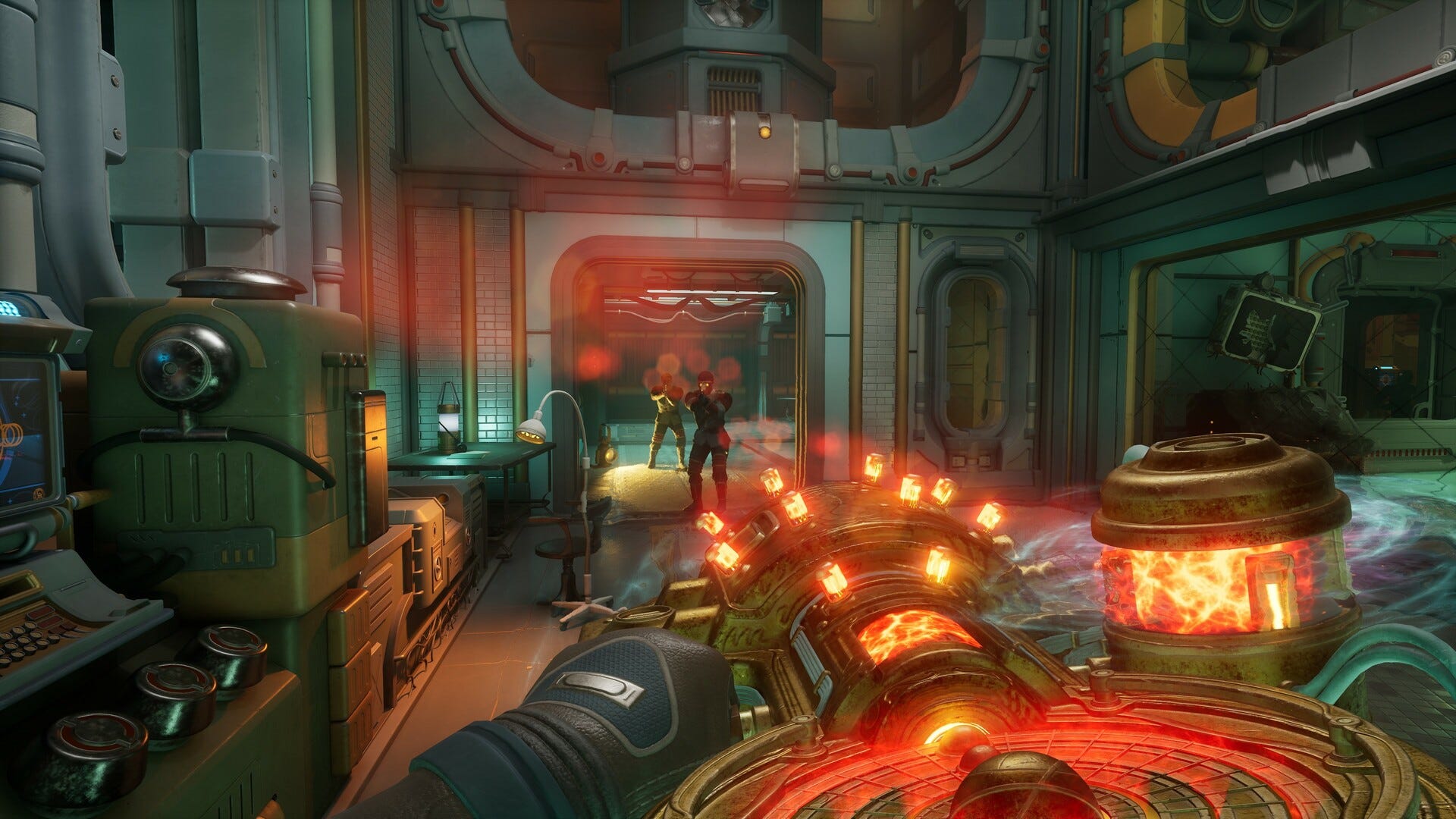
The imbalance extends to weapon mechanics. Heavy machine guns inexplicably deliver twice the damage per second of other weapon types, making them the obvious choice despite limited ammunition. Crafting offers little relief, forcing players to rely on vending machines to stockpile heavy rounds. Gadgets, introduced as supplementary combat tools, suffer from similar issues. Of the four available, only the shield proves consistently useful, functioning like Halo’s regenerating barrier and effectively doubling survivability. The others (time dilation, goggles for invisible enemies, and an acid spitter for stealth) are situational at best, undermined by the fact that stealth is pointless when enemies die in two or three shots. Armor compounds the imbalance, offering no meaningful protection regardless of type, leaving the shield as the only reliable defense.
Healing mechanics, carried over from the first game, attempt to innovate with a toxicity system that limits item use. While clever in theory, the broken armor system ensures players are constantly forced to heal after only a few hits, rendering the mechanic frustrating rather than strategic. Even perks fail to meaningfully alter combat. For example, Synthetic Man procured the Serial Killer perk in the game which gave his character increased maximum health. However, the game’s inhalers could not restore it fully, leaving the player vulnerable despite inflated stats. Companions provide minor support through abilities like healing or taunting, but their impact is limited, echoing the same companion limitations of the first game.
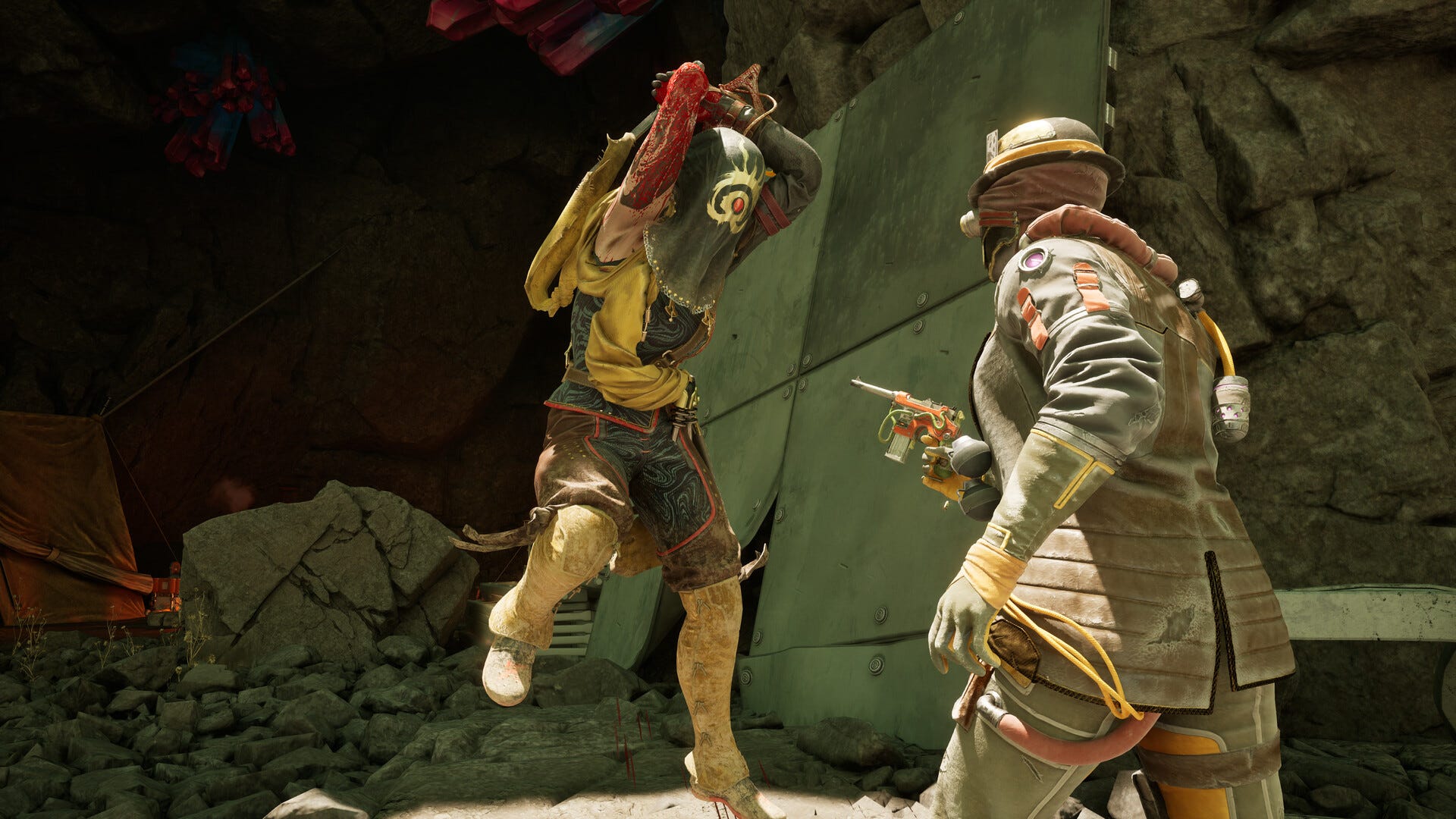
Enemy variety is another glaring weakness. Human enemies, regardless of faction, all function identically, reducing combat encounters to repetitive skirmishes. Animal enemies are recycled wholesale from the first game (mantisaurs and raptadons return despite the new solar system setting.) Mechs offer the only slight variation, but their bullet sponge design makes them tedious rather than engaging. As a result, combat quickly becomes monotonous, with the second half of the game recycling the same encounters from the first half, padded out to stretch the playtime to thirty hours.
Dungeon design also compounds the repetition. Exploration is minimal, reduced to linear hallways filled with enemies. Outside of side quests, there is little incentive to enter these spaces, and the few exceptions fail to redeem the overall lack of creativity. The sheer volume of combat encounters is nearly double that of Fallout: New Vegas, revealing the developers’ reliance on shooting as filler content rather than meaningful gameplay.
Player Dialogue
One of the core failures of The Outer Worlds 2 lies not in its supporting cast but in the voice of the player character. Rather than offering dialogue that grounds the protagonist in the world, the game saddles players with lines that read like snarky internet quips. On multiple occasions, Synthetic Man noted the tone was painfully out of place, resembling the sarcastic detachment of a Reddit thread rather than the gravitas of a role-playing hero. What should have been immersive player expression instead becomes a stream of awkward one-liners, undermining any attempt at serious engagement with the narrative.
Examples abound: trivial complaints about neighbors, clumsy attempts at wit, and superficial declarations of power dynamics. These lines are actively disruptive, breaking immersion and leaving players questioning how such writing passed through development. The problem is compounded by the fact that the worst dialogue does not come from the eccentric NPCs but from the player character themselves. Every exchange feels like it was rehearsed for a standup performance, reducing the protagonist to a caricature rather than a vessel for player agency.
The issue extends beyond tone into ideological framing. Dialogue choices casually admit to war crimes, trivialize moral dilemmas, and insert commentary that feels more like contemporary internet discourse than world-building. The attempt to weave themes of justice and guilt into the narrative unravels in a tangle of contradictions. The game presents “innocent until proven guilty” as a novel idea, yet this framing feels disingenuous in light of broader cultural debates. Instead of exploring these themes with nuance, the writing resorts to heavy-handed moralizing that alienates rather than engages.
This failure is particularly striking given Obsidian’s legacy. Synthetic Man bemoans the lack of writers like Chris Avellone who once defined the studio’s reputation for sharp, morally complex storytelling in titles such as Fallout: New Vegas. The contrast here is stark: The Outer Worlds 2 delivers dialogue that feels juvenile, self-aware in its weakness, and embarrassingly reductive.
The Story
Throughout the game, illusion of choice quickly reveals itself for what it is. Dialogue options are framed with the familiar “Telltale will remember this” mechanic, but the consequences are negligible. At best, these choices determine binary outcomes in companion quests, never shaping the broader narrative.
The story escalates with the introduction of Augustine Deere, a supposedly legendary Earth Directorate agent. The game repeatedly hypes her prowess, yet her characterization is riddled with contrivances. She infiltrates the Protectorate (portrayed as an incompetent fascist faction) without raising suspicion and performs absurd feats behind their backs. Her betrayal becomes the pivotal moment of the tutorial mission, leading to the deaths of the player’s crew and leaving your first companion, Niles, mutilated but alive. Niles was among the few NPCs that Synthetic Man actually liked. Regardless, the player is denied any choice in the outcome of the tutorial mission and they are forced instead into a scripted escape as Deere detonates the station. This act worsens the crisis in Arcadia, creating a massive rift that threatens to destroy the system within a decade, setting the stage for the player’s mission to stop her.
From there, the game’s tone grows increasingly self-indulgent. In the “ultimate edition,” players are mocked for consumerism immediately after the tutorial, a cheeky jab at those who paid for early access (ironically, this is despite the game’s poor pre-order performance.) This metacommentary feels less like satire and more like contempt for the audience. The journey then continues to Paradise Island on Eden, where the player is joined by a second companion: Valerie, a robot. Valerie becomes the centerpiece of awkward, cringeworthy dialogue. The developers preemptively insert a warning against intimacy with the robot, derailing any depth of character interaction into a juvenile gag. This exchange epitomizes the game’s broader failure to balance tone, emphasizing its own self-parody rather than meaningful storytelling.
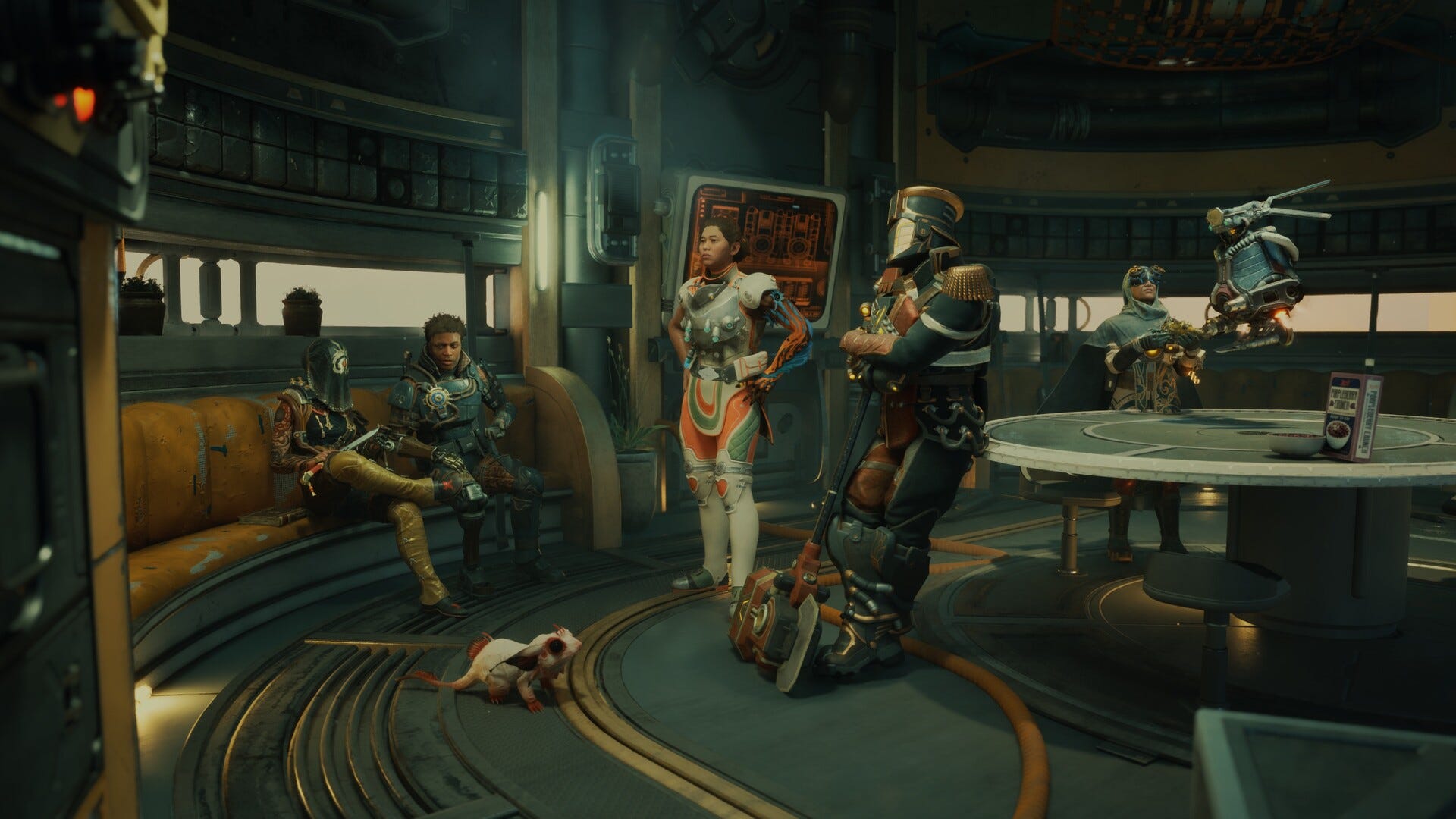
Romance, a staple of many RPGs, is absent altogether. The developers appear to have avoided it deliberately, perhaps due to their own ideological self-insertion into the cast. Yet given the grotesque design of most NPCs, the absence of romance feels less like a missed opportunity and more like a tacit admission that the characters are unappealing. The result is a world populated by companions and NPCs who are either insufferable, contrived, or outright repulsive.
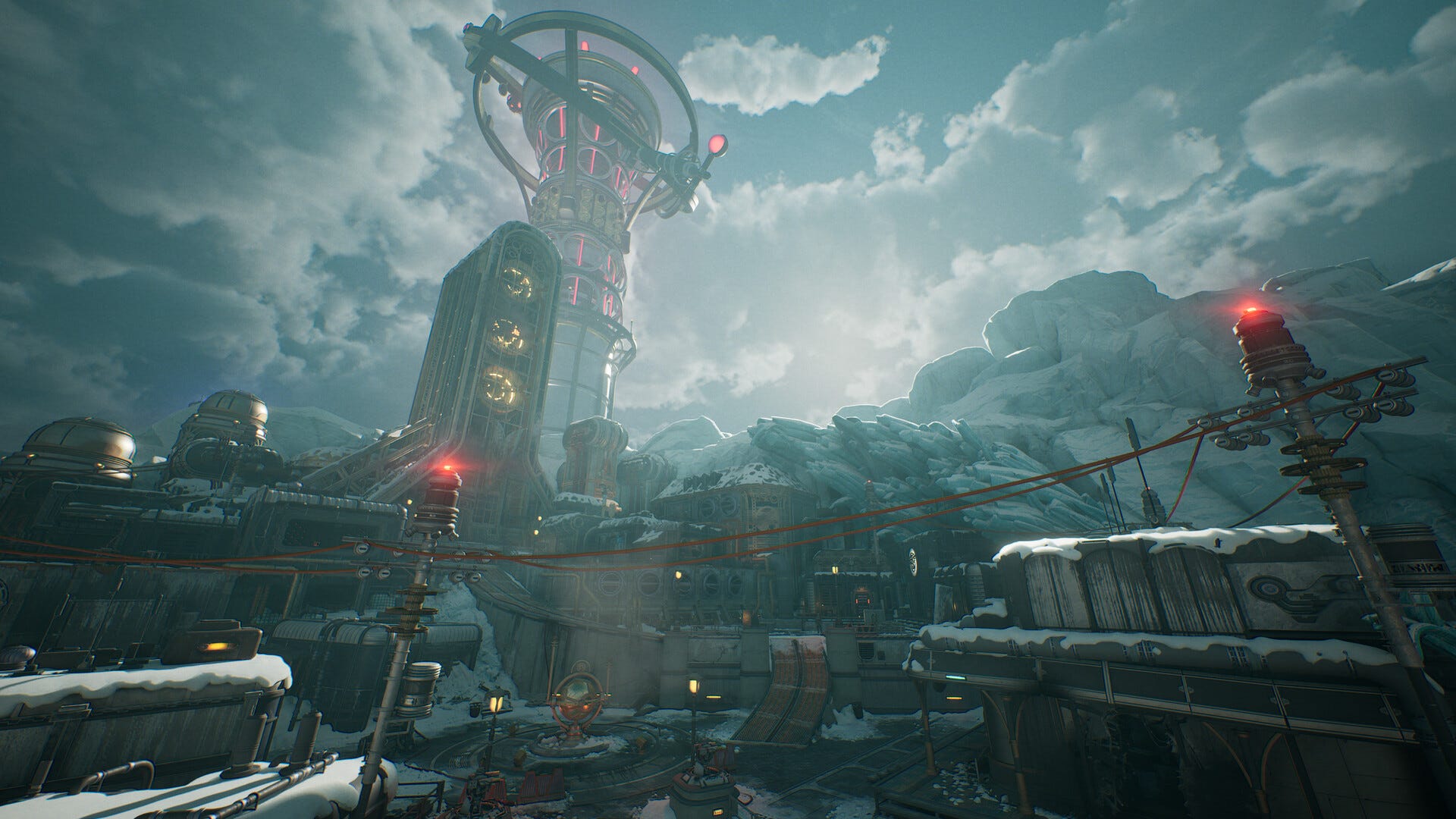
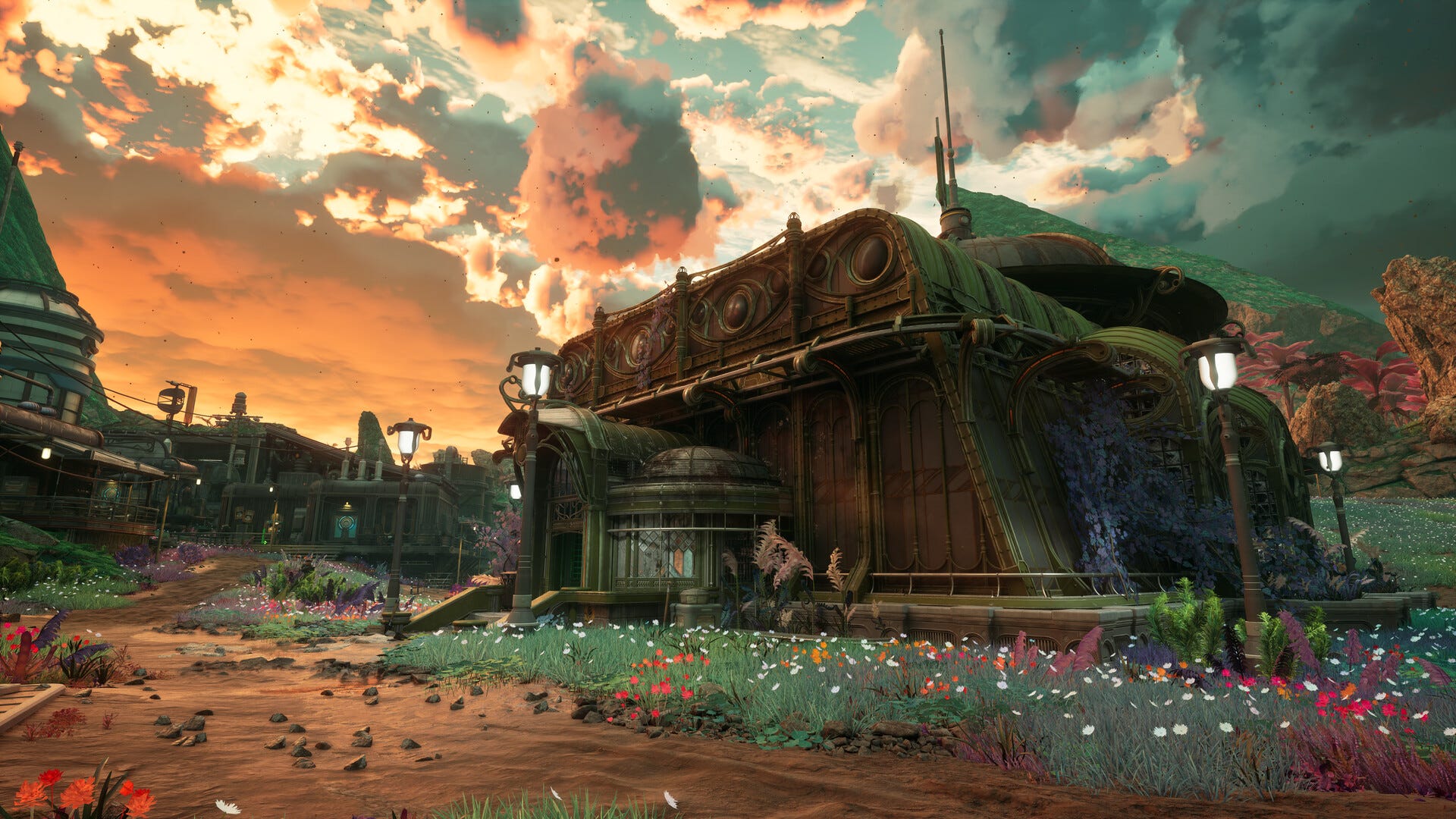
Unlike expansive RPGs such as Elder Scrolls or Fallout, The Outer Worlds 2 abandons the idea of a single, sprawling sandbox in favor of a series of smaller, compartmentalized maps. At first, this design seems promising. The opening planet is more densely packed with content and clearly received the most development effort. Yet the illusion quickly fades. Subsequent planets devolve into barren wastelands with little to do, exposing the game’s lack of time, budget, or ambition to sustain its world-building. As with the first installment, the developers front-loaded their creativity, only to let the experience collapse into emptiness as the player progresses.
Synthetic Man’s video, “The Outer Worlds 2 is a Smug Redditor’s Wet Dream” breaks the story down in depth, delivering a deep critique of the game in particular and modern gaming trends in general. As with most of his videos, he utilizes a unique polemical commentary that moves beyond mechanics and aesthetics into cultural and ideological critique.
Conclusion
By the time the credits roll, Synthetic Man concludes that The Outer Worlds 2 offers no true sense of closure. With only two companion quests completed, the ending slides are sparse, perfunctory, and unsatisfying. The player is left with little acknowledgment of their choices, reinforcing the sense that thirty-five hours of gameplay have been wasted. Even the act of documenting the experience in detail feels more like an obligation than a reward. Synthetic Man admits that his review video itself may not have been worth the effort, but insists that someone had to cover the game thoroughly because inevitably, years down the line, revisionist voices will attempt to frame this title as a hidden gem. It is not. It is, in Synthetic Man’s words, “a giant pile of shit.”
The condemnation is absolute: there is not a single redeeming quality in the game. The best element, the shooting, is merely “okay,” functional but uninspired. Certain systems, such as the skill tree, suggest replay value on paper, but the reality is grim. Why would anyone willingly endure this experience again? Even with the psychological resignation that sets in after twenty hours, the game remains torture, only slightly less painful once the player accepts their fate.
The writing, meanwhile, is framed not as propaganda but as self-indulgence. It may gesture toward ideology, but it fails to persuade or provoke. Instead, it reeks of self-congratulation, of writers “huffing their own farts,” congratulating themselves on their moral superiority while portraying enemies as cartoonishly evil and incompetent. Synthetic Man insists this is not effective propaganda. It is hollow posturing, symptomatic of a broader decline in modern game development.
That decline, he argues, is systemic. Even if corporate mandates, political agendas, and diversity initiatives were stripped away, modern games would still be inferior to those released twenty years ago. The problem is not only meddling executives but also developers themselves which Synthetic Man describes as “genuinely untalented.” The metaphor is sharp: hiring a chef who cannot scramble eggs will inevitably produce inedible slop. So too with studios that lack the craft to produce compelling games.
The commercial failure of The Outer Worlds 2 is taken as proof of this argument. Ugly games do not sell, and Synthetic Man points to other industry disasters such as Concord as evidence that audiences reject what they see as a “DEI aesthetic.” This aesthetic is described as “space toucan–like,” a grotesque style that no real people enjoy looking at. Synthetic Man’s hope is that the collapse of The Outer Worlds 2 marks the end of the franchise, and perhaps even the end of Obsidian itself, though he notes Microsoft’s inexplicable willingness to keep the studio alive.
The conclusion is blunt and final. There is no reason anyone should want to play this game after watching his review. For those who dislike-bombed his video without watching it, Synthetic Man offers sarcastic thanks for the engagement, noting that even hate keeps his channel alive. His video closes in mockery of the developers’ lack of self-awareness and ridiculing the absurdity of mechanics like “N-ray” powers, which remain unexplained by the game’s writing.
Synthetic Man’s final note is one of rage, disbelief, and dismissal: this game is garbage, this IP is garbage, and the industry that produced it is collapsing under its own incompetence.
NEXT: Numerous Woke Activists Laid Off Amid Square Enix Restructuring

I got the first Outer Worlds game for free and felt that I overpaid. Didn't finish the ugly, boring thing. Unsurprising that its sequel is more of the same and worse.
It is surprising that it is *that* bad, though. Entirely intentional.