


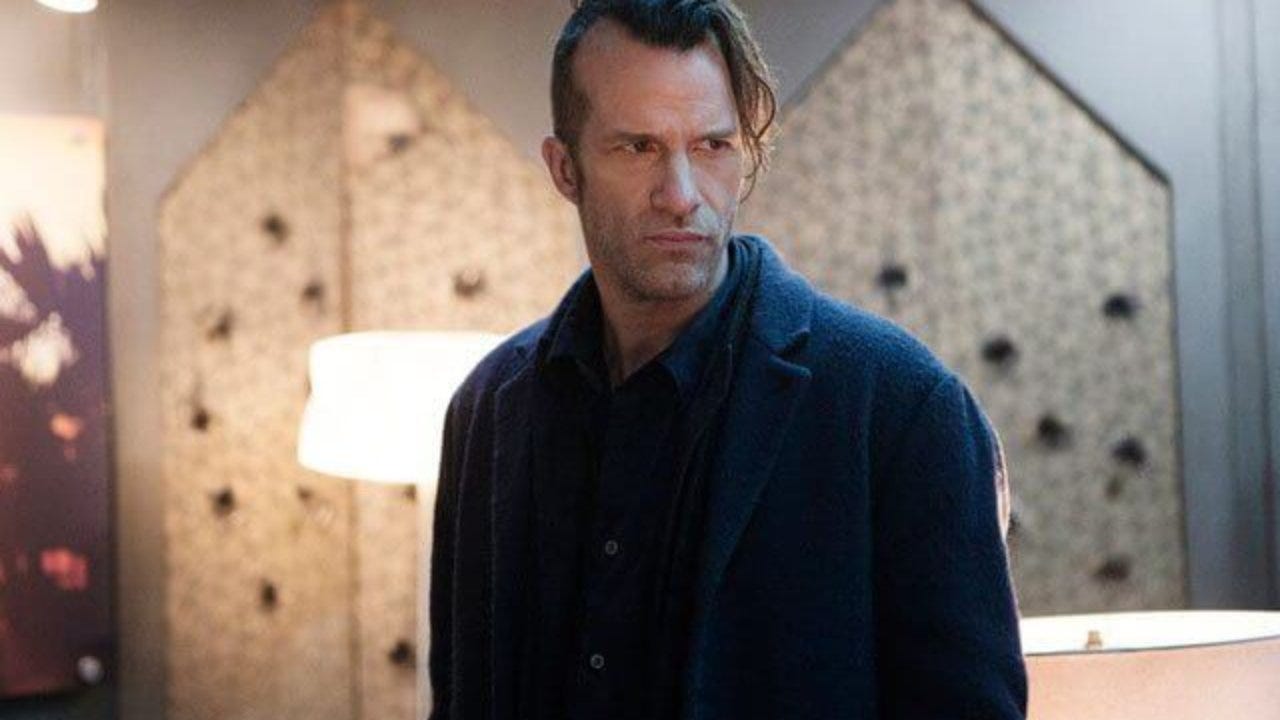
Strange New Worlds just announced Thomas Jane as Dr. Leonard McCoy and Kai Murakami as Hikaru Sulu for the series finale, and the casting confirms what fans have suspected for three seasons: the show doesn’t care about Star Trek continuity. McCoy and Sulu shouldn’t be on the Enterprise during Captain Pike’s command, and their presence in the finale is another example of Alex Kurtzman’s Secret Hideout prioritizing shallow fan service the real fans don’t want over internal consistency.
According to TrekMovie, the finale will feature “Kirk’s first day of command” of the USS Enterprise, with showrunner Akiva Goldsman noting that Kirk’s first time in the captain’s chair happened well before his appearance in “Where No Man Has Gone Before,” the second pilot of The Original Series. The episode will bring together the full TOS crew the first time, completing the lineup that defined Star Trek for generations.
There’s just one problem: this violates established continuity, and the show knows it.
The Continuity Problem: McCoy Wasn’t There
Dr. Leonard McCoy was not the chief medical officer of the Enterprise during Captain Pike’s command. In “The Cage,” the original Star Trek pilot from 1964, the Enterprise’s chief medical officer was Dr. Philip Boyce, played by John Hoyt. Boyce appears in the episode as Pike’s confidant, the person the captain turns to when he’s questioning his fitness for command. That’s the role McCoy would later fill for Kirk, but during Pike’s era, it was Boyce.
When Kirk took command and the series proper began with “Where No Man Has Gone Before,” the chief medical officer was Dr. Mark Piper, played by Paul Fix. Piper appears in that episode and is clearly established as the ship’s doctor. McCoy doesn’t join the Enterprise until after Piper’s departure, sometime between “Where No Man Has Gone Before” and “The Corbomite Maneuver,” the first regular episode in production order.
Strange New Worlds has already replaced Boyce with Dr. M’Benga (Babs Olusanmokun) as chief medical officer, which is itself a continuity change but one that’s defensible. M’Benga was established in TOS as a doctor who served under Kirk, so having him serve earlier under Pike isn’t a major stretch. But now the show is adding McCoy to the Enterprise during Pike’s final days in command, which directly contradicts the established timeline.
The show could argue that McCoy is visiting the ship rather than serving as chief medical officer, or that he’s temporarily assigned for a specific mission. But TrekMovie’s article describes the finale as featuring Kirk’s “first day of command,” which suggests a transition from Pike to Kirk. If McCoy is present for that transition, it implies he’s already part of the crew, which contradicts his absence from “Where No Man Has Gone Before.”
The Sulu Problem: He Wasn’t There Either
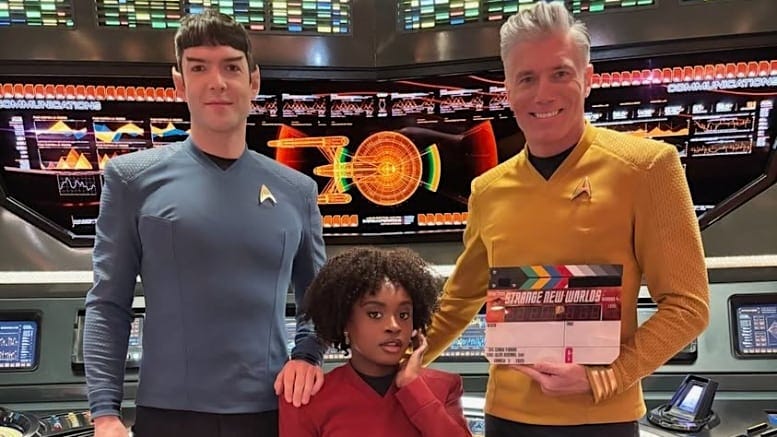
Hikaru Sulu’s presence is even more problematic. Sulu doesn’t appear in “The Cage” or “Where No Man Has Gone Before.” He first appears in “The Corbomite Maneuver” as a physicist, then becomes the helmsman in “The Man Trap.” His absence from the first two pilots is notable. The Enterprise had a different helmsman during those missions.
Strange New Worlds has already introduced Erica Ortegas (Melissa Navia) as the Enterprise’s helmsman during Pike’s command. She’s a new character created for the show, and she’s been the ship’s pilot for three seasons. If Sulu appears in the finale, what’s his role? Is he replacing Ortegas? Is he serving in a different capacity? The show hasn’t explained how Sulu fits into the crew structure during this period.
The most likely explanation is that Sulu, like McCoy, is being shoehorned into the finale for fan service reasons regardless of whether his presence makes sense. The show wants to assemble the full TOS crew for a big moment, and continuity is secondary to that goal.
The Casting: Thomas Jane and Kai Murakami
Thomas Jane is 56 years old. Dr. McCoy in The Original Series was in his mid-to-late 30s. DeForest Kelley was 46 when the show premiered in 1966, playing a character established as younger. If Strange New Worlds takes place roughly ten years before TOS (around 2259 in Star Trek chronology), McCoy should be in his late 20s or early 30s. Jane is two decades too old for the role.
Jane is a talented actor with a long career in genre television and film. He’s best known to sci-fi fans as Detective Miller in The Expanse and as the lead in the 2004 Punisher film. He’s also appeared in HBO’s Hung, which earned him three Golden Globe nominations. Jane can act, and he’ll likely deliver a competent performance. But he’s miscast by age, and that’s a problem when you’re trying to maintain continuity with a character who has a well-established timeline.
The casting suggests Strange New Worlds isn’t trying to show McCoy as a younger officer joining Starfleet or serving his early career. They’re casting an older actor to play McCoy as close to his TOS appearance as possible, which makes the continuity violation more glaring. If McCoy is already this age during Pike’s command, how old is he supposed to be during Kirk’s five-year mission and the subsequent films? The math doesn’t work.
Kai Murakami is a Japanese actor primarily known for stage work, including his role as Kazego in the Royal Shakespeare Company’s production of My Neighbour Totoro. He’s also done performance-capture work for video games like Assassin’s Creed Shadows and Rise of the Ronin. He’s a talented performer, but he’s an unknown quantity for television audiences, and his casting raises questions about how the show will handle Sulu’s character.
George Takei played Sulu with a specific energy, but not a major focus character. Sulu was part of the ensemble, not a lead. Murakami’s stage background suggests he can handle the role, but it’s unclear how much screen time Sulu will actually get in the finale. If he’s just there for a cameo to complete the crew roster, the casting is less important. If he has a substantial role, Murakami will need to establish the character quickly in a single episode.
Why This Keeps Happening
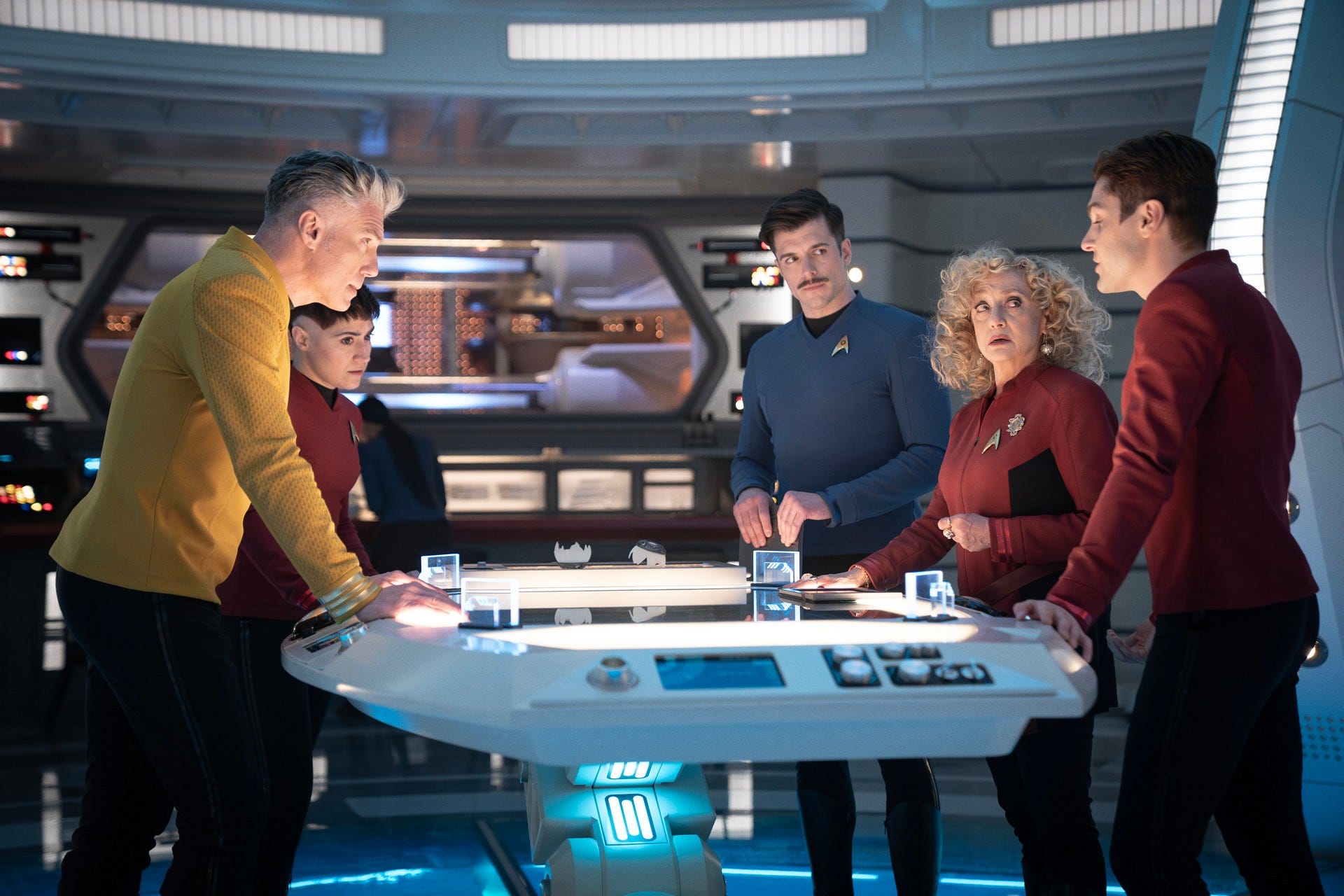
Strange New Worlds has been playing fast and loose with continuity since its first season. The show introduced Kirk (Paul Wesley) earlier than he should appear, brought in Scotty (Martin Quinn) before he should be on the Enterprise, and now it’s adding McCoy and Sulu despite their absence from the established timeline.
The pattern is clear: the show prioritizes fan service and “cool moments” over internal consistency. Showrunners Akiva Goldsman and Henry Alonso Myers want to give audiences the TOS crew assembled on the Enterprise, so they’re doing it regardless of whether it makes sense within Star Trek’s established continuity.
This is the Alex Kurtzman approach to Star Trek that’s been consistent throughout his tenure. Continuity is flexible, canon is negotiable, and what matters is delivering moments that generate social media buzz and positive press. It’s the same philosophy that gave us Michael Burnham as Spock’s secret adopted sister, female Custodes in Warhammer 40K (wait, wrong franchise), and the Klingon redesign in Discovery that was quietly abandoned when fans revolted.
Goldsman has been explicit about wanting to connect Strange New Worlds to The Original Series. In interviews, he’s talked about the show as a “love letter” to TOS and how the finale will bring Kirk’s story full circle. But love letters should respect what they’re celebrating, not rewrite it to fit a different vision.
The “No Chekov” Decision
Interestingly, TrekMovie’s article notes that Ensign Pavel Chekov will not appear in the finale. Goldsman stated definitively: “Not Chekov. There’s no Chekov,” with Myers adding, “Yeah, Chekov doesn’t make any sense.”
This is the correct decision. Chekov was introduced in the second season of TOS, and Walter Koenig has confirmed the character wasn’t part of the crew during the first season. Having Chekov appear in Strange New Worlds’ finale would be an even more blatant continuity violation than McCoy and Sulu.
But the fact that the showrunners recognize Chekov’s absence as a continuity issue while ignoring McCoy and Sulu’s similar problems reveals the inconsistency in their approach. They’re willing to respect some aspects of canon while violating others, and the criteria for which rules matter seems arbitrary.
What This Means for Star Trek
Strange New Worlds is the best of the Kurtzman-era Trek shows. It’s returned to episodic storytelling, it features likable characters, and it’s captured more of the TOS spirit than Discovery or Picard ever managed. But it’s still a show that treats continuity as optional, and that’s a problem for a franchise built on 60 years of interconnected storytelling.
Star Trek fans care about continuity. They know the timeline, they remember the details, and they notice when shows contradict established canon. Strange New Worlds has been getting away with continuity violations because the show is otherwise good, but there’s a limit to how much fans will tolerate.
The McCoy and Sulu casting is another step in the wrong direction. These characters shouldn’t be on the Enterprise during Pike’s final days in command, and their presence undermines the careful worldbuilding that made Star Trek feel like a real, consistent universe. When every show rewrites canon to fit its own needs, the shared universe stops feeling shared.
What do you think? Does assembling the TOS crew justify breaking continuity, or should Strange New Worlds have respected the established timeline?
For a great alternative to mainstream publishing, with sci-fi spy thriller action, read The Stars Entwined on Amazon!

NEXT: Star Trek Actor Anson Mount Mocks Christians By Calling Christmas “A Pagan Festival”
Is the new actor playing Sulu a preening butt pirate who has coasted for years on one lame "Oh my..." catchphrase?
Takei/Sulu was in "Where No Man Has Gone Before". Check the scene of Kirk discussing things with his department heads on the bridge, just prior to crossing "the barrier". There Sulu stands in a blue shirt. Scientist, not helmsman, so still a continuity issue if SNW has him in a gold shirt and helming.