


Dafydd ab Hugh, born David M. Friedman in Los Angeles on October 22, 1960, died this week at 65. Ansible reported the news. Few details are available. He had been largely absent from public life and online presence for several years.
He took his pen name from the Welsh — Dafydd ab Hugh means “David son of Hugh” — reflecting his mother’s Welsh descent, and eventually made it his legal name. Before he wrote a single novel he served in the United States Navy in the 1980s, training as a Radar Intercept Officer with the goal of becoming an astronaut. Color blindness ended that path. He turned to writing instead, which was the genre’s gain.
His first novel, Heroing; or, How He Wound Down the World, came out from Baen Books in 1987. It introduced Jiana, a professional heroine navigating a world of quests and mythical challenges — the kind of sword-and-sorcery protagonist Baen built its early catalog around. A sequel, Warriorwards, followed in 1990. He then published two time-travel novels reworking Arthurian legend through Arthur War Lord (1994) and Far Beyond the Wave (1994) for Avon Books — modern characters chasing each other back through history to the court of Arthur, trying to change the past and discovering the usual complications.
His short fiction drew serious attention. His 1990 novelette “The Coon Rolled Down and Ruptured His Larinks, A Squeezed Novel by Mr. Skunk,” published in Asimov’s Science Fiction, earned Nebula and Hugo Award nominations. The Science Fiction Encyclopedia singled it out as his most notable original work — a post-apocalyptic piece whose linguistic invention drew comparisons to Russell Hoban’s Riddley Walker while pushing further into graphic territory. It is exactly the kind of story that wins award nominations and does not get made into a franchise, which is perhaps why it has been underremembered.

The bulk of his publishing career ran through Star Trek and Doom tie-in fiction, where he did some of the more interesting work in those respective lines. His Deep Space Nine novel Fallen Heroes (1994) is frequently cited by DS9 readers as one of the better entries in the early Pocket Books run, as an alien invasion of the station that leaves almost everyone dead, told through a time-shifted structure with Quark and Odo as reluctant detectives piecing together what happened. It is darker than most Trek novels of the era were willing to go, and it works because ab Hugh understood that DS9 was a darker show than its predecessors. The Rebels trilogy (The Conquered, The Courageous, The Liberated, 1999) followed, continuing his work with the DS9 cast. He also wrote Star Trek: The Next Generation’s Balance of Power and contributed to the Invasion! crossover event across the franchise lines. A Time to Create and A Time to Destroy were announced for his hand in the 2004 A Time to… miniseries, but the books were never published when the line was reduced from twelve to nine volumes.

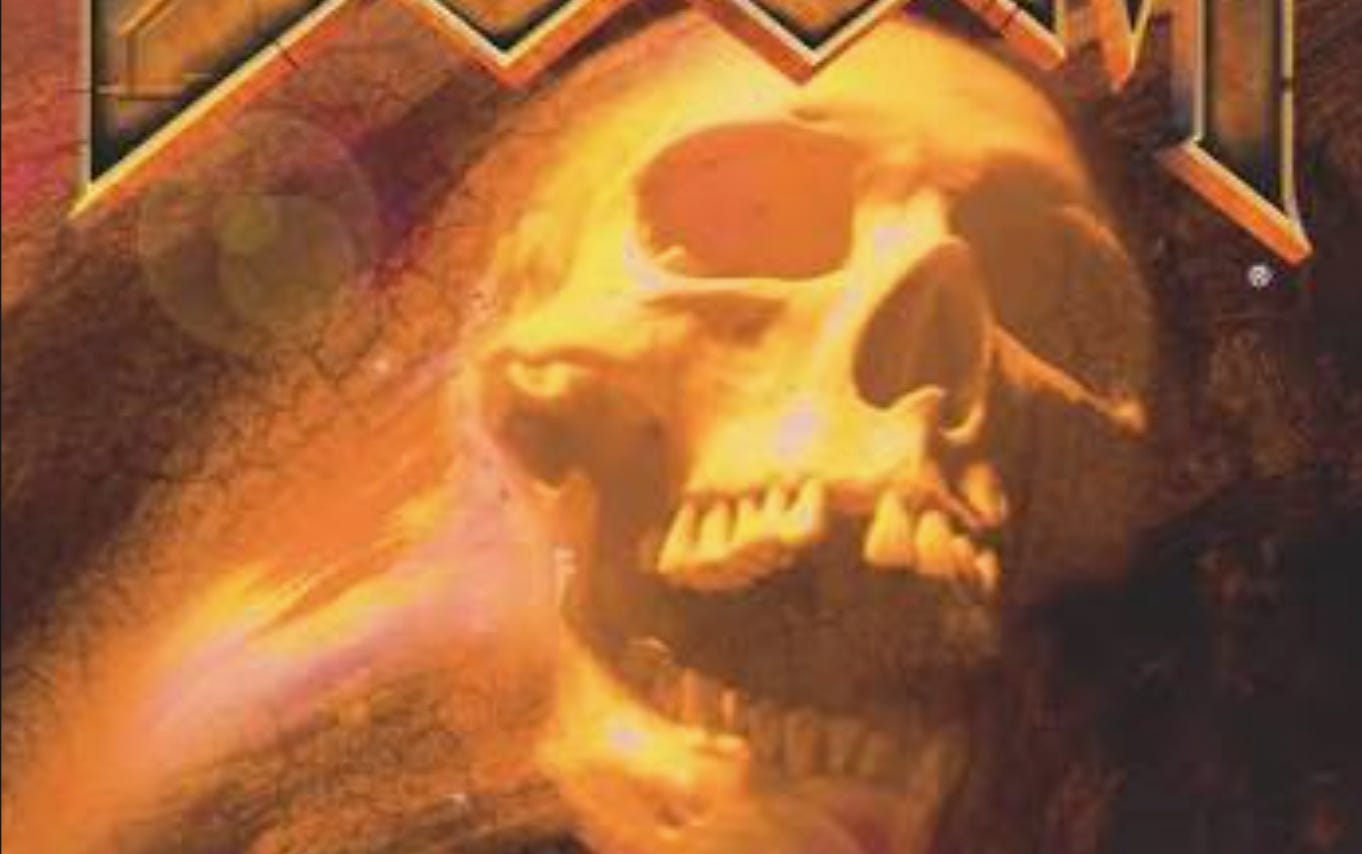
The four Doom novelizations, Knee-Deep in the Dead, Hell on Earth, Infernal Sky, and Endgame (1995-1996), all co-written with libertarian SF author Brad Linaweaver, were a different animal. First-person-shooter tie-in fiction was not a prestigious category, but ab Hugh and Linaweaver treated the material with more seriousness than the format asked for. Knee-Deep in the Dead was compared, somewhat generously, to Heinlein’s Starship Troopers for its Milsf sensibility. Endgame pushed into genuinely strange territory, working in themes of faith and galactic conflict that sat oddly alongside the demonic carnage.
He held libertarian-to-conservative political views, which at various points put him at odds with the increasingly progressive Trek fiction community, though he largely kept his distance from the online battles of recent years. He was not a prominent culture war figure. He was a working genre writer who produced novels for franchises he cared about, wrote at least one genuine short story that deserved more recognition than it received, and then went quiet.
This is another sad loss for science fiction. Have you read his work?
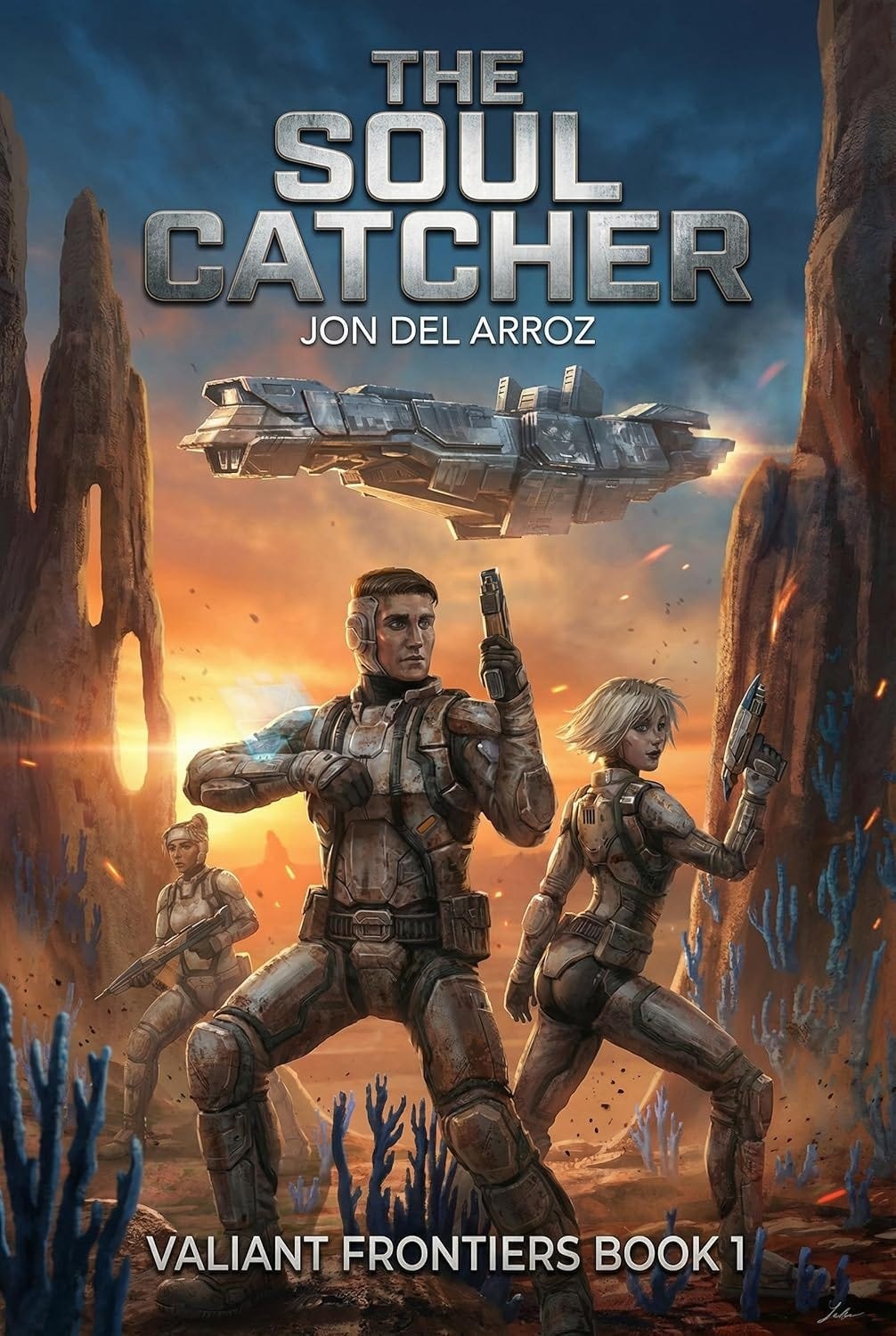
First contact with the Oridians was supposed to be humanity’s proudest moment. Instead, their chief engineer is dead, their ship is sabotaged, and an ancient alien technology is stealing souls. Book one of the Valiant Frontiers series delivers exploration, mystery, and the kind of crew you’ll want to follow across the galaxy. Read The Soul Catcher on Amazon and start the adventure.
I read the Doom books as a teen and enjoyed them; a couple years ago I introduced them to my son. They were surprisingly interesting considering the source material. May he rest well.
RIP Dafydd.