


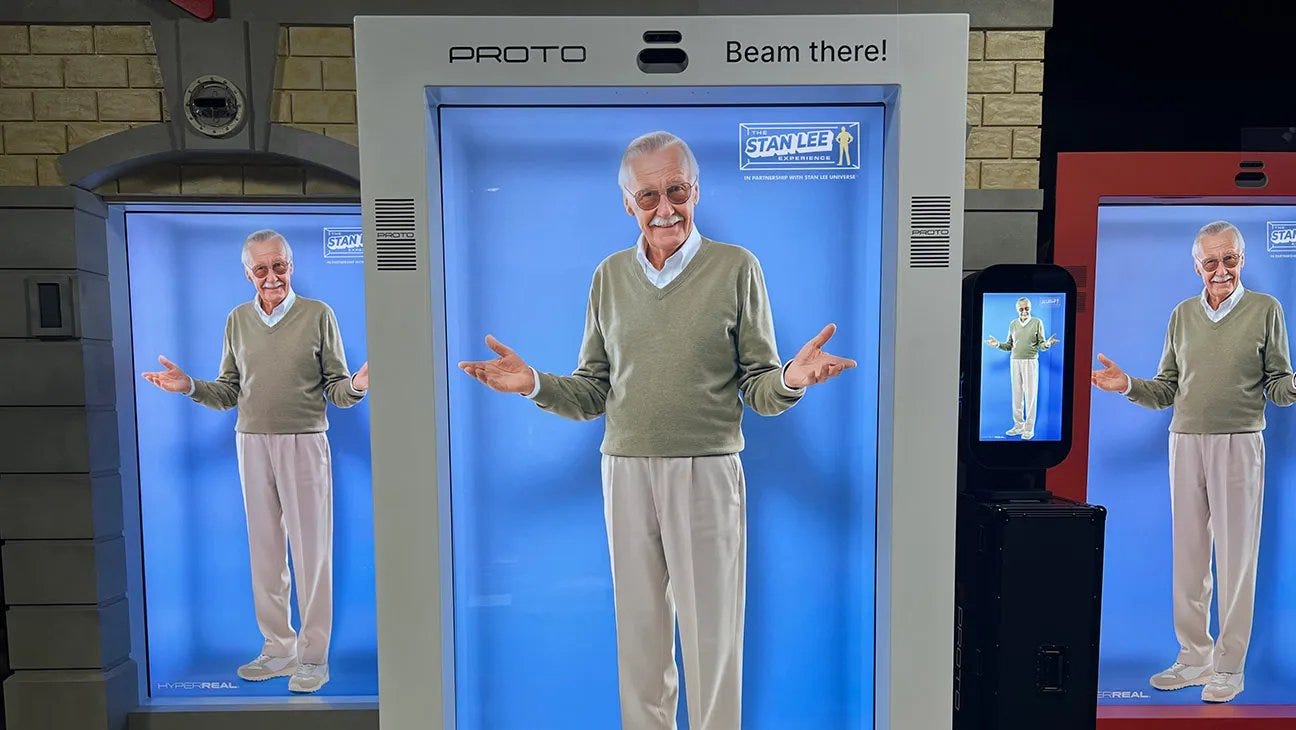
The future arrived at LA Comic Con this year in the form of a lifelike Stan Lee hologram, allowing fans to interact with the late Marvel creator through cutting-edge AI technology. The experience offers a glimpse into a world where digital resurrection becomes possible - but raises questions about consent and exploitation.
Proto Hologram and Hyperreal collaborated to create this interactive avatar, training a large language model on decades of Lee’s writings, interviews, and public appearances. Unlike standard AI chatbots, this system includes strict guardrails to ensure responses stay true to Lee’s known persona and interests.
“We take Stan Lee’s words and import them into the model and then we put rails on the side of it,” said Johnson, “So he doesn’t go off and talk about things that Stan wouldn’t have said.”
The AI Stan Lee greets fans with familiar enthusiasm: “My favorite thing about being at a comic convention is getting to meet all the amazing fans and hearing their stories about how Marvel has impacted their lives,” Lee said in the late actor’s voice.
This experience feels like stepping into Star Trek’s holodeck, that fictional technology where users interact with realistic holographic characters. Chris DeMoulin, CEO of Comikaze Entertainment, describes the avatar as “an entry point for fans, old and new, into the Marvel universe.”
For fans, the technology offers something previously impossible: a chance to meet their hero and ask questions directly. The AI draws from Lee’s vast public record to provide responses that feel authentic to his voice and personality. Bob Sabouni of Kartoon Studios emphasized their commitment to authenticity: “We’ll never put words in his mouth that aren’t in line with” his established persona.
The technology represents a breakthrough in digital human recreation, combining spatial computing with advanced AI to create convincing interactions with deceased personalities.
But this innovation arrives with a troubling context. As detailed in AARP’s investigation into Lee’s final years, the Marvel creator faced exploitation from multiple individuals who manipulated his trust for financial gain. Max Anderson, Jerry Olivarez, and Keya Morgan all inserted themselves into Lee’s life, allegedly stealing millions while claiming to protect him.
The AARP report revealed Lee’s vulnerability in his final years, with handlers controlling his appearances and finances. One particularly disturbing video from Silicon Valley Comic Con showed the 95-year-old Lee barely able to sign his name while being coached through autograph sessions.
Now, years after his death, technology companies are once again profiting from Lee’s likeness and voice. While the current project appears respectful and includes family approval through Kartoon Studios’ Stan Lee Universe, it raises questions about digital consent and posthumous exploitation.
This hologram technology forces us to confront uncomfortable questions about death, consent, and digital legacy. Can we truly capture someone’s essence through their public statements? Who controls these digital ghosts? What happens when the technology improves enough to create entirely new “conversations” with the deceased?
The Stan Lee hologram may be entertaining and technically impressive, but it also opens doors to potential abuse. Future versions could put words in deceased celebrities’ mouths or create entirely fabricated interactions for profit.
What do you think about using AI holographic technology to bring back beloved figures from the past? Does this honor their legacy or exploit their memory?
Join my comics Substack for some great superhero reading to fight back against the mainstream industry:

NEXT: IDW Media Holdings Reports “Sales Decline” In Another Troubling Sign For Comic Industry
In my 2018 novel The Other Tommy, my main character, Judah Rhodes has an AI device who appears in the form of a hologram. Her name is Argene or Genie. She was a device created by a medical supply company Judah's father owned, a kind of companion/minder for handicapped and/or emotionally frail people. In the story, she becomes self-willed, acting in my main character's best interest (as she interprets it), but not always with his consent. Recently BBC offered classes with Agatha Christie. Like the REAL (sort of real) Agatha Christie. Now we have Stan Lee. Next River Phoenix will finally finish his last movie. Sort of. At what point do these digital people become REAL?
horrifying!