


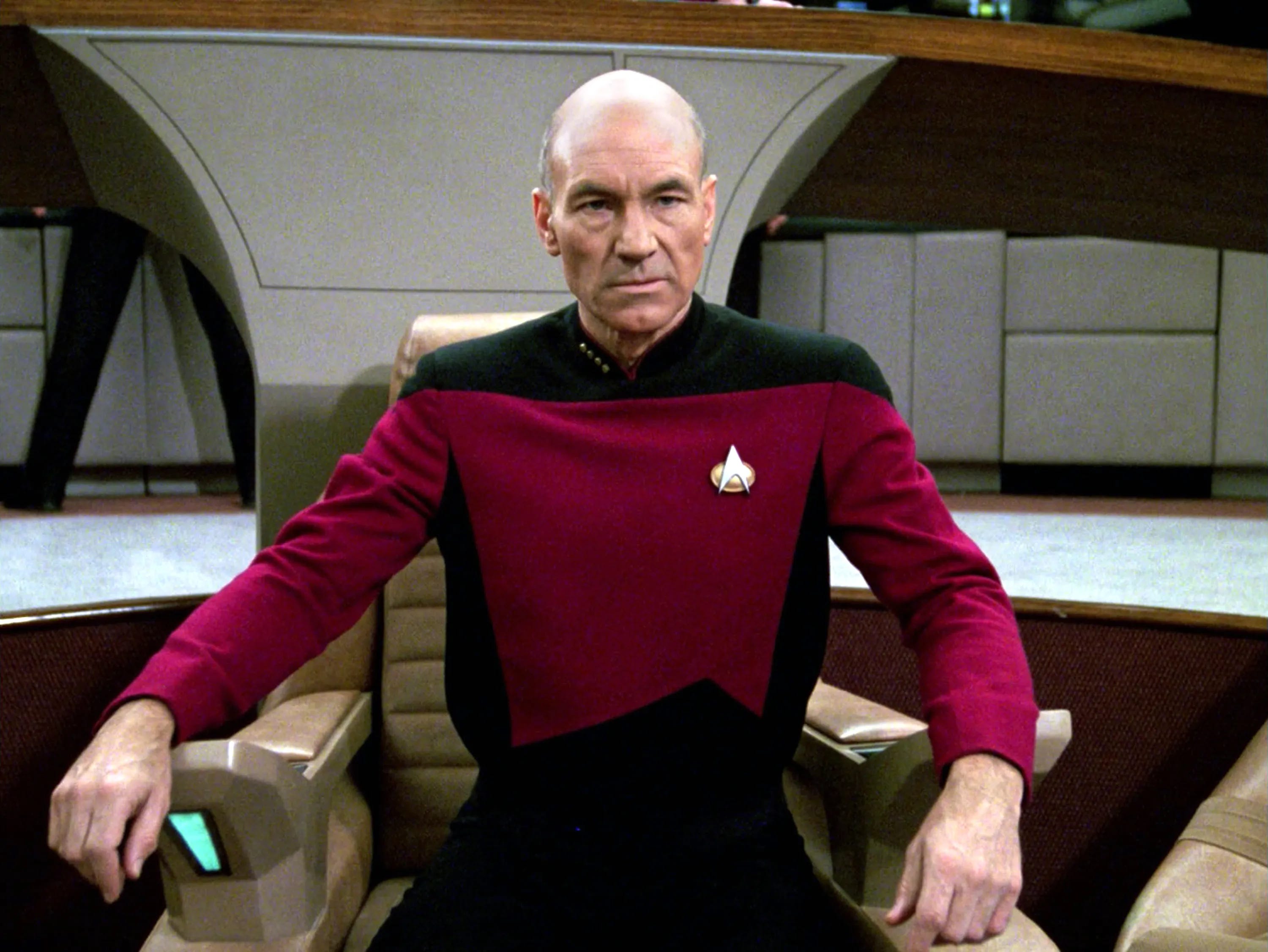
Sir Patrick Stewart, the Royal Shakespeare Company actor who became Captain Jean-Luc Picard in Star Trek: The Next Generation and Professor Charles Xavier in the X-Men films, died on Wednesday, October 28, at his home in Los Angeles. He was 86. His family announced the death through his spokesperson, who described the cause as “a brief and poignant journey with Alzheimer’s disease and Lewy body dementia.” The statement said he was surrounded by family and friends, and his wife, the singer-songwriter Sunny Ozell, was with him. It added, “We will forever cherish the peaceful ease and reflection on his face.”
Stewart was born Patrick Hewes Stewart on July 13, 1940, in Mirfield, West Yorkshire. His family’s statement calls him a son of Mirfield. He trained in classical theater and joined the Royal Shakespeare Company, where he played Claudius and Macbeth. He also took on Harold Pinter’s No Man’s Land and Samuel Beckett’s Waiting for Godot, and he later toured a one-man A Christmas Carol. His screen work before Star Trek included Gurney Halleck in David Lynch’s Dune in 1984.
In 1987 he was cast as Captain Picard in Star Trek: The Next Generation, which made him an international star. He led the series for seven seasons as commander of the USS Enterprise-D, then carried Picard through four feature films. He returned to the role in Star Trek: Picard, which ran for three seasons on Paramount+ from 2020 to 2023. In 2000 he began playing Charles Xavier in X-Men, a role he held through Logan in 2017, and he appeared as an alternate-universe Xavier in Doctor Strange in the Multiverse of Madness in 2022. Marvel Studios announced him for the ensemble of Avengers: Doomsday, scheduled for December 18, 2026.
His other work covered comedy and voice acting: Robin Hood: Men in Tights, Conspiracy Theory, The Prince of Egypt, Green Room, The Kid Who Would Be King, and the sitcom Blunt Talk. He narrated Peter and the Wolf and earned a Grammy for it. Queen Elizabeth II knighted him in 2010 for services to drama. His statement also lists his philanthropy on domestic violence survivors, global refugees, veterans’ mental health, and animal welfare, along with his years as a university chancellor and his lifelong support of Huddersfield. He is survived by Ozell and two children from his first marriage. In lieu of flowers, the family asked for donations to the Johns Hopkins Alzheimer’s Disease Research Center Fund and to the Alzheimer’s Foundation of America’s caregiver resources.
His last major project, released this spring, was a recording of all 154 of Shakespeare’s sonnets, titled Patrick Stewart Performs the Complete Sonnets of William Shakespeare, from Simon & Schuster Audio. It grew out of the daily sonnet readings he began posting online during the pandemic, which he described as something that “became something of a part-time job for us.” Of the finished recording he said, “In recording all 154 sonnets, I was struck by how they have the capacity to capture every shade of feeling and experience.” He also said, “The warmth of the response reminded me how restorative Shakespeare’s words can be when we need them most.”

Many of those poems turn on loss and death, and they read differently this week. In Sonnet 71, Shakespeare writes, “No longer mourn for me when I am dead / Than you shall hear the surly sullen bell / Give warning to the world that I am fled.” In Sonnet 30, the speaker counts his griefs, then ends with the line, “But if the while I think on thee, dear friend, / All losses are restored and sorrows end.” Sonnet 55 holds that “Not marble, nor the gilded monuments / Of princes, shall outlive this powerful rhyme.” Sonnet 146 closes, “So shalt thou feed on Death, that feeds on men, / And Death once dead, there’s no more dying then.” And Sonnet 18 ends with the promise that “So long as men can breathe or eyes can see, / So long lives this, and this gives life to thee.”
A man whose name is tied to starships and mutants spent the end of his career reading a poet who wrote about being remembered. Listening to Stewart voice those sonnets is a fitting way to remember him, because Shakespeare was where his career started and where he returned.
Alas, poor Yorik, I knew him well Horatio.
When you're called to play in front of the Great bird of the Galaxy, the show must go on.
Damn, did Picard think Chekov needed some company??