


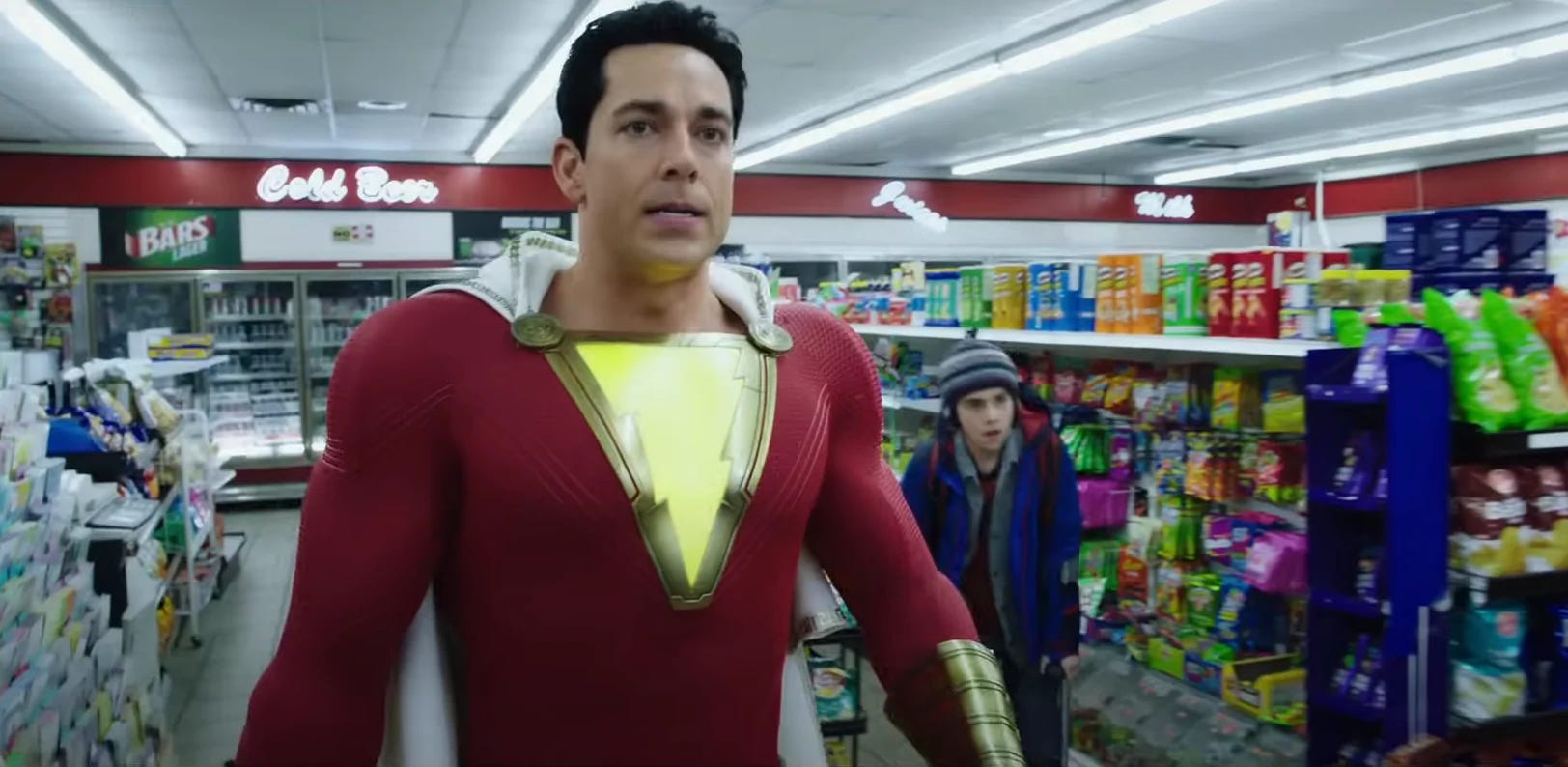
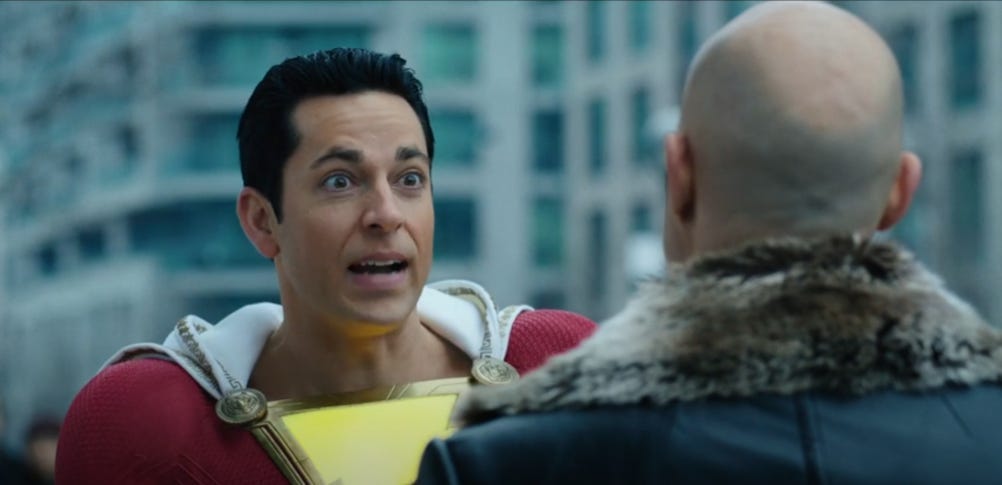
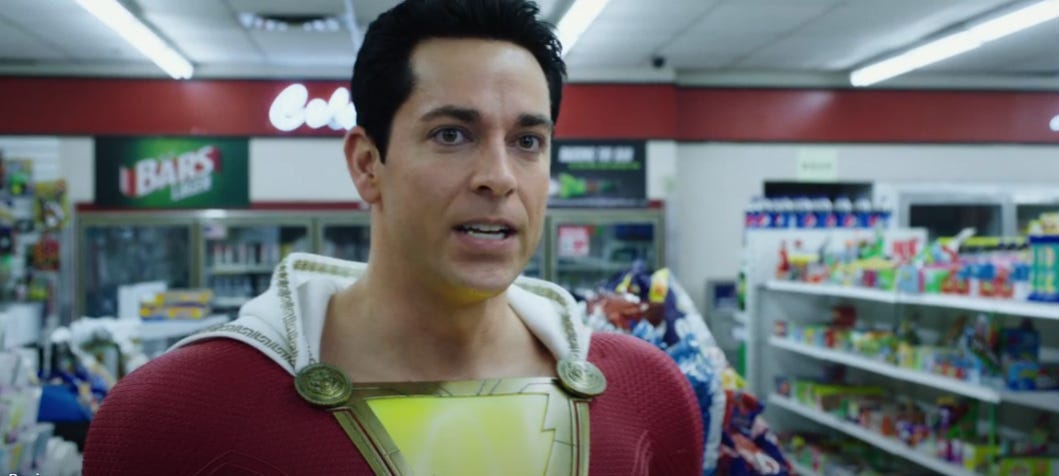
Zachary Levi, known for his role as Shazam in Shazam! and Chuck Bartowski in Chuck, recently shared his thoughts on why Hollywood is in such a poor state, putting the lion’ss share of the blame on executives.
In an interview with Matt Walsh, Levi was asked about the current state of the film industry and how nearly all of the top grossing films this century have been remakes, sequels, or IP-based. Specifically, he was asked if original storytelling was dead.
READ: Amazon MGM Studios Gains Full Creative Control Of James Bond
Levi initially responded by sharing his hope that original storytelling is not dead and he hopes to ensure that it does not die.
From there, he noted that even in the 90s and early 00s that Hollywood was pushing the remakes, “Even then there was the beginnings of this trend of ‘Let’s just go reboot this long old series into a movie.’ That was the big thing back in the late 90s into the 2000s. That was the kind of the beginnings of the reboots. Was, ‘Well, we’re not just going to remake a movie or bring back a whole TV show, we’re just going to find IP that people knew from TV and then we’ll give it a new skin and new cast and we’ll make it a movie event.’”
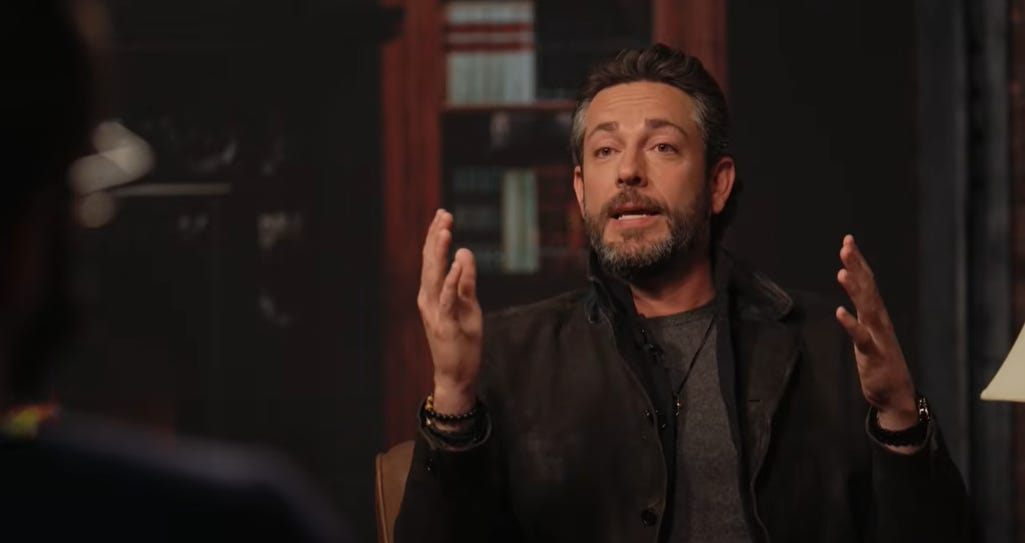
Next, Levi clarified that he does not believe every single remake, reimagining or sequel is bad, “I think there’s been some really cool sequels and really cool reimaginings and reboots.”
However, he added, “It’s when that is becoming more and more, as you’re saying, more and more the well that’s being drawn from.”
From there, he noted that older Hollywood executives “had more vision, more creativity, more balls to be able to take big swings and be like, ‘No, we’re going to go do this thing.’ And they’re like, ‘But no one knows what that is.’ And it’s like that’s the point. We’re going to make something entirely fresh and new. We’re going to blow people’s minds. And we’ll advertise and we’ll do good marketing for it so people understand or whatever it is.”
“Did some of those things blow up in their faces? All the time,” he acknowledged. “But they still had the chutzpah to be like, ‘Let’s go and actually try to be this industry that we pretend to be, which is creative and therefore creating. Creation should be constantly not to be entirely, but mostly new things, new ideas.”
Levi then excoriated Hollywood executives, “Though there are some lovely and good executives that still inhabit Hollywood, I don’t know that they’re in the majority. …When the lawyers and accountants started to take over, when capitalism run amok kind of started really being like, ‘Well, let’s just monetize the heck out of these things,’ well then, of course, they’re going to start hiring more executives that are towing those lines and not the lines that are in contrast to those, which is, ‘No, we actually want to spend money a little more recklessly. We want to go take a swing that’s not a guarantee.’ That’s all just slowly kind of shifted over.”
“So I think there are lot of executives who, honestly, are not creative or not visionary, and/or kind of scared deep down, probably dealing with some kind of impostor syndrome because they’re in a position where they are being asked, ‘What’s the new big idea?’ And they’re like, ‘Uhhh. Johnson…’ And they’re looking around for all the underlings and they’re all scared because they don’t want to say the wrong thing.”
A little later he noted how executives completely mangle ideas, “They might say, ‘Hey, that’s a great new idea. We love it. But we’re going to change everything about it. And it’s going to start towing some agenda that we want to infuse into it.’”
READ: Ethan Hawke Reveals Hollywood Studios Cast Actors Based On Their Instagram Followers
When asked a follow-up by Walsh about whether anyone in the executive positions ask whether the projects need to be made in the first place, Levi answered, “I think that’s part of the problem. Within the executive class at this point, I think there has been a real changing of the guard in the mindset of what it means to be an executive today.”
He continued, “And this is not an indictment of who they are as human beings although I think that people allow for it are lacking in some integrity to say like, ‘Hey, let’s not go do this. Let’s not go down this road.’ But there’s pressures. And the pressures are all either monetary: money, money, money, how can we make money. But then there’s also been insane sociopolitical agenda pressure that comes from lots of different places that ultimately starts shifting cultural perception and the studios become victims of that too, I think.”
“A lot of people want to say that Hollywood is the one who’s pushing a lot of the agenda that they don’t like whatever that agenda is,” he said. “Certainly Hollywood is massively complicit in it, but I don’t know that these agendas even necessarily start in Hollywood. Some of them might. But some of them are them thinking, ‘Oh! What’s the hip, cool thing to do? What are we going to do so that people like us and we don’t get cancelled?’ They’re not immune to those same things. So you have a lot of executives who might mean well, but they’re like, ‘Guys, we got to do this thing. We got to make this thing because that’s what’s going to comply with the expectations of us as a company otherwise people are going to think we’re racist, or we’re sexist, or whatever any of those particular things are.”
“So I think because of that you’re drawing in an executive class that’s going to serve those two masters. It’s money and agendaed appearance whatever that is,” Levi stated. “This is why a lot of the new executives are terrified because they don’t know what to do and so they just go, ‘Bring back that old TV show that people really like that we got to a point where we didn’t think the ratings were good enough to even keep going, but now because network television ratings are so low anyways it doesn’t really and people like it. Well, they did, didn’t they? Do a focus group. Screw the focus group. Bring it back!’ They’re literally running scared. We all know it. We see it.”
What do you make of Levi’s analysis on where the blame for the poor state of Hollywood lies?
I've been saying for a while now that Hollywood has lost its creativity. It goes back to the old stuff and won't make anything new because they are afraid.