


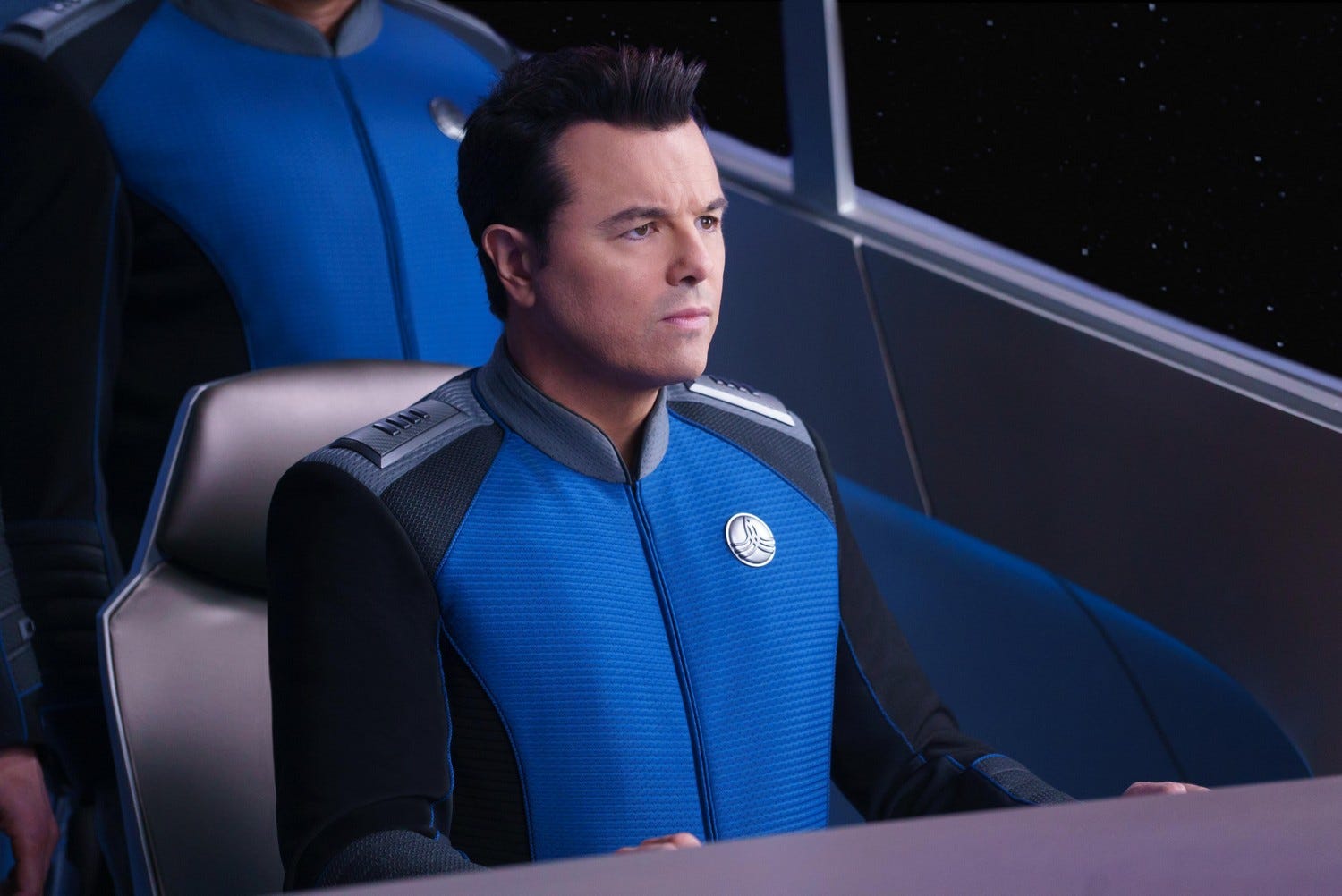
Seth MacFarlane confirmed in a recent interview with The Hollywood Reporter that season four of The Orville is written and ready to produce, but his packed schedule remains the primary obstacle to making it happen.
“I will be honest with you: Season four is written,” MacFarlane told THR while promoting the second season of Peacock’s Ted. “It’s just a question of when we have time to produce it.”
He continued: “The 10 scripts are done. I’m the problem. It’s [a matter of] when I can make that my year, with all the other stuff we have in the works. But we can hit the ground running when it happens.”
The statement offers both hope and frustration for fans who’ve been waiting since June 2022, when season three of The Orville: New Horizons concluded on Hulu. The show has been in limbo ever since, with no official renewal or cancellation announcement from the streamer.
The Scheduling Problem
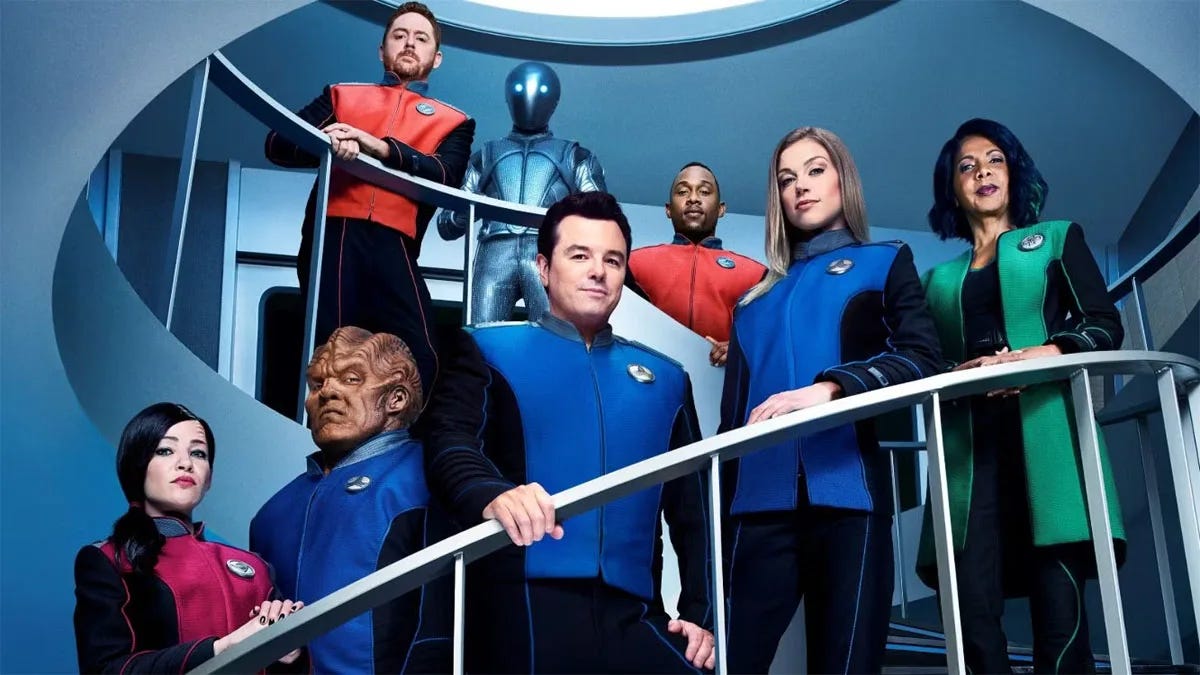
MacFarlane’s schedule is packed. Season two of Ted premiered on Peacock in March 2025 to strong reviews. He’s also developing multiple projects through his production company Fuzzy Door Productions, including animated series and feature films. His voice work on Family Guy, American Dad!, and other projects continues. And he’s pursuing his music career, having released several albums of classic standards.
The Orville is not a quick production. Season three took years to complete, partly due to COVID-19 delays but also because of the show’s ambitious scope. The series features extensive visual effects, elaborate makeup and prosthetics, and production values that rival big-budget science fiction films. Episodes regularly run over an hour, and MacFarlane stars in, writes, produces, and often directs them.
For MacFarlane to commit to season four, he’d need to clear roughly a year of his schedule to include time for pre-production, filming, post-production, and the extensive visual effects work the show requires. Given his current commitments, finding that window is challenging.
Hulu has reportedly been ready to move forward. MacFarlane confirmed that the streamer would greenlight season four if he can make the time. “Hulu would be ready to move forward on the new season, but his own packed schedule has made it challenging to find time for him to shoot,” THR reported.
The ball is in MacFarlane’s court. The scripts exist. The network is willing. The cast has expressed interest in returning. The only missing piece is MacFarlane’s availability.
Why Fans Care
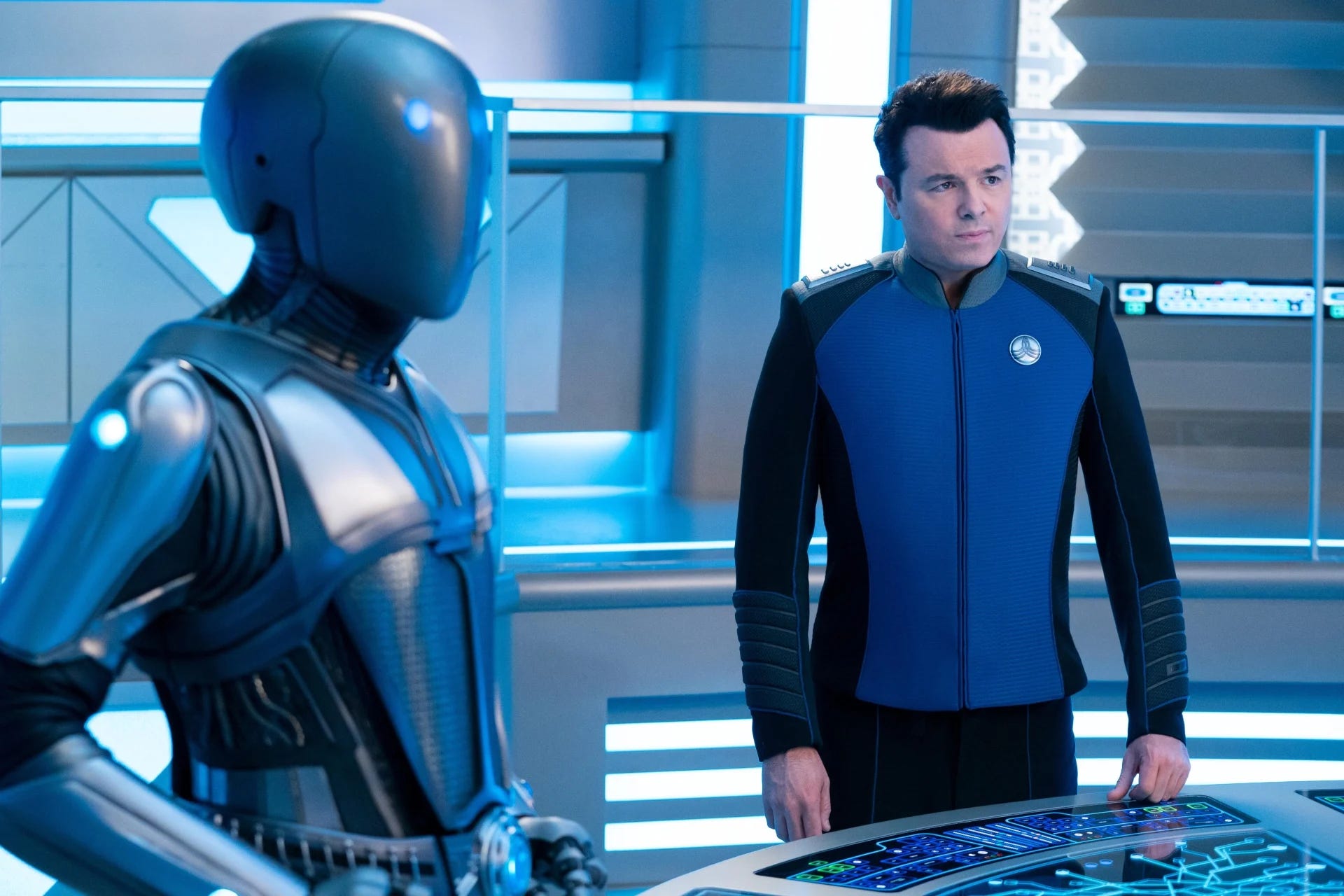
The Orville has become something of a spiritual successor to classic Star Trek for fans disillusioned with the franchise’s current direction under Alex Kurtzman. While Star Trek: Discovery, Picard, and Strange New Worlds have their defenders, a vocal segment of the fanbase feels the modern shows have abandoned the optimistic, exploratory tone that defined The Next Generation and the original series.
The Orville leans into that classic Trek formula: a ship exploring space, encountering new civilizations, and grappling with moral and philosophical questions. The show features former Star Trek writers and producers, including Brannon Braga, who wrote for TNG, Voyager, and Enterprise. The influence is obvious and intentional.
MacFarlane has been open about his love for Star Trek and his desire to create something in that tradition. The Orville started as a comedic take on the genre but evolved into something more serious and ambitious by season three. The humor remained, but the show tackled weighty themes—gender identity, religious extremism, artificial intelligence, and the ethics of intervention—in ways that felt true to Trek‘s legacy.
With Star Trek: Starfleet Academy in development and fan reception to recent Trek projects remaining mixed, there’s an appetite for science fiction that captures the spirit of the franchise’s golden age. The Orville fills that niche, which is why fans are so eager for season four.
The Woke Problem
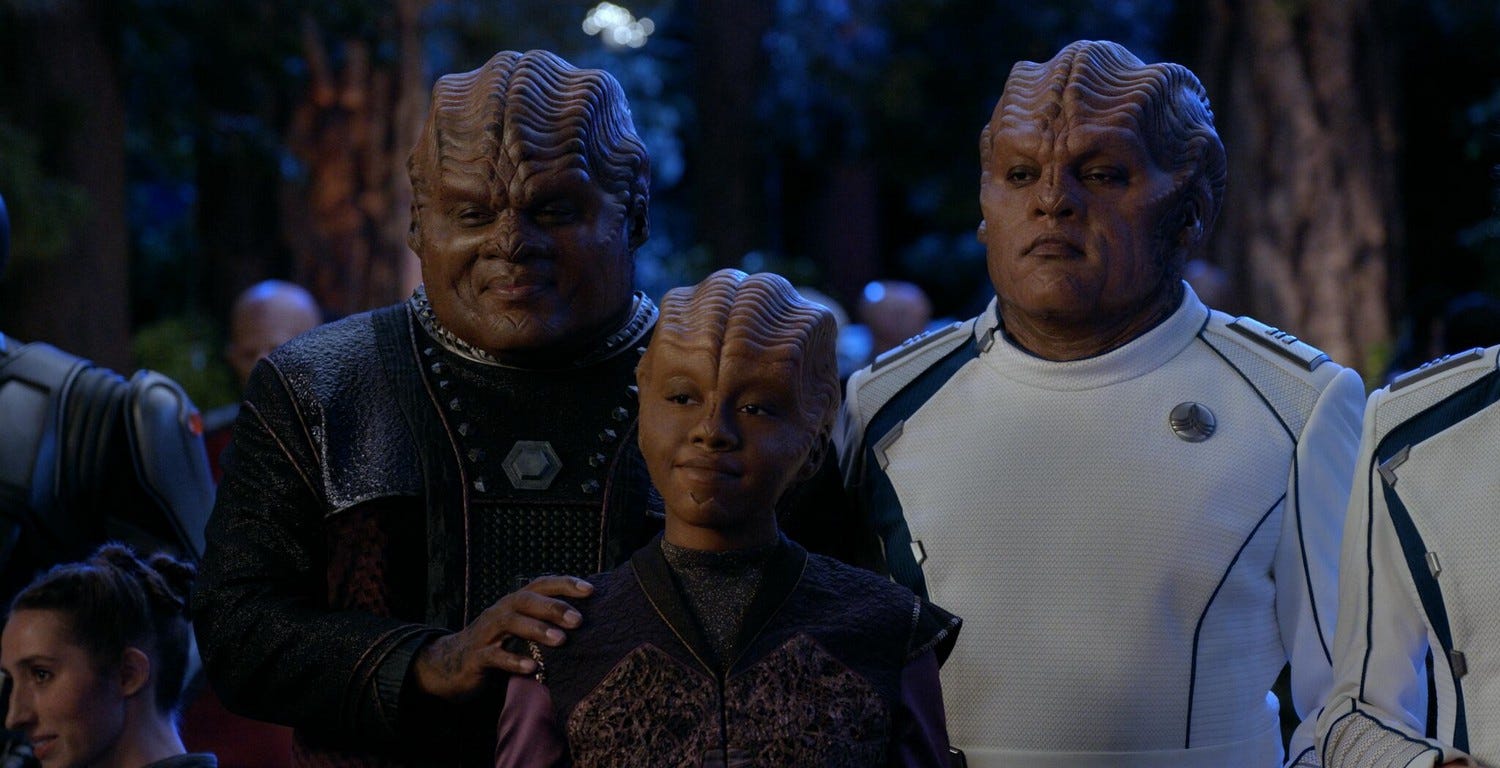
The Orville isn’t immune to the issues that plague modern Star Trek. The show has featured storylines that lean heavily into progressive messaging, sometimes at the expense of narrative balance. Season three’s episode “A Tale of Two Topas” dealt with gender transition in ways that felt more like a lecture than a story. Other episodes have touched on social justice themes with varying degrees of subtlety.
This is a tightrope MacFarlane walks. He’s a Hollywood liberal working in an industry that increasingly demands ideological conformity. The Orville reflects that, and some fans find it off-putting. But the show also features genuine character development, strong performances, and a commitment to exploring ideas rather than simply delivering messages.
The involvement of creators like Brannon Braga helps. Braga understands how to tell science fiction stories that engage with contemporary issues without becoming preachy. His episodes of TNG and Voyager dealt with complex themes—identity, consciousness, morality—while remaining entertaining. That sensibility is present in The Orville, even when the show occasionally stumbles into didacticism.
What Season Four Might Look Like
MacFarlane has been cagey about season four’s content, but the fact that ten scripts are complete suggests a full season rather than a shortened run. Season three consisted of ten episodes, so this would match that structure.
The season three finale left several threads unresolved. The Kaylon threat remains. The Union’s relationship with the Krill is fragile. Ed and Kelly’s relationship continues to evolve. There’s plenty of material for another season to explore.
The question is when it will actually happen. MacFarlane’s comments suggest he wants to make it, but his schedule is the limiting factor. If he can clear a year in the next few years, season four could go into production. If not, the show may remain in limbo indefinitely.
What do you think? Can The Orville maintain its quality if production is delayed for several more years?
When genetic engineering nearly doomed the species, humanity made a desperate bargain: let the frontier do what nature intended. In a harsh universe, these cadets have to make impossible decisions. Read Space Fleet Academy today.

On the topic of The Orville: it was OK, nothing terrific. Seth McFarlane isn't as funny as he thinks he is. He's not even as funny as his fans think he is either. I can't tolerate most of his work.
The difference with the Orville is, if you squint hard enough, you can see the love this man and this production has for Star Trek. In any other era, it would just be middling fan fiction on its best day.
But we are in an era of franchise vandalism that defies logic and sanity.
This half-baked, lukewarm, so-so funny space show is the absolute best Star Trek product since Enterprise was cancelled 20 some years ago. That's not just sad, it's pathetic.
Mediocrity aside, a huge problem for this show is all the elapsed time. They've done three seasons in nine years. Absolute best case scenario puts it what, two or three years out? Twelve years to make four half seasons of content is laughable. (Remember when shows did 22 episode seasons???)
I skipped season three since it took four years to come out and I wasn't rewatching or recapping it. It wasn't worth the effort then, and won't be going forward if there's more. They had a brief time to capitalize on what they had and missed it. Have more respect for the audience's engagement next time.
Loved season 1, season 2 was ok, watched only a few episodes of season 3 and will not watch season 4. It went from a love letter to the original Star Trek with a good bit of Galaxy Quest thrown in then degenerated to something as bad as the modern Trek shows. I could care less if season 4 even happens.