


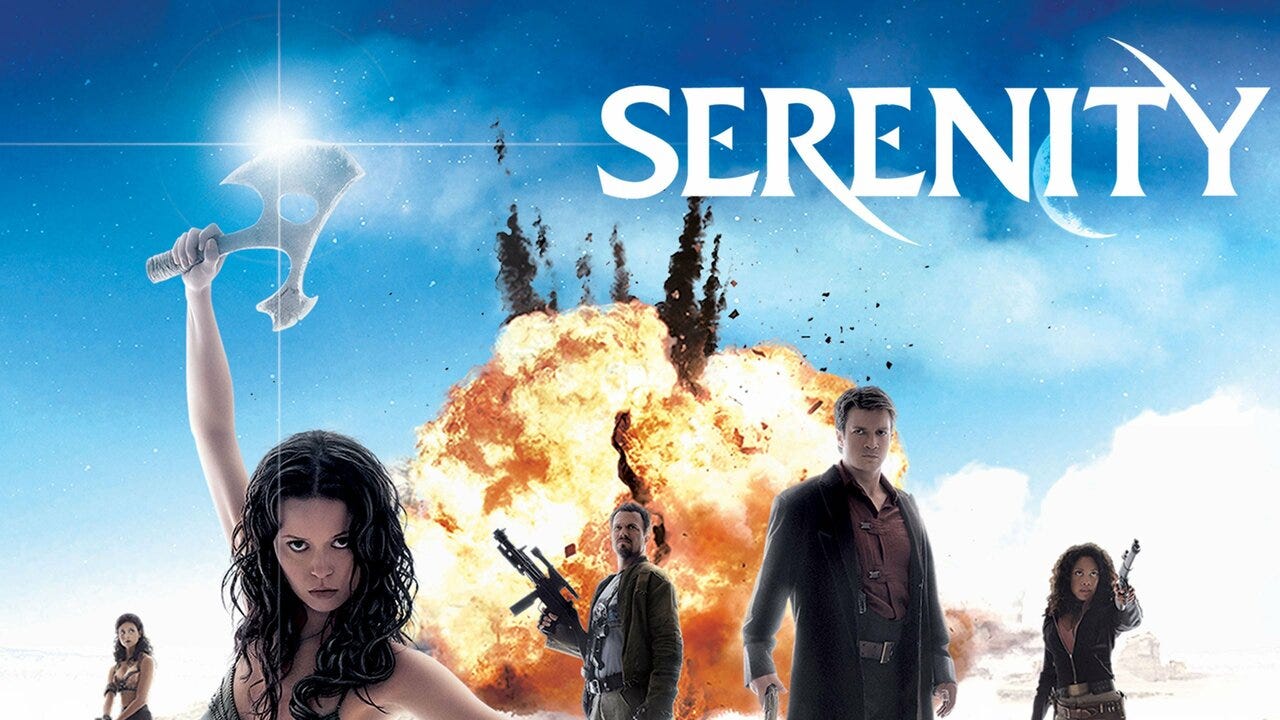
With Firefly reunion rumors circulating and the show back in conversation, this was the perfect weekend to revisit Serenity. The 2005 film that gave Joss Whedon’s cancelled series the ending it deserved holds up remarkably well two decades later as a tight, confident science fiction action film that works both as a love letter to the show’s fanbase and as a standalone introduction to the ‘verse.
The Best Possible Recap
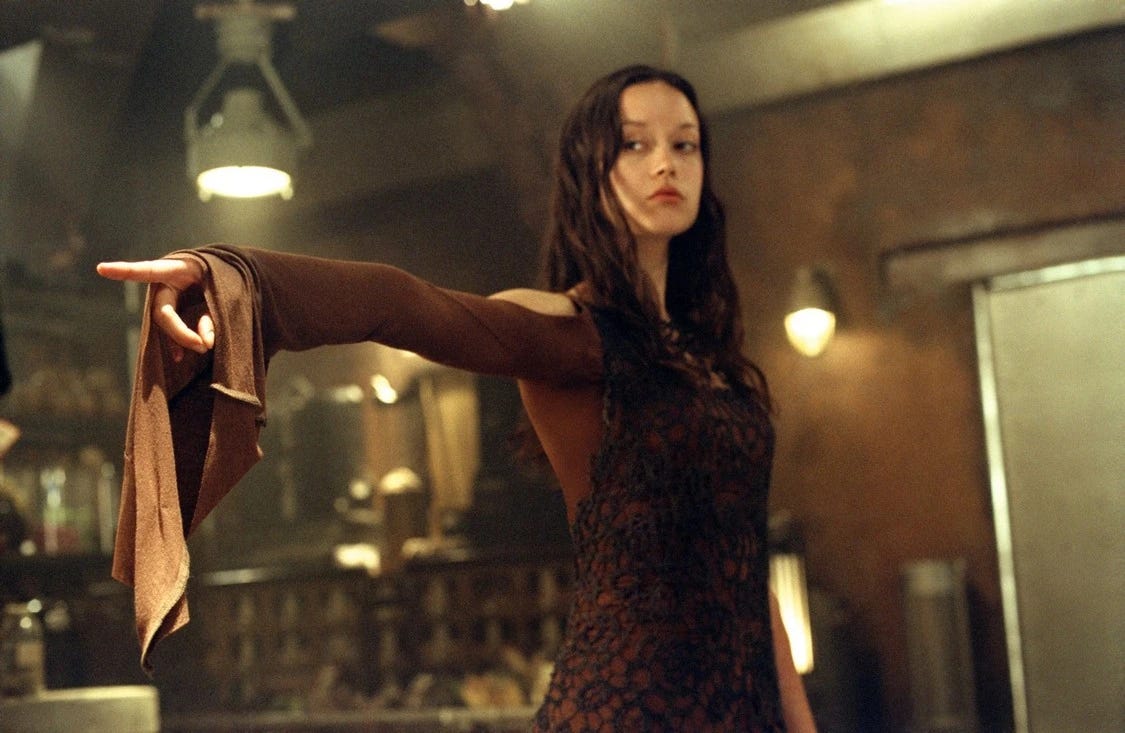
One of Serenity‘s underappreciated achievements is how efficiently it brings new viewers up to speed. Within the first fifteen minutes, you understand who Malcolm Reynolds is, what the Alliance is, why the crew of Serenity operates outside the law, and why River Tam is the most dangerous person on the ship. Whedon condenses fourteen episodes of character establishment into a masterclass of economical storytelling, using action and dialogue simultaneously to convey backstory without ever feeling like exposition.
First-time viewers get everything they need. But if you’ve watched Firefly first, the film rewards that investment with emotional depth that a cold viewing can’t fully access. You understand what’s been lost, what’s been built, and what’s at stake in ways that make every scene hit harder.
The Operative: A Bond Villain Done Right
The Alliance operative hunting River, played by Chiwetel Ejiofor, is the film’s greatest asset and its most direct connection to the show’s final episode “Objects in Space.” That finale featured Early, a philosophical bounty hunter who lectured the crew while methodically dismantling their defenses. The Operative functions on the same wavelength: a true believer, completely committed to a system he acknowledges is built on atrocities, calmly explaining his worldview to the people he’s about to kill.
Both characters share a theatrical, Bond-villain quality with monologuing, philosophical certainty, and the strange almost-respect for their quarry. But where Early was eccentric and unpredictable, the Operative is precise and terrifying. He doesn’t enjoy what he does. He considers himself a monster in service of a better world. That self-awareness makes him more unsettling than a conventional villain.
Ejiofor is extraordinary in the role, bringing a quiet menace that makes every scene he’s in feel dangerous.
Mal Reynolds: Unapologetically Masculine
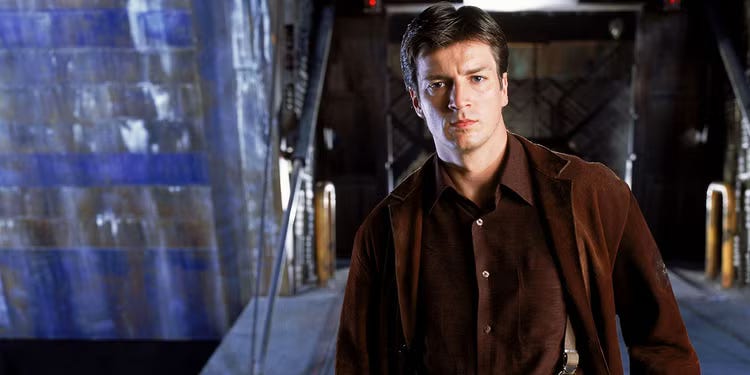
Mal Reynolds in Serenity is the archetype of the Western hero transplanted into science fiction—and the film makes no apologies for it. He shoots first. He makes hard decisions without hand-wringing. He protects his crew with a directness and physicality that feels genuinely old-fashioned in the best possible sense.
There’s a particular pleasure in watching a protagonist who doesn’t perform moral complexity for the audience’s benefit. Mal knows what he believes, knows what he’ll fight for, and acts on it without lengthy justification. The scene where he faces down the Operative is the film’s emotional spine. A man who lost his faith at Serenity Valley and rebuilt himself around something smaller and harder: the crew, the ship, the freedom to move.
Nathan Fillion carries the film the way he carried the series—with roguish charm that never tips into smugness and physical confidence that reads as earned rather than performed.
The Politics
Serenity was always a political film. The Alliance is a benevolent authoritarian government that wins wars, builds infrastructure, and genuinely believes it’s improving human civilization, and is completely willing to murder, cover up, and control to maintain that narrative. The Independents were the losing side of a war fought over the right to be left alone.
The Reaver origin story lands differently in 2025 than it did in 2005. The revelation that the Alliance introduced a chemical agent to an entire planet’s atmosphere to make the population more docile and make them compliant, and that it either worked too well or catastrophically backfired, creating the Reavers from those who didn’t succumb, now carries uncomfortable contemporary resonance. A government deciding it knows better than its citizens what’s good for them. Forcing compliance through chemistry. Suppressing the information when it goes wrong.
Whedon wasn’t writing a COVID allegory, he couldn’t have been in 2005. But the parallel is there and it’s potent. The film’s core argument is that the freedom to fail, to be imperfect, to be left alone is worth more than enforced improvement. That’s a quite a subversive idea for a mainstream science fiction film, and it’s delivered without lecturing.
The Characters: Great Where They Get Time
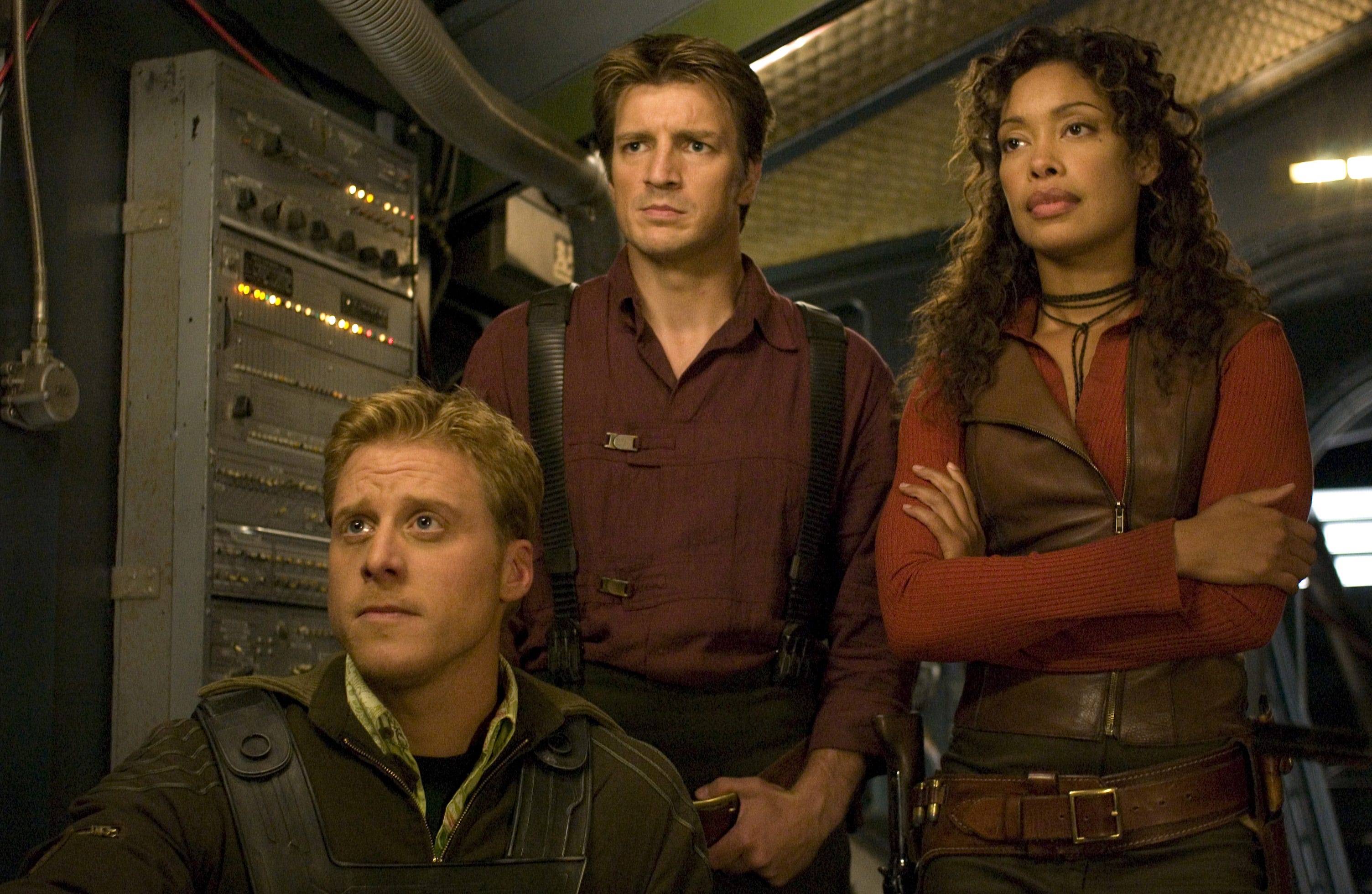
The ensemble is a pleasure to spend two hours with. Zoe’s quiet authority, Kaylee’s warmth, Jayne’s mercenary pragmatism, Inara’s grace, and Simon’s protective desperation are all handled efficiently within the film’s runtime.
The limitation is that two hours can only do so much with nine characters plus a villain. Shepherd Book in particular gets short-changed. His mysterious past is acknowledged but never resolved. His death, while emotionally effective in the moment, feels rushed precisely because the film hasn’t had time to develop him further.
Inara and Shepard Book both deserved more. Jayne deserved a bigger moment. Zoe’s grief after Wash deserved more space than the film could give it.
These aren’t criticisms of the film so much as laments for the television series that should have existed to give these characters room to breathe.
The Wash Problem
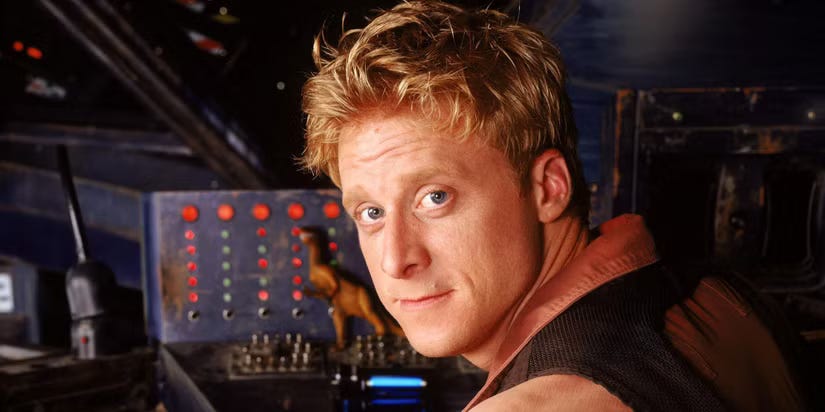
Hoban Washburne is killed by a Reaver harpoon immediately after landing the ship through impossible circumstances, the best pilot in the ‘verse having his finest moment and dying for it within seconds. It’s shocking, brutal, and designed to tell the audience that no one is safe. It works as filmmaking. It absolutely does not work for the franchise.
The circumstances of the decision are now well-documented. Alan Tudyk would not sign a multi-picture contract, reportedly citing concerns about being locked into a franchise. Ron Glass, who played Shepherd Book, similarly declined. Whedon killed both characters partly in response to those negotiations.
The decision may have made sense in the room in 2005 when a multi-film Firefly franchise seemed plausible. In retrospect, with no sequels materializing and the franchise now being discussed as a potential reboot twenty years later, it looks like a mistake that can’t be undone. Wash is dead in the established continuity. Any continuation has to account for that absence.
It casts a shadow over the film’s ending that the rest of the movie can’t fully dispel. You walk out satisfied but melancholy. Which is probably exactly what Whedon intended. But it doesn’t make it hurt less.
Final Thoughts
Serenity is a better film than most cancelled television series deserved. It’s a better film than most active television series get. Whedon took a dead show and gave it dignity, a proper ending with stakes, consequences, and a statement of purpose that justifies every episode that came before it.
The action sequences are excellent, particularly the extended Reaver attack and the climactic fight between Mal and the Operative. The cinematography is more confident than the show’s handheld aesthetic. The pacing is tight. The villain is exceptional. The philosophy is more interesting than most science fiction films bother with.
Watch Firefly first if you can. Love the characters before you have to watch some of them die. But if you can’t—if you want to see what the show was about before committing to fourteen episodes—Serenity will tell you everything you need to know and make you wish there was more.
There should have been more.
Rating: 9/10
What do you think? Does Serenity justify the deaths of Wash and Book, or did Whedon sacrifice long-term franchise potential for short-term dramatic impact?
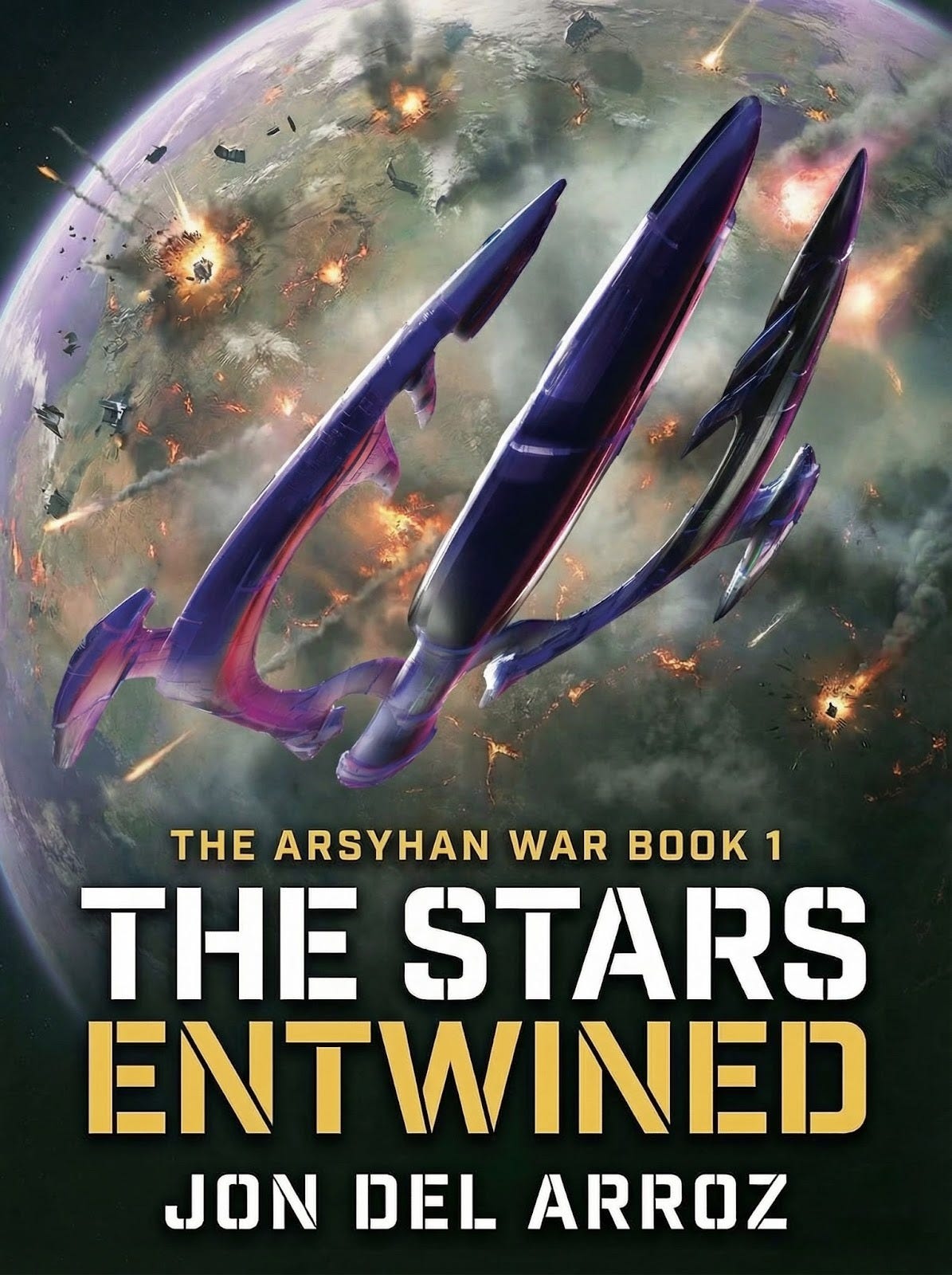
If the golden age of Trek and Babylon 5 left a hole in your sci-fi diet, The Stars Entwined fills it — interstellar espionage between two civilizations on the brink of war. Read The Stars Entwined on Amazon!
NEXT: Reclaiming The Shire: The Right Wing And Christian Soul Of The Lord Of The Rings (Part 2)
Wonderful film of a wonderful show. My intro to Firefly fandom was a mention in STarlog magazine. Then I shipped out for Basic and while in AIT, I saw an ad flash by on TV in the Student Company dayroom at Ft Meade, but did not get a chance to see it. Most of my fellow student Soldiers wanted to watch Lord of the Rings again. Then when I was assigned to Ft Gordon and went out with a wonderful Sailor who was this lady nerd who loved Babylon 5, and was smart as hell, Navy Cryptolinguist NCO, we went to see Hitchhiker's Guide to the Galaxy, and saw trailers of Attack of the Clones and...Serenity. Then went to my hotel room and saw ST Enterprise Through a Mirror Darkly Pt. 1. It was a magic evening. I got to see Firefly for the first time when I went to Germany and found the DVD set in the PX. Introduced the whole staff of AFN Heidelberg to the show, that and Battlestar Galactica.
Definitely enjoyed both. But imagine missionaries in there? Plantingchurches on those planets, confronting the Alliance, giving sanctuary to the Independents, creating bastions of Christian men rebuking Evil, wherever the story leads!
SAD! Let's do it!!!