


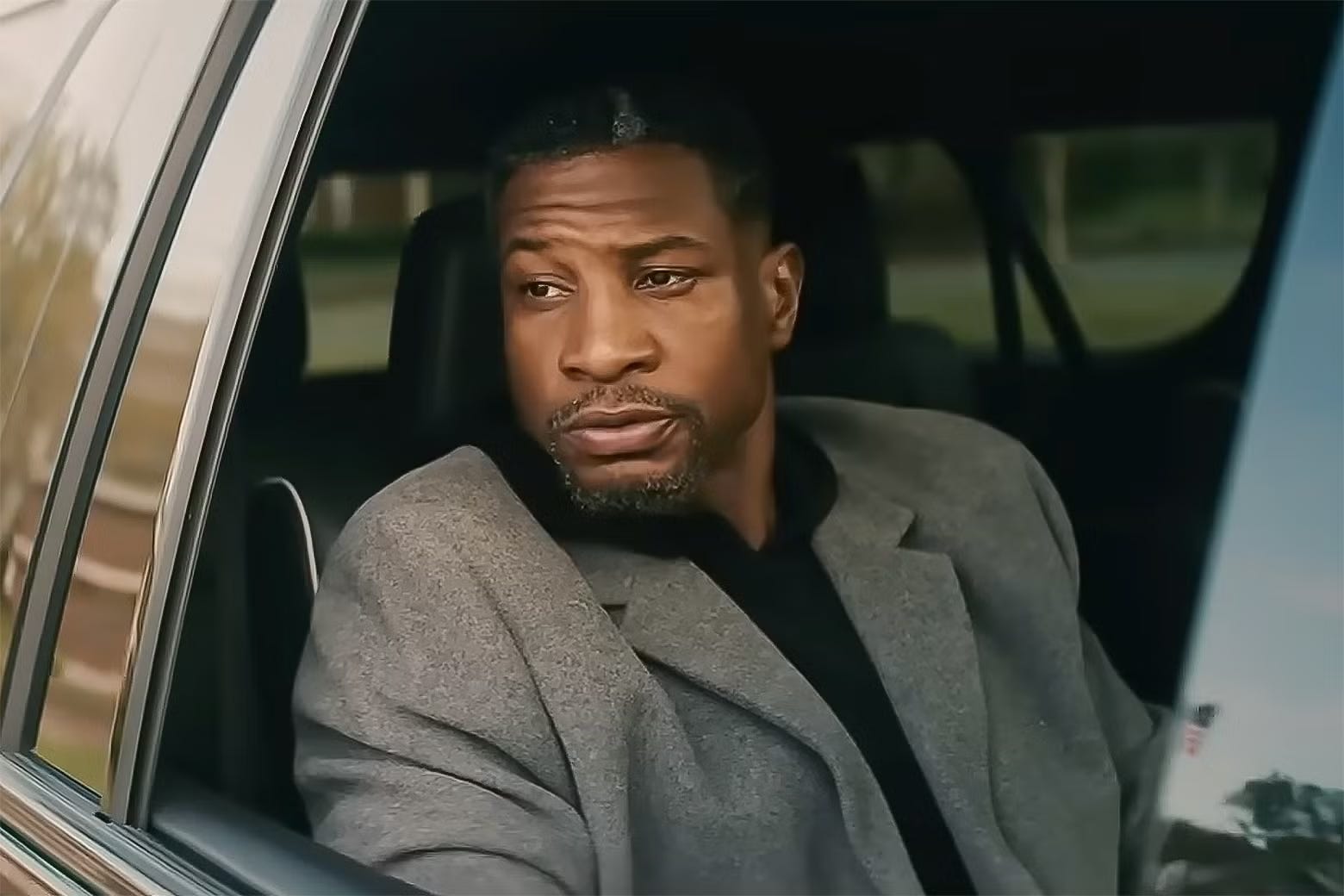
Run Hide Fight: Infidels hit DailyWire+ on September 16, marking Jonathan Majors’ first major starring role since his 2023 misdemeanor assault and harassment conviction cost him the role of Kang the Conqueror at Marvel, a murky situation where it’s really a shame and doesn’t seem like it was entirely his fault, something we’ve seen a lot with cancel culture costing someone who doesn’t deserve it a career.
Director Kyle Rankin, working again with producers Ben Shapiro and Dallas Sonnier, built the film as a standalone sequel to the 2020 school-shooting thriller Run Hide Fight. The tie between the two films runs thin: they share a director and little else beyond a passing reference to the high school where the first movie took place. Infidels needs no familiarity with the original to work as its own picture, and it stands on its own from the opening scene.
That opening is set in Somalia, where Delta Force Captain Clay Saunders (Majors) leads a mission to capture ISIS leader Asad al-Madhi. Saunders’ friend and fellow soldier, Reed Shaw, is gunned down by one of al-Madhi’s men during the operation. Rather than killing al-Madhi on the spot in retaliation, Saunders brings him in alive for interrogation, a decision that turns him into a Delta Force legend and sets up the entire plot that follows. His restraint is also what makes him a target years later.
The film then cuts to Laughton University, where Saunders, now a published author warning about the dangers of Islamic extremism, is booked for a campus lecture. What follows is a broad, on-the-nose satire of what conservative speakers have actually dealt with on college campuses for a decade: protesters organizing to shut the event down, faculty debating in private whether to even let it happen, and professors getting quietly canceled for defending it. The radical activists on screen are drawn as caricatures, led by a blue-haired protest leader and her friend, both rallying a crowd chanting Free Palestine. It comes out later that the pair are being paid to agitate. The cowardly dean caves to the protesters’ demands at every turn, and in an effort to look diverse, the faculty brings on a new Muslim janitor named Ibrahim as part of a hiring push. Ibrahim turns out to be al-Madhi’s son. He has spent his time on campus quietly setting up an attack, using the protest as cover to force the U.S. government to release his father and to settle a score with Saunders in the same move.
Reed Shaw’s son, Devlin, is one of the students at Laughton, and the film spends real time with him and his circle before the siege begins: his roommate P.J., a former Army veteran; a friend named Kwan who brews his own moonshine to get people over to his place; and Lizzy, the girl Devlin has been chasing all semester. None of these performers operate on Majors’ level, and the gap shows clearly in the cuts between his scenes and theirs, though none of it is bad. Lizzy is the one member of the group interested in Saunders’ lecture on Islam, and that interest is what puts her in the room when Ibrahim’s men make their move.
Majors gets shot early in the takeover and spends roughly half the runtime off screen recovering, which ran against expectations going in given how the marketing sells this as his movie. The film hands the rescue instead to Devlin, and once the siege proper begins, it turns into an hour-long, Die Hard-style shootout that does not let up. Producer Dallas Sonnier has been blunt about the intent behind that: “If you’re afraid to put radical jihadis as your villains, then you’re a wimpy movie producer,” he said ahead of release, and the film backs that up. Ibrahim’s men force male hostages to submit to the religion and the women to wear burqas, executing anyone who resists on the spot.
The Daily Wire fingerprints show clearest in the dialogue arguing that Judeo-Christian values, not Christian values specifically, built America and stand against Islam. That’s Ben Shapiro’s framing showing through, and it gets hammered a couple of times in a way that feels a little disingenuous, lumping Judaism and Christianity together as one unified side of the fight. The broader point about Islam’s incompatibility with the West still lands even where that particular argument oversells its case.
Once the action starts, the director does an incredible job ratcheting up the tension, and some of the gore lands a little too realistic in the best possible way. One standout beat: partway through the siege, Ibrahim’s men turn on their paid protesters, dragging the blue-haired activist and her friend up to a rooftop and executing them in cold blood after the pair had done everything asked of them. It’s a funny beat, the kind that makes you wonder if the useful idiots were the real victims of the whole thing.
The ending plays exactly like the 80s and 90s action movies it’s clearly modeled on: Devlin gets the girl, the survivors hug it out, and a needle drop closes the credits with some 90s music mixed in. Along the way, the terrorists try to force the hostages to convert to Islam on camera. Lizzy, a pre-med student, refuses to convert, and in the same stretch finds a moment to try to save one of her captors after he’s shot, a small but pointed contrast between the culture the film is defending and the one it’s condemning.
Mainstream critics have reacted about as predictably as the premise would suggest. Variety called it “Islamophobic drivel,” and the Guardian dismissed it as “laughably terrible far-right propaganda.” Clips from the film have also been going viral online for supposed unintentional comedy, the same reflex mainstream outlets apply to any Daily Wire release that names its villains instead of dressing them up. None of that reaction says much about whether the movie works on its own terms, and judged against what it set out to do, a low-budget throwback siege picture willing to let Majors carry real weight in the scenes he’s given, Infidels delivers. This was a very entertaining, action-packed watch, and the points it was making landed even through the heavy-handed stretches.
Does Majors’ willingness to headline a project this openly political help or hurt whatever comeback he still has left in mainstream Hollywood?