


The Grand Theft Auto series has always gotten a pass on its darkest content because of one word: satire. For more than two decades, Rockstar’s defense on this front has been consistent: The violence is over-the-top, the sex is grotesque, and the radio is full of caricatures. The whole thing was supposed to be a funhouse mirror held up to American excess. If you can’t see the joke, then the joke is on you.
Critics and players alike have long treated the series as culturally subversive rather than spiritually corrosive. Even many Christians who would never touch the games themselves have accepted the “it’s just satire” argument as sufficient. But GTA 6 has now given us an entirely sequence that begs a lot of questions...
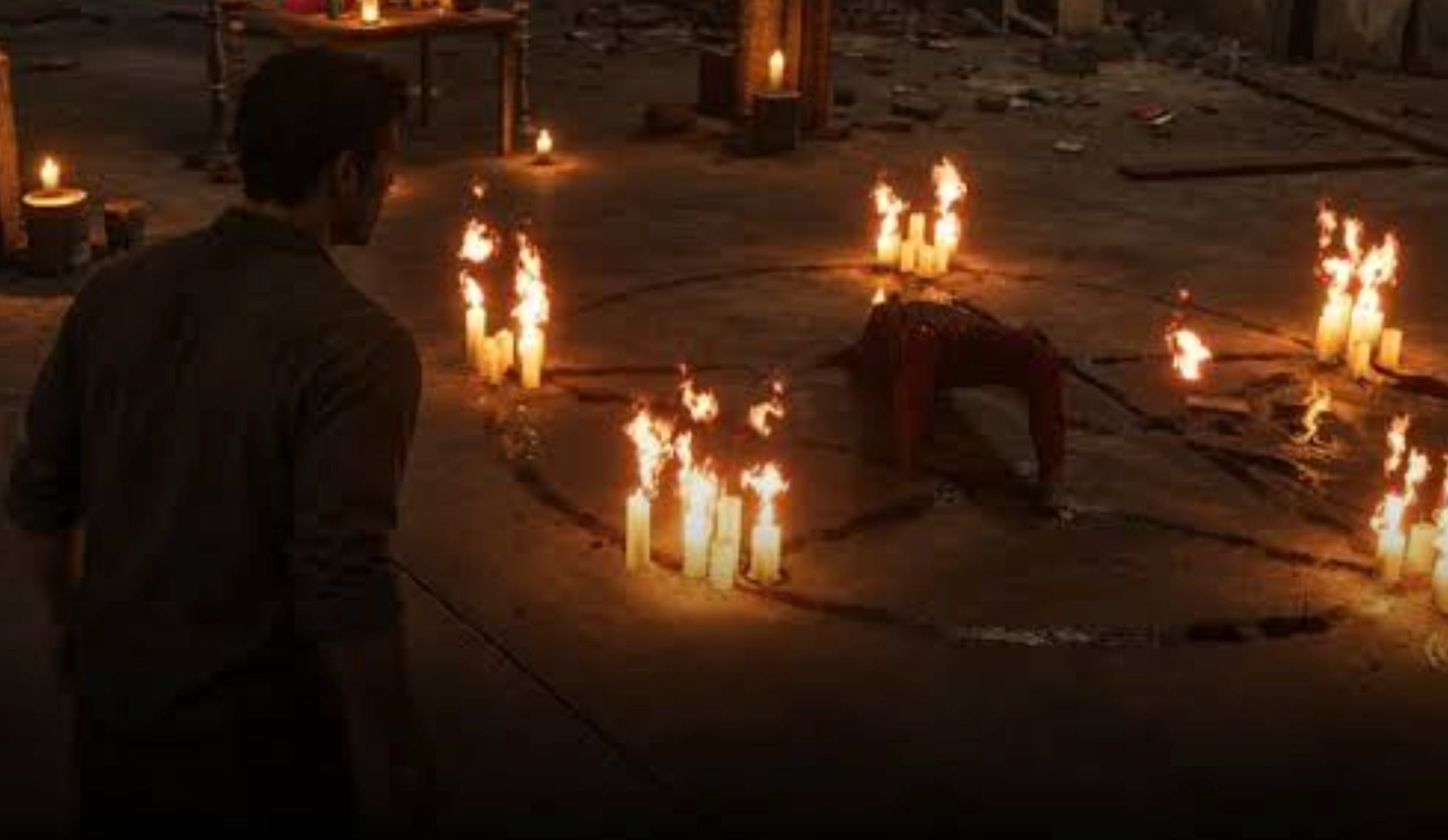
In an abandoned warehouse in Capri, players can find a pentagram drawn on the floor, complete with candles, an altar, a skull, and a journal that speaks of cleansing fire. If you knock out a random NPC, carry the body inside, and place it on the star, the lights die. and the candles alight all by themselves. Depending on who you are playing at the time, you encounter a possessed version of Lucia floating off the ground or a demonic vision of Cal or Lucia’s mother. The sacrificed body reanimates and cannot be killed. At one point the entity briefly takes control of the player character and forces them to point a gun at their own head and the only way to end the encounter is fire.
Notice I haven’t delivered what the punchline is. That’s because there isn’t one. No character undercuts the moment with vulgarity or irony and none of the later missions treats the event as absurd. The sequence is detailed, atmospheric, and played completely straight. It is not a parody at all, but a carefully designed occult ritual that the player can perform.
The nature of satire is that it requires the work itself to signal that what is being depicted is being mocked or exaggerated. When Rockstar puts a right-wing radio host on air ranting about trans athletes and then has him linger uncomfortably on how “beautiful” the girls are, the satire is easy to discern. But, the Capri sequence does none of this. It simply tasks the player with making a human sacrifice and then subjects them to the supernatural consequences. That’s it.
Scripture does not treat the invocation of spiritual powers as an aesthetic flavor or harmless theater. The Christian posture is that these things are real and forbidden. Participation in them is spiritually dangerous whether the participant believes in them or not. Interactive media changes the equation further because even watching a fictional character perform a ritual is a kind of exposure. But in the video game, you are also engaged in performing the ritual with the character you play.
None of this is to say series has ever completely been about pure comedy. There have always been moments of genuine cruelty and darkness, but those moments were usually framed by the larger satirical project in and of itself. The Capri ritual stands apart because the sequence and satire are completed removed from its instance. All that remains is a self-contained horror sequence that invites the player to enact in the occult.
Naturally, Christians who engage with popular culture do not need to pretend that every dark image is an invitation to the demonic. However, discernment requires distinguishing between irony and endorsement. I’m not arguing that Rockstar is deliberately running some kind of satanic conversion campaign, but this detail is worth pointing out because our culture has reached a point where the line between irony and sincerity has become increasingly blurred. There are people who openly practice occultism, make it a business, and even publicly advertise their efforts to cast spells on political figures like Donald Trump. These practices are not confined to fictional entertainment or edgy jokes and the distinction between depicting such things and actively participating in them becomes increasingly worth examining. Occultism is genuinely frightening, and its increasingly open presence in popular culture is something Christians ought to be wary of.

G_T_A. GœTiA