


Barry Reese, the pulp adventure novelist behind The Dark Society and a contributor to the Marvel Encyclopedia, is sharing a firsthand account of working alongside science fiction legend Harlan Ellison on a Green Hornet anthology, and the story is not flattering to Ellison.
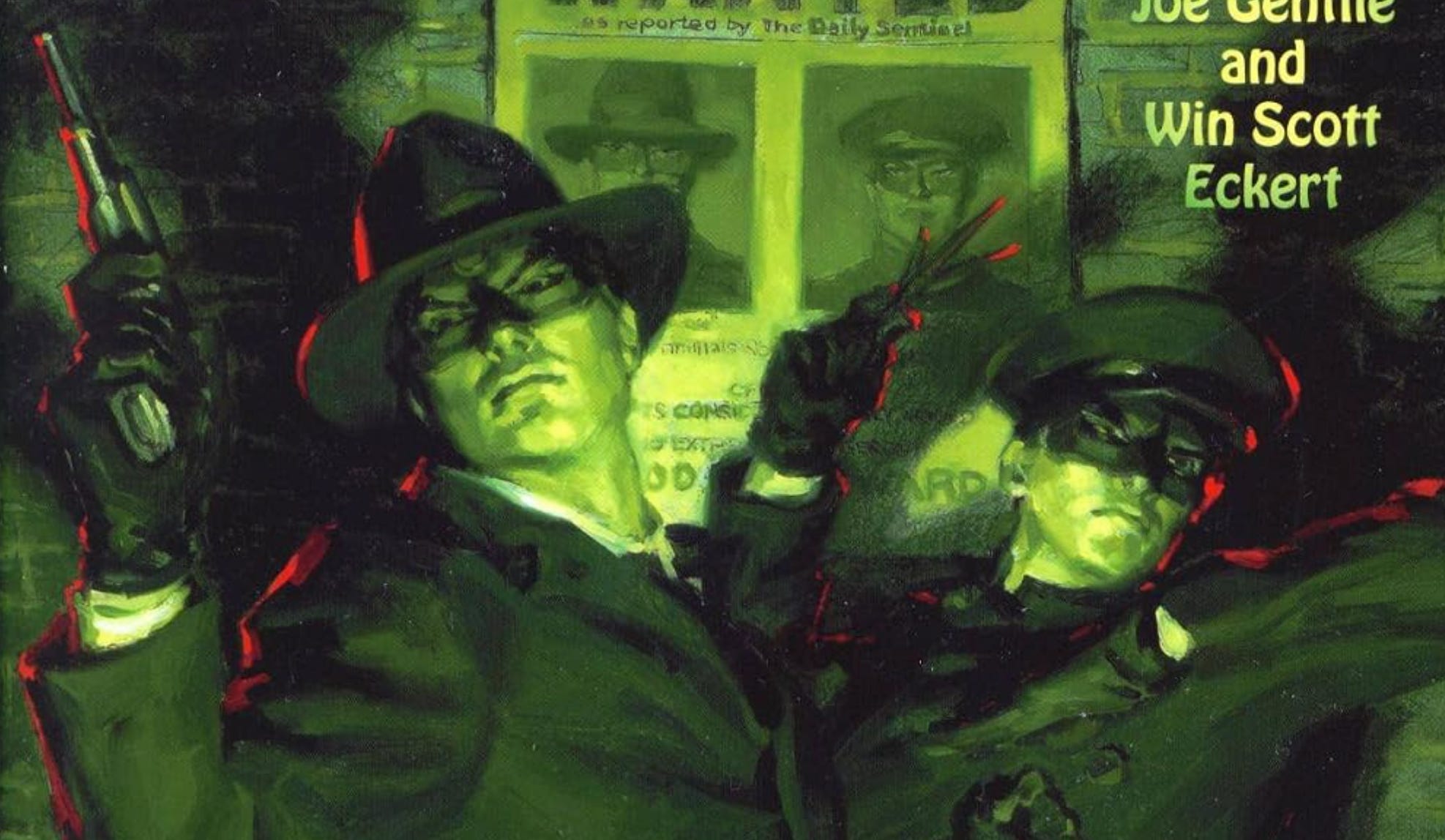
The book in question is Moonstone’s The Green Hornet Chronicles, a 2010 hardcover anthology that gathered a stacked lineup for a licensed pulp property. Star Trek novelists Robert Greenberger and Greg Cox contributed stories, alongside independent comics veteran Ron Fortier, pulp historian Will Murray, and C.J. Henderson. Ellison, an eight-time Hugo winner and four-time Nebula winner, was brought on to write what was billed as the first-ever meeting between the Green Hornet and Lee Falk’s Phantom.

Reese told Fandom Pulse the wait for Ellison’s contribution stretched well past a year, and the finished product wasn’t what anyone signed up for.
“I’m not sure it’s interesting enough for coverage, but I was a writer on one of the Moonstone Green Hornet anthologies, and Ellison had been brought in to write the ‘first-ever’ meeting between the Green Hornet and Lee Falk’s Phantom. All of us turned our stories in on time…. Except for Ellison. We all waited and waited for over a year. The publisher didn’t want to publish it without Harlan’s story because he was the biggest name attached to the project. Finally, we were told that Harlan had sent something in. Then the book came out, and we all saw that Harlan’s contribution was not a story at all… It’s an essay. An essay all about how he couldn’t come up with an idea until he finally realized that these two characters shouldn’t meet. And that’s what he kept us waiting for over a year for… a short essay about why he didn’t contribute his story.”
Reese’s account lines up with an independent report on the same episode. Writer Nick Mamatas covered the situation for The Smart Set in 2014, noting Ellison’s planned story, titled “The Soul of Solomon,” got three pages in before Ellison abandoned it and wrapped the fragment in a long essay explaining why the two pulp characters had “nothing in common, ultimately, save the arrogance of an old man who has learned at the last doorway that sometimes what ain’t, shouldn’t be.”
Reese also said Ellison kept his distance from the rest of the contributors during the process, a detail that stands out given how collaborative the rest of the anthology’s writers were with each other.
“I didn’t [speak with him]. Joe Gentile did all the talking with Ellison. The rest of us had a lot of contact with each other, but I got the impression that Harlan was above that.”
Joe Gentile founded Moonstone Books in Chicago in 1995, initially publishing creator-owned black-and-white comics before pivoting in 2001 toward licensed pulp and adventure properties. The company built its reputation by reviving Golden Age characters like The Phantom, Doc Savage, Zorro, and The Avenger through comics, graphic novels, and prose anthologies. Landing Ellison for a Green Hornet team-up story was a coup for a publisher operating in that space, which is part of why the year-plus wait, and the essay that resulted, stung.
Reese said most contributors, himself included, were not paid cash for their work. He received roughly 20 contributor copies of the finished book instead. The draw for the writers involved was never the paycheck.
“They just did it because they loved the characters,” Reese said of the anthology’s contributors.
Ellison’s delay was not an isolated incident. His literary executor, J. Michael Straczynski, has since revealed that Ellison lived for decades with undiagnosed bipolar disorder and clinical depression, conditions that slowed his once-prolific output to a crawl by the 1990s and remained largely unknown outside his inner circle. The same pattern that produced a one-year wait for a three-page fragment and an essay on the Green Hornet project also produced the far more famous Last Dangerous Visions anthology, which sat unfinished for nearly fifty years before Straczynski completed it after Ellison’s death. Reese’s story is a small-scale version of a much larger, and now better understood, pattern in Ellison’s career.
Readers looking for more pulp adventure fiction in the spirit of the Green Hornet and Phantom crossover Ellison never delivered should check out Reese’s own work. His Dark Society series follows a team of occult investigators battling supernatural threats in a pulp-inspired setting, and it is available now through Reese’s website and major retailers.

What do you make of a legend like Ellison holding up an entire anthology for over a year only to turn in an essay instead of a story?