


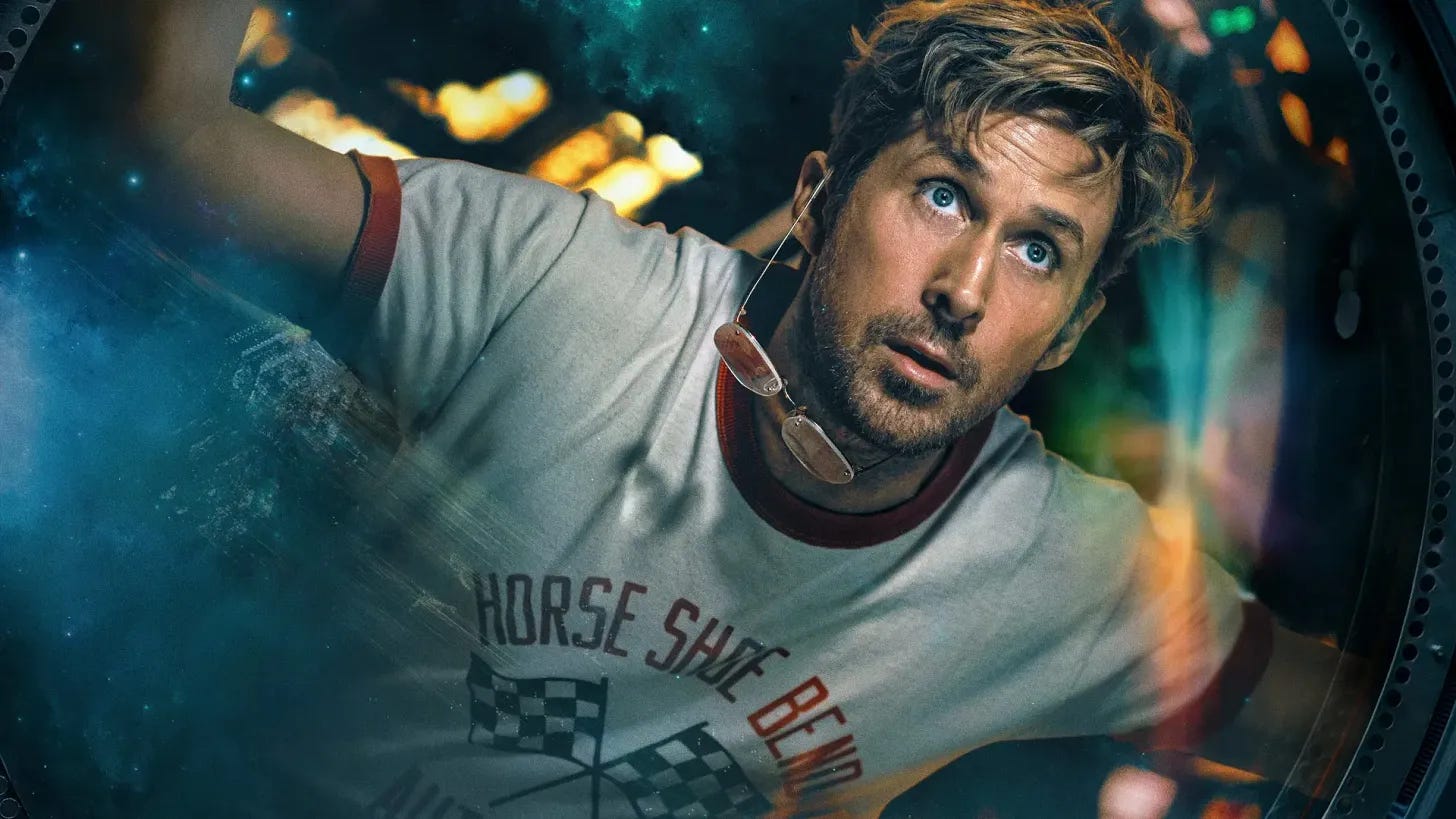
Project Hail Mary opened March 20 to $80.6 million domestically and $60.4 million overseas, a $141 million worldwide debut that broke Amazon MGM’s own opening weekend record. Five weeks later it sits at $285 million domestic and $577 million worldwide, the third highest-grossing film of 2026 and the top-earning original property of the year by a distance that is not close.
The week-to-week holds are the number that matter most. The film dropped only 32.8% in its second weekend, landing at $54.5 million. For context, Dune: Part Two, a franchise sequel with years of built-in anticipation behind it, dropped further in its second frame and earned $8 million less. Internationally, Project Hail Mary held at minus 5% in week two across 86 markets. Deadline noted at the time that Interstellar dropped 21% internationally in the same window, The Martian dropped 41%, and Dune dropped 48%. A minus 5% hold for a non-franchise original film is essentially unheard of. It means people were talking about it, and the people they told were buying tickets.
The production was six years in the making. MGM acquired the rights to Andy Weir’s novel in March 2020 for $3 million before Amazon bought the studio. Phil Lord and Christopher Miller were attached to direct by May 2020. Because they were committed to Spider-Man: Across the Spider-Verse, Drew Goddard — who had previously adapted Weir’s The Martian for Ridley Scott in 2015 — wrote the screenplay. Ryan Gosling starred and produced. Sandra Hüller, James Ortiz, and Lionel Boyce round out the cast.
IMAX alone accounted for $27.6 million of the opening weekend take across 400 global screens. Amazon MGM positioned it as an IMAX-first launch, and the strategy worked. IMAX CEO Rich Gelfond noted that the film’s depiction of space “stands among the best” the format has presented. The trailer, released June 30, 2025, accumulated 400 million views globally in its first week, the most-viewed trailer ever for an original film on that timeline.
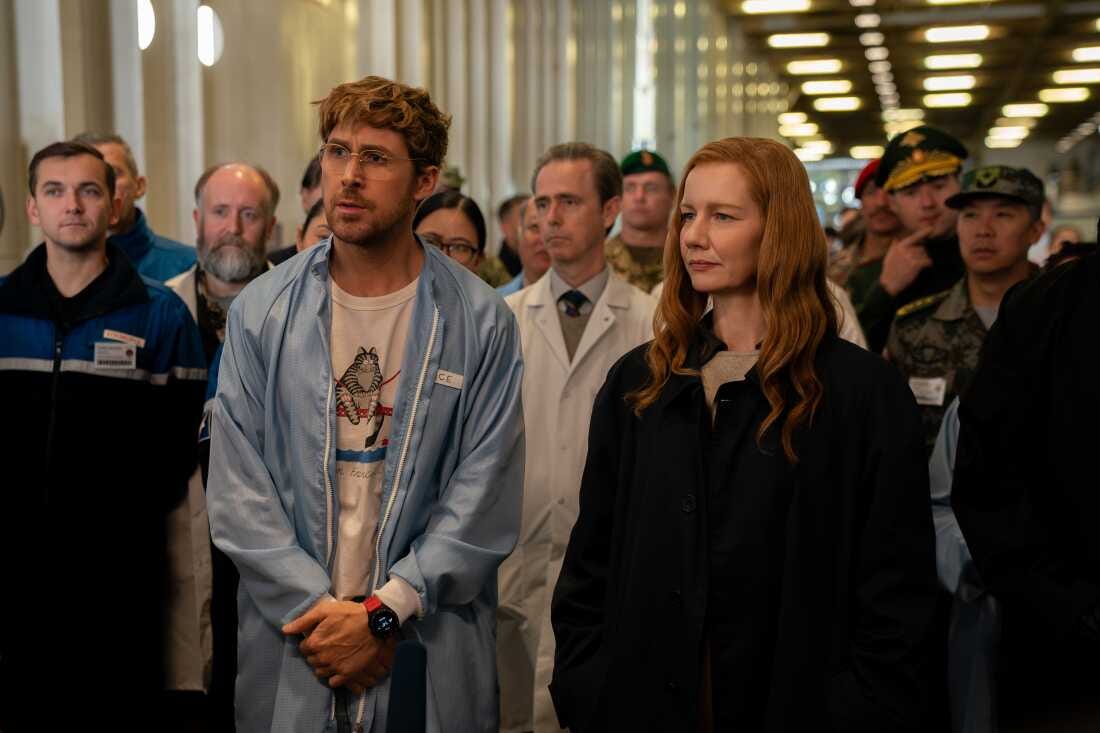
The film now sits as the highest-grossing Amazon MGM Studios release of all time, beating Creed III‘s $276 million worldwide. Its current trajectory puts a final total around $630–650 million within reach, which would surpass The Martian‘s reported $630.6 million final gross. It is currently closing in on Quantum of Solace ($589.5 million), the next benchmark on the list.
Analyst Shawn Robbins of Fandango called the opening “a testament to the power of Andy Weir’s original novel and the efforts Lord and Miller made in being faithful with the adaptation.” That word — faithful — is doing real work in that sentence. The Martian succeeded on the same principle. Weir writes scientists solving problems under pressure, and both film adaptations resisted the impulse to sand down the science for a wider audience. The audience came anyway.
Deadline noted when covering the film’s second weekend that non-franchise IP “excelling around the world” was “hopefully a sign of the times.” That framing says something about where the industry’s expectations had sunk. A film built around original material, no prior IP recognition, no sequel setup, holding at minus 5% internationally in week two, and the trade press treated it as surprising. It should not be surprising. It should be the baseline.
What do you think: does Project Hail Mary‘s run change how studios greenlight original sci-fi, or does Hollywood take the wrong lesson and just try to turn it into a franchise?
When genetic engineering nearly doomed the species, humanity made a desperate bargain: let the frontier do what nature intended. In a harsh universe, these cadets have to make impossible decisions. Read Space Fleet Academy today.
Kurtzman is out there pitching a Hail Mary Academy TV series.